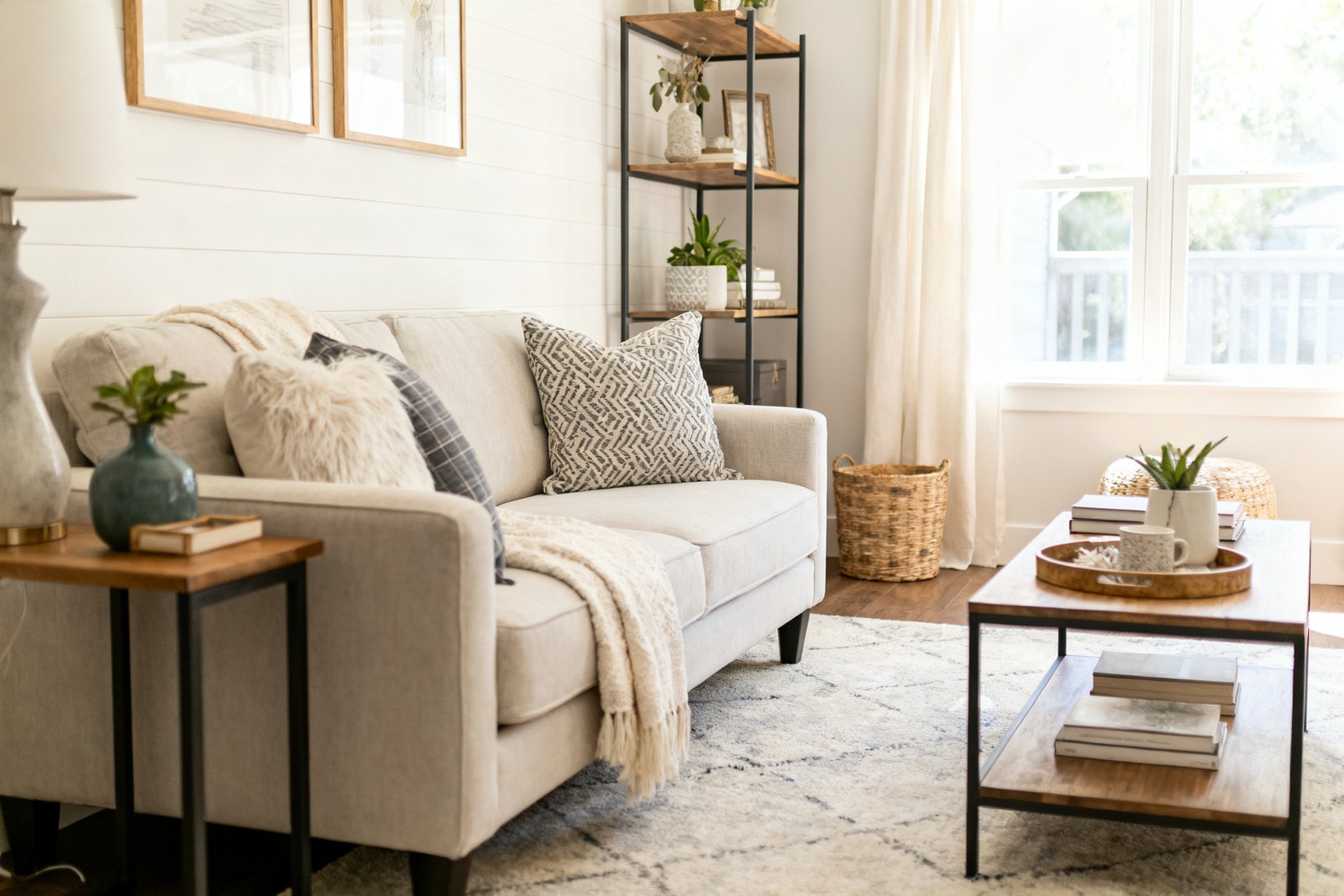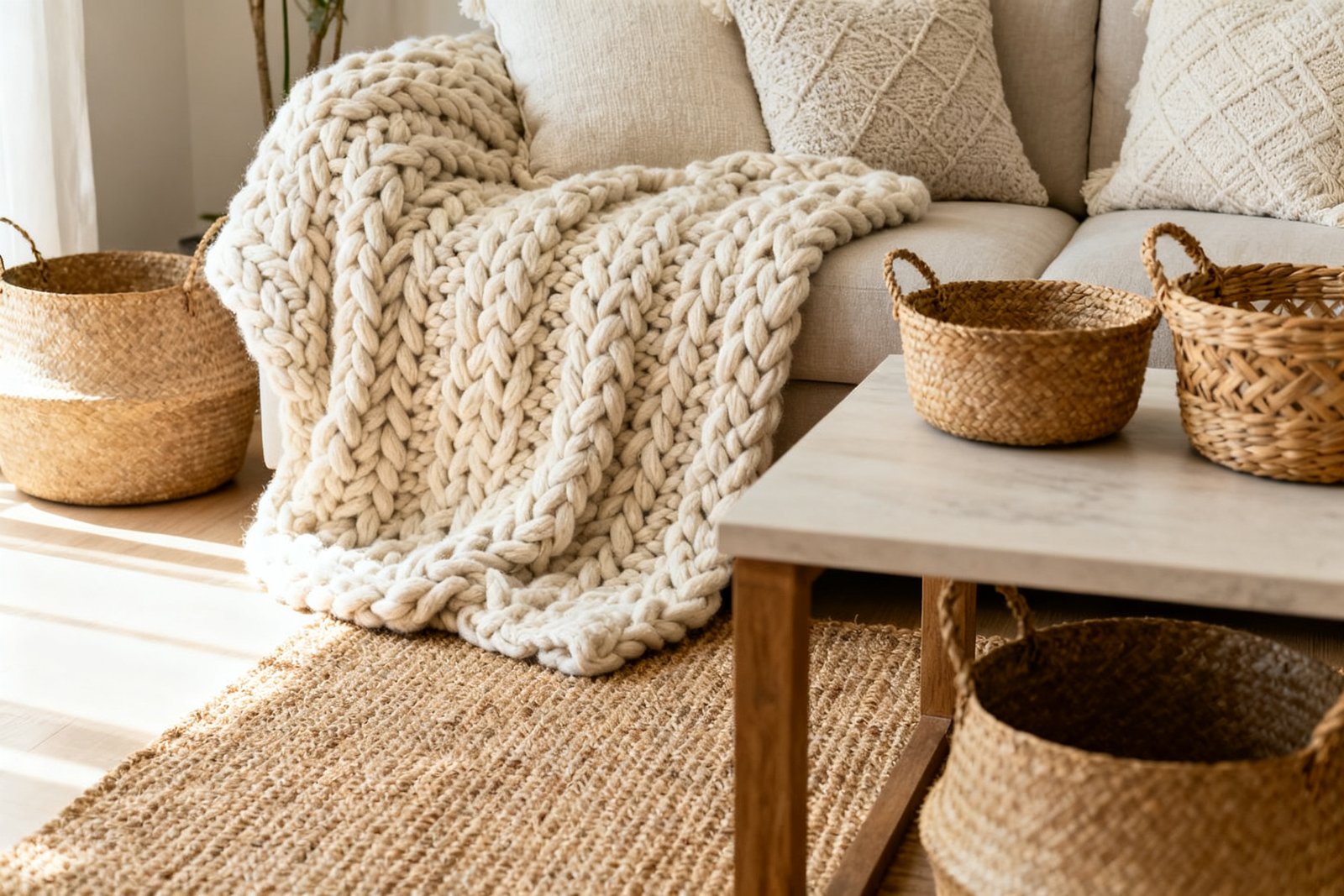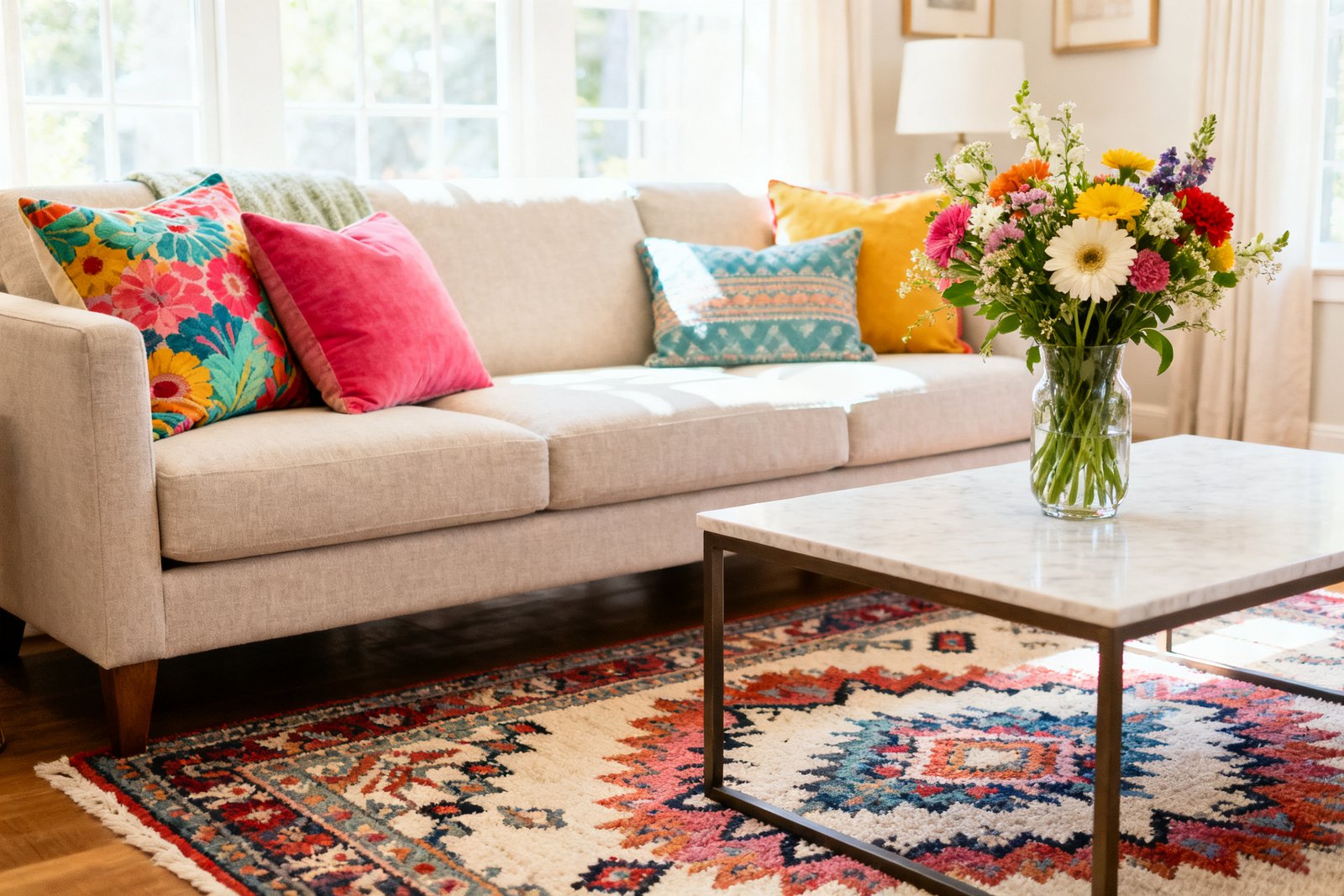

Neutral rooms are calm and classic, but they can slip into bland fast. The good news: you can layer in color without repainting everything or spending much. Here’s how to add personality, warmth, and interest using budget-friendly moves you can finish in a weekend.
Start with a Simple Color Plan
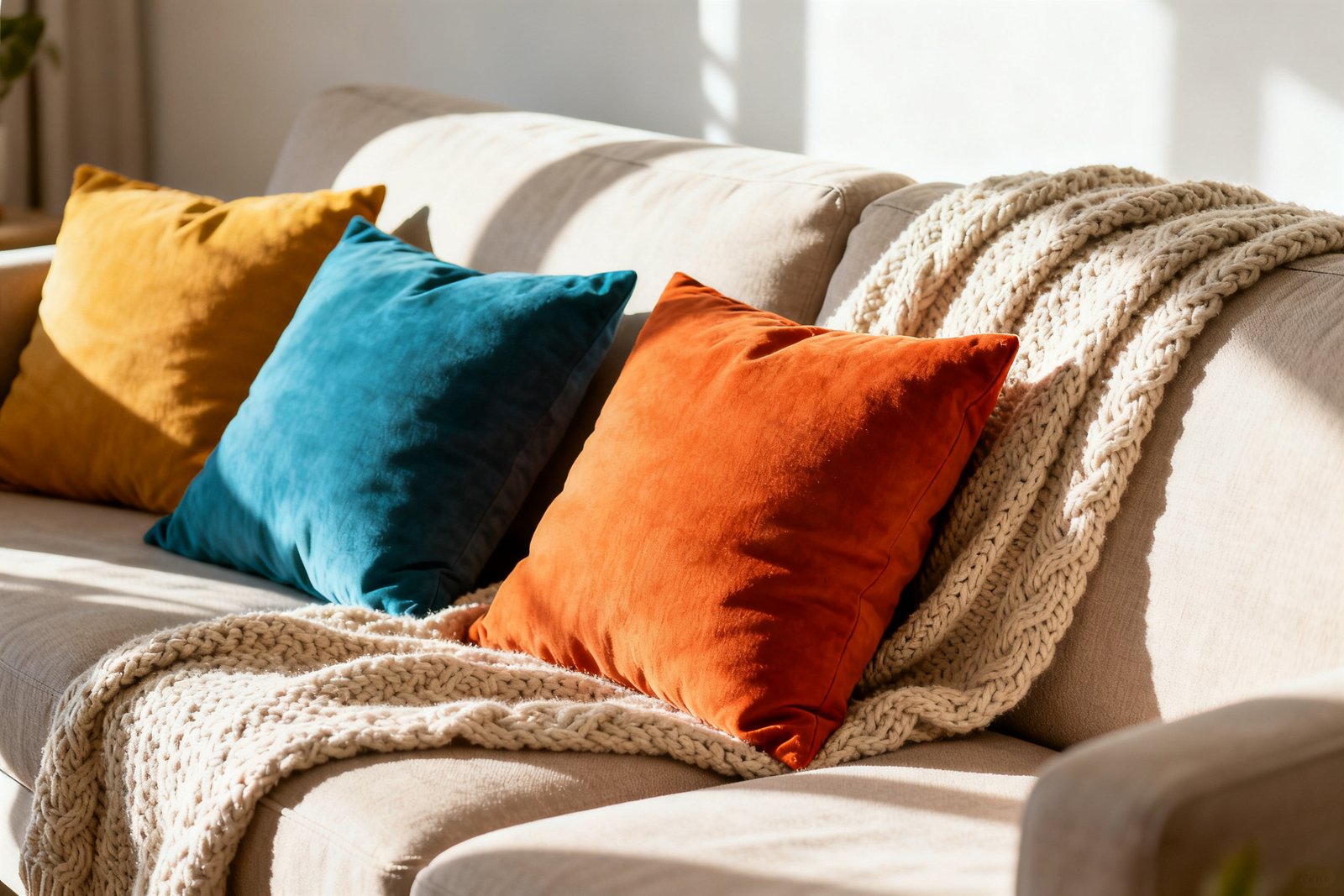
Before you buy anything, choose 1-2 accent colors and one supporting shade. This keeps the room cohesive and makes cheap items look intentional. Pull inspiration from anything you already own—a book cover, a scarf, a rug edge, or art print.
Quick method
- Pick a main accent color you love (e.g., terracotta, emerald, navy).
- Add a second accent that complements it (e.g., blush with terracotta, mustard with navy).
- Select a neutral-to-color bridge (e.g., warm wood, black, or brass) to tie accents to your existing neutrals.
Test your picks in daylight and at night. Tape paint swatches or fabric scraps to the wall and step back. Aim for about 20-30% of the room in color accents, leaving 70-80% neutral to keep it calm.
Textiles: Fastest Color for the Least Money
For more ideas, see our guide on how to choose a cohesive color palette.
Textiles add big impact with low risk. Because they’re easy to swap, they’re the best place to start if you’re unsure about color commitment.
Pillows and throws
- Mix solid-colored pillows ($10–$20 each) with one patterned piece ($15–$30) that includes your accent colors.
- Choose texture as well as color: linen, bouclé, velvet, and chunky knits add depth even in similar hues.
- Use removable covers so you can keep cheaper inserts and swap the color for $8–$15 per cover.
Rugs and runners
A small patterned rug can anchor color. Look for 4×6 or 5×7 polypropylene rugs ($40–$120) that are easy to clean. If a full rug is out of budget, layer a colorful 3×5 over a plain jute or sisal base—this costs less and still reads as a big color moment.
Window treatments
Roman shade dupes and tab-top curtains in washed cotton or linen blends add soft color. Expect $20–$40 per panel. If you already have white curtains, dye them with a fabric dye kit ($8–$12) for a custom color wash.
Art and Wall Tricks Without a Full Paint Job
Loving your new pops of color? Keep the momentum going with our free 5-Day Budget Home Reset—one small, low-cost task a day.
You don’t need to paint four walls to get impact. Use art, temporary color fields, or small paint projects to shift the mood affordably.
Budget art ideas
- Print digital art or public-domain posters at a copy shop ($5–$20 per print). Use thrifted frames ($3–$10) and paint the frames in your accent color.
- Hang a fabric remnant or a patterned tea towel in a poster frame ($5–$25) for texture and color.
- Create a color block: paint a rectangle behind a console or bed in your accent shade (sample pots $5–$10). It reads like headboard art and uses very little paint.
Peel-and-stick solutions
Peel-and-stick wallpaper or decals let you test color on one wall or a niche for $30–$60 per roll. Use it behind shelves, inside bookcases, or on a fireplace surround for a controlled pop that’s rental-friendly.
Style Your Surfaces with Color
It also helps to check out choose paint colors on a budget.
Bookshelves, consoles, and coffee tables are low-cost places to sprinkle color. Use what you have first, then fill gaps with thrift finds.
Books and objects
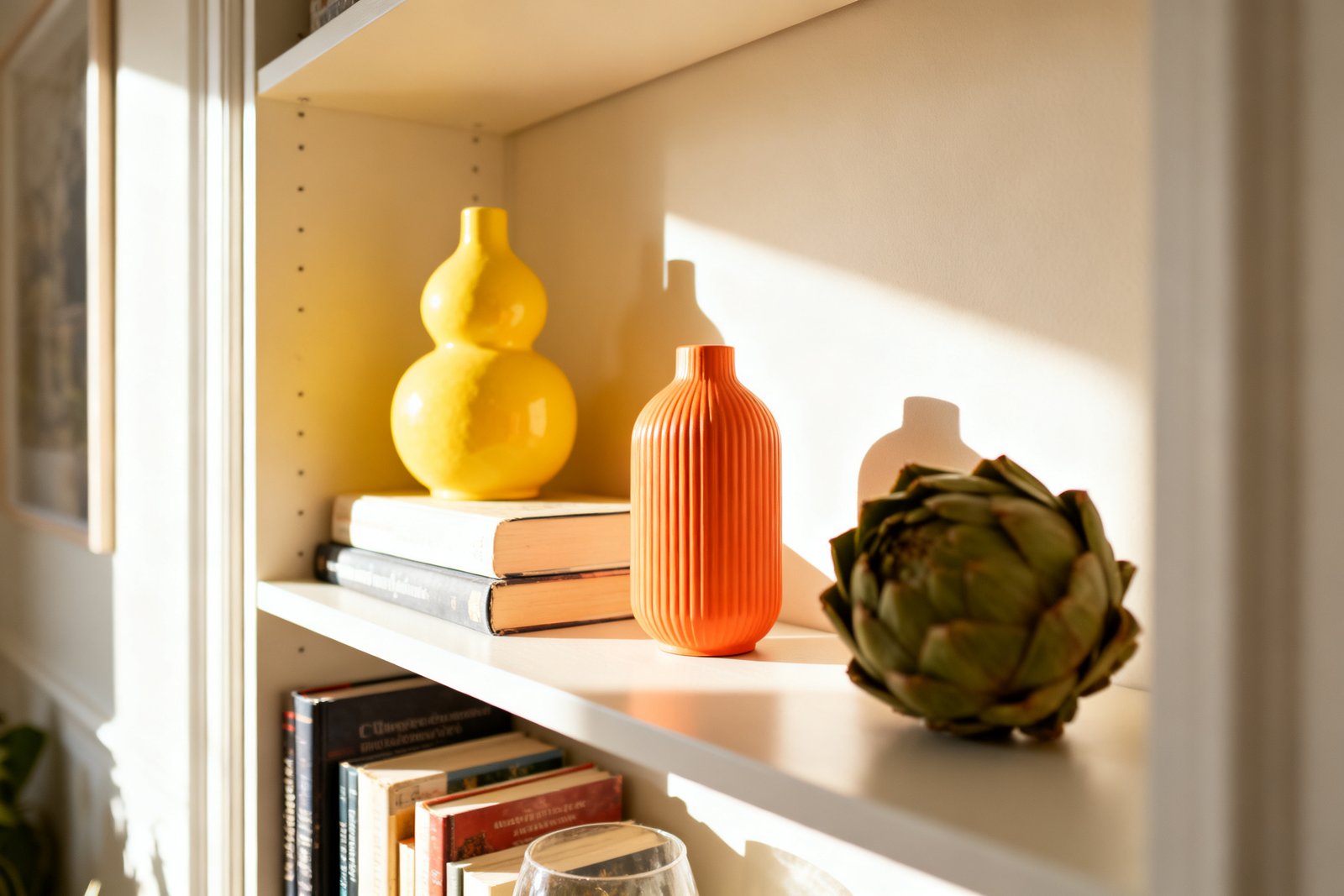
- Turn books so their colorful spines face out; group by your accent colors for a curated look.
- Spray-paint small thrifted objects (frames, bowls, candlesticks) in a matte accent hue ($6–$10 per can). Stick to 1–2 small pieces per surface to avoid clutter.
- Add a colorful tray ($10–$25) to corral remotes and coasters; trays make color look organized.
Greenery and florals
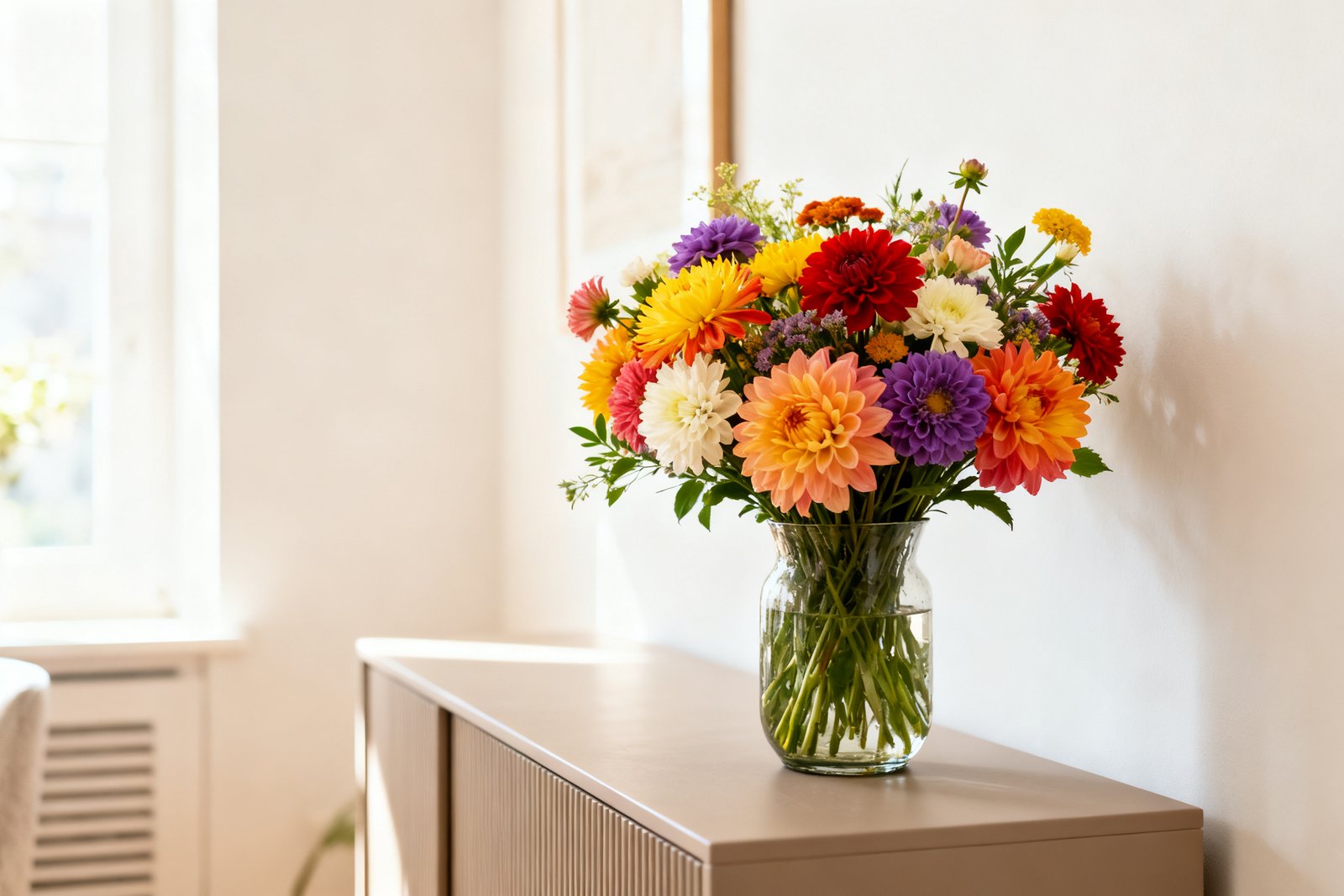
Plants add color through leaves and pots. Use terracotta, painted pots, or bright ceramic planters ($8–$20). Seasonal grocery-store flowers ($5–$15) in a colored glass vase can change the palette monthly without commitment.
Swap Small Fixtures and Hardware
Hardware changes are subtle but shift the room’s temperature. They’re also easy to reverse and often cost less than a single throw pillow.
Affordable updates
- Cabinet knobs and pulls: swap to colored ceramic, matte black, or brushed brass ($2–$6 each). Even six knobs on a console can set a theme.
- Lamp shades: replace a plain white drum with a colored, pleated, or patterned shade ($18–$40). Or recover a shade with fabric and fabric glue for under $15.
- Switch plates and outlet covers: choose black, bronze, or painted to match your accent ($2–$8 each) for a tidy, custom look.
Use Color in Layers, Not All at Once
To keep a neutral room from looking chaotic, add color in measured steps and repeat accents at least three times around the room. This helps the eye connect the dots.
Layering plan
- Anchor: add one large color moment (rug, art, or color block).
- Echo: add two medium accents (pillows, throw, lampshade) that repeat the hue.
- Detail: add 2–3 small touches (vase, tray, book spine group) to finish.
Stand back after each step. If a piece fights the palette, remove it. Editing is free—and often the thing that makes the colors read as intentional.
Low-Cost Paint Projects That Pay Off
Target smaller surfaces where a little paint makes a big difference. Sample sizes or a quart ($5–$20) go a long way.
- Side tables or a stool: paint in a satin finish accent color.
- Backs of a bookcase: a single coat behind shelves frames your items and adds depth.
- Picture frame mats: paint or cover with colored paper for $1–$3 per mat.
- Inside of a door: painting the interior side of a plain door gives a controlled pop without overwhelming the room.
Realistic Example: Refreshing a Beige Living Room for Under $150
Room: Beige sofa, white walls, light wood floors. Goal: Warm it up with terracotta and moss green.
- Two terracotta pillow covers and one patterned cover with terracotta/green accents: $40
- Moss green throw: $20
- Thrifted frames (spray-painted terracotta): $15 total
- Two 11×14 downloadable art prints with warm tones: $20 printed
- Color block rectangle behind the sofa using a sample pot of terracotta paint and painter’s tape: $10
- Terracotta plant pot and a pothos: $18
- Matte black metal tray for the coffee table: $15
- Colored lamp shade (subtle green): $25
Total: Around $163 (often less if you already own inserts or find frames cheaper). The room now has one big anchor (color block), mid-size echoes (pillows, shade), and small accents (tray, pot), all tied to the same palette.
Mistakes to Avoid
- Buying random colorful items without a palette. Pick your 1–2 accents first so you don’t end up with a mismatched rainbow.
- Putting all the color on one side of the room. Repeat hues at least three times and distribute them around the space.
- Ignoring undertones. Cool grays pair better with blues and emeralds; warm beiges lean into terracotta, mustard, or olive.
- Going too saturated on every item. Mix one bold piece with softer tints and textured neutrals to avoid a loud look.
- Skipping lighting. Warm bulbs make colors richer; cool bulbs can wash them out. Choose 2700K–3000K for cozy tones.
FAQ
How much color is too much in a neutral room?
Start with 20–30% of the room in color accents. That usually means one larger element (rug, art, or color block), two to three medium accents (pillows, throws, lampshades), and a few small pieces. If the room starts to feel busy, remove one medium item and reassess.
What if I rent and can’t paint?
Use peel-and-stick wallpaper, color-blocked art panels, or large framed textiles to stand in for painted areas. Swap in colored lamp shades, pillow covers, and rugs; all are non-permanent and high impact. Keep original hardware to reinstall and use colored knobs on furniture instead of walls or cabinets.
Can I mix warm and cool colors?
Yes—just balance the ratio. If your base is warm (beige, cream), lead with a warm accent (terracotta, mustard) and add a small cool note (teal, navy) in two to three places. Reverse this if your base is cool (gray, crisp white).
What’s the cheapest way to test a color?
Buy a sample pot and paint a large poster board or foam board, then move it around the room to see it in different light. For textiles, order swatches or use inexpensive napkins or tea towels in your chosen shade to preview the effect.
If you want to keep going, take a look at mix and match patterns.
Final Thoughts
Adding color to a neutral room doesn’t require a full makeover or a big budget. Choose a simple palette, layer textiles, use art and small paint projects strategically, and repeat hues throughout the room. With a few focused updates, your space will feel more personal and pulled together—without losing the calm you like about neutrals.