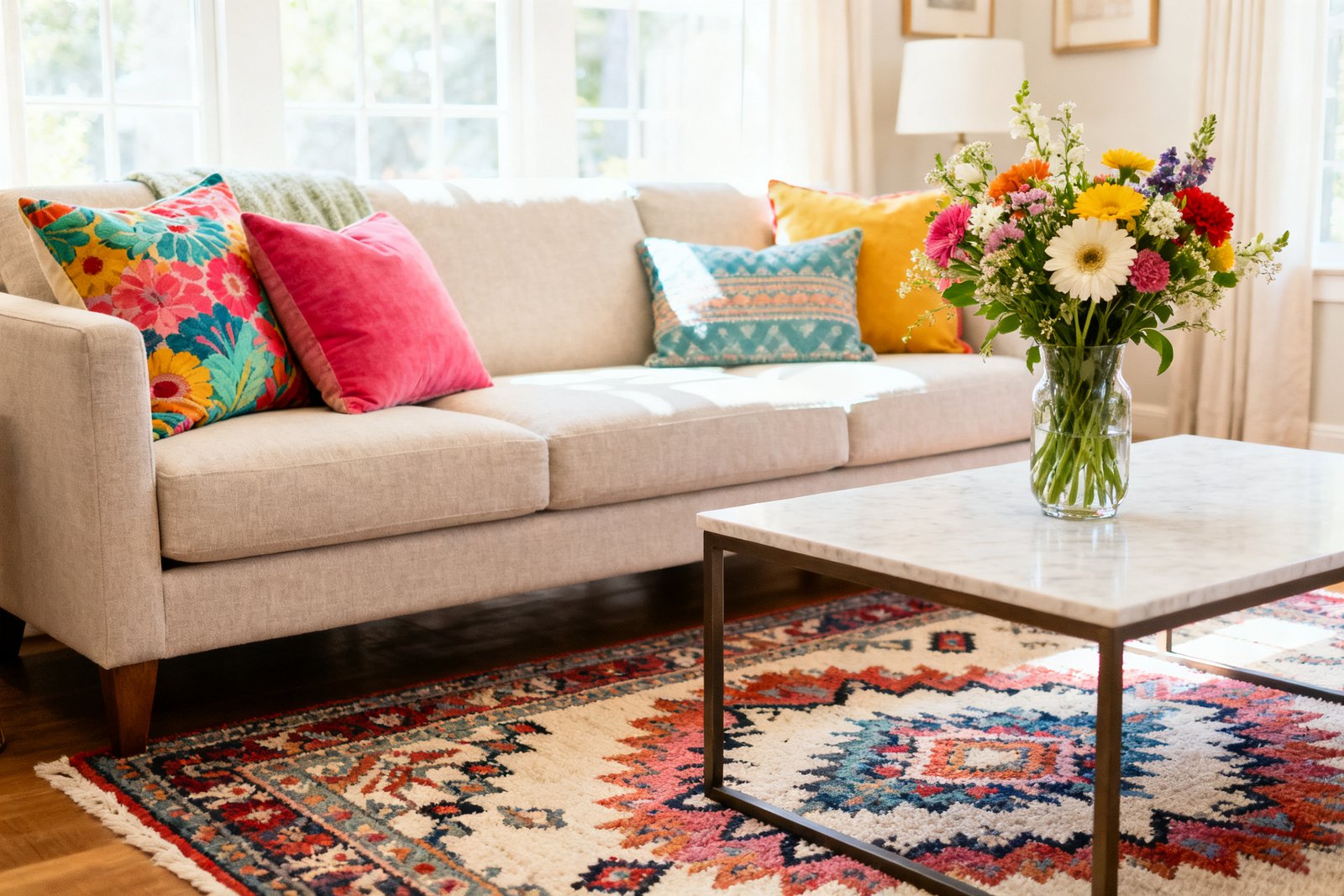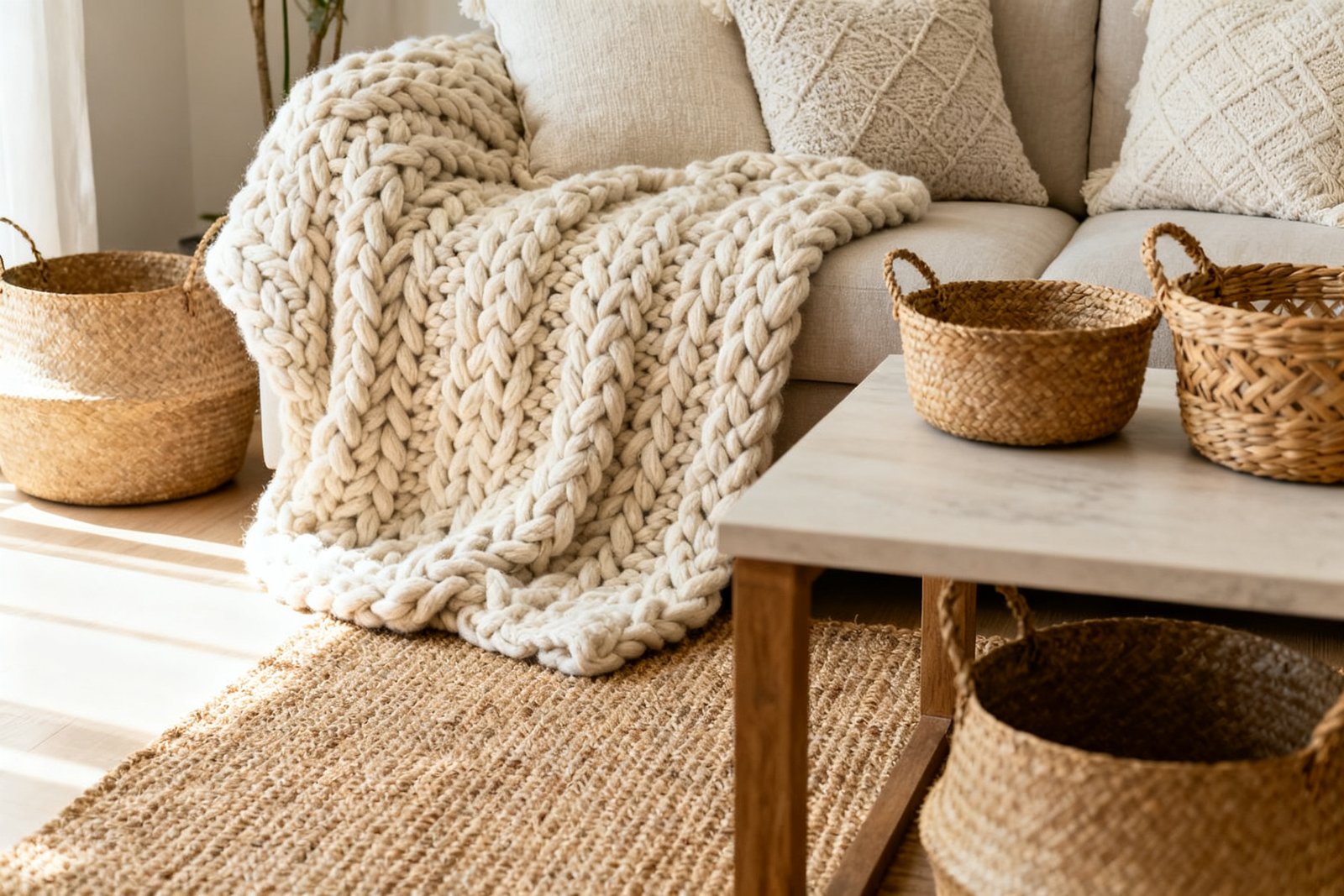

Cozy rooms invite you to sink in, slow down, and stay a while. You don’t need a big budget to get there—just smart layers, tactile materials, and a few easy DIYs. Here’s how to add texture that looks intentional and feels great, without overspending.
Start With Layerable Textiles You’ll Actually Use
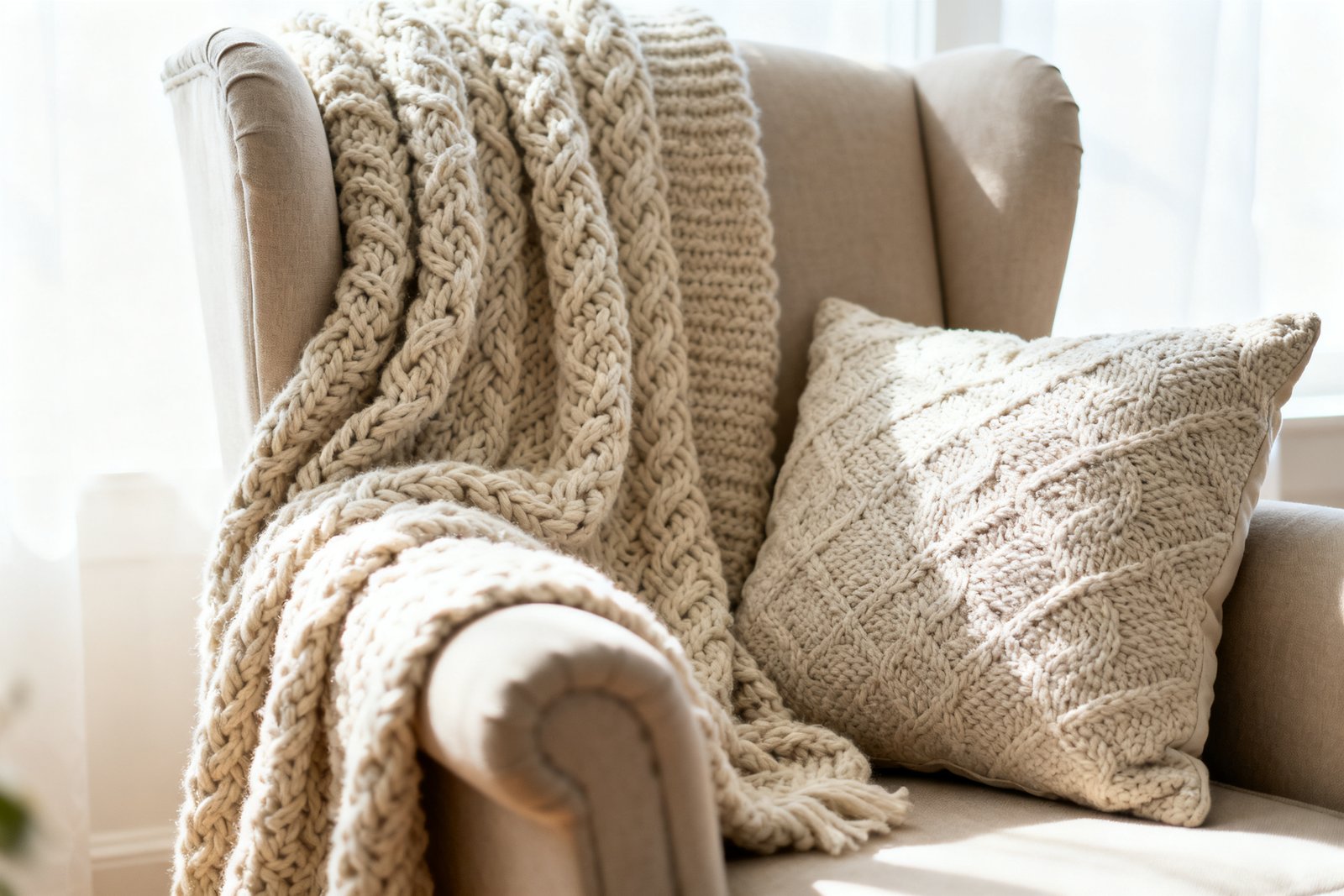
Texture begins with the things you touch most: throws, pillows, and small rugs. Focus on materials with visible weave or pile. You don’t need designer fabrics—look for nubby knits, washed cotton, faux shearling, waffle weave, and chunky basket weaves.
High-impact, low-cost picks
- Throw blankets: knit acrylic, cotton waffle, or fleece ($10–$30)
- Pillow covers: corduroy, chenille, linen-blend, or tufted cotton ($6–$18 for covers; reuse existing inserts)
- Small rugs: cotton flatweave or faux sheepskin ($15–$40)
Tip: Buy pillow covers separately and reuse inserts you already have. If your inserts are floppy, add a second slightly smaller insert inside to plump them up.
Use Layered Rugs to Add Depth Underfoot
For more ideas, see our guide on how to warm up a cold-feeling room.
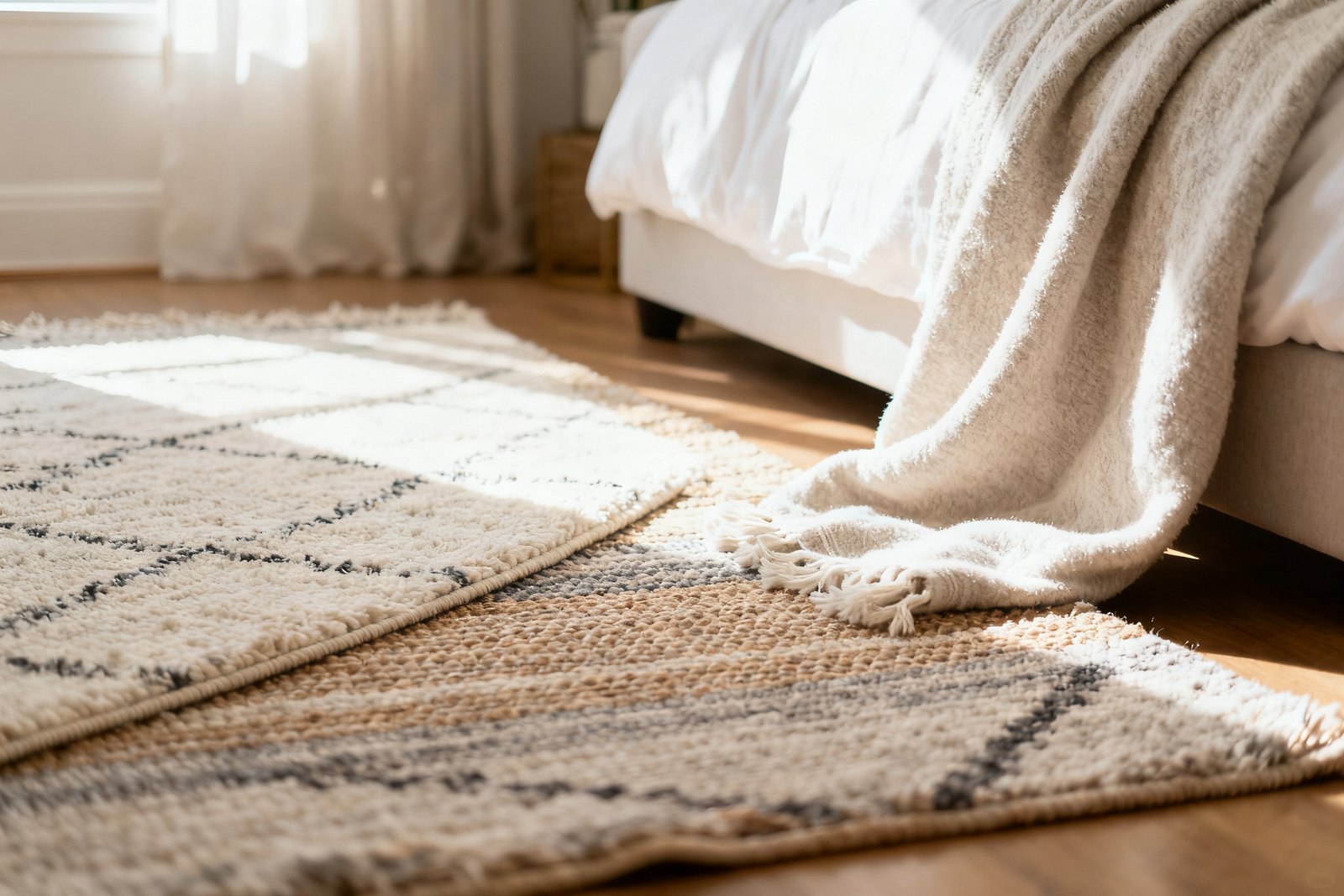
Rug layering adds instant texture and can make smaller, budget rugs feel intentional. Place a durable, neutral base like a jute or sisal-look rug, then top it with a smaller patterned or plush rug to add softness.
How to layer without tripping
- Choose a flat, grippy base rug (jute-look, low-pile indoor/outdoor). Size: large enough to define the area.
- Add a thicker top rug at 60–70% of the base size so it looks proportional.
- Use rug tape or a non-slip pad between layers to prevent shifting.
Budget range: a 5×7 jute-look rug runs $45–$90; a 3×5 accent rug is often $20–$50. If you have wall-to-wall carpet, skip the base and add a sturdy rug pad under your top rug for better texture.
Bring in Natural and Woven Elements
Once your room feels cozy, keep going with our free 5-Day Budget Home Reset—five days of simple, budget-friendly updates.
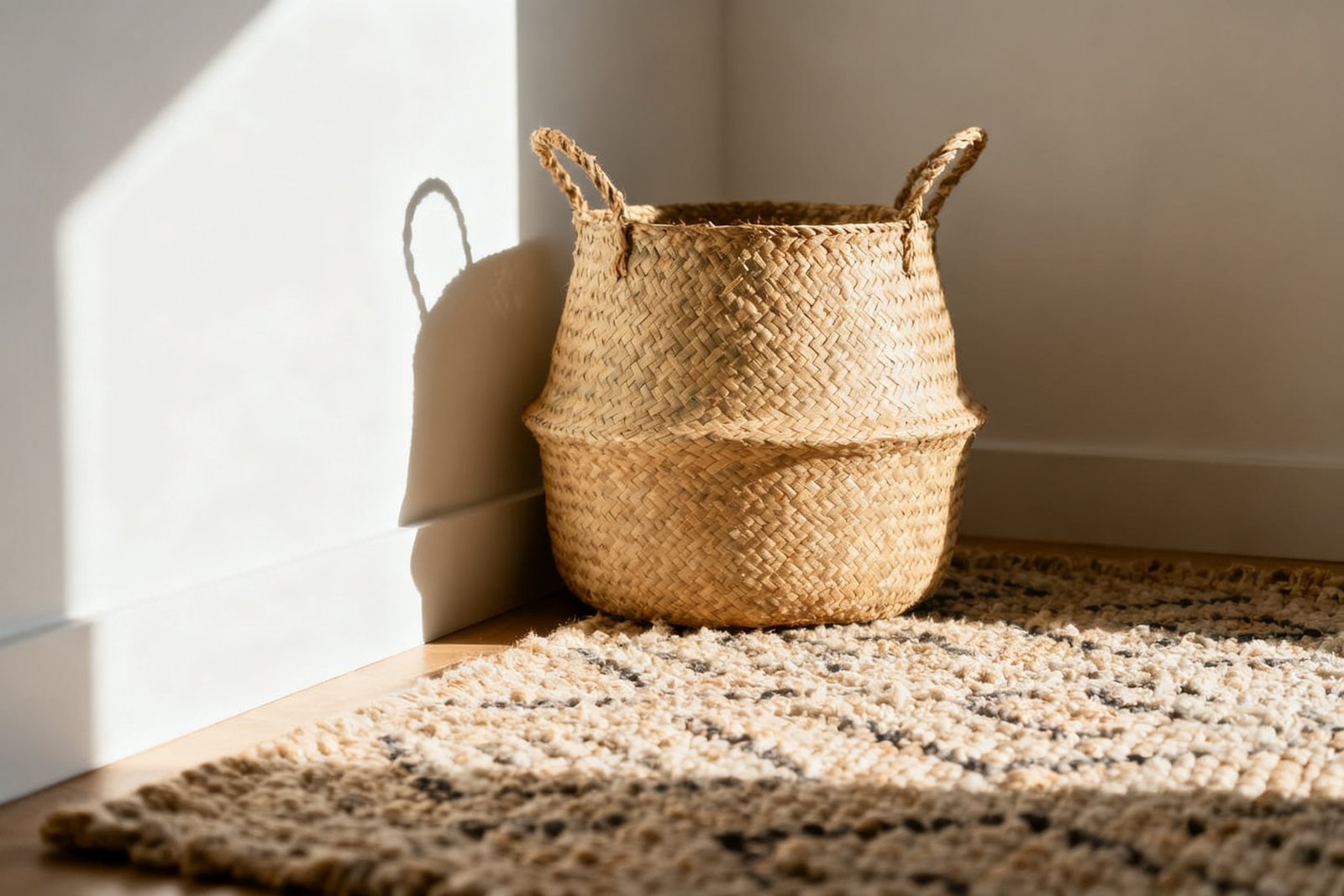
Hard materials can still read as cozy when they have visible grain or weave. Woven baskets, wood, cork, and rattan add warm, tactile interest and break up flat surfaces.
Easy swaps and small additions
- Storage: seagrass or rope baskets for throws and toys ($8–$20 each)
- Lighting: rattan or cane lamp shades ($15–$35) or a woven pendant ($30–$60)
- Surfaces: cork coasters, wood trays, bamboo frames ($3–$20)
- Planters: textured ceramic, terracotta, or woven covers ($6–$25)
Mix textures intentionally: pair smooth ceramics with a woven basket and a rough terracotta pot for a balanced vignette.
Textured Walls and Windows on a Budget
It also helps to check out choose throw pillows that look expensive.
Walls and windows are large surfaces that can handle subtle texture without feeling busy. Aim for matte finishes, light dimension, and layered window treatments.
Wall ideas
- Matte paint: a flat or matte sheen softens light and reduces glare; often the same price as eggshell.
- Textured art: frame fabric remnants (linen, burlap, quilt blocks) in thrifted frames ($2–$15). Add a mat for a cleaner look.
- Peel-and-stick options: grasscloth-look wallpaper or beadboard panels ($20–$45 per roll/panel) for a single accent wall or inside bookshelves.
Windows that feel layered
- Sheers + curtains: pair inexpensive voile sheers ($10–$20 per panel) with heavier cotton or faux linen drapes ($20–$35 per panel).
- Clip rings: add flow and texture to basic panels; easier to open/close ($6–$12 per pack).
Keep patterns subtle if your room already has bold textures elsewhere. If your furniture is smooth and simple, a heavier weave drape or faux linen adds needed depth.
Warm Up Furniture With Covers, Wraps, and DIY Touches
You can add texture to furniture without replacing it. Think slipcovers, fabric wraps, and tactile hardware.
Quick wins
- Slipcovers: a cotton or linen-blend slipcover can hide a slick sofa and add softness ($50–$120 for a sofa; $25–$60 for chairs).
- DIY bench/ottoman: wrap foam and a textured fabric (bouclé, chenille) over plywood; staple underneath; add legs ($40–$90 total).
- Hardware: swap smooth knobs for wood, leather pull tabs, or ridged metal ($2–$6 each).
- Tabletop texture: add a runner in burlap, nubby linen, or quilted cotton ($8–$20) and layer a wood or woven tray on top.
For rental-friendly changes, use removable adhesive to attach a strip of cane webbing or reed to the front of a cabinet door or bookshelf backing for instant texture.
Cozy Lighting = Cozy Texture
Light affects how texture reads. Softer, warmer light emphasizes nubs, weaves, and layers, while harsh light flattens them.
Budget lighting upgrades
- Bulbs: switch to warm white (2700–3000K) in living spaces. Multi-packs run $8–$15.
- Lamps: add one small table lamp or a floor lamp with a fabric or woven shade ($20–$60).
- String or fairy lights: drape inside a glass vessel or along a bookshelf ($8–$15), not across the ceiling.
Place lights at different heights (floor, table, sconce) to add visual layers at night. Even two lamps and a dimmer bulb can change a room’s feel.
Soft Texture Through Scent and Sound
Cozy isn’t only visual. Layering scent and quiet sound dampening adds perceived softness.
- Scent: simmer a small pot of water with citrus peels and cinnamon on low, or use a few drops of essential oil on a cotton pad in a small dish. Cost is minimal if you use kitchen scraps.
- Sound: add fabric wall hangings, heavier curtains, or a second smaller rug to reduce echo. Even a bookshelf filled with mixed-size books and baskets helps.
A Realistic Example: Rental Living Room Refresh for Under $200
Goal: make a small rental living room feel cozier without painting.
- Two faux linen curtain panels + clip rings: $55
- Cotton waffle throw + chenille throw: $35
- Four textured pillow covers (reuse existing inserts): $36
- 3×5 accent rug layered over existing carpet: $30
- Rattan lamp shade for existing lamp: $20
- Seagrass basket for throws: $16
- Framed fabric art from thrifted frames and remnant: $6
Total: about $198. Result: layered windows, tactile seating, a softer floor zone, and woven accents that break up flat surfaces.
Step-by-Step: Build a Cozy Texture Plan
- Pick a base palette: 2–3 neutrals (e.g., warm white, oatmeal, camel) and 1–2 accent colors you already own.
- Audit textures you have: list what’s smooth (leather sofa, laminate floors) and what’s already textured (knit throw, jute basket).
- Choose 3 texture types to add: one soft (bouclé/chenille), one woven (rattan/jute), one patterned or tufted (rug or pillow).
- Target large surfaces first: windows and floors give bigger payoff than tiny decor.
- Add lighting: swap bulbs to warm white and add one lamp with a fabric or rattan shade.
- Edit: remove one item for every two you add so the room doesn’t feel crowded.
Mistakes to Avoid
- Too many competing textures: limit bold textures to 2–3 statement areas (e.g., curtains, rug, one chair) and keep the rest subtle.
- Ignoring maintenance: long-pile rugs and heavily tufted pillows attract lint and pet hair. If you have pets, favor tight weaves and washable covers.
- Skipping rug pads: layers shift without them and can be a tripping hazard.
- Darkening everything: cozy doesn’t have to mean dark. Use warm neutrals and matte finishes to soften without losing light.
- Buying duplicates: measure first and make a short list. It’s easy to overbuy pillow covers and baskets.
FAQ
How do I add texture if my space is already small?
Use fewer, larger pieces instead of many small ones. Choose a chunky knit throw, one textured rug, and simple faux linen curtains. Keep walls lighter and opt for slim-profile baskets and lamps so the room stays open.
What’s the easiest washable option for homes with kids or pets?
Look for machine-washable cotton or polyester pillow covers and throws. For rugs, try low-pile washable rugs or indoor/outdoor flatweaves that can be hosed off or spot-cleaned. Avoid high shag and heavy fringe.
How can I balance leather furniture?
Leather reads smooth and cool. Add softness with a chunky throw draped over an arm, two textured pillows in bouclé or chenille, and a woven basket nearby. A fabric or rattan shade on a side lamp also helps counterbalance the sleek surface.
Do I need patterns to create texture?
No. Texture is about surface variation. You can keep everything solid and still create depth by mixing matte with nubby, ribbed with smooth, and woven with plush. If you add patterns, keep them subtle and in your color palette.
If you want to keep going, take a look at layer rugs like a designer.
Final Thoughts
Texture is the most budget-friendly way to make any room feel inviting. Start with the big surfaces you see and touch—windows, floors, seating—and layer in a few woven and soft elements. With small, intentional choices, even a tight budget can deliver a space that looks warm and feels good to live in.