
Streak-free glass doesn’t require pricey sprays or special cloths. With a couple of pantry ingredients and the right technique, you can clean windows and mirrors for pennies and get a clear, consistent finish. Here’s a simple, repeatable method that works indoors and out.
What You’ll Need (On a Budget)
You likely own most of these already. If not, each item is inexpensive and widely available at dollar stores or supermarkets.
- White distilled vinegar (5% acidity): $1–$3 per quart
- Rubbing alcohol (70% isopropyl): $1–$3 per bottle
- Dish soap (plain, not moisturizing): $1–$3
- Spray bottle (16–24 oz): $1–$3
- Microfiber cloths (lint-free): $0.50–$2 each in multipacks
- Optional: Squeegee for windows: $5–$10
- Optional: Old cotton T-shirt or flat-weave flour sack towel for final buff
- Bucket and warm water for outdoor windows
Total setup can be under $10 if you shop smart and reuse cloths.
Mix a Streak-Free DIY Glass Cleaner
For more ideas, see our guide on how to cleaning hacks worth knowing.
This blend cuts grease, evaporates fast, and doesn’t leave residue. Make it fresh every few weeks for best results.
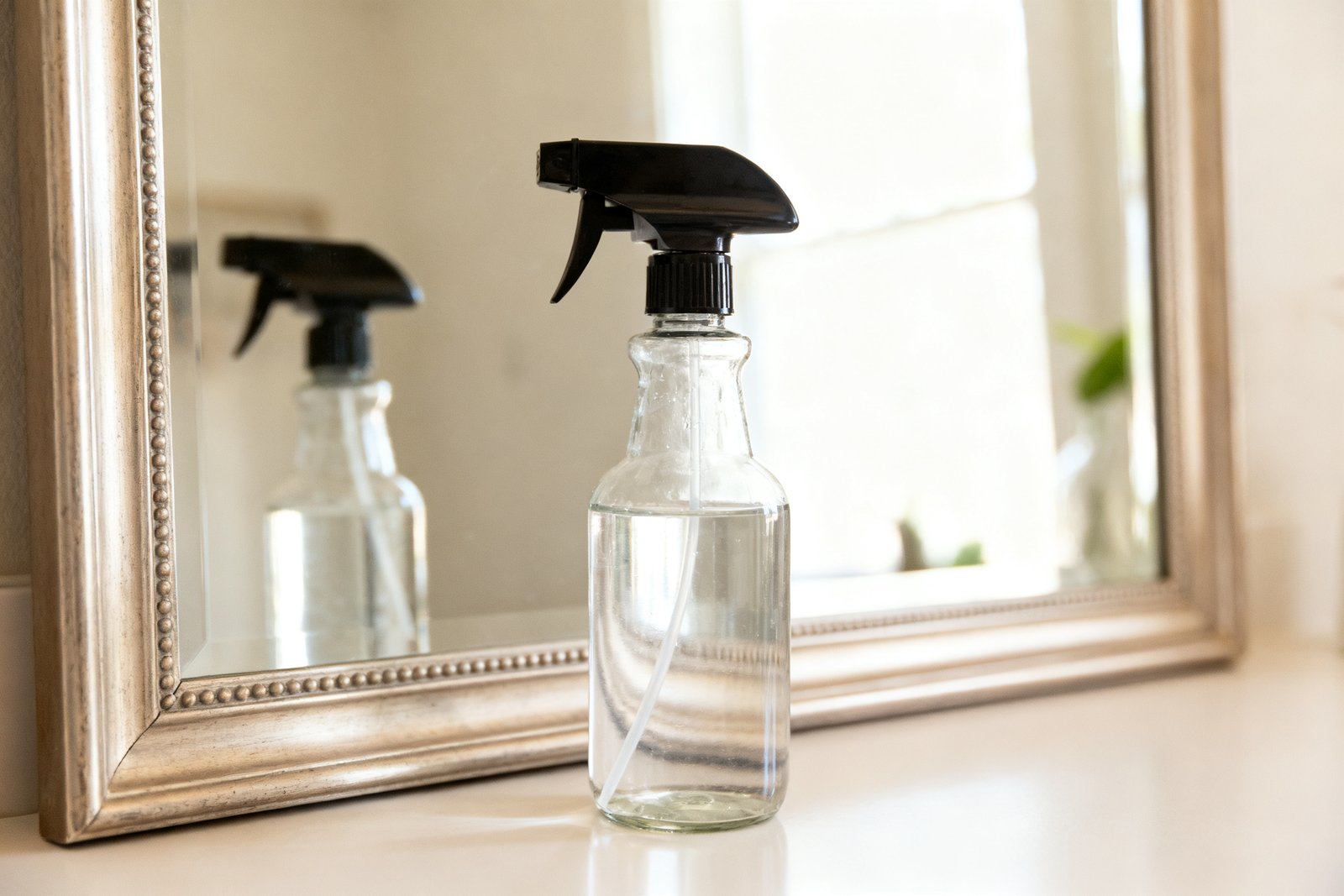
- Fill a clean spray bottle with 1 cup water (preferably distilled if you have hard tap water).
- Add 1 cup white vinegar.
- Add 1/2 cup rubbing alcohol (70%).
- Add 1 small drop of dish soap (about 1/8 teaspoon). Do not overdo it.
- Gently swirl to combine. Label the bottle.
Why it works: Vinegar dissolves mineral spots and soap residue, alcohol speeds drying and reduces spotting, and a tiny bit of dish soap breaks up oils and fingerprints.
Prep Before You Spray
Love that streak-free shine? Bring the same fresh feeling to your whole home with our free 5-Day Budget Home Reset.
Getting rid of dust and grit first prevents smears and micro-scratches. A 30-second prep step makes the finish noticeably clearer.
- Dust off the glass with a dry microfiber cloth. Pay attention to top edges and corners.
- For bathroom mirrors with hairspray build-up, lightly wipe with a warm, damp cloth first.
- For outdoor windows, rinse with a hose or wipe with a wet cloth to lift grit before cleaning.
- Avoid direct sun. Clean when the glass is cool to the touch so the solution doesn’t flash-dry into streaks.
Step-by-Step: Streak-Free Cleaning Method
It also helps to check out keep your home clean with less effort.
Indoors (Mirrors and Interior Windows)
- Lightly mist the glass. You want a thin, even coat—not dripping.
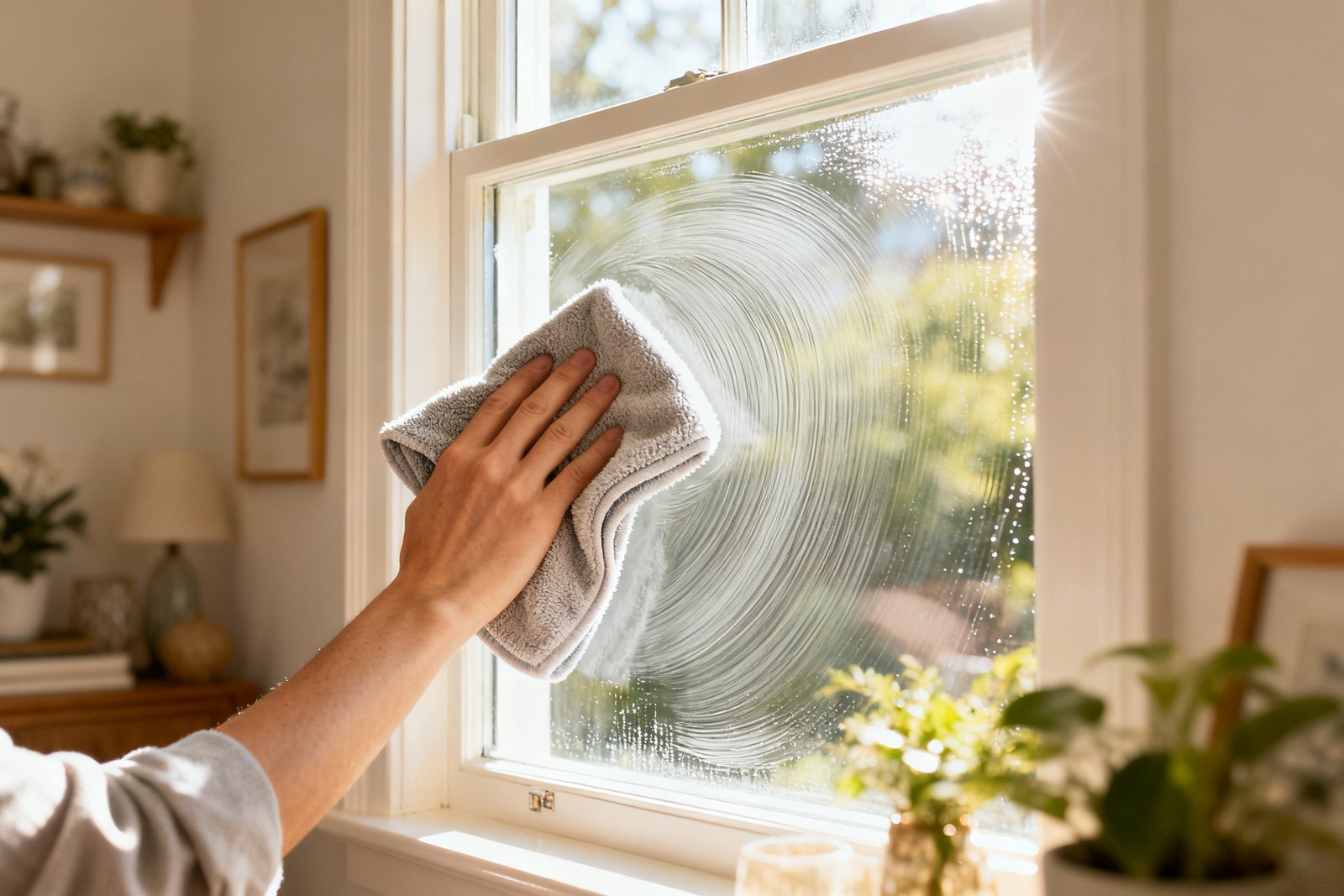
- Wipe in overlapping horizontal strokes from top to bottom with a clean microfiber cloth.
- Flip or refold the cloth frequently so you’re always using a clean section.
- For edges and corners, use a folded cloth edge to trace the frame line.
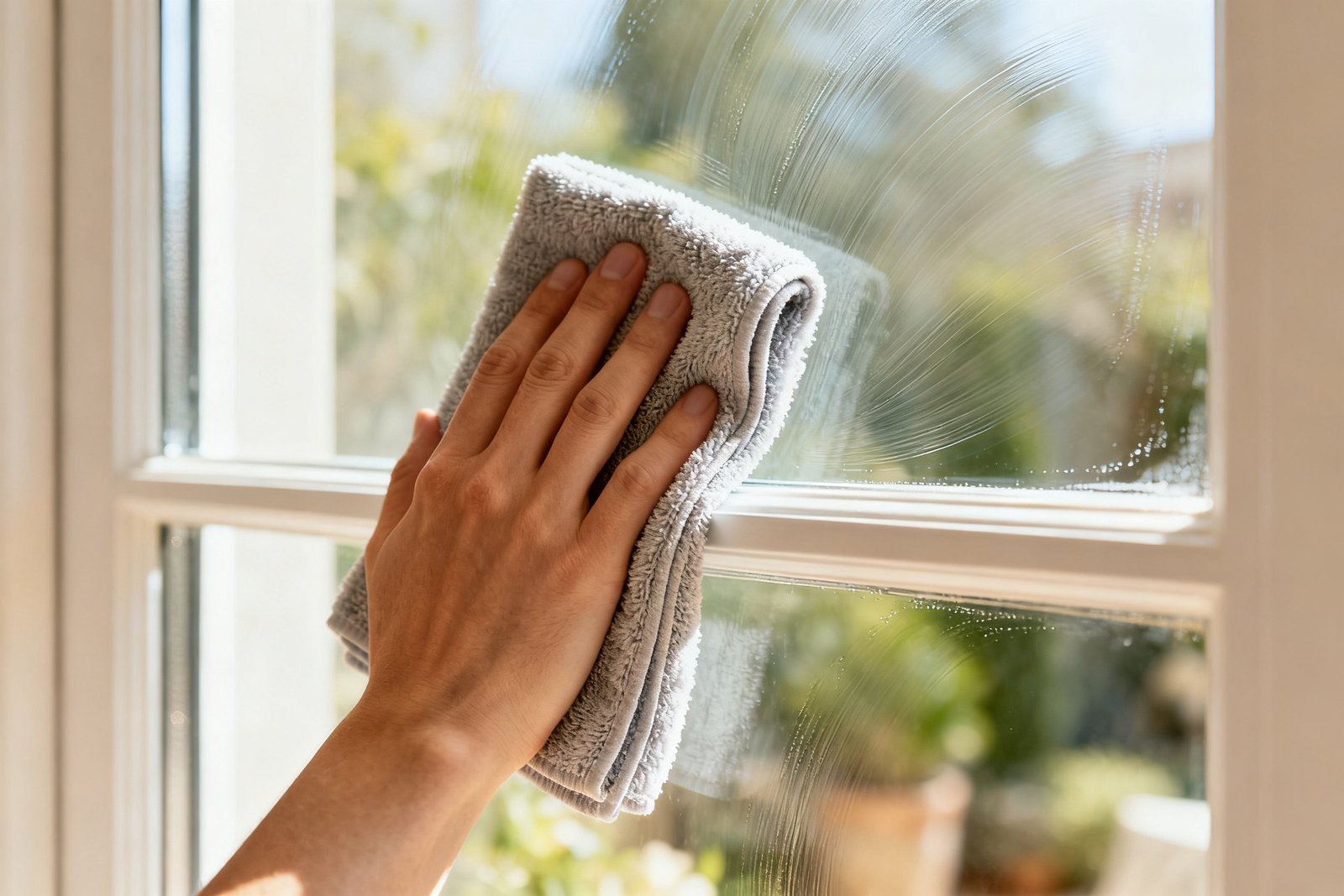
- Buff dry with a second, dry microfiber or a clean cotton T-shirt using small circular motions.
Tip: If you still see faint swirls, mist the cloth (not the glass) once and do a quick final pass.
Outdoors (Exterior Windows)
- Rinse the window with water to remove loose dirt.
- Spray the DIY cleaner generously or wash with a bucket mix (1 gallon water + 1/2 cup vinegar + 1 teaspoon dish soap).
- Use a squeegee: Pull from top to bottom in straight lines, wiping the blade with a cloth after each pass.
- Detail edges and any drips with a dry microfiber cloth.
On very grimy windows, pre-wash with warm, soapy water, rinse, then finish with the vinegar/alcohol cleaner and squeegee.

Choosing the Right Cloth (and Using It Well)
Microfiber is your best friend because it grabs oils and water without lint. Keep glass-only cloths separate so they don’t pick up fabric softener or dryer lint.
- Use flat-weave microfiber for glass. Avoid plush towels that shed fibers.
- Wash cloths without fabric softener; it leaves a film that transfers to glass.
- Have at least two cloths per session: one to clean, one to buff.
- For a final polish, a smooth cotton T-shirt or flour sack towel works well and costs almost nothing.
Realistic Example: Tackling a Bathroom Mirror with Spots and Streaks
Scenario: After morning routines, your mirror has toothpaste flecks, water spots, and foggy streaks. You have 5 minutes before guests arrive.
- Dust off loose debris with a dry microfiber (10 seconds).
- Lightly mist the mirror, focusing on the center; avoid saturating the bottom edge where water can wick behind the glass.
- Wipe in horizontal lines from top to bottom, flipping the cloth halves as they load up (1 minute).
- Spot-treat any remaining dots by spritzing the cloth corner and pressing for 2–3 seconds to dissolve, then wipe (30 seconds).
- Buff with a dry T-shirt in circular motions until the surface squeaks (30–60 seconds).
Total time: Under 4 minutes. Cost per clean: Just a few cents.
Troubleshooting Common Problems
Persistent Streaks That Reappear
Cause: Too much soap, dirty cloth, or cleaning in direct sunlight. Fix: Remix cleaner with less soap, switch to a fresh cloth, and clean when glass is cool.
Lint on the Glass
Cause: Wrong towel type or fabric softener residue. Fix: Use flat-weave microfiber or smooth cotton. Wash cloths without softener and avoid dryer sheets.
Cloudy Haze After Drying
Cause: Hard water minerals or product residue. Fix: Wipe with a cloth dampened with straight vinegar, then buff dry. If your tap water is hard, use distilled water in the mix.
Greasy Fingerprints That Won’t Budge
Cause: Heavy oils from hands or cosmetics. Fix: Add a small extra drop of dish soap to your spray for that session, pre-wipe prints, then finish with your normal cleaner.
Budget Variations and Upgrades
No Alcohol on Hand
Use 1 part vinegar to 1 part water and a single drop of dish soap. It dries a bit slower—buff thoroughly with a dry cloth to finish.
If You Hate the Vinegar Smell
The scent dissipates quickly as alcohol evaporates. To soften it, add a small strip of lemon peel to the bottle for a day, then remove. Or clean with windows open for quick airing.
DIY Squeegee Alternative
For small mirrors, wrap a plastic ruler with a smooth T-shirt and pull in straight lines. It’s not perfect but helps reduce wiping on larger panes in a pinch.
Reusable Tool Setup Under $15
- 4-pack flat-weave microfiber: $4–$8
- Spray bottle: $1–$3
- Vinegar + alcohol + dish soap: $3–$7 total
- Basic squeegee (optional): $5–$10
Once you have the kit, ongoing cost per clean is negligible.
Mistakes to Avoid
- Using too much cleaner. More liquid spreads grime and causes streaks—light misting works best.
- Cleaning in direct sunlight or on hot glass. The solution dries too fast and leaves marks.
- Overloading soap in the mix. Even an extra squirt can leave a film.
- Reusing a dirty cloth. Flip and refold often; switch to a fresh cloth for the final buff.
- Skipping the dust-off step. Grit can scratch and smear as you wipe.
- Spraying frames or backing edges heavily. Excess moisture can seep behind mirrors and into wood frames.
Maintenance Tips for Always-Clear Glass
- Quick weekly wipe: A light mist and 60-second buff prevents build-up and saves time later.
- Keep one microfiber in the bathroom cabinet just for mirrors to avoid cross-contamination.
- For shower glass, run a squeegee after each use to prevent mineral spots and soap scum.
- Label your spray bottle and store out of direct sunlight to maintain effectiveness.
FAQ
Can I use newspaper to wipe glass?
Modern newspaper inks and thinner paper can smudge or leave residue. If you like the feel, use it only for a final buff after cleaning with microfiber. Otherwise, a flat-weave microfiber or old T-shirt is more reliable and lint-free.
Is ammonia better than vinegar?
Ammonia can cut heavy grease, but it’s harsher on some finishes and the fumes are strong in small spaces. For typical home windows and mirrors, vinegar plus a tiny bit of dish soap and alcohol is safer, cheaper, and plenty effective.
Will this damage tinted or coated windows?
Check manufacturer guidance. Avoid abrasive pads and strong ammonia on aftermarket tints or specialty coatings. The mild vinegar/alcohol mix is generally safe on standard residential glass when applied to a cloth rather than soaked onto edges or seals.
What if my mirror has black spots around the edges?
That’s desilvering—damage to the mirror backing. Cleaning won’t fix it. Prevent further spread by avoiding heavy wetting along the bottom edge and drying frames promptly after cleaning.
If you want to keep going, take a look at easy eco-friendly cleaning tips.
Final Thoughts
Clear, streak-free glass is mostly about technique and clean cloths—not expensive products. Keep a simple vinegar-alcohol spray, use light misting, wipe in consistent strokes, and finish with a dry buff. With this routine, your windows and mirrors will stay bright and spotless for pennies per clean.