How to Organize Cleaning Supplies When You Have Little Space
Posted in :

When you’re short on storage, cleaning supplies can easily turn into a jumble of bottles, rags, and half-empty sprays. With a few smart systems and compact tools, you can keep everything tidy, visible, and easy to grab. Here’s how to set up a small-space cleaning station that actually works—and fits your budget.
Start by Editing: Keep Only What You Use
Before you buy anything, shrink the volume. Fewer items mean less space and less visual clutter.
- Pull everything out and group like-with-like: sprays, powders, floor cleaners, tools, rags, extras.
- Toss or responsibly dispose of duplicates you won’t use, old rags, and any products you dislike.
- Consolidate partial bottles of the same product to save space (same brand/formula only).
- Choose multi-use products: an all-purpose cleaner, glass cleaner, dish soap, disinfecting wipes or spray, and a floor solution usually cover most needs.
Aim for a compact kit: 5–8 core products, a microfiber set, a scrub brush, a sponge, gloves, and one floor tool. This is your baseline for a small-space home.
Designate a “Home” (Even If It’s Tiny)
For more ideas, see our guide on how to under-sink organization ideas.
Pick a single primary zone to store most supplies. A consistent home reduces duplicates and wasted time searching.
- Under the kitchen sink: common, near daily messes. Use vertical add-ons to maximize it.
- Hall or utility closet: ideal if you can add hooks and shallow bins on the door.
- Laundry area: pair stain treatments and detergents with cleaning tools for easy grab-and-go.
If your space is very tight, split your kit: a mini set in the bathroom (toilet brush, bathroom spray, glass cleaner, 2 cloths) and everything else in the kitchen.
Use Vertical Space First
Tidy supplies are just the start. Our free 5-Day Budget Home Reset gives you one simple, low-cost task a day to reset your home.
Walls, doors, and the insides of cabinet doors are prime real estate in small homes. Focus on mounting and hanging to get items off the floor and shelves.
Back-of-Door Organizers
Over-the-door rack with adjustable baskets ($20–$40): holds sprays, paper towels, gloves, and rags. If renting, choose no-screw options or use removable hooks rated for 5–10 lbs.
Hooks and Rails
- Adhesive hooks ($6–$12 for a pack): hang dustpans, brushes, gloves, and small caddies.
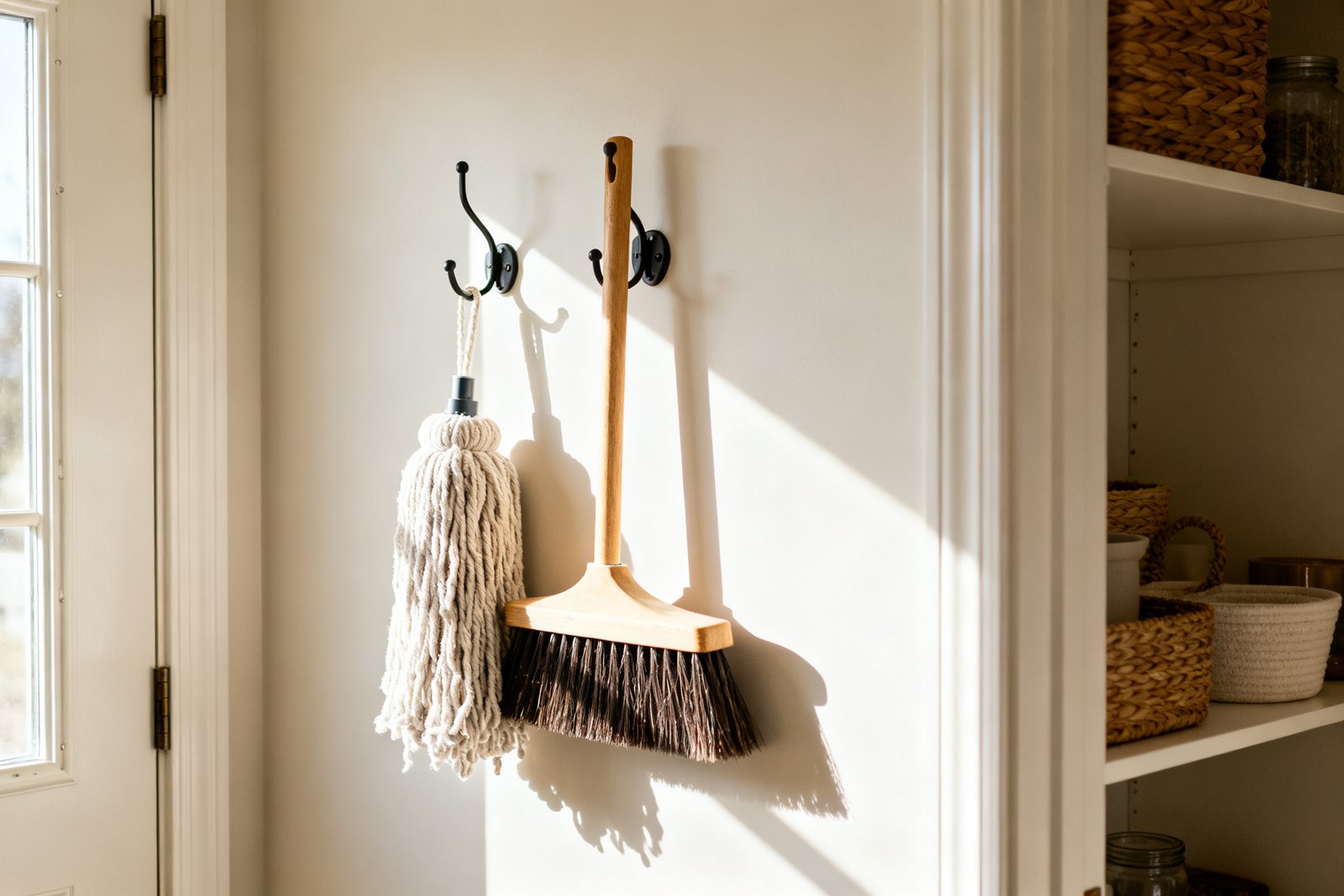
- Mop/broom grippers ($10–$18 for 3–6): mount across a narrow wall or inside a closet to secure handles upright.
- Magnetic strip ($10–$15): great on the side of a washer/dryer for small metal tools (scraper, key ring with brush).
Inside-Cabinet Solutions
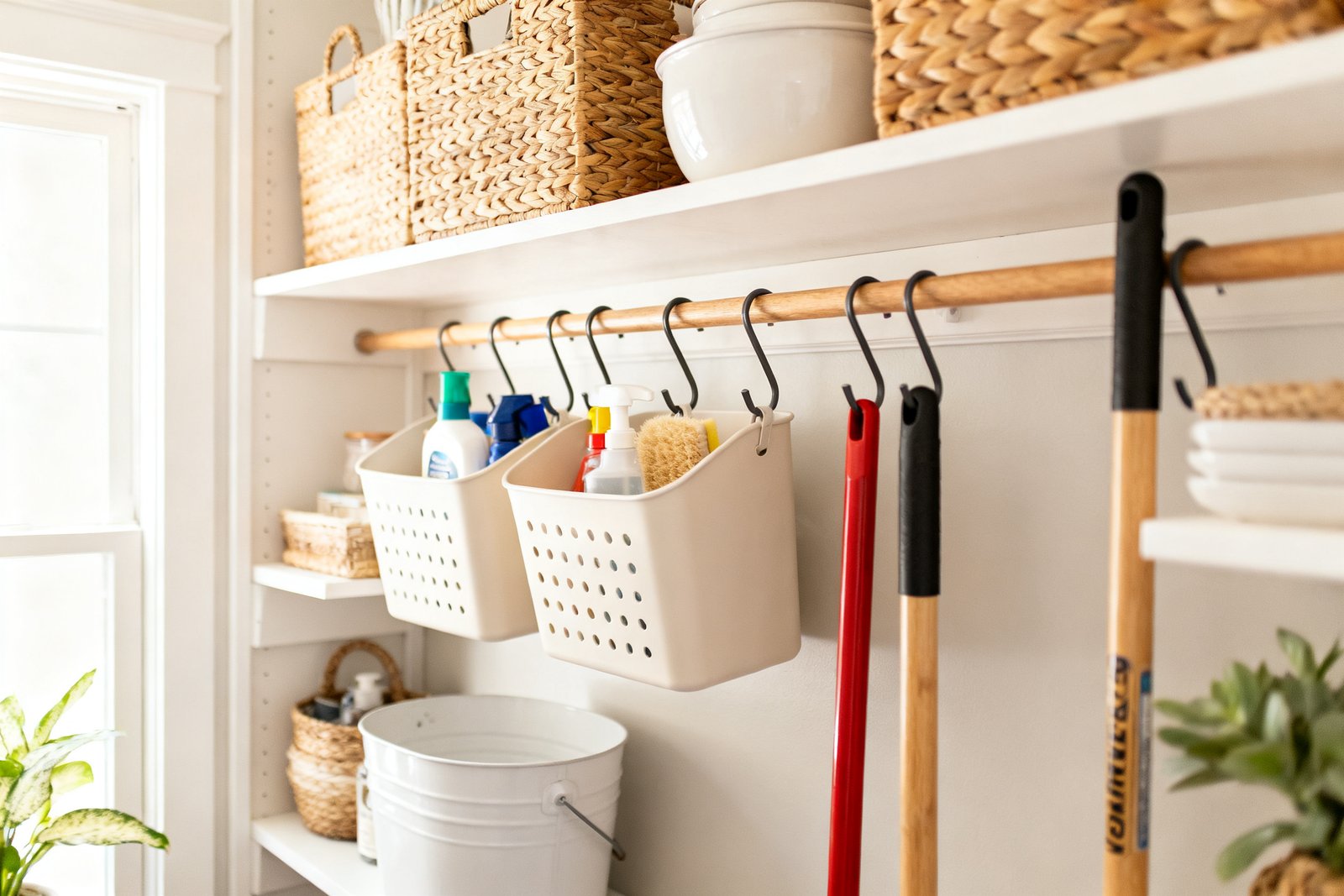
- Tension rod under the sink ($5–$10): hang spray bottles by their triggers to free shelf space.
- Over-cabinet door caddy ($12–$20): slim basket for sponges, a brush, and dish soap.
- Shallow command-bin ($8–$12): attach to the inside of the door for gloves, scrub pads, or garbage bag rolls.
Choose Compact, Multi-Function Tools
It also helps to check out maximize vertical storage.
Downsize bulky gadgets. Opt for tools that collapse, nest, or do double duty.
Space-Saving Picks
- Collapsible bucket ($10–$18): folds flat to 2–3 inches.
- Extendable duster ($10–$20): reaches high spots; removable microfiber head washes easily.
- Flat mop with reusable pads ($15–$30): pads store flat; doubles as a dust mop when dry.
- Small scrub brush with handle ($5–$8): works for grout, sinks, and tub corners.
- Microfiber cloths (8–12 pack, $8–$15): color-code for kitchen, bath, glass to prevent cross-contamination.
- Compact vacuum or handheld ($30–$90): wall-mount if possible; store attachments in a labeled pouch.
Consider concentrate cleaners with refillable bottles ($8–$20 for a starter kit). One small bottle of concentrate replaces multiple bulky bottles and reduces waste.
Contain and Label the Right Way
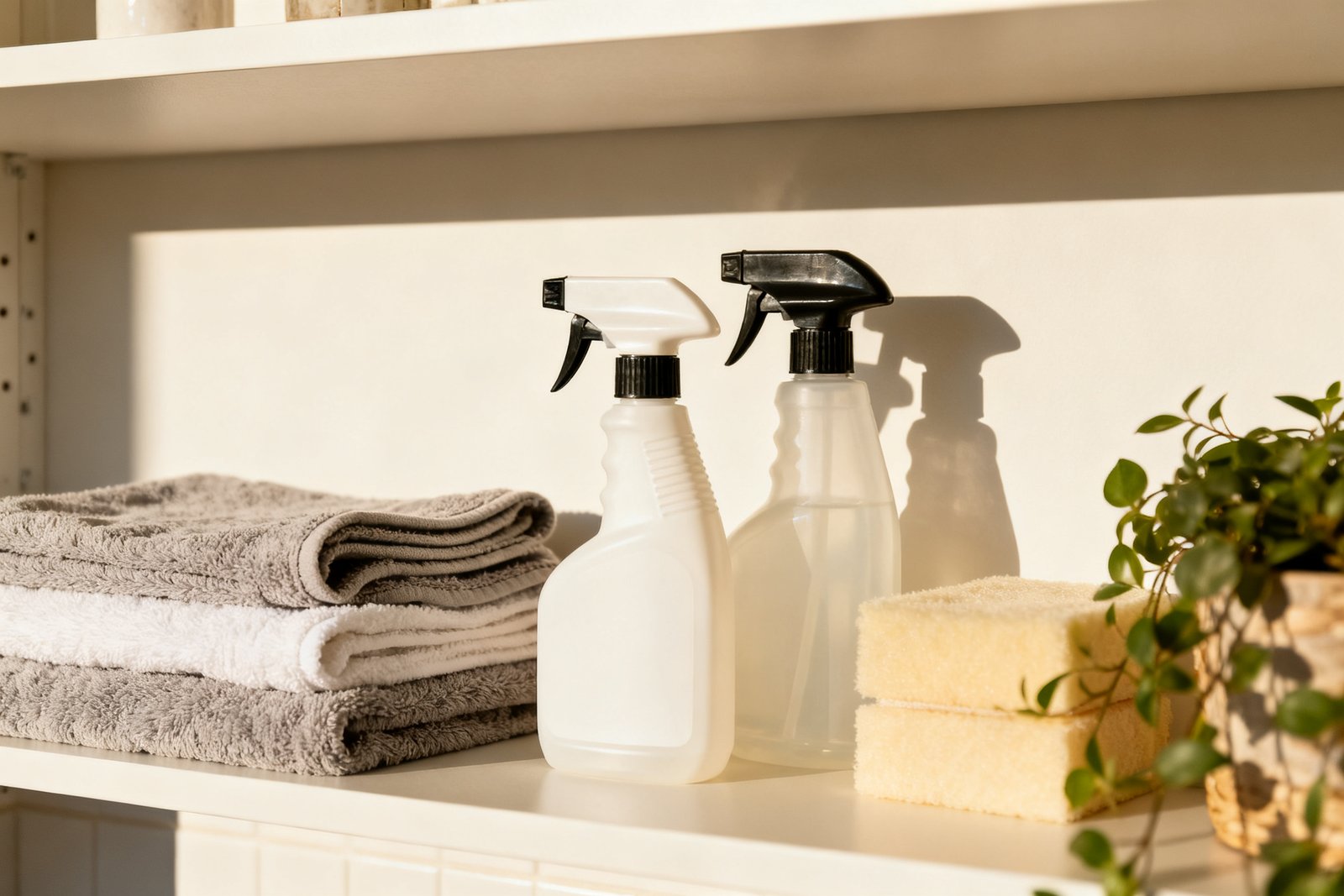
Transparent, sturdy containers help you see what you have and stop spills from spreading. Labeling makes shared spaces work better.
Under-Sink Setup (Example)
- One low, clear bin for daily kitchen items: dish soap, all-purpose spray, sponge, brush. ($6–$10)
- One medium bin for bathroom refills: toilet cleaner, glass cleaner, bathroom spray. ($8–$12)
- One small bin for specialty items: stainless cleaner, wood polish, grout paste. ($5–$8)
- Shallow tray for microfiber cloths and gloves. ($4–$7)
Label the front of each bin with simple categories: Kitchen, Bathroom, Specialty, Cloths. Painter’s tape and a marker work fine and cost almost nothing.
Portable Caddy Method
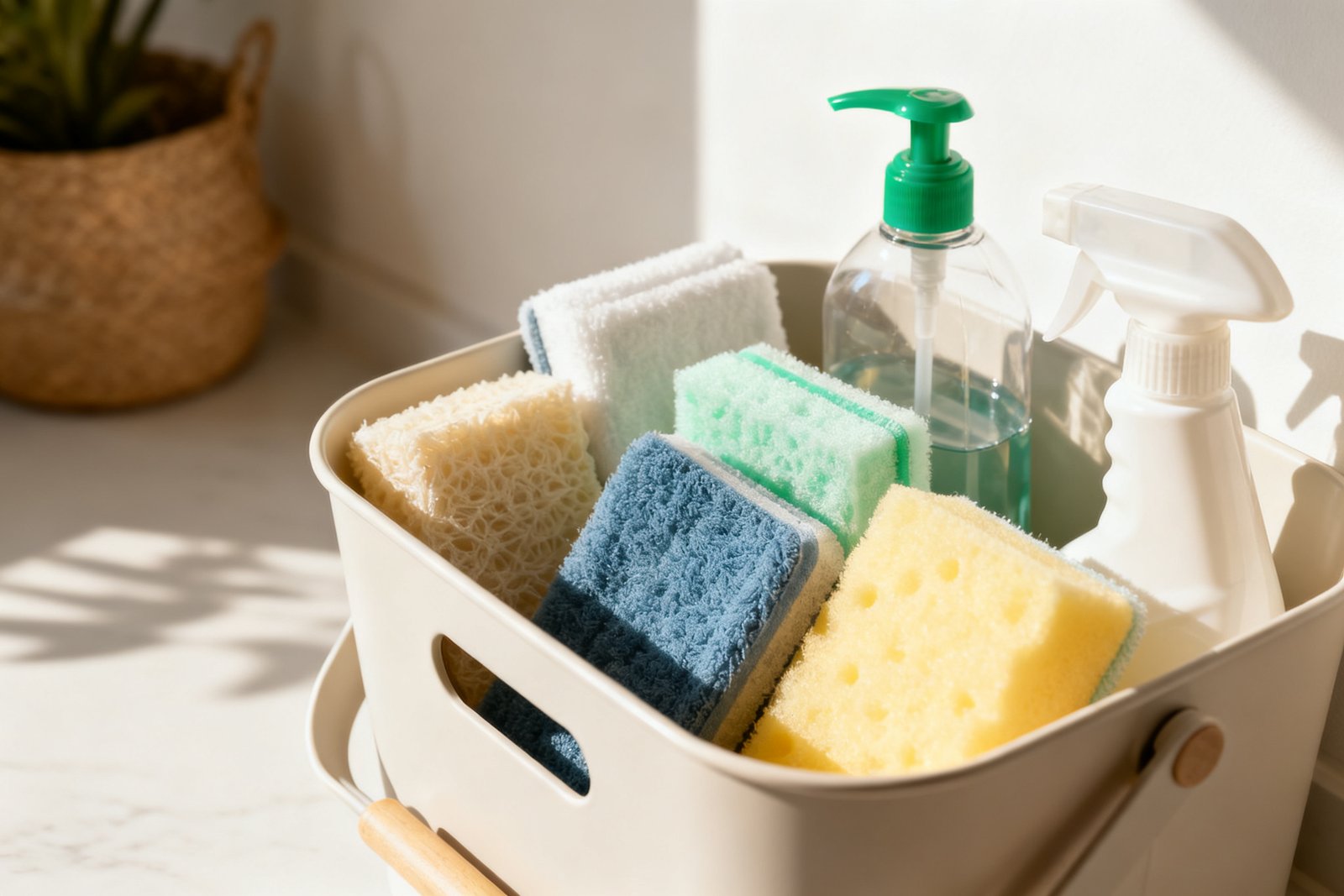
If you clean room by room, a handled caddy ($8–$15) is efficient. Load it with your most-used items so you’re not dragging the whole stash around.
- All-purpose spray, glass cleaner, disinfecting wipes or spray
- 2–3 microfiber cloths (color-coded), sponge
- Small scrub brush, gloves, trash bags
Store the caddy on a shelf or hang it on a large hook to free floor space.
Make Refills and Safety Simple
Keeping small-space storage safe and low-maintenance is key.
Refill Station
- Keep concentrates and extra paper towels together in a higher bin labeled Refills.
- Mark refill lines on spray bottles with a permanent marker so mixing is quick.
- Track low items with a small sticky note on the inside of the cabinet door.
Safety and Ventilation
- Store chemicals out of reach of children and pets—higher shelves or a latched cabinet.
- Never store cleaners right next to food. If under the kitchen sink, use a spill tray.
- Keep ammonia and bleach separate; never mix them.
Realistic One-Hour Setup Plan
Here’s a quick, budget-friendly plan you can complete in a small apartment in about an hour.
- Empty the under-sink cabinet. Wipe the base and measure width and height.
- Install a tension rod across the upper third; hang 3–4 spray bottles.
- Place one medium clear bin on the left (Kitchen), one on the right (Bathroom).
- Slide a shallow tray up front for cloths and gloves; tuck sponges in a small cup.
- Mount two adhesive hooks inside the door: one for a brush, one for the caddy handle.
- Stick a small command bin to the door for trash bags and scrub pads.
- Mount two broom grippers on the pantry or hallway wall for a mop and broom.
- Label bins with painter’s tape. Done.
Estimated cost: $35–$70 depending on what you already own.
Example: Studio Apartment Setup
Jules lives in a 400 sq ft studio with no utility closet. He stores everything in the kitchen and bathroom.
- Kitchen: Under-sink tension rod with 3 sprays (all-purpose, glass, degreaser). Two bins: Kitchen Daily and Refills. Command bin inside door holds trash bags and gloves. Mop and broom hang on two grippers behind the entry door.
- Bathroom: Slim over-the-toilet shelf ($25–$35) with a small caddy holding bathroom spray, glass cleaner, toilet cleaner gel, 2 cloths, and a scrub brush. Toilet brush sits in a covered holder on the floor.
- Vacuum: Lightweight stick vac wall-mounted next to the fridge; attachments in a labeled zip pouch on a hook.
Everything is contained, labeled, and off the floor, leaving cabinets free for cookware and toiletries.
Mistakes to Avoid
- Overbuying specialty products you rarely use. Stick to multi-purpose basics.
- Stashing cleaners in multiple random spots. Keep a primary home plus one small bathroom set.
- Using deep, opaque bins. Things vanish and you buy duplicates.
- Ignoring vertical space. Doors and walls can hold half your gear.
- Skipping labels. Future you won’t remember where refills or cloths go.
- Keeping leaking or cracked bottles. Transfer or dispose safely and use a spill tray.
Maintenance: Keep It Working
A small system only stays tidy if it’s easy to reset. Build a 5-minute weekly habit.
- Wash microfiber cloths; restock 3–4 into the caddy.
- Check levels; add to a running list on the cabinet door.
- Wipe the under-sink base or caddy tray to catch drips.
- Return tools to hooks after each clean so nothing piles up on the floor.
FAQ
How many cleaners do I really need?
Most homes can run on an all-purpose cleaner, glass cleaner, dish soap, disinfectant, and a floor solution. Add a bathroom-specific cleaner if your all-purpose isn’t rated for soap scum, and a stainless or wood polish only if you have those surfaces. Fewer bottles means faster cleaning and simpler storage.
What’s the best way to store rags and sponges hygienically?
Keep clean microfiber cloths in a breathable tray or mesh bag. Let sponges and brushes dry fully—use a small over-the-sink caddy or a vented cup with holes. Wash cloths weekly (no fabric softener; it reduces absorbency) and replace sponges regularly.
How do I organize if I don’t have a single cabinet to spare?
Go fully vertical: a slim over-the-door organizer for sprays and cloths, two broom grippers for mop and broom, and a hanging caddy on a hook in the bathroom for daily items. Use a collapsible bucket as your “bin” and slide it under a bed or sofa when not in use.
Are concentrates and tablet cleaners worth it in small spaces?
Often yes. A small box of refills replaces multiple full bottles and reduces clutter and trash. Just label diluted bottles clearly and store the concentrates together in a lidded bin out of reach of kids and pets.
If you want to keep going, take a look at damage-free command hook hacks.
Final Thoughts
Small spaces demand intentional storage. Edit your kit, claim a dedicated home, then build up with vertical solutions, compact tools, and clear labels. With a simple weekly reset, your cleaning supplies will stay contained, visible, and ready when you are—without taking over your home or your budget.