
You know that cave under the sink that swallows cleaning supplies and spits out chaos? Let’s fix that. Whether you’re wrangling dish soap and sponges or hair products and extra TP, your under-sink space can actually behave.
We’ll set up smart zones, use the right organizers, and stop the avalanche every time you open the door. Ready to turn that gremlin den into a well-oiled drawer of glory?
Start with a Clean Slate (and a Quick Purge)
Empty it all out. Everything.
Yes, even the mysterious bottle with a label that wore off in 2012. Toss duplicates, expired products, and anything you never use. You’ll free up more space than you think. Wipe, line, and prep:
- Clean the cabinet base and walls.
- Add a waterproof liner to protect from drips and make future wipe-downs easy.
- Measure the interior (width, depth, height) including pipe placement. Those numbers matter.
Work Around the Pipes Like a Pro
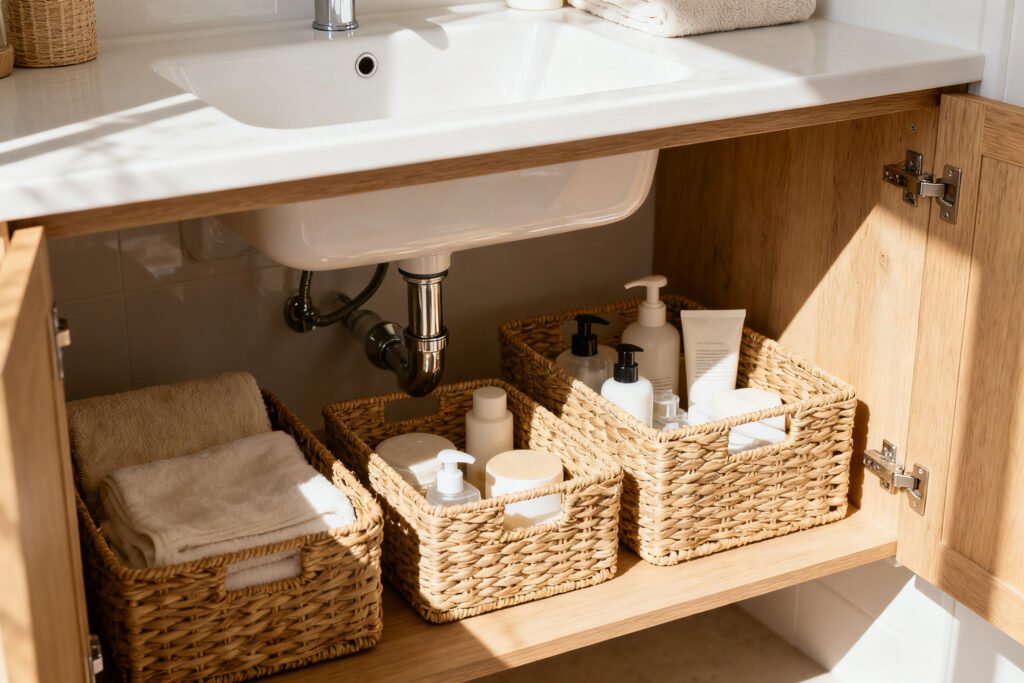
Pipes hog the prime real estate, but you can still win the layout game. Think vertical and modular. Go for adjustable systems:
- Under-sink expandable shelving with cutouts or movable panels fits around pipes.
- U-shaped risers create levels so stuff doesn’t hide behind taller bottles.
- Stackable bins split the space into tiers without permanent hardware.
Pro Tip: Map the “No-Go” Zone
Use painter’s tape to outline where pipes and disposal parts block space. Now you can place bins and shelves with zero guesswork.
IMO, fewer returns to the store = a happier organizer.
Create Smart Zones (So You Stop Hunting)
Make the cabinet act like a tiny store with aisles. Sort by task, not by container shape. Kitchen under-sink zones:
- Daily cleaning: Dish soap, scrub brush, sponge, rinse aid, dishwasher tabs.
- Deep clean: Degreaser, stainless cleaner, glass cleaner, microfiber cloths.
- Trash & bags: Roll of liners, compost bags, extra can filters.
- Misc tools: Gloves, plunger (if you must), small tool for garbage disposal.
Bathroom under-sink zones:
- Hair & heat: Dryer, straightener, brushes, styling products.
- Daily care: Toothpaste backups, floss, face wash, moisturizer.
- Paper & extras: Toilet paper, tissues, cotton swabs, feminine care products.
- Cleaning kit: Bathroom-specific cleaner, toilet brush gel, spare cloths.
Label Like You Mean It
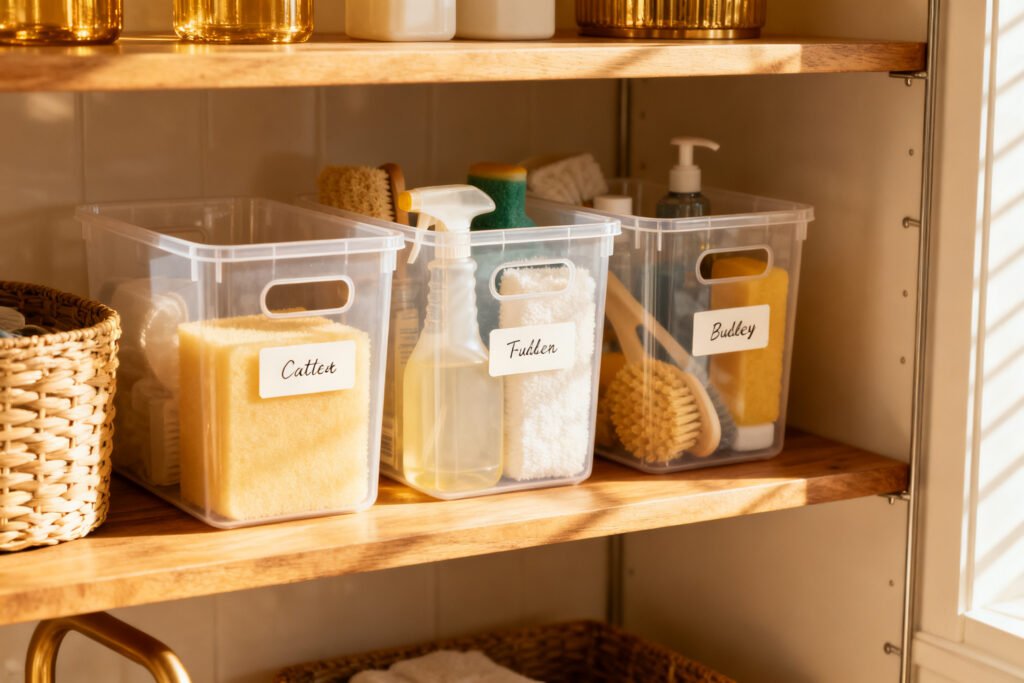
Use simple, bold labels on bin fronts: “Daily Clean,” “Hair Tools,” “TP.” You won’t think; you’ll just grab. FYI, clear bins help too, but labels prevent family members from pretending they “couldn’t find it.”
Choose Containers That Actually Fit
Random baskets rarely work under a sink.
Get containers that use every inch and slide easily. Best container types:
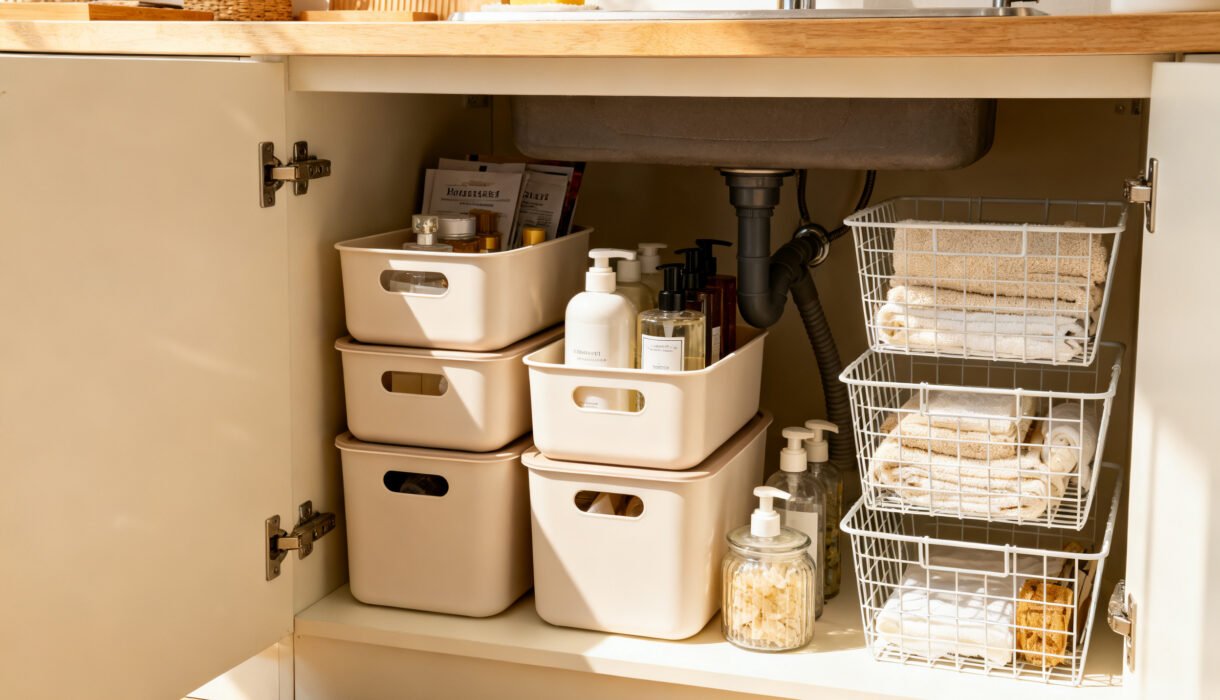
- Pull-out drawers: Two-tier or single-level units that glide out—great for small bottles and sponges.
- Open bins with handles: Quick access for bulky items like cleaners or TP.
- Turntables (shallow): Perfect for spray bottles and cleaners you grab often; check height clearance first.
- File organizers or magazine holders: Store cutting boards (kitchen) or hair tools (bathroom) upright.
- Over-cabinet door bins: Stash dish gloves, brushes, or extra toothpaste where they’re easy to grab.
Corral the Small Stuff
Tiny items go rogue fast. Use:
- Divider trays for dishwasher pods, sponges, razor refills.
- Mini caddies for cleaning cloths and scrub pads.
- Zip pouches for spare O-rings, sink stoppers, and weird hardware you swear you’ll need later.
Install Clever Hardware (Low Effort, High Payoff)
You don’t need a full reno. A few low-commitment upgrades change everything. Hardware winners:
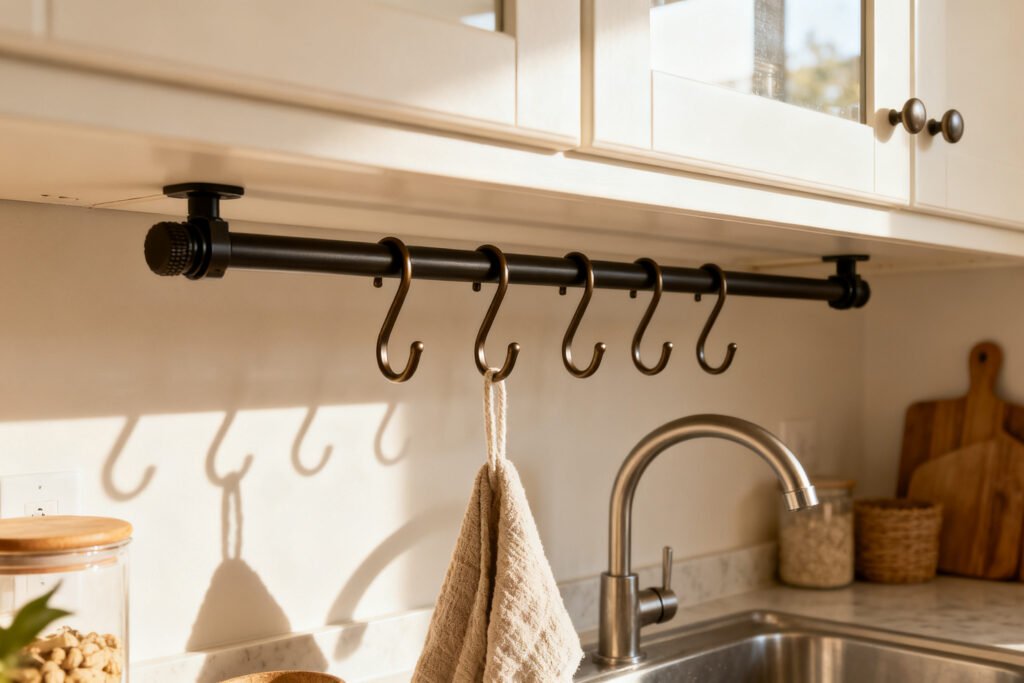
- Adhesive hooks on cabinet walls for gloves, brushes, or a dustpan.
- Tension rod across the cabinet to hang spray bottles by the trigger.
- Cabinet door racks for foil, wraps, or extra soap in the kitchen; hair products or wipes in the bathroom.
- Clip-on cord keepers for hair tools and small appliance cords.
Protect Yourself from Leaks
Water happens.
Prepare once and relax.
- Waterproof mat or tray to catch drips under the P-trap.
- Leak sensor with alarm for peace of mind (especially in rentals or older homes).
- Elevated bins so one drip doesn’t soak everything.
Streamline What You Store (Because Space Isn’t Infinite)
Truth: You don’t need six half-used bottles of glass cleaner. Consolidate and decant thoughtfully. Space-savers that perform:
- Concentrates with refillable spray bottles cut clutter.
- Multipurpose cleaners replace niche products you never reach for.
- Refill stations for hand soap and dish soap keep the extras tidy in one bin.
- Limit bulk under-sink; stash warehouse-size backups elsewhere.
Set a Cap
Give each zone a container and a hard limit. If the bin overflows, something gets used up or donated.
It’s like a budget, but for bottles.
Bathroom-Specific Tricks That Actually Work
Bathrooms handle product overload, cords, and heat tools. Keep it simple and safe. Smart moves:
- Heat-safe caddies for hot tools so you can put them away sooner.
- Vertical file holders for flat irons and brushes—way less tangle.
- Acrylic drawers for cotton swabs, flossers, and travel-sized items. Clear = quick.
- TP dispenser bin that fits 3–4 rolls. No one should face the “empty roll” boss battle unprepared.
Under-sink wins are easier when your kitchen and bath are already reset. The free 5-Day Budget Home Reset gives you five days of quick, budget-friendly progress.
Hygiene Buffer Zone
Keep cleaning chemicals in a separate bin from personal care. It reduces cross-contamination and confusion. Also, store kids’ items up front and low for easy access; meds and sharp tools go in a high, lidded bin elsewhere.
Maintenance That Doesn’t Feel Like a Chore
You built a system.
Now keep it breezy. Quick habits:
- One-in, one-out: Replace empties instead of stockpiling.
- Monthly 5-minute reset: Wipe the liner, toss trash, realign zones.
- Decant day when you refill soaps and concentrates—do it while a show streams.
Family-Proof the Setup
Labels + door racks + pull-out drawers = fewer “Where’s the…?” questions. FYI, clear bins remove many excuses.
FAQs
How do I organize around a garbage disposal or big pipes?
Use an expandable under-sink shelf with removable panels so you can straddle the disposal. Place a low, open bin directly under the P-trap for items you use daily and taller stackable drawers on either side.
Mark the pipe footprint with tape first to avoid buying bins that won’t fit.
Are turntables actually useful under a sink?
Yes, if you pick a shallow, grippy one. They shine with cleaners or skincare in medium-height bottles. Avoid super-tall items that tip when you spin, and measure the door clearance so the turntable doesn’t smack the frame.
IMO, one small turntable beats fishing behind bottles.
For more budget organization ideas, explore kitchen drawer organization tips, budget pantry organization ideas, and budget-friendly closet organization.
What should I not store under the sink?
Skip anything heat- or moisture-sensitive: extra electronics, batteries, certain medications, and delicate cosmetics. Also avoid paper goods directly on the base—use a bin. If kids or pets roam, lock away harsh chemicals or store them higher.
How do I keep it safe with kids and pets?
Install a simple childproof latch or magnetic lock, and store chemicals in a lidded bin with a handle at the back.
Label everything clearly. Consider fragrance-free or pet-safe cleaners and keep dishwasher pods in a latched drawer unit or higher cabinet.
What’s the best budget setup?
Use shoebox-size plastic bins, a tension rod for sprays, adhesive hooks for gloves, and a dollar-store file holder for cutting boards or hair tools. Add a peel-and-stick liner and a simple label maker (or painter’s tape + marker).
Cheap, durable, and flexible.
How do I handle smelly cabinets?
Clean thoroughly, dry it out, and check for slow leaks. Add a drip tray, then place an odor absorber (charcoal bag or baking soda) in the back. Keep airflow with breathable bins and don’t cram wet sponges inside—let them dry first.
Wrap-Up: Your Cabinet, Your Rules
You don’t need perfect Pinterest vibes.
You need a setup that survives real life. Build around the pipes, create zones, use pull-outs and bins that actually fit, and keep chemicals separate from personal care. Do a quick reset once a month, and your under-sink cave stays tamed—no avalanche, no mystery bottles, just stuff you can find in two seconds flat.
IMO, that’s the dream.