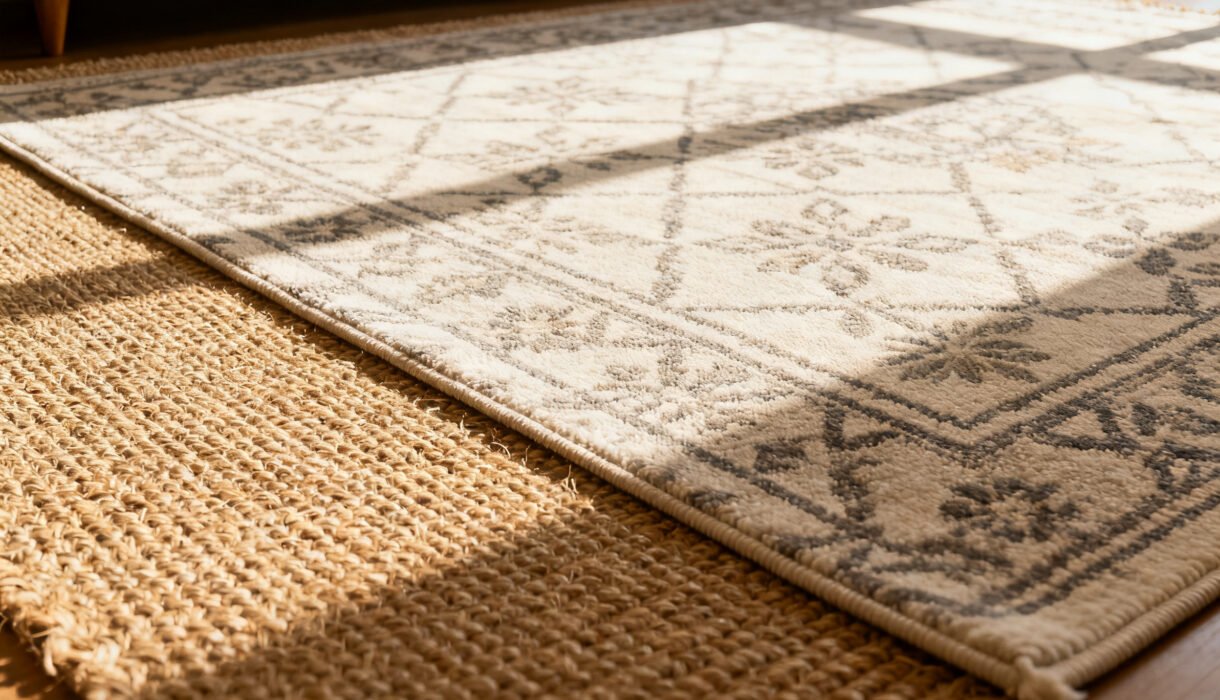

You don’t need a designer budget to layer rugs like a pro—you just need a few smart tricks and the confidence to break a couple “rules.” Ready to make your floors look intentionally styled (and not like a yard sale)? Let’s stack textures, play with pattern, and stretch your dollars in all the right places. Short version: a big neutral base, a character rug on top, and a few styling hacks you’ll wish you knew sooner.
Start With the Right Base Rug
Your base rug does the heavy lifting.
It grounds the room, defines the area, and—bonus—lets you buy a smaller, more interesting rug for the top.
- Go big and neutral: Jute, sisal, seagrass, inexpensive wool flatweaves, or cotton dhurries all work. Aim to cover most of the seating area.
- Size matters: Choose a base rug that fits under at least the front legs of your sofa and chairs. The top rug can be smaller and cheaper.
- Color hack: Warm neutrals (tan, oatmeal, honey) feel cozy; cooler tones (gray, greige) look sleek. Match your room’s vibe, not your fear of commitment.
Budget Tip: Buy the “room-size” look for less
Large natural-fiber rugs often cost a fraction of wool and vintage options. You’ll still get that expansive, polished look—without selling a kidney. FYI, outlets and online flash sales are your best friends here.
Pick a Star for the Top Layer
Your top rug brings the personality.
Think of it as jewelry for your floor—except you can sit on it and spill things.
- Color or pattern? Choose one to lead: If your base reads textured and calm, your top can bring bold color or a statement pattern. Not both at full volume.
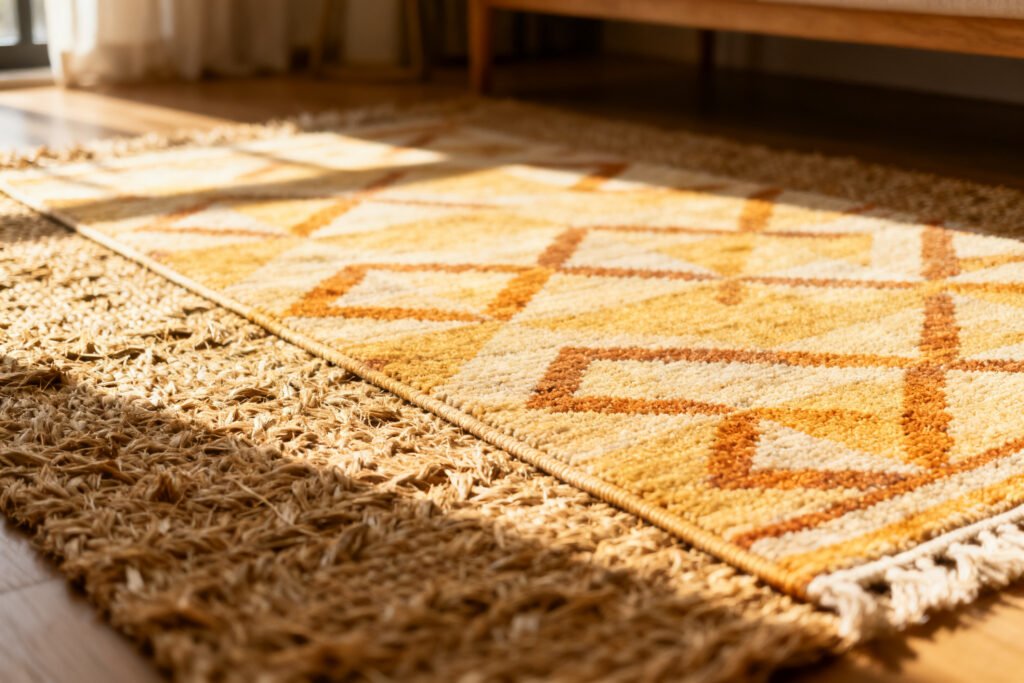
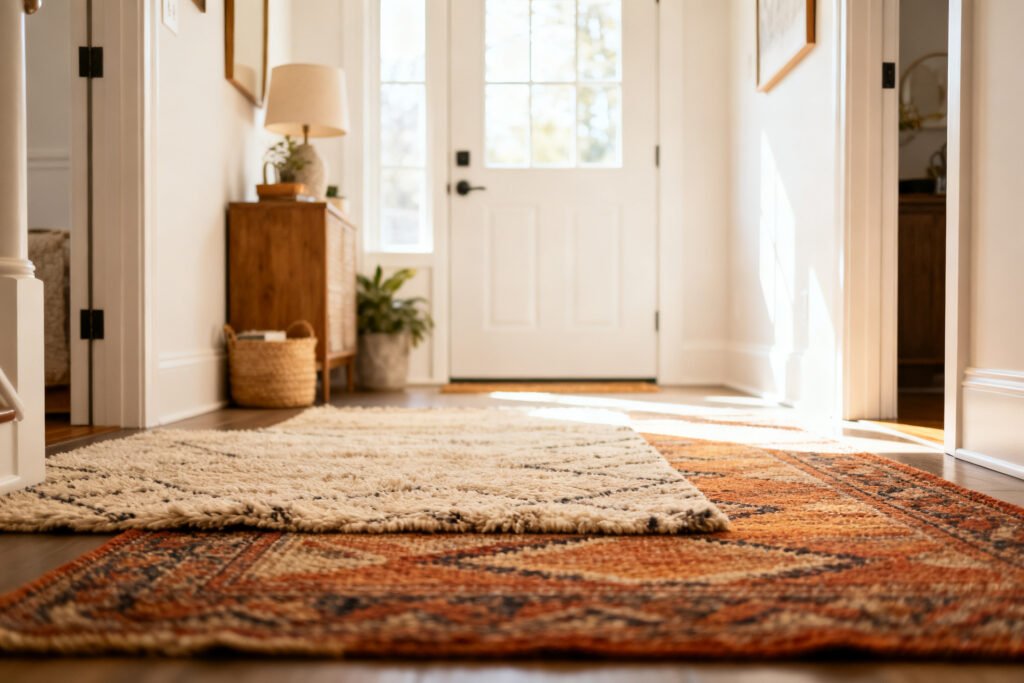
- Play with pile: A plush, vintage-style, or Beni-style rug on top of a flat jute adds instant “designer did this” energy.
- Go slightly smaller: Aim for the top rug to sit inside the seating area by several inches so you see that border of the base rug.
What actually looks good together?
- Jute base + Persian or Persian-style top (rich, layered, timeless)
- Seagrass base + Moroccan trellis or Beni-style (texture-on-soft contrast)
- Flatweave base + sheepskin or faux sheepskin throws layered near a chair (cozy reading nook vibes)
- Muted wool base + kilim top (graphic but grounded)
Get Pro-Level Scale Right
Sizing might feel boring, but mistakes here scream “I tried.” Keep it simple with these rules.
- Base rug: big enough to unite the zone. Living room? At least the front legs of each major piece on the base rug.
- Top rug: roughly 60–many the base rug’s footprint. You want a visible border all around (4–12 inches looks intentional).
- Pathways stay clear. Don’t let layered edges jut into walkways—you’ll stub toes and mutter regrets.
Pro Visual Trick
If your room feels narrow, run the base rug longways. Then turn the top rug perpendicular or centered under the coffee table. That cross-direction adds depth and makes the space feel wider.
Magic? No—just geometry that pays rent.
Mix Textures Like You Mean It
Texture earns you instant style points—especially on a budget.
- Contrast is queen: Rough with soft, flat with plush, matte with slight sheen.
- Keep one calm: Let one layer act as “quiet background” so the other can flirt with the spotlight.
- Layer in odd numbers: Base rug + top rug + a small accent (like a sheepskin draped by the sofa) looks organic, not fussy.
Texture Pairings That Rarely Fail
- Jute + low-pile vintage (hello, character)
- Seagrass + hand-tufted wool (hello, foot heaven)
- Flatweave + shag (careful with pets, but deliciously cozy)
Color and Pattern—Stay Playful but Edited
Want bold color? Great.
Want bold pattern too? Also great. Want both at full blast in every direction?
IMO, risky unless you love visual chaos.
- Use a shared color thread: Pull one tone from your top rug and echo it in pillows or art so the room feels intentional.
- Scale your patterns: If the top rug has a tight, intricate print, keep the base simple. If the top offers big, open motifs, a fine texture underneath balances it.
- Mind undertones: Cream + warm jute sings; cool gray + yellowed jute argues. Check in daylight before committing.
Try This Easy Color Formula
– Neutral base (sand, flax, or gray) – Top rug repeats one accent color already in the room (rust, indigo, forest) – Add one small pattern elsewhere (striped throw, block-printed pillow) to tie it all together
Keep the Layers Safe and Flat
Rug stacks that slide or ripple kill the vibe fast.
Secure them like a grown-up.
- Use a quality rug pad: Get a full-size pad under the base rug for grip and cush. It makes budget rugs feel luxe—seriously.
- Anti-slip corners or tape: Add discreet rug tape under the top rug’s corners. Lift easily later with adhesive remover.
- Vacuum smart: Hold the top rug’s edge while vacuuming across it to avoid grabbing the layer below.
Pet and Kid Proofing
Choose low- to medium-pile tops if you have pets or toddlers.
Patterns hide crumbs and hair. Washable tops exist now, and they’re a lifesaver in play areas—FYI, they layer well over jute.
Layered rugs look best in an uncluttered room. The free 5-Day Budget Home Reset clears the way in five short days.
Shop Like a Designer (on a Regular-Person Budget)
You don’t need trade-only showrooms. You just need strategy and a little patience.
- Hunt secondhand: Facebook Marketplace, estate sales, and thrift stores often hide real wool rugs for cheap.
- Know materials: Wool cleans well and wears forever; cotton flatweaves keep costs down; polypropylene handles messes.
- Stack discounts: Open-box deals, coupon codes, and outlet sections can drop prices by 30–60%.
- Think runners and smalls: Layer two runners side-by-side on a large base for a custom look. No one will clock it unless you brag.
Quick DIY Upgrades
– Bind or serge the edges of a carpet remnant to create a custom base – Dye a faded cotton flatweave for a moody top layer – Add leather corner tabs to a kilim for that “boutique” detail
Room-by-Room Layering Ideas
- Living room: 8×10 jute base + 5×8 vintage-style top centered under coffee table. Add a sheepskin to an accent chair for texture.
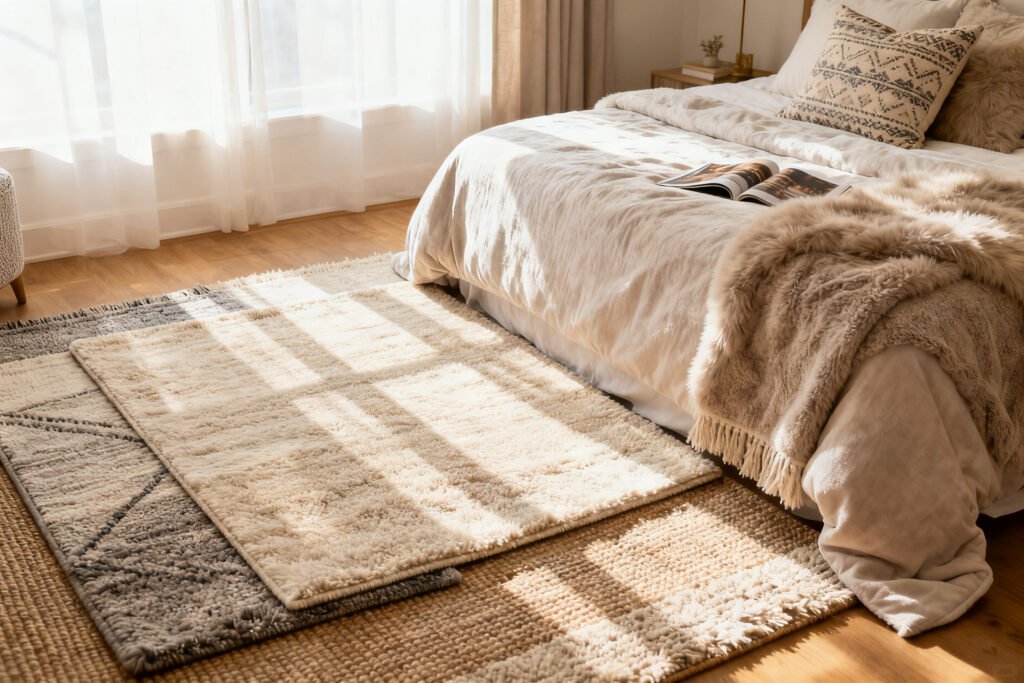
- Bedroom: 6×9 flatweave base under bed + two small runners on each side as the “top layers.” Warm toes without buying a massive rug.
- Dining room: Keep it flat on top. Jute base + kilim top works, but avoid shag here unless you enjoy vacuuming spaghetti.
- Entry: Indoor-outdoor base + patterned wool or washable top.
Dirt won’t win.
FAQs
Can I layer rugs over carpet?
Yes, and you should. Use a low-profile flatweave or jute as the “base” over the carpet, then add your decorative top rug. Add a rug pad designed for carpet-to-rug to stop sliding.
It’s the quickest way to hide builder-beige.
How do I clean layered rugs without wrecking the setup?
Vacuum the top rug weekly. Lift the top layer every couple weeks, shake it outside if possible, then vacuum the base. Spot-clean with a gentle solution (water + a little dish soap) and blot, don’t scrub.
For wool, use wool-safe cleaner only.
For more budget floor and styling ideas, see choose the right rug size, budget lighting ideas, and budget curtain ideas.
What if my room is small—will layers make it look busy?
Not if you keep the base neutral and the top rug cohesive with your palette. Aim for a simple texture underneath and one pattern on top. Also, leave a bit of base rug showing all around to frame the space.
Small room, big style, no overwhelm.
Is there a “wrong” way to mix patterns?
You can mix anything if you scale it right and share a color thread. That said, IMO tiny pattern on tiny pattern feels noisy. Pair a bold, open motif with a finer texture or a subtle stripe.
Give your eyes somewhere to rest.
How do I know my rug sizes without guessing?
Tape out the sizes with painter’s tape on the floor. Sit, walk, open doors—test the layout. When it feels easy to move around and looks balanced from the main seating spot, you nailed it.
Cheap, fast, and way better than returns.
Do I need a rug pad if I already have two rugs?
Yes. A good pad under the base adds cushion, keeps layers flat, and protects your floors. If the top still shifts, add small grippers or rug tape just at the corners.
Conclusion
Layering rugs on a budget boils down to this: big neutral base, character-filled top, smart sizing, and textures that actually talk to each other.
Secure the stack, keep cleaning simple, and shop with strategy. You’ll get that “designer did this” look for less—and yes, your floors will totally brag about it.
Styling rugs into a full bedroom makeover? The Budget Bedroom Makeover Planner keeps it organized and on budget.