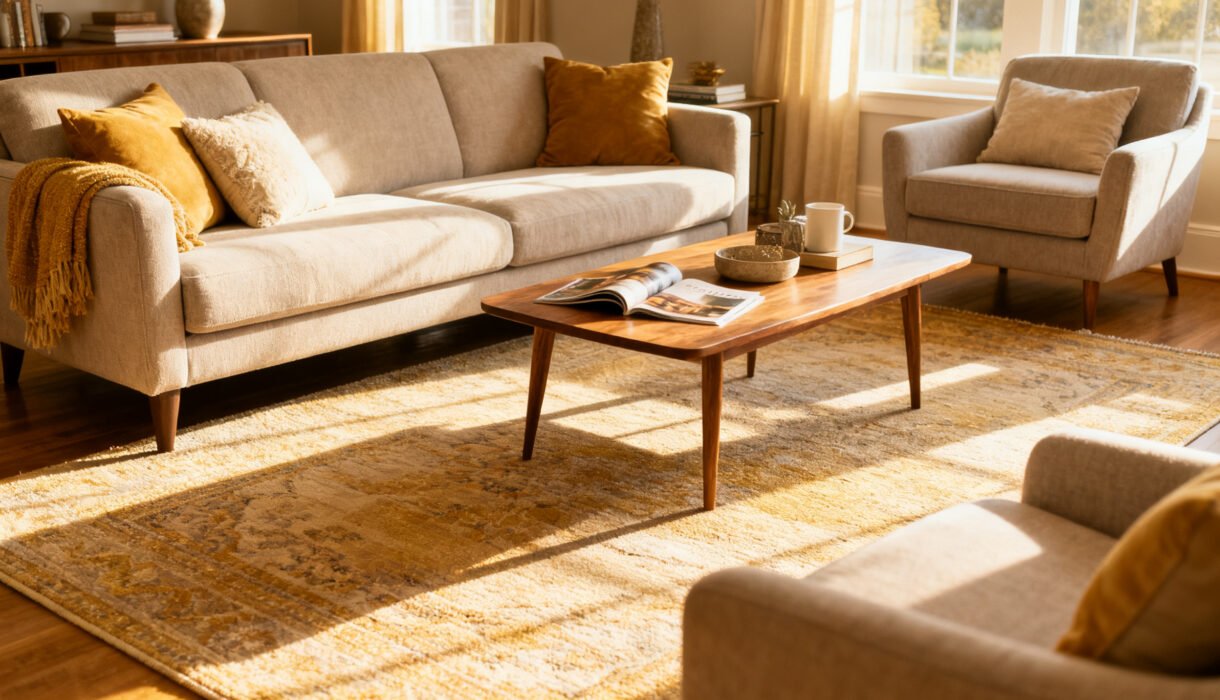

You don’t need a design degree to pick the right rug size—you need a tape measure, a plan, and maybe a little tough love about that too-small rug you’ve been pretending is “minimalist.” Rugs can make a room feel bigger, cozier, and way more pulled together. The wrong size, though? Instant chaos.
Let’s fix that, room by room, with zero fluff and lots of practical tips you can actually use.
Start With the How: Measure, Then Visualize
Before you fall in love with a pattern, nail the size. Grab a tape measure and map out your furniture layout first. Then measure the floor space you want to ground—usually the area under and around your main seating or furniture grouping.
- Leave breathing room: Aim for 8–24 inches of bare floor between the rug edge and the walls. Smaller rooms can get away with 8–12 inches; larger rooms look better with 18–24.
- Use painter’s tape: “Draw” the rug on your floor with tape. You’ll see instantly if it feels right with your furniture.
- Round up, not down: When in doubt, bigger usually looks better. Tiny rugs make rooms feel choppy and cheap—there, I said it.
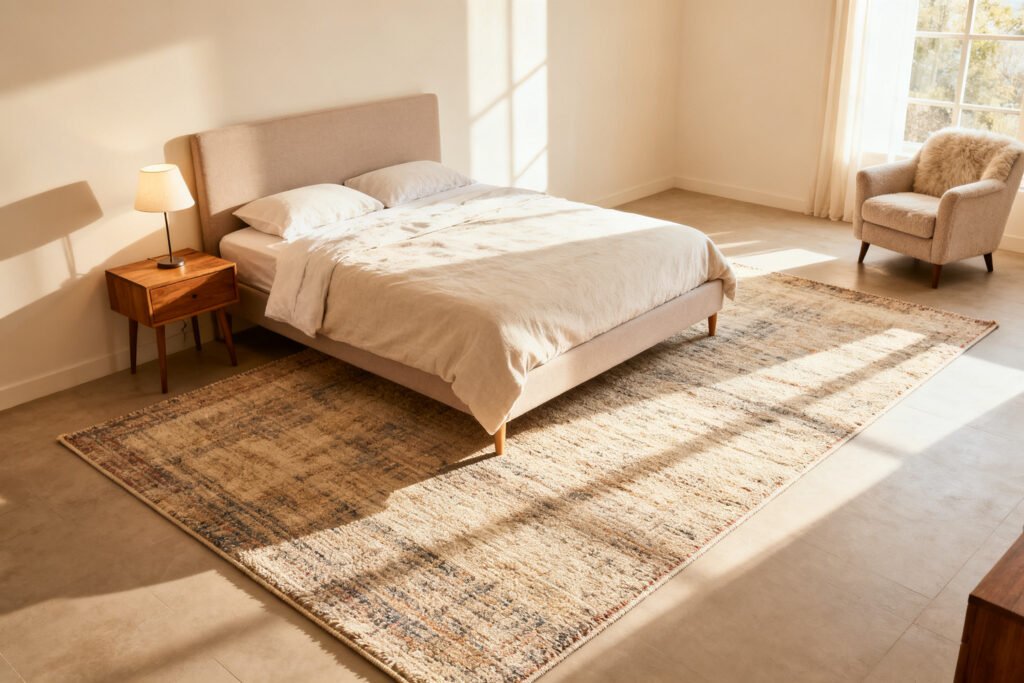
Living Rooms: Anchor the Conversation
Your living room rug should pull the seating area together, not float sadly under a coffee table like a lonely island.
Use one of three layouts.
All legs on the rug
Large space? Go big. All sofas and chairs sit fully on the rug with 8–12 inches of rug beyond the furniture edges. Typical sizes: 9×12 or 10×14.
Front legs on
This works for most homes. Front legs of sofas and chairs on the rug, back legs off.
It connects the pieces without needing a monster rug. Typical sizes: 8×10 or 9×12.
Float a sectional
For sectionals, you want at least the front edge and corner anchored. Aim for 8×10+ so the chaise doesn’t look stranded.
- Pro tip: Give yourself at least 6–10 inches of rug in front of the sofa for the coffee table.
- Avoid: 5×7 in a full living room unless it’s a small accent area. It won’t anchor anything—just vibes, and not good ones.
Bedrooms: Soft Landings, Please
No one wants to hopscotch to the bathroom on cold floors. You want enough rug to step onto from bed—on both sides.
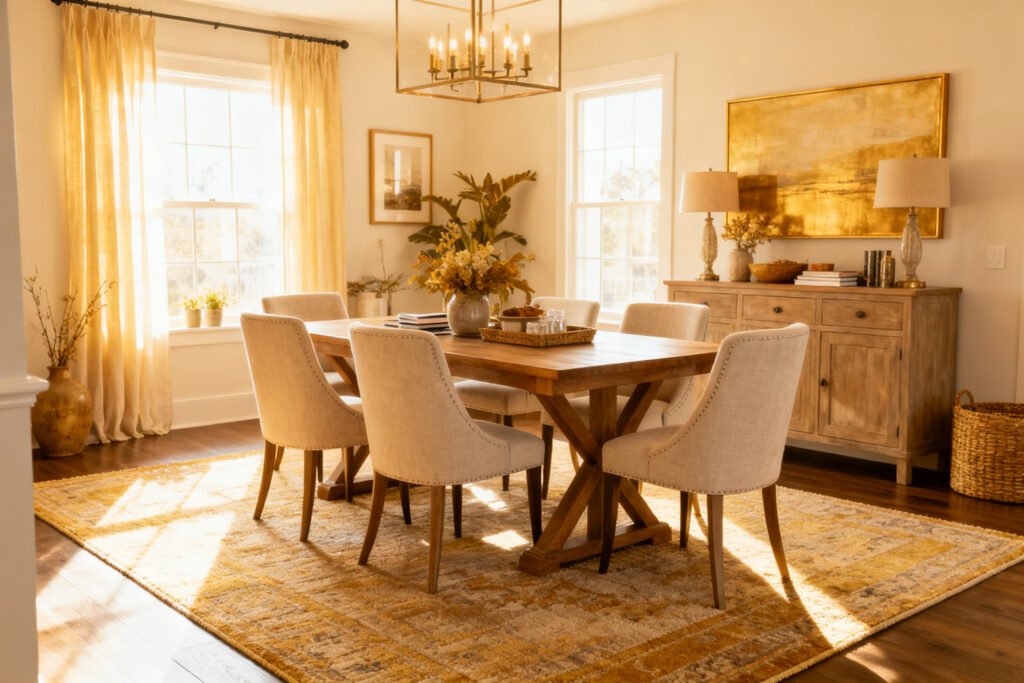
Under the bed, centered
The classic. Slide the rug under the bottom two-thirds of the bed so your nightstands stay off the rug.
- King bed: 9×12
- Queen bed: 8×10
- Full bed: 6×9 (or 8×10 if you have space)
Runners on each side
Tight room?
Use 2.5×7 or 3×8 runners on both sides. It’s budget-friendly and still cozy.
Kids’ rooms and twins
Try a 5×7 or 6×9 under the bottom two-thirds of the bed, or a 5×8 centered in play areas.
- IMO: Bigger feels more luxurious. If your nightstands end up half-on, half-off, bump up a size.
Dining Rooms: Chairs Need Space to Scoot
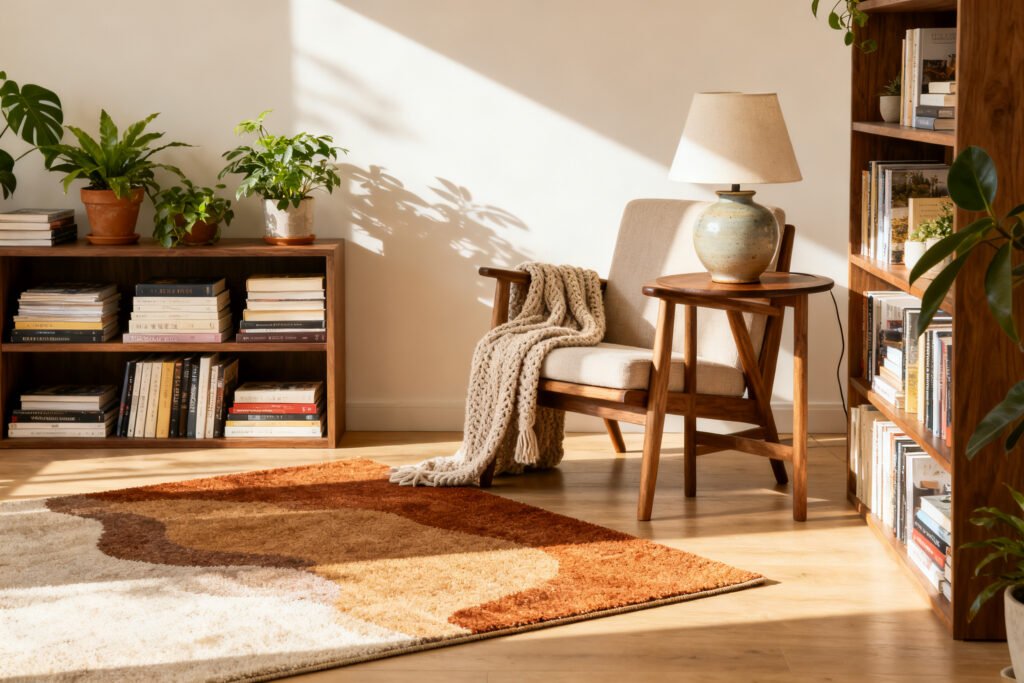
If the chair legs fall off the rug when you pull out, the rug’s too small.
Full stop. You want all chairs to stay on the rug—even when someone scoots back a bit.
- Add 24 inches beyond the table on all sides. This usually covers the pull-out zone.
- Rectangular tables: Common sizes are 8×10 for a 6–8 seater and 9×12 for larger.
- Round tables: Use a round rug if you can. For a 48-inch table, aim for an 8-foot round. For 60-inch tables, go 9-foot round.
- Don’t: Use a 5×7 with a standard dining table. It never ends well.
Kitchens, Entries, and Hallways: Runners Do the Heavy Lifting
These spaces love runners and small rugs, but size still matters.
Kitchens
Place runners where you stand most—like between the sink and island, or along the main prep area.
- Runner sizes: 2.5×8, 2.5×10, or 2.5×12 for long galley kitchens.
- Zones: Smaller spaces do well with a 3×5 in front of the sink.
Entryways
Give guests a target when they walk in.
The rug should sit clear of the door swing and fill the space without eating the floor.
- Small entry: 3×5 or 4×6
- Grand foyer: 6×9, 8×10, or a large round rug centered on the light fixture
Not sure your layout is working? Sometimes a room just needs a reset first. The free 5-Day Budget Home Reset gives you five days of small, budget-friendly wins that make choosing a rug (and everything else) easier.
Hallways
Leave 3–6 inches of bare floor on each side of the runner so it doesn’t look like a carpet remnant. Standard widths are 2–3 feet; lengths vary from 6–14 feet.
Shape Matters: Rectangular, Round, or Layered?
Rug shape can complement your furniture and architecture. Let the layout lead you.
- Rectangular rugs: Best for most living, dining, and bedrooms because furniture usually aligns that way.
- Round rugs: Great under round tables, in nurseries, or in small seating nooks.
- Square rugs: Use in square rooms or under square tables to echo the symmetry.
- Layering: Pop a smaller vintage or patterned rug over a larger neutral flatweave. It adds texture and lets you size up without breaking the bank (FYI, it also hides crimes committed by pets).
Thickness, Pile, and Practical Stuff
Size rules matter, but comfort and maintenance matter too. Choose materials and thickness based on traffic and lifestyle.
- Low-pile/flatweave: Best for dining rooms, kitchens, and high-traffic areas. Easy to clean, chairs glide smoothly.
- Medium to high pile: Cozy in bedrooms and living rooms where you want plush underfoot.
- Natural fibers: Wool wears like iron and cleans well. Jute and sisal look great but feel rough and hate spills.
- Synthetics (polypropylene, PET): Kid- and pet-friendly, often washable. Not heirlooms, but very practical.
Rug pads are not optional
Use a pad sized slightly smaller than your rug. It prevents slipping, adds cushion, and makes cheap rugs feel fancy.
Also protects your floors—your future self says thanks.
Common Mistakes to Avoid (So You Don’t Have to Re-Buy)
Let’s dodge the usual traps—and yes, I’ve made them all.
- Buying too small: If you’re hesitating between two sizes, go larger. Every time.
- Ignoring doors and vents: Check door clearances and floor vents before buying thick rugs.
- Forgetting scale: Large patterns on a tiny rug can look chaotic. Balance the room’s scale and pattern density.
- Floating furniture: Rugs should touch or sit under your main pieces. If everything sits off the rug, it looks disconnected.
- Weird shapes to force a fit: Don’t buy a round rug for a very rectangular room just because it’s on sale. Shape should serve the layout, not fight it.
FAQ
Can I use multiple rugs in one large room?
Yes, and it can look awesome if you define separate zones. Keep a consistent color palette or texture, and make each rug large enough to anchor its own furniture group.
IMO, vary the textures slightly so it feels layered, not like a showroom.
How much of the bed should sit on the rug?
For the classic look, place the bottom two-thirds of the bed on the rug and keep nightstands off. That gives you comfy landings on both sides and at the foot. If you have the space and budget, a 9×12 under a king bed looks luxe.
For more budget living-room wins, check out make a small living room look bigger, a budget living room makeover, and budget coffee table styling.
What if my room is an odd size?
Consider custom-cut rugs or broadloom carpet bound to size.
It’s not as pricey as it sounds, and you’ll get a perfect fit. Or layer: start with a big, affordable flatweave and stack a smaller statement rug on top.
Is it okay if the rug goes under radiators or heat vents?
Avoid covering floor vents and give radiators breathing room. Heat + wool is fine, but heat + blocked airflow is not.
Cut around the vent or choose a smaller rug that clears it.
Do round rugs ever work in living rooms?
They do—if your seating arrangement is circular or you’re highlighting a round coffee table in a smaller conversation nook. In standard sofa-and-chairs setups, a rectangle usually wins for coverage and balance.
How do I choose between an 8×10 and a 9×12?
Tape both footprints on your floor. If the 8×10 barely hits your front legs or leaves awkward gaps, upgrade to 9×12.
Your eye wants generous borders and clean lines—go with the size that makes the layout look intentional.
Wrap-Up: Size First, Style Second
Great rugs pull rooms together, but the right size does the heavy lifting. Measure your layout, leave consistent borders, and choose a shape that echoes your furniture. When you’re unsure, size up.
Then pick the pattern you love, toss down a pad, and enjoy a room that finally looks finished—because it is. FYI, your feet will thank you, too.
Rethinking the whole space, not just the floor? The The Budget Bedroom Makeover Planner helps you plan a full bedroom makeover room by room, right down to the rug.