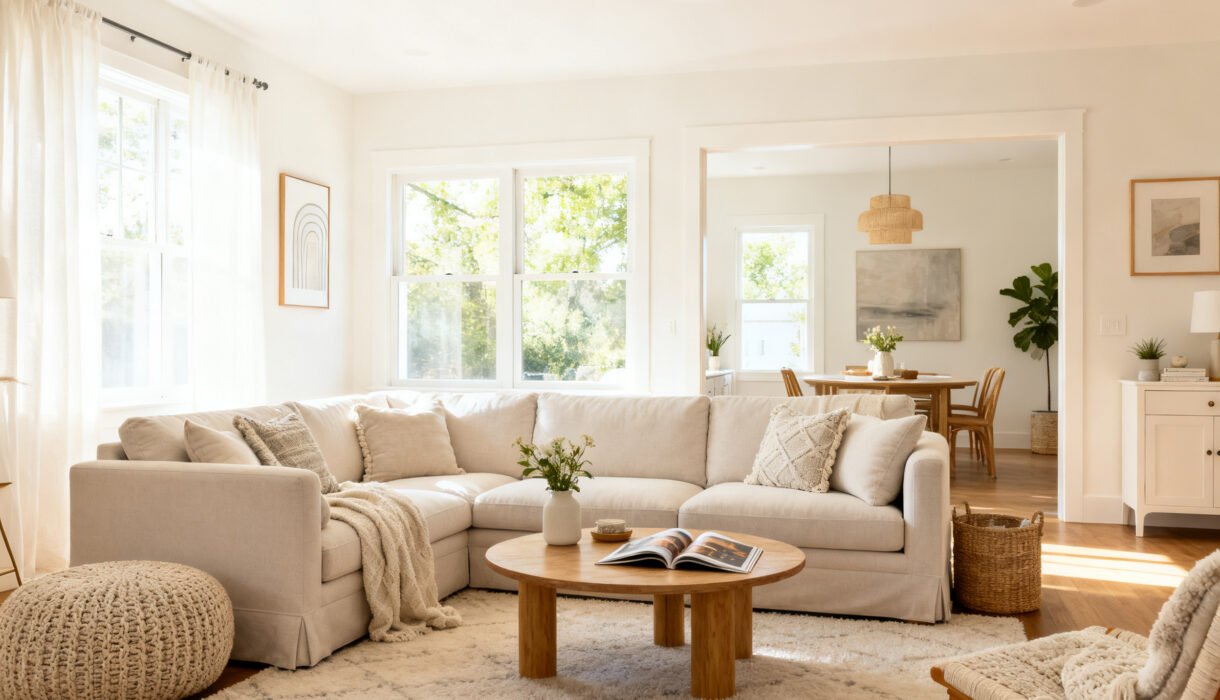

Some rooms just swallow light whole. You turn on a lamp and it feels like a cave with a nightlight. Good news: you don’t need to knock down walls or sell a kidney for skylights.
With a few clever tweaks, you can fake sunshine and make your dark room feel bright, open, and alive.
Start by diagnosing the darkness
Before you buy anything, figure out why the room feels gloomy. Is it the paint? The lighting?
The heavy furniture? Sometimes the space just absorbs light like a sponge.
- Check natural light sources. Are the windows blocked by furniture, bulky curtains, or foliage outside?
- Look at surface finishes. Matte, dark, and textured surfaces suck up light. Glossy and light ones bounce it back.
- Identify the shadows. Corners, ceilings, and under-shelf areas often hide in the dark.
Quick wins before big changes
- Clean windows.
Grime steals light. It’s boring. Do it anyway.
- Trim any plants blocking the window. Love your ficus, but not at the cost of daylight.
- Move bulky furniture away from windows and corners.

Layer your lighting (not just one sad lamp)
One overhead light can’t do it all. You need layers—like a lighting lasagna. Aim for at least three types: ambient, task, and accent.
- Ambient: Your main “fill” light. Use ceiling fixtures, semi-flush mounts, or bright, diffused floor lamps.
- Task: Focused lighting for reading, cooking, or working—desk lamps, under-cabinet LEDs, swing-arm sconces.
- Accent: Lights that highlight art, shelves, or architectural features. They add sparkle and depth.
Bulb basics that matter
- Color temperature: 2700K–3000K for cozy spaces, 3500K–4000K for brighter, crisper vibes. Avoid hospital chic (5000K+) unless you enjoy interrogation lighting.
- Brightness: Aim for 2,000–3,000 lumens total in a small room; 4,000–6,000 lumens for larger rooms.
- CRI (Color Rendering Index): Go for 90+ CRI so colors look real, not sad.
Use color like a light multiplier
Paint color changes everything.
Dark rooms don’t always want pure white (shocker!). Whites can look dingy without good sunlight. Instead, choose soft tints that reflect light but still feel warm.
- Go for off-whites and pale neutrals: Think warm ivory, pale greige, or a delicate blush/peach undertone to counter cool shadows.
- Try light mid-tones: Gentle sage, powder blue, or muted mushroom can feel brighter than stark white in low light.
- Use a slightly lighter ceiling: One or two shades lighter than the walls lifts the room visually.
Finish matters more than you think
- Eggshell or satin on walls reflects more light without showing every bump (IMO, the sweet spot).
- Semi-gloss for trim and doors adds crisp contrast and bounce.
Maximize reflection (mirrors, metals, and glass)
If the room won’t make light, you’ll make it bounce.
Reflective surfaces double whatever light you have.
- Big mirror opposite a window: Classic trick. Doubles the view and the light. Size up if you can.
- Mirrored or metallic accents: Side tables with glass tops, brass lamps, chrome frames—these sparkle without screaming “disco ball.”
- Glossy art frames and glass: They catch light and add polish.
Where to place mirrors (so they don’t just reflect clutter)
- Across from or adjacent to windows to pull light deeper into the room.
- Behind lamps to amplify their glow.
- At the end of a dark hallway to stop the cave effect.
Edit and lighten your furniture
Chunky, dark furniture can turn a room into a black hole.
Slim it down and lighten it up.
- Choose legs over skirts: Sofas and chairs with visible legs let light and sightlines flow.
- Use lighter fabrics: Linen, cotton, or performance fabrics in light neutrals brighten instantly.
- Swap heavy wood tones: Try pale wood, painted pieces, or glass/acrylic side tables.
- Declutter surfaces: Clutter blocks light and adds visual weight. Be ruthless. Your future bright room will thank you.
Rugs and textiles that lift the room
- Pick a larger light rug to visually expand the floor.
- Use patterned textiles with a light background to keep energy without the heaviness.
- Add sheer or light-filtering curtains instead of blackout drapes (unless you’re a vampire, in which case, carry on).
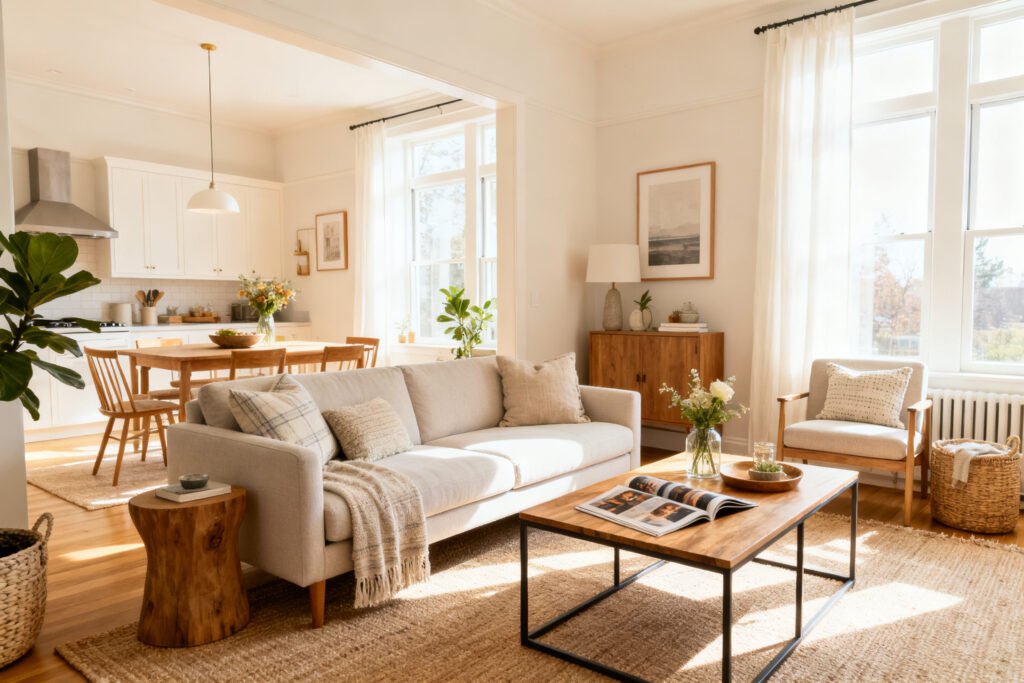
Window treatments that don’t kill daylight
You want privacy without blocking every photon.
Small changes here make a huge difference.
- Sheers or solar shades: They soften views and let in plenty of light. Layer with side panels if you want drama.
- Mount high and wide: Hang rods near the ceiling and extend them past the window frame so curtains stack off the glass.
- Skip heavy valances: They eat light and look dated. FYI, nobody misses them.
Clean lines, clear glass
- Use minimal hardware and slim profiles to reduce visual clutter.
- Try clear or frosted glass for doors to borrow light from adjacent rooms.
Brightening a room is easier when it is tidy and calm. The free 5-Day Budget Home Reset helps you reset first.
Brighten the ceiling and corners
Dark rooms lose light up high and in the edges.
Fix those, and everything lifts.
- Uplighting: Place floor lamps or wall sconces that shine upward to wash the ceiling.
- LED strips: Tuck them above cabinets, behind crown molding, or along shelves for a subtle glow.
- Paint trick: A slightly cooler, lighter ceiling color can make the room feel taller and brighter.
Don’t forget art and shelves
- Spotlight art with picture lights or small track heads.
- Add lights inside bookcases or glass-front cabinets for depth and sparkle.
Plants, decor, and finishing touches
A bright-feeling room also feels alive. You don’t need a jungle—just strategic green and shine.
- Low-light plants: ZZ plants, snake plants, pothos—they survive where the sun doesn’t.
- Light accessories: Pale ceramics, white candles, and clear vases reflect and scatter light.
- Edit colors: Keep a mostly light palette, then add a few bold accents so the room feels intentional, not washed out.
Scents and senses (yes, this matters)
A room that smells fresh and feels airy reads brighter. Open the window when you can.
Use a crisp scent. Small, cheap win IMO.
FAQ
Will white paint always make a dark room brighter?
Not always. In low light, pure white can look flat or gray.
Choose a warm off-white or a soft pastel with a touch of color. Test swatches at different times of day and pick the one that looks least sad in the darkest corner.
What’s the best light bulb for a cozy but bright feel?
Go for LEDs at 2700K–3000K with 90+ CRI. They give you warmth without the yellow dinginess.
Add dimmers so you can switch between “reading nook” and “movie night” without swapping bulbs.
For more room styling ideas, see make a small room look bigger, budget lighting ideas, and choose the right light bulbs.
How many lamps do I need in a living room?
Aim for at least three light sources in a small living room and four to six in a larger one. Mix a ceiling fixture, a floor lamp, and a couple of table lamps. Bonus points for a picture light or LED strips on shelves.
Do mirrors really make a difference?
Yes—when placed well.
Put a large mirror across from a window or behind a lamp to bounce light around. Avoid letting it reflect clutter or a dark hallway, or you’ll double the problem.
Can I keep my dark sofa?
You can, but balance it. Add a light rug, pale throw pillows, and a bright throw.
Pair it with glass or light-wood tables so the space doesn’t feel bottom-heavy.
What if my room has zero windows?
You’ll rely fully on layered artificial light and reflection. Use multiple fixtures, higher lumens, mirrors, light paint, and consider a faux window (backlit panel or curtain over a lit niche). It sounds extra, but it works.
Conclusion
You don’t need a renovation to fix a gloomy room—you need strategy.
Layer your lights, bounce what you’ve got, lighten surfaces, and let windows do their job. Make a few smart swaps, and the room stops sulking and starts shining. FYI, your houseplants will approve.
Brightening a bedroom as part of a refresh? The Budget Bedroom Makeover Planner helps you plan every step.