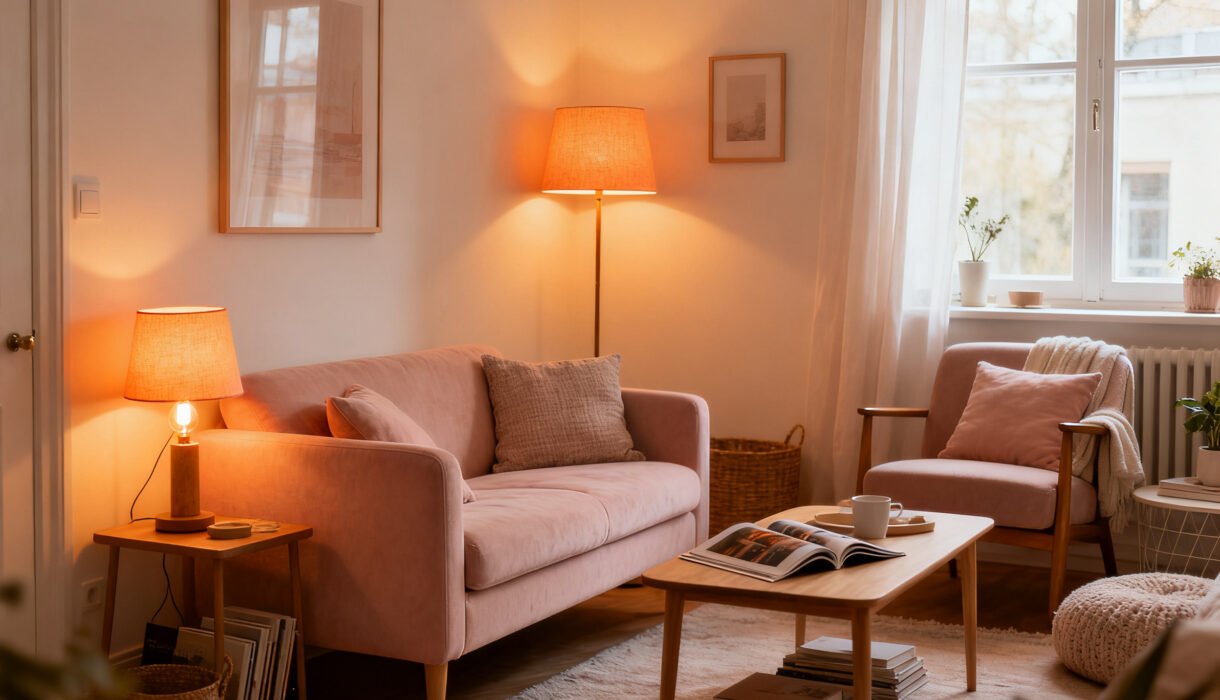

You flip a switch, and your room suddenly feels like a dentist’s office—or a cozy cabin. That’s not magic. That’s your light bulbs doing all the heavy lifting.
If your space feels off, don’t blame the throw pillows. Fix your lighting, and everything else falls into place. Let’s get your home glowing in all the right ways.
Start with Mood: What Kind of Cozy Are You After?
Cozy means different things in different rooms.
You probably want soft, warm light for living rooms and bedrooms, and slightly brighter, cleaner light for kitchens and bathrooms. Think vibe first, then pick bulbs to match. Quick cheat sheet:
- Living room/bedroom: warm and dimmable
- Kitchen: warm-to-neutral, brighter for tasks
- Bathroom: neutral with good color accuracy
- Hallways/entry: warm and welcoming
FYI: You can absolutely mix lighting types in the same room for layers.
One bulb can’t do everything.
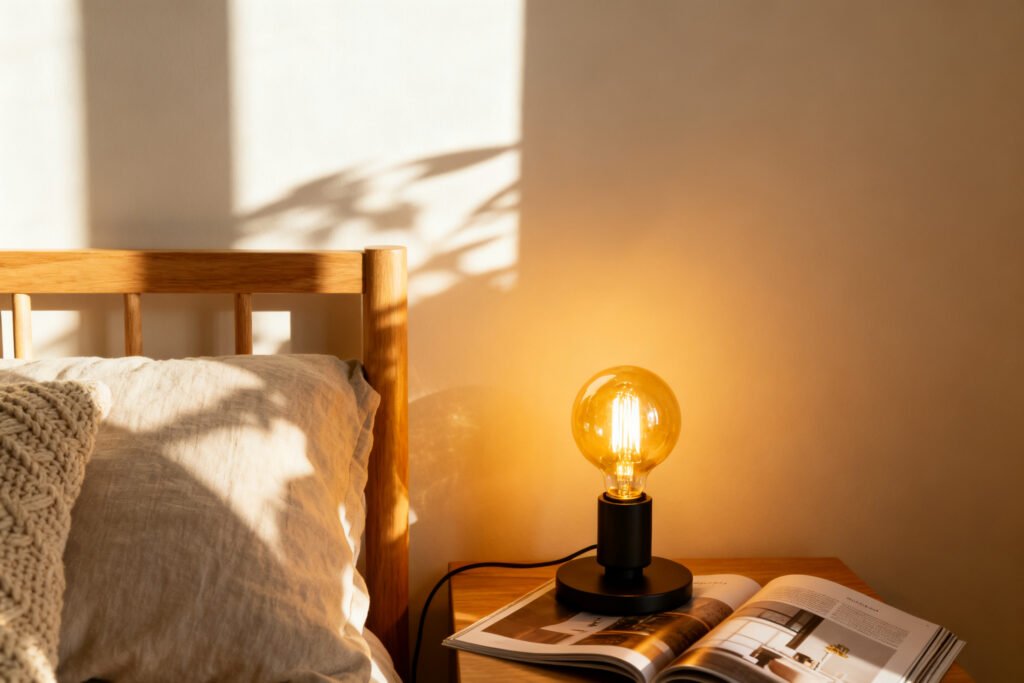
Color Temperature: Warmth Wins (Most of the Time)
Color temperature is the “warm vs. cool” feel of light, measured in Kelvin (K). Lower numbers look warm and candle-like; higher numbers look cool and crisp.
- 2200–2700K: super warm, cozy, great for evenings and winding down
- 3000K: warm-white, still cozy but a bit brighter-feeling—nice for kitchens and offices at home
- 3500–4000K: neutral-white, good for bathrooms and task lighting
IMO, 2700K is the goldilocks for most living spaces. Go 2200K for lamps or dimmed evening vibes, and 3000K if you like a slightly fresher look without going hospital-chic.
Pro tip: Look for “warm dim” or “sunset dim” LEDs
These bulbs shift from 2700K down to 2200K as you dim them—just like old-school incandescent.
They scream cozy without whispering “I’m pretending.”
Brightness: Lumens, Not Watts
Watts measure energy use, not brightness. We talk lumens now. More lumens = brighter.
As a guideline:
- Table lamp: 450–800 lumens
- Floor lamp/reading: 800–1100 lumens
- Ceiling fixture (small room): 1000–2000 lumens total
- Kitchen task areas: 1500–3000 lumens total (spread across fixtures)
If a bulb lists only “60W equivalent,” that usually means around 800 lumens. Still check the box, because “equivalent” sometimes lies.
Layer your light
Instead of one mega-bright ceiling light, use 3–5 light sources in a room:
- Ambient: ceiling fixture or large floor lamp
- Task: desk/reading lamp
- Accent: wall sconces or small table lamps
The mix creates depth and warmth. One harsh light does none of that.
CRI: The Secret Sauce for Pretty Colors
CRI (Color Rendering Index) tells you how accurately a bulb shows colors on a 0–100 scale.
Higher CRI = your sofa looks like your sofa, not a strange cousin.
- 90+ CRI: ideal for living spaces, art, and bathrooms (makeup doesn’t lie to you)
- 80–89 CRI: acceptable for general use, but colors can look a touch flat
If you care about cozy that feels rich and alive, choose 90+ CRI. It costs a little more. It pays off every day.
Bulb Shapes and Bases: Form Meets Function
Yes, shape matters.
It affects both the look and how the light spreads. Common shapes you’ll actually use:
- A19/A21: classic bulb shape for table and ceiling fixtures
- G25: globe bulbs for bathrooms and vanities—soft, even glow
- BR30/PAR38: recessed can lights—flood (BR) for general light, spot (PAR) for focused beams
- ST19 “Edison”: vintage look for visible fixtures; pick warm (2200–2400K) and high CRI
- Candelabra (B10/B11): chandeliers and sconces; dimmable versions feel fancy
And bases:
- E26: standard screw base in most US fixtures
- E12: candelabra screw base
Match the base and check the fixture’s max wattage (for LEDs, you’re fine many the time).
Beam angles for recessed lights
– Flood (90–120°): general ambient light – Spot (25–45°): highlight art or a reading chair Choose flood for cozy living rooms; spots can look dramatic if you aim them well.
Go Dimmable or Go Home
Dimming is the ultimate cozy hack. You turn the brightness down, and boom—instant atmosphere.
But not all LED bulbs dim well, and not all dimmers play nice. What to check:
- Bulb must say “dimmable.”
- Use LED-compatible dimmers. Old dimmers can cause flicker or buzzing.
- Look for 10% or 1% minimum dim levels. Lower minimum = smoother mood lighting.
IMO, warm-dim LEDs + dimmer beat smart bulbs for pure coziness. But if you love voice control, read on.
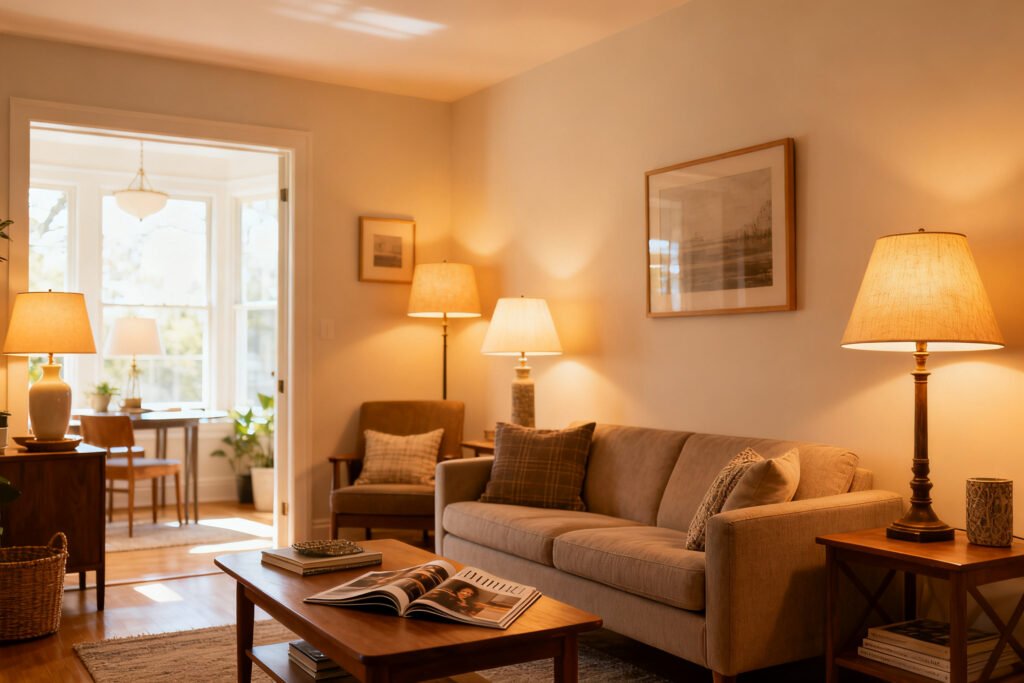
Smart Bulbs: Cozy on Command
Smart bulbs let you tweak color temperature, brightness, and schedules without moving from the couch.
That’s cozy for your body and your laziness. Tips:
- Tunable white (2200–6500K) handles morning-to-evening shifts perfectly.
- Set evening routines to 2200–2700K and 30–50% brightness.
- Group fixtures by zone so you create scenes: “Movie,” “Reading,” “Dinner.”
Just don’t overcomplicate it. If your lights need a software update before dinner, you’ve gone too far.
Energy, Lifespan, and Don’t-Annoy-Your-Eyes Details
LEDs win on basically everything: energy savings, lifespan, and staying cool.
Choose bulbs that specify:
- Energy Star or DLC listing for reliable performance
- Flicker-free (or low flicker) to reduce eye strain and headaches
- Enclosed-fixture rated if the bulb sits in a sealed globe
- Wet/damp rated for bathrooms and covered patios
If a light gives you a headache, it probably flickers or glares. Swap it. Life’s too short for annoying light.
The right bulbs shine brightest in a calm room. The free 5-Day Budget Home Reset helps you reset the space first.
Match the Bulb to the Fixture (Aesthetics Matter)
If the bulb is visible, make it good-looking.
Frosted bulbs diffuse light softly; clear bulbs show filaments and can glare unless you dim them. With glass pendants or chandeliers, frosted or milky bulbs often look classier and cozier. Also:
- Use lamp shades with warm fabrics to soften LED edges.
- Pick similar color temperatures across a room to avoid clashing tones.
- Mix heights: table lamps low, sconces mid, ceiling lights high—for layered depth.
Glare control 101
– Choose lower Kelvin and frosted bulbs for eye-level fixtures – Use dimmers and shades to soften hotspots – Position reading lights behind your shoulder, not in your eyes
Shopping Checklist (So You Don’t Stand in Aisle 12 Forever)
Before you buy, know:
- Room vibe: cozy, tasky, or both?
- Color temp: 2200–2700K for cozy; 3000K for warm-bright; 3500–4000K for tasks
- Brightness: target lumens (800 is your classic lamp)
- CRI: go 90+ if you can
- Shape/base: A19/E26, etc.
- Dimmable + dimmer compatibility
- Special ratings: enclosed/ damp/ flicker-free
Snap a pic of the fixture and bring it with you.
You’ll thank yourself.
FAQ
What’s the best color temperature for a cozy living room?
Aim for 2700K for everyday use, with dimming down to feel extra snug at night. If you want candle vibes, try 2200K bulbs in table lamps. Keep the whole room within a 300K range so it feels cohesive.
How bright should bedroom lights be?
Use layered lighting: a ceiling light around 1000–1500 lumens total plus bedside lamps at 450–800 lumens each.
Add dimmers so you can wind down in the evening and still read without squinting. Cozy wins when you control brightness easily.
Are warm-dim bulbs worth it?
Yes, if you love ambiance. Warm-dim bulbs shift from 2700K to around 2200K as you dim, which feels natural and relaxing.
They cost a bit more, but IMO the mood upgrade pays off every single night.
For more cozy, low-cost ideas, see budget lighting ideas, cozy home decor without overspending, and make your home cozy and inviting.
Do I need 90+ CRI?
You don’t need it, but you’ll notice it. With 90+ CRI, wood tones look richer, art pops, and skin tones look human. If you care about aesthetics, go 90+.
For garages or closets, 80 CRI works fine.
What’s the difference between A19 and A21?
They’re both classic bulb shapes, but A21 is slightly larger and often brighter. Most table lamps and fixtures fit A19. If you need more output and have space, A21 can help—just confirm shade clearance.
Why do my LEDs flicker on a dimmer?
You probably have a mismatch.
Get dimmable LEDs designed for your LED-compatible dimmer and check the manufacturer’s compatibility list. If flicker persists, swap the dimmer or choose bulbs labeled “flicker-free.”
Conclusion
Cozy lighting isn’t a mystery—it’s a few smart choices stacked together. Pick a warm color temperature, aim for 90+ CRI when you can, layer multiple light sources, and make sure everything dims smoothly.
Do that, and your home shifts from “fine” to “I-never-want-to-leave” with one click. Now go give your switches the glow-up they deserve.