How To Clean Upholstered Furniture At Home Without Expensive Products
Posted in :

Your couch takes a beating. Snack crumbs, mystery stains, pet hair—somehow it all ends up there. The good news?
You don’t need pricey sprays or pro services to fix it. With a few cheap pantry staples and smart tricks, you can get your upholstered furniture looking fresh again—without turning your living room into a science lab.
Know Your Fabric Before You Touch a Drop
Before you mix anything, check the fabric tag. It usually hides under cushions or along a seam.
Those letters matter:
- W: Water-based cleaners work. Lucky you.
- S: Solvent-only. No water.
Use alcohol-based options.
- WS: Water or solvent. You’ve got flexibility.
- X: Vacuum only. Spot clean at your own risk.
No tag?
Do a tiny patch test on the back or under a cushion. If color lifts onto your cloth, stop. Better cautious than crying over a bleached armrest, IMO.
Start With the Dry Clean: Vacuum Like You Mean It
You’ll pull out 80% of the grime with a proper vacuuming.
Use the upholstery tool and crevice attachment. Go slow. Two passes in different directions makes a big difference.
- De-crumb: Lift cushions and banish the snack graveyard.
- De-fuzz: Use a lint roller or slightly damp rubber glove to grab pet hair.
- De-stink: Sprinkle baking soda over cushions, wait 20–30 minutes, then vacuum again.
Boring?
Yes. Essential? Also yes.
Simple Solutions That Actually Work
You don’t need a chemistry degree—or a shopping cart of products.
These three solutions cover most messes.
The Universal Gentle Cleaner (for W or WS fabrics)
Mix 2 cups warm water + 1 teaspoon mild dish soap + 1 tablespoon white vinegar. Stir gently to avoid excessive suds. Dampen a microfiber cloth, blot the stain, and work from the outside in.
Rinse the cloth with clean water and blot again to remove residue. Don’t soak the fabric—moist, not wet.
Alcohol-Based Cleaner (for S or WS fabrics)
Fill a spray bottle with isopropyl alcohol (70% or higher). Lightly mist the stained area and blot with a clean white cloth.
Alcohol evaporates fast, which helps prevent water rings. Pro tip: This also freshens microfiber.
Deodorizer + Brightener (for stink, not gunk)
Mix equal parts white vinegar and water in a spray bottle. Light mist, air dry.
The vinegar smell fades fast and takes “dog” with it. FYI: Don’t use this on silk, velvet, or anything marked S-only.
Spot-Cleaning: The Blot, Don’t Rub Gospel
Stains respond to patience, not panic. Always blot.
Rubbing just spreads the mess and roughs up fibers.
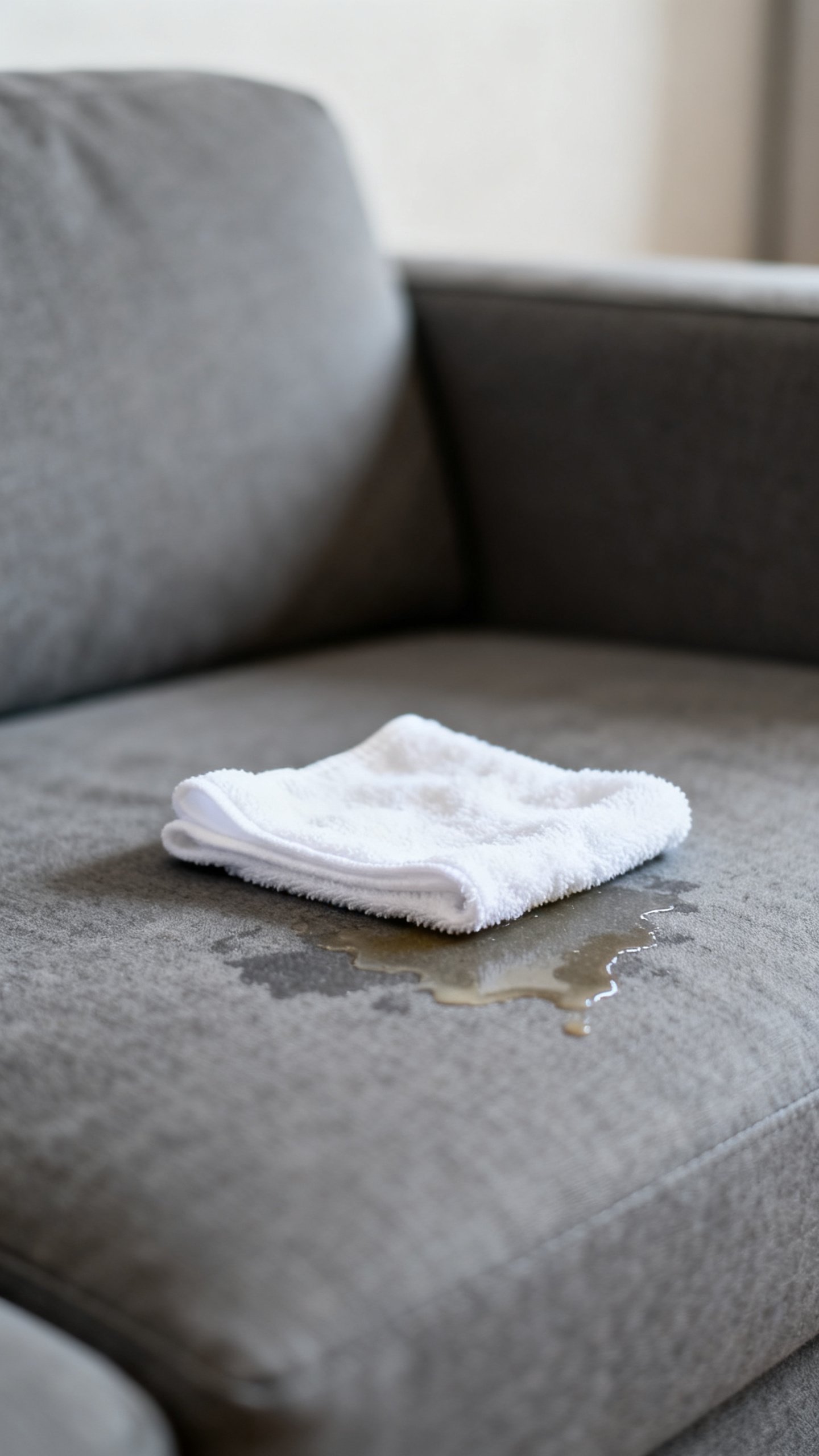
- Fresh spills: Blot immediately with a dry cloth. Get as much out as you can first.
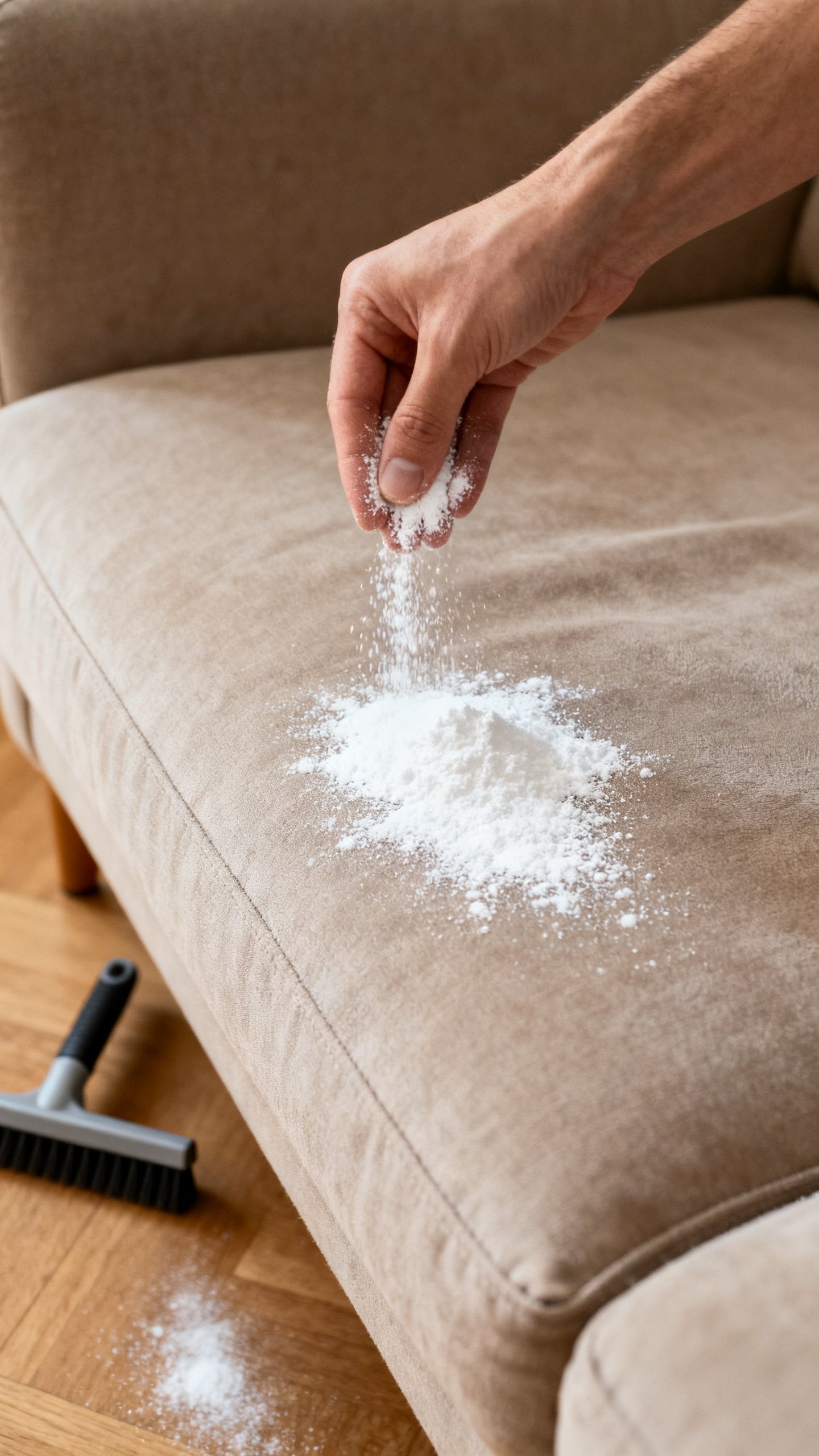
- Greasy stains: Dust on a bit of cornstarch or baking soda. Let sit 15–30 minutes, then vacuum.
Follow with your fabric-appropriate cleaner.
- Protein stains (milk, food, sweat): Use the gentle cleaner. Cool water only—hot water can set protein stains.
- Ink or marker: Try isopropyl alcohol on a cotton swab. Tap, lift, rotate swab.
Be patient.
Dealing With Water Rings
Water rings happen when moisture dries unevenly. Lightly mist the entire cushion face with distilled water, then gently brush or blot as it dries to even out the finish. Sounds scary, but it works.
Microfiber Magic: Make It Look New Again
Microfiber shows marks but bounces back nicely.
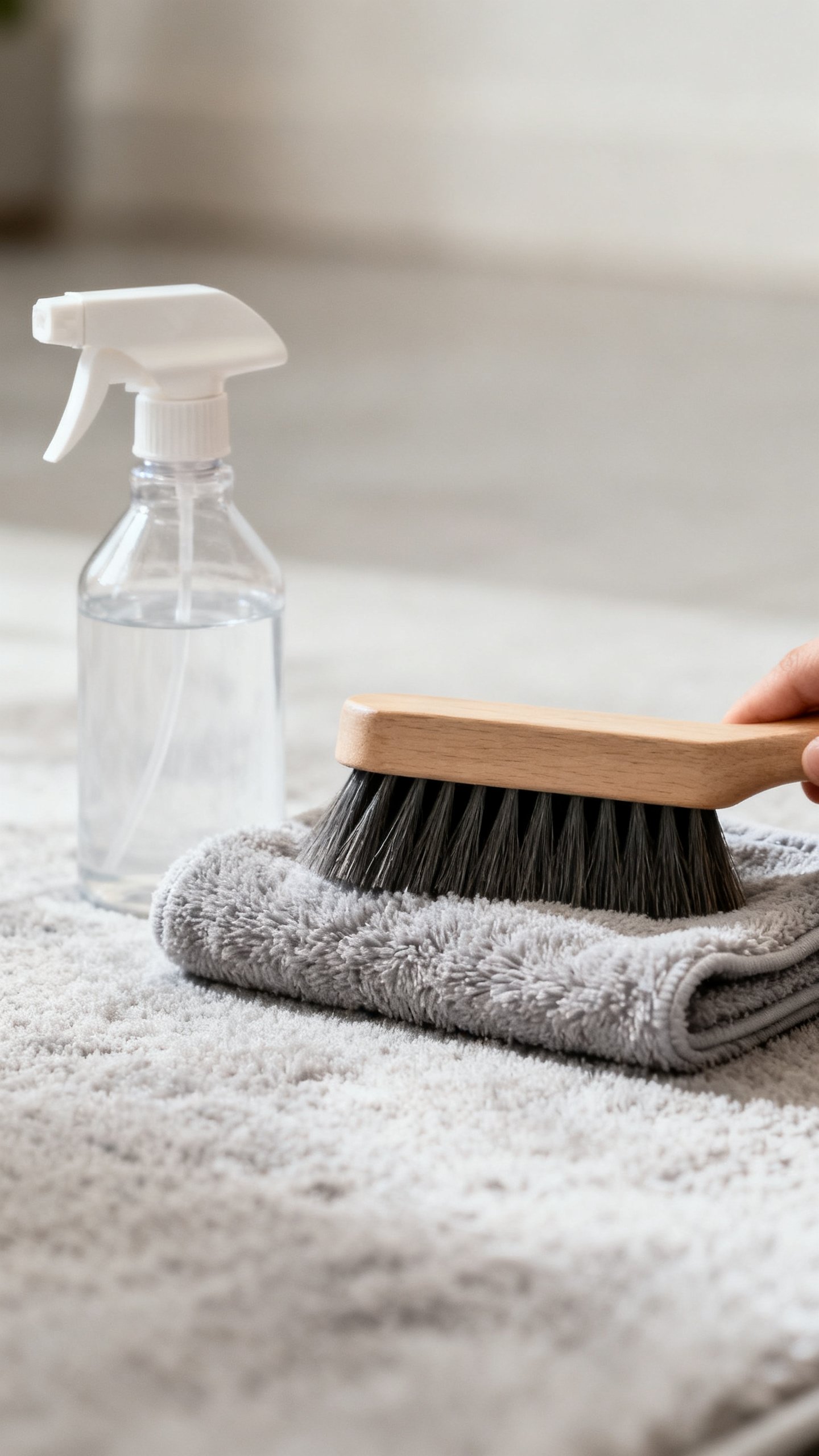
- Use isopropyl alcohol to treat spots.
Spray, then blot.
- When dry, restore the nap by gently brushing the fabric with a soft-bristle brush or clean, dry sponge.
- For overall refresh, lightly mist alcohol and brush in one direction for a uniform look.
It’s basically skincare for couches.
Odors, Pets, and “What Even Is That Smell?”
Let’s talk stink. You can defeat it without perfume-bombing your home.
- Baking soda: Cover cushions, wait 30–60 minutes, vacuum. Repeat for stubborn smells.
- Vinegar steam: Place a small bowl of white vinegar near the couch overnight.
It absorbs odors (no, you don’t pour it on the fabric).
- Sun + air: If cushions have removable covers, air them outside in bright shade. UV and airflow help a lot.
- Pet accidents: Blot, then use the gentle cleaner. Follow with a 1:1 vinegar-water mist.
Finish by sprinkling baking soda, let dry, vacuum. If the odor lingers, repeat. Enzymes work best long-term, but we’re keeping it low-cost here.
Deep Clean Without a Machine
No steam cleaner?
No problem. You can still refresh the whole piece.
- Pre-vacuum thoroughly.
- Mist, don’t soak. Lightly spray your fabric-appropriate solution over one section at a time.
- Agitate gently. Use a soft brush or microfiber cloth in small circles.
- Blot with clean towels. Pull out as much moisture and grime as possible.
- Rinse cloths and repeat. Wipe with a damp cloth (water only) to remove cleaner residue.
- Speed-dry. Aim a fan at the piece. Prop cushions upright so air can circulate.
Avoid direct heat.
You’ll see a difference right away, and even more once it dries fully.
Protect Your Work (Future You Will Thank You)
You cleaned it—now keep it that way.
- Vacuum weekly if you have pets or kids. Biweekly if you don’t.
- Rotate cushions monthly for even wear.
- Use throws in the most abused spots (looking at you, dog armrest).
- Blot ASAP whenever you spill. Procrastination is the enemy of clean sofas, IMO.
- Sun check: Keep furniture out of direct sun to prevent fading and dried-out fibers.
What Not To Do (Learn From My Regrets)
Some shortcuts backfire—badly.
- Don’t oversaturate. Water can seep into padding and cause mildew or water rings.
- Don’t use colored cloths. Dye transfer happens.
Stick to white or very light microfiber.
- Don’t mix chemicals. Vinegar + bleach is a hard no. Also, bleach on upholstery? Absolutely not.
- Don’t skip the test patch. Even “safe” cleaners can lift dye on certain fabrics.
- Don’t scrub aggressively. You’ll raise pilling and fuzz the texture.
Gentle wins.
FAQs
How do I clean velvet without ruining the pile?
Use the gentlest approach. Vacuum with a soft brush attachment first. Spot clean with a barely damp cloth and a tiny bit of mild soap if the tag allows water.
Always brush the pile in one direction as it dries. For serious messes, velvet often needs pro care—just saying.
Can I use laundry detergent on upholstery?
In tiny amounts, yes—but dilute it well and only on W or WS fabrics. Laundry detergents can leave residue that attracts dirt, so rinse with a damp cloth after.
If you see too many suds, you used too much.
How do I remove old, set-in stains?
Work slowly. Start with your fabric-safe cleaner and multiple rounds of blotting. For oily stains, pre-treat with cornstarch or baking soda first.
Some stains fade but don’t vanish; your goal is “less obvious,” not “time machine.”
Is vinegar safe on all upholstery?
No. Vinegar works great on many synthetic and cotton blends labeled W or WS, but avoid it on S-only fabrics, silk, or some delicate weaves. When in doubt, test a hidden spot.
If the area looks dull or rough afterward, stop.
My couch smells musty. Now what?
Vacuum thoroughly, then bake it in baking soda for an hour and vacuum again. Lightly mist a vinegar-water mix (if your tag allows), and aim a fan to dry fast.
If the odor persists, the cushion cores may be the culprit—remove covers and air everything out. Sun and airflow do wonders.
Can I use a handheld steam cleaner?
If your tag says W or WS, you usually can—but go light and keep the head moving. Too much steam = water rings and potential shrinkage.
Always test first and dry with fans afterward.
Conclusion
You don’t need boutique potions or a cleaning subscription to rescue your sofa. With a few basics—dish soap, vinegar, baking soda, and isopropyl alcohol—you can tackle most stains, smells, and mystery marks. Keep it simple, blot don’t scrub, and test before you go all-in.
Your couch will look better, smell fresher, and, FYI, your wallet will survive the ordeal.