

Curtains can make a room feel taller, cozier, or straight-up chaotic if you pick the wrong length. Good news: you only need a few rules and a tape measure to nail it. We’ll break down exactly where curtains should hit, how high to hang the rod, and what works best for your windows.
By the end, you’ll feel weirdly confident about fabric rectangles. Let’s go.
First, decide the vibe: polished, relaxed, or dramatic?
Before you measure anything, pick the look you want. Curtain length sets the tone more than color or pattern, IMO.
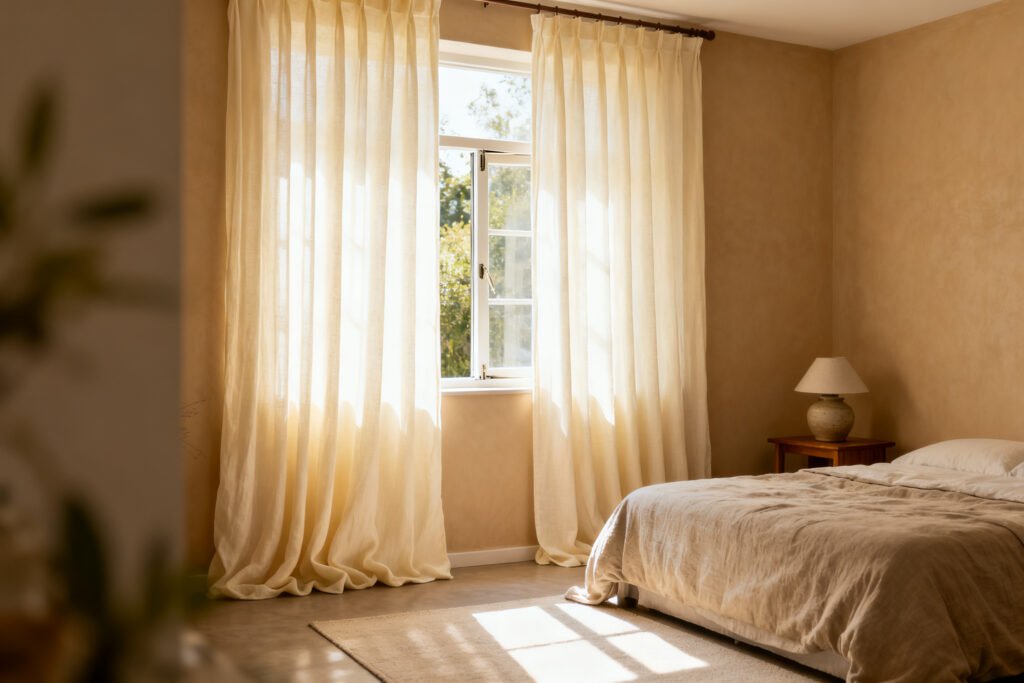
- Hover (aka “kiss the floor”): Curtains barely touch the floor. Clean, tailored, hotel-chic. Zero tripping hazards.
- Break (1–2 inches on the floor): Slight bend at the bottom. Soft, cozy, a little romantic without the dust bunnies.
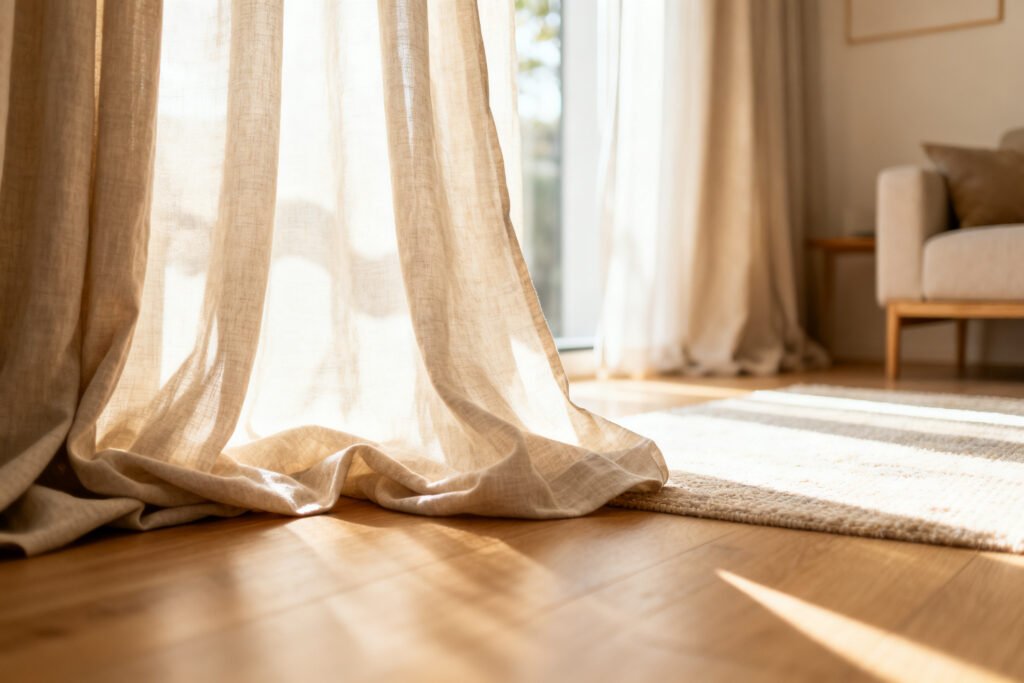
- Puddle (4–8+ inches on the floor): Luxurious and dramatic. Great for low-traffic rooms. Not great if you own a Roomba with trust issues.
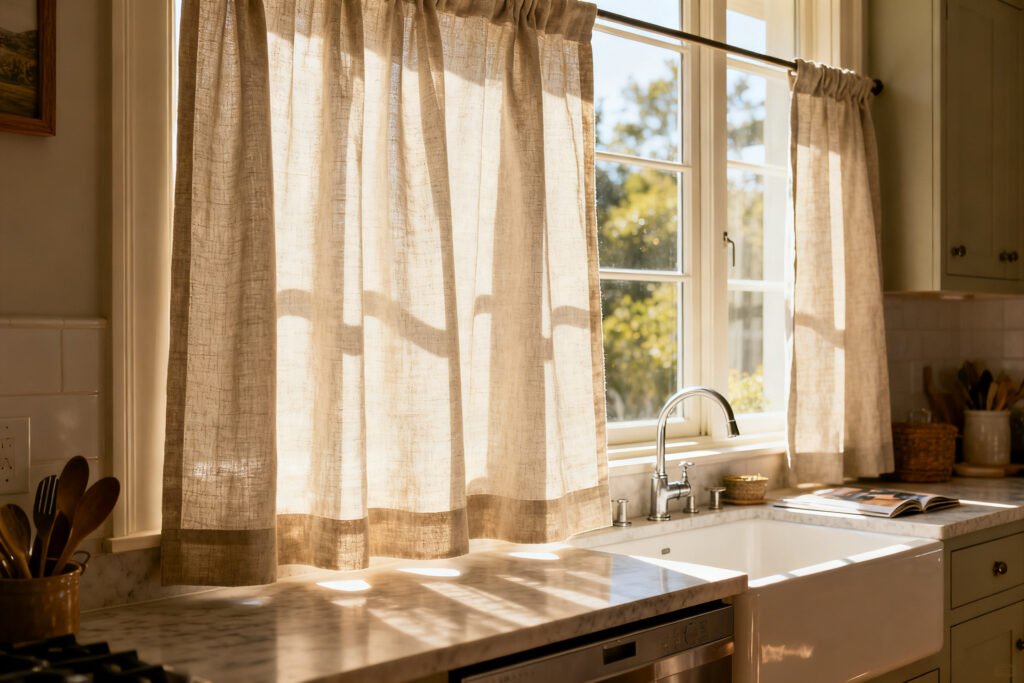
- Apron (hits the sill or just below): Practical for kitchens, baths, or radiators. Casual and tidy.
Standard lengths that actually work
Stores love selling “standard” sizes.
Some of them help. Some of them… don’t. Here’s how to use them smartly.
- 63 inches: Good for short windows where you want apron length. Think kitchens and laundry rooms.
- 84 inches: Often too short if you hang the rod high (which you should). Works only if your ceilings are low and you’re aiming for apron length.
- 96 inches: The sweet spot for most 8–9 foot ceilings. Lets you hang the rod high and still reach the floor.
- 108 inches: Best for tall ceilings or puddling.
- 120 inches: For very tall ceilings or dramatic puddles. Or for people who overestimate their hemming abilities, FYI.
Custom vs. off-the-shelf
Buy ready-made if your windows are standard and you don’t need perfection. Go custom if:
- You want exact “kiss the floor” length.
- Your windows vary or sit at weird heights.
- You want a specific header style or blackout lining.
No shame in hemming tape either. It’s the DIY hero no one talks about.
Measure like a pro (it’s easy, promise)
The secret to nailing curtain length lives in two measurements: rod height and finished length.
- Decide rod placement: Start 4–6 inches above the window frame. If you want the room to feel taller, go 8–12 inches or halfway to the ceiling. Higher rod = taller-looking walls.
- Mark your floor length target:
- Hover: Measure to just 1/2 inch above the floor.
- Break: Add 1–2 inches to floor length.
- Puddle: Add 4–8 inches (go bigger for drama).
- Apron: End at the sill or 4 inches below.
- Account for header style: Grommet, rod pocket, rings, or back tabs change the visual height. Rings usually add 1–2 inches of drop below the rod. Subtract that from your panel length.
Pro tip: measure both sides
Floors and ceilings love to be uneven. Measure left and right sides. If the numbers differ, split the difference or choose hover length to hide the wonkiness.
Pick the right header style for the look you want
Your curtain “header” changes how tall and structured the panel looks.
- Rings with drapery hooks: Polished, easy to open and close, adjustable height. Great for “kiss the floor.”
- Grommets: Casual, modern waves. They hang a bit lower from the rod—plan your length accordingly.
- Back tabs: Clean and tailored, no hardware showing. Slightly more friction when you pull them.
- Rod pocket: Traditional and simple. Tougher to slide, best for decorative panels you don’t open daily.
- Pinch pleat / tailored pleat: Formal and structured. Usually used with rings and hooks for that designer finish.
Room-by-room strategies
Different spaces call for different curtain behavior. Yes, curtains have behavior.
- Living rooms and bedrooms: Aim for hover or break. It looks intentional and stays neat even with daily use.
- Dining rooms or formal spaces: Try a small puddle for drama (1–4 inches). Keep traffic patterns in mind—no one wants to tango with fabric.
- Kitchens and bathrooms: Go apron length for function and easy cleaning. Moisture and splashes are not puddle-friendly.
- Kids’ rooms and pet zones: Hover length. You’ll thank yourself later.
Windows with radiators, vents, or baseboard heaters
Keep fabric clear of heat sources. Use apron length that ends above the radiator, or switch to Roman shades if you want zero fuss.
Don’t forget width and fullness (it changes the length too)
Length steals the show, but fullness keeps things looking rich, not skimpy.
- Rod width: Extend the rod 6–10 inches past each side of the window. It makes windows look wider and lets light in.
- Panel width: Aim for 1.5–2.5 times the window width in fabric. Sheers like more fullness; heavy velvet needs less.
- Stack-back space: Ensure the opened panels don’t block the glass. This affects where you place the rod and, yes, the perceived length.
Hemming without tears
Use iron-on hem tape for quick fixes. If you love a perfect “kiss,” hang the curtains for a day first to let them relax, then pin and hem.
Fabric settles—gravity does what gravity does.
Before you fuss over curtain length, a clutter-free window makes everything look sharper. The free 5-Day Budget Home Reset helps you reset the space in five quick days.
Common mistakes to avoid
We’ve all made them. You don’t have to.
- Hanging the rod too low: It shortens your walls visually. Higher rod = instant upgrade.
- Buying 84-inch panels for tall walls: They’ll float awkwardly. Go 96 inches or more.
- Ignoring header type: Rings and grommets change drop length. Measure with hardware in mind, FYI.
- Forgetting uneven floors: Always measure both sides and plan for a hover if things look crooked.
- Puddling in high-traffic zones: It looks gorgeous until someone trips or the dog nests in it like a woodland creature.
FAQs
How high should I hang my curtain rod?
Mount it 4–6 inches above the window frame for a safe, classic look. If you want the room to feel taller, go 8–12 inches up or halfway to the ceiling.
Just keep it consistent across the room so it looks intentional.
Should curtains touch the floor?
Usually, yes. “Hover” or “kiss the floor” reads polished and modern. If you want a softer vibe, add a small break. Choose apron length only for practical spaces like kitchens, baths, or where heaters live.
What if my store-bought curtains are a little short?
You’ve got options.
Lower the rod slightly (within reason), add rings to gain length, or sew on a contrasting fabric band at the bottom—looks designer and hides the oops. Worst case, use them as apron-length in a different room.
For more budget window and styling tips, see budget curtain ideas, choose the right rug size, and make a small room look bigger.
Do blackout curtains change the recommended length?
Not really. Length rules stay the same.
But blackout panels can be heavier, so use sturdy hardware and consider rings for smoother movement. Also, ensure the rod extends wider than the window to block side light.
Can I puddle curtains on carpet?
You can, but it looks heavier and collects lint faster. If the room feels too plush, switch to a small break instead.
On hardwood, puddles read more elegant—just keep them tidy.
How do I handle sliding glass doors?
Use a rod that extends well beyond the door so panels stack off the glass. Choose hover length so the fabric glides easily. Consider ripple-fold or grommets for smooth opening and closing, IMO.
Wrap-up: your window, your rules
Curtain length isn’t mysterious—it’s math plus mood.
Decide the vibe, hang the rod high, measure to the floor, and adjust for header style. When in doubt, aim for a clean hover and call it a day. Your windows will look taller, your room will feel finished, and you’ll wonder why you ever settled for high-water drapes.
Dressing a bedroom window as part of a bigger refresh? The Budget Bedroom Makeover Planner helps you plan the whole room on a budget.