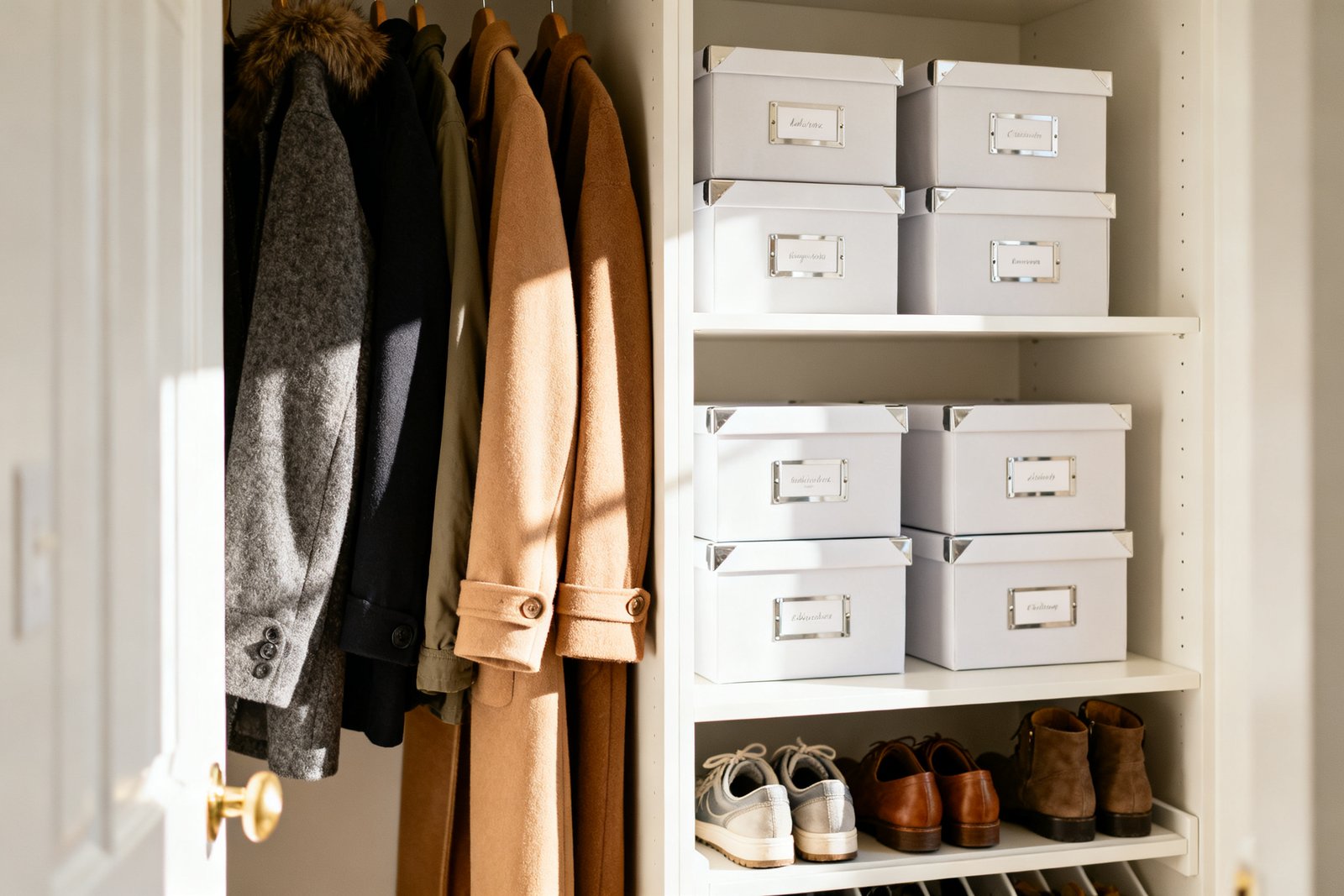

A coat closet can work hard for coats, shoes, and bags—if you give everything a clear spot and use the space from floor to ceiling. You don’t need custom built-ins to make it functional. A few budget organizers, better hangers, and a simple layout can transform the clutter.
Start with a Quick Reset
Empty the closet completely so you can see what you have and what space you’re working with. Measure the width, depth, and height, plus the door clearance; note the current rod height and shelf depth. Snap a quick photo to refer back to when you shop for bins or racks.
Sort items into four piles: keep (in-season), keep (off-season), relocate, and donate/trash. Be honest about duplicates and worn-out pieces—one reliable raincoat beats three that don’t fit well.
Define Zones: Top, Middle, Floor, and Door
For more ideas, see our guide on how to organize a linen closet.
Divide the closet vertically so each category has a home. This makes daily use simpler and reduces the pile-up on the floor.
Top Zone: Light, infrequent items
- Off-season hats, gloves, scarves in labeled bins.
- Extra totes or travel umbrellas.
- Refill items like lint rollers or spare shoelaces.
Middle Zone: Coats and daily bags
- Primary hanging space for coats and jackets.
- One or two bag hooks for the most-used handbags or backpacks.
Floor Zone: Shoes
- Sturdy, wipeable shoe storage for daily pairs.
- Weather gear like boots and a tray for wet shoes.
Door Zone: Quick-grab accessories
- Door-mounted rack or hooks for scarves, hats, dog leash.
- Flat pockets for gloves to keep them paired.
Set Up Coats the Smart, Slim Way
Tackling one closet is a great start. Our free 5-Day Budget Home Reset gives you a doable daily task to reset the rest of your home.
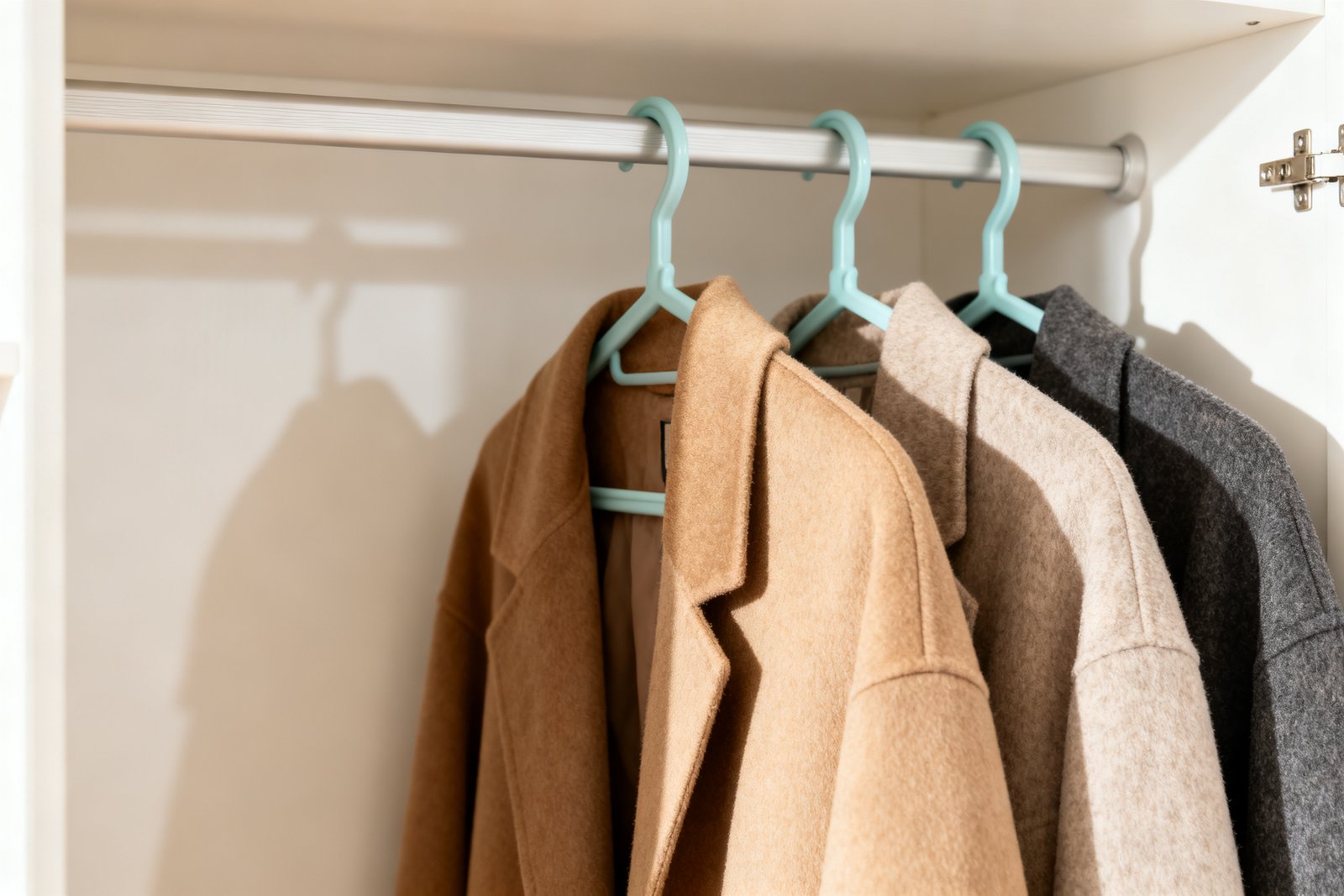
Hangers matter. Swap bulky mixed hangers for slim, non-slip velvet or sturdy plastic ones ($10–$20 for 20–30). Aim for matching hangers to maximize space and make it easier to slide coats.
Group by person, then by coat type (rain, heavy winter, light jacket). Put the bulkiest coats toward one side so they don’t block bags or door storage. If you share the closet, assign left half/right half to each person to reduce morning rummaging.
If your rod is high and you have kids, add a lower tension rod below one side for their coats ($10–$15). It doubles as a staging rod for guests’ coats during gatherings.
Give Shoes a Contained Home
It also helps to check out create an entryway drop zone.
Decide how many pairs really need to live here—usually 1–2 daily pairs per person plus weather gear. Relocate dressy or rarely worn shoes to bedroom closets or under-bed storage. Keeping shoe count low makes the floor easier to clean and prevents the pile-up.
Budget shoe storage options
- Low-profile metal rack (two-tier): $15–$25. Good for 6–8 pairs and easy to wipe down.
- Stackable plastic shoe drawers: $3–$7 each. Great for keeping pairs visible and dust-free.
- Boot tray: $8–$15. Catches water/salt; add river stones for airflow if you like.
- Wire shelf with a solid liner: $10–$20. Creates a raised second level for shoes without squishing them.
Place the rack or drawers along the back or one side, leaving a clear landing zone for wet shoes near the door. If boots flop, add inexpensive boot shapers (or DIY with rolled magazines or pool noodles cut to size).
Corral Bags Without the Tangle
Bags tend to topple if they don’t have structure. Pick one of these methods and stick with it:
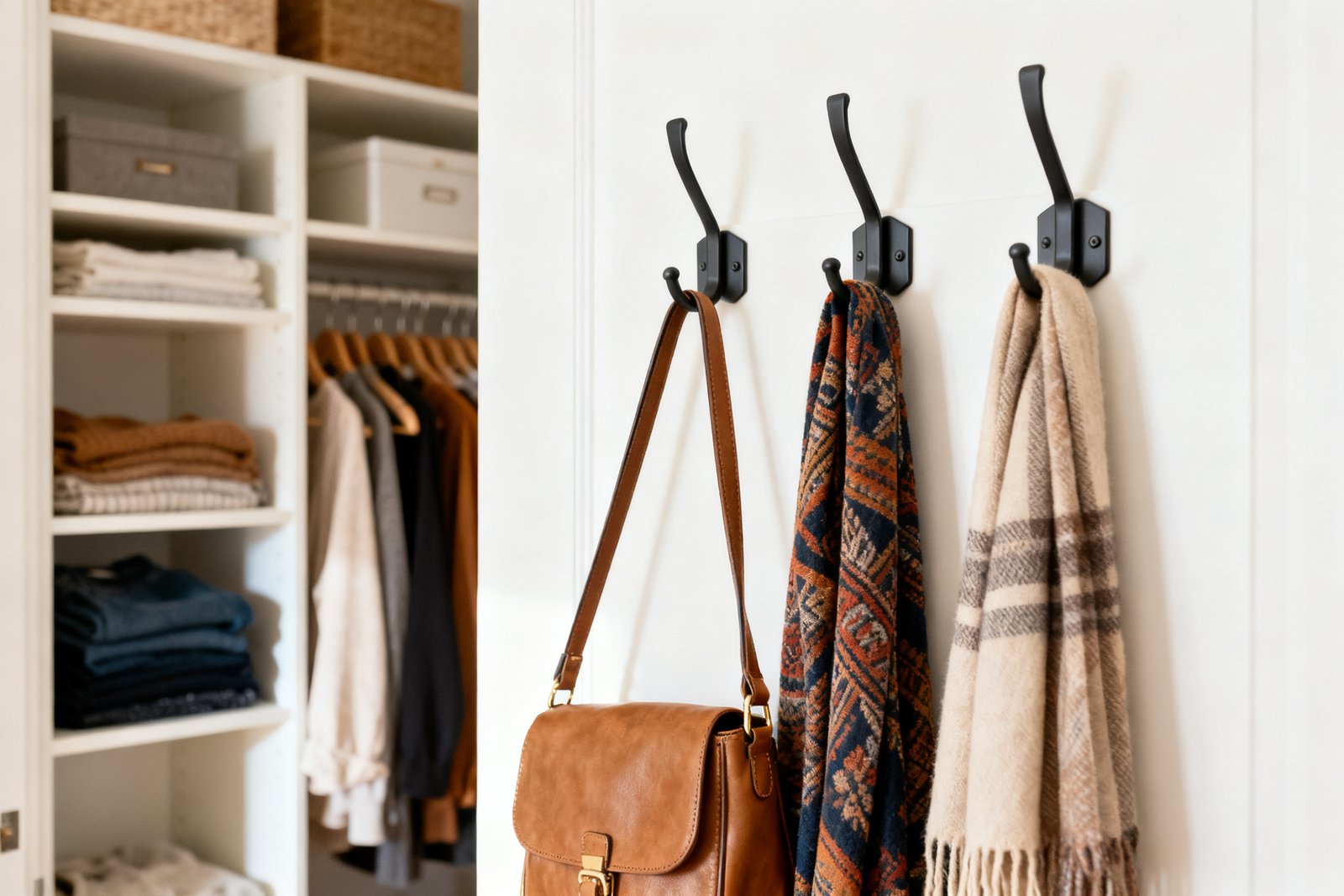
- S-hooks on the rod: $5–$10 for a pack. Hang two daily-use bags and a backpack; avoid overloading so coats can still slide.
- Over-door hook rack: $10–$20. Perfect for lightweight totes, reusable grocery bags, and hats.
- File-style bin on the shelf: $8–$15. Stand clutches and crossbodies upright like files; use dividers or cardboard to keep shapes.
Limit the closet to your top 3–4 active bags. Store occasion bags elsewhere or rotate seasonally. Use a small pouch inside each daily bag for keys and chapstick so you’re not digging at the door.
Make Accessories Easy to Grab (and Return)
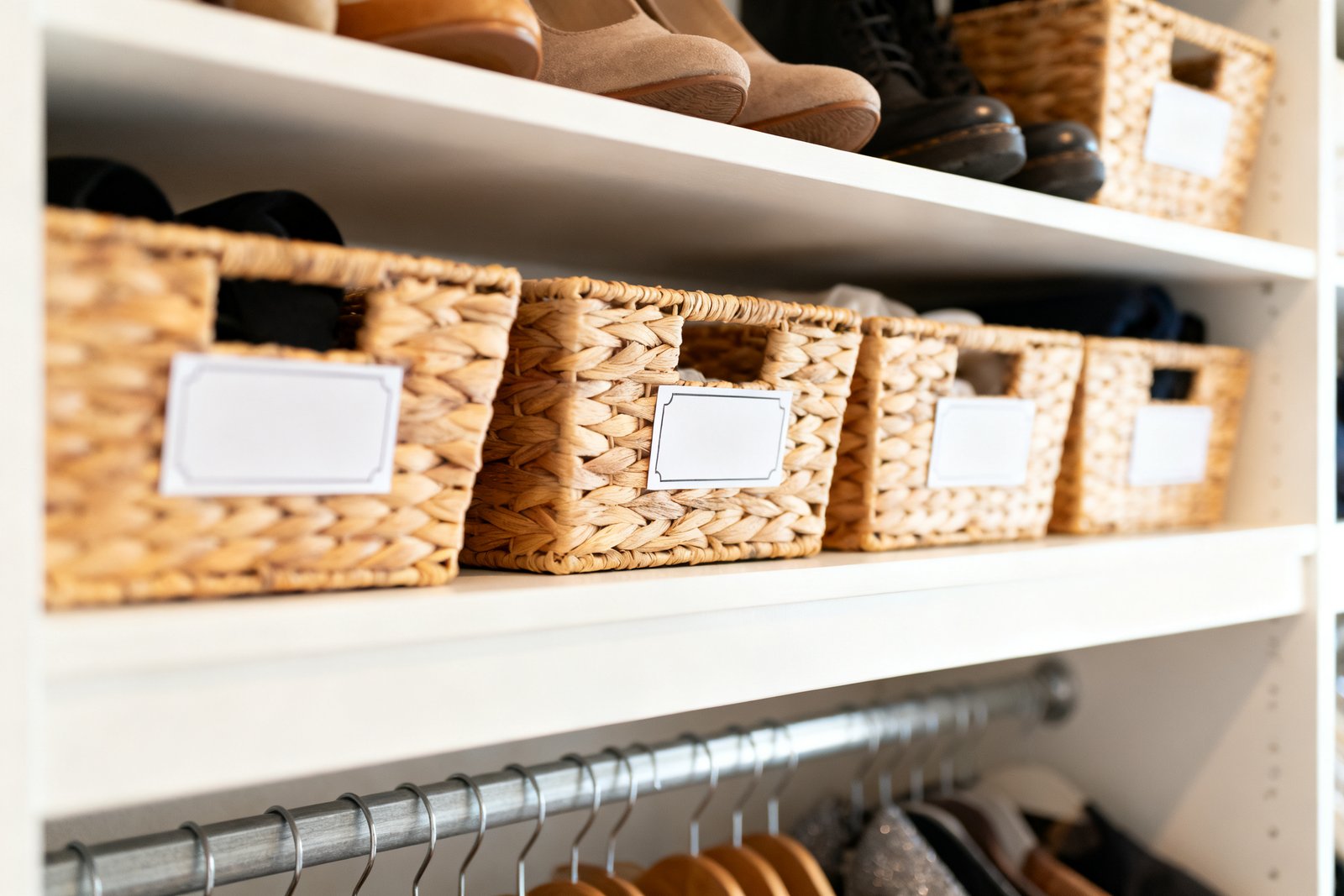
Winter accessories scatter easily. Use small, labeled bins for each person or category so things get returned to the same spot every time. Clear shoebox-size bins ($1–$3) or soft baskets ($6–$12) both work; label fronts with painter’s tape if you don’t have a labeler.
Gloves pair best in flat pockets. An over-door organizer with fabric or clear pockets ($12–$20) keeps mittens together and visible. Reserve one pocket for “guest gloves/hats” to avoid lending your only pair.
Inexpensive Upgrades That Create More Space
Add a simple shelf or riser
If you have only one high shelf, add a freestanding shelf riser ($10–$15) to double the storage for bins. For a weekend project, a basic DIY plywood shelf cut to width and set on L-brackets can cost $20–$35 and instantly creates a second tier.
Use vertical separators
Magazine files ($2–$5) double as dividers for small umbrellas, mailers, and dog gear. A tension rod placed vertically in a corner can corral umbrellas upright (cap the end with a felt pad to protect the floor).
Lighting fixes
Dark closets cause clutter. Add a motion-sensor LED puck or strip light ($8–$15) to the underside of the top shelf. Battery-operated, peel-and-stick styles take 5 minutes to install and make it easier to find black gloves in a dark space.
A Realistic Example: Small Entry Closet Makeover (~$60–$85)
Closet size: 36 inches wide with one shelf and a single rod. Before: mixed bulky hangers, shoes piled on the floor, bags slumped on the shelf, no spare light.
- Declutter: Move dress shoes to bedroom closet; donate two unworn jackets; toss single mittens.
- Hangers: Replace with 24 slim non-slip hangers ($15). Group coats: heavy left, light right.
- Shoes: Add two-tier metal rack ($20) on the left; boot tray ($10) on the right for winter boots.
- Bags: Install over-door rack ($12) for totes and dog leash; keep two daily bags on S-hooks ($5) at the far right of the rod.
- Accessories: Two clear bins ($6) for gloves/hats on the shelf; label with tape.
- Lighting: Stick-on motion puck light under the shelf ($10).
Result: Coats slide easily, four daily shoe pairs visible, wet boots have a landing zone, and gloves live in labeled bins—no more digging.
Simple Maintenance Habits
- One-in, one-out for shoes and coats kept in this closet.
- Weekly 2-minute reset: return gloves to bins, check for stray receipts in bags, wipe boot tray.
- Seasonal swap: move off-season coats to garment bags or a spare closet; switch bins to front with current-season items.
- Guest-ready hook: keep one empty over-door hook for visitors’ bags.
Mistakes to Avoid
- Overloading the door: Too many heavy items on an over-door rack can make the door hard to close. Keep it to lightweight accessories.
- Buying bins before measuring: Deep bins on a shallow shelf hang over and waste space. Measure depth first.
- Ignoring the floor: Shoes without containment turn into a wall of clutter. Add a rack or tray, even a cheap one.
- Mixed hangers: Thick, mismatched hangers eat space. Choose one style to gain inches instantly.
- Storing everything here: Limit to daily-use coats, shoes, and bags; overflow lives elsewhere.
Quick Checklist
- Measure closet width, depth, rod height, and shelf depth.
- Edit down to daily-use coats, 1–2 shoe pairs per person, 2–3 active bags.
- Choose slim hangers and group coats by person and type.
- Contain shoes with a rack/drawers and a boot tray.
- Assign bins for hats/gloves; label simply.
- Use door space for light accessories and organize gloves in pockets.
- Add light and a small weekly reset routine.
FAQ
How do I deal with bulky winter coats in a tiny closet?
Hang only the current season’s bulky coats and store others in a bedroom closet or under-bed vacuum bags. Place heavy coats at one end so they don’t block access. Slim hangers free up surprising space; if needed, add a short secondary rod for lighter jackets and keep big coats up top.
What’s the best way to store wet boots?
Use a boot tray near the door side of the closet so water doesn’t migrate. Line it with a doormat scrap or pebbles to elevate soles and speed drying. Empty the tray weekly and wipe it down to prevent odor.
How can I keep kids’ stuff from mixing with adults’?
Give kids a lower zone: a short rod or a row of 3–4 hooks mounted at kid height, plus one small bin with their name for hats and gloves. Keep their shoes on the bottom row of the rack or in a labeled drawer so they can put things away themselves.
What if my closet has no shelf?
Add a freestanding shelf unit that fits under the rod or install a single board with L-brackets into studs. Even a $15 wire shelf with a liner creates a spot for bins and doubles storage immediately.
If you want to keep going, take a look at damage-free command hook hacks.
Final Thoughts
When you give coats, shoes, and bags a dedicated zone and right-size the amount you keep here, a small coat closet can run smoothly. Start with a reset, add a few low-cost organizers, and practice a short weekly tidy. The result is a functional entry that saves time every time you leave the house.