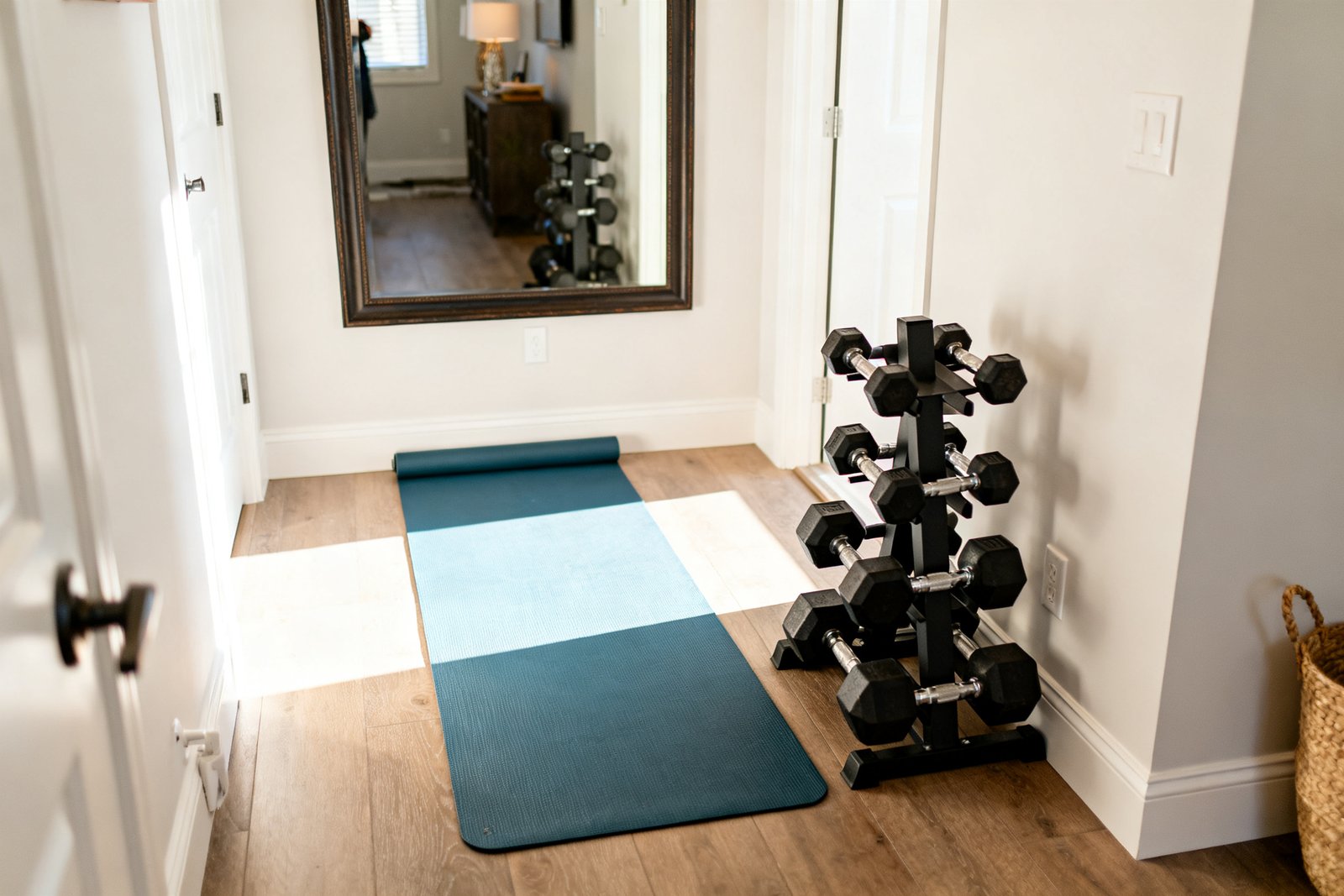

A home gym doesn’t need a spare room or fancy equipment. With smart choices and a few square feet, you can create a space that works for strength, cardio, and mobility—without draining your budget. Here’s how to set one up that fits your home, your goals, and your wallet.
Define Your Space and Your Goals
Start by picking a consistent spot, not a perfect one. A corner of the living room, a hallway end, or a 3′ x 6′ area by the bed can work. Consistency matters more than size because your gear stays accessible and you build a habit.
Decide your top two priorities: strength, cardio, mobility, or general fitness. Your goals guide your gear. For example, if you want strength and mobility, you’ll spend on resistance bands and a mat before anything else.
Lay the Foundation: Flooring and Storage
For more ideas, see our guide on how to best furniture for small spaces.
Flooring that Saves Your Joints (and Floors)
Protecting the floor also protects your body. Interlocking EVA foam tiles ($15–$30 for a 24–48 sq ft set) are easy to trim and store. If you lift heavier or have hardwood, consider a 6′ x 4′ stall mat from a farm supply store ($45–$60) for better grip and durability.
On very tight budgets, use a dense yoga mat ($15–$25) doubled up over a thin rug pad ($10–$15). It won’t be bombproof, but it’s enough for bands, dumbbells up to moderate weight, and bodyweight moves.
Storage That Disappears
- Over-the-door hooks and a canvas shoe organizer ($10–$20) for bands, jump rope, and sliders.
- Shallow under-sofa or under-bed bin ($10–$25) for mat and dumbbells.
- Wall-mounted broom clips ($8–$12 for a pack) to hold a foam roller or bar.
Keep everything within arm’s reach. If you have to dig for it, you’ll skip it.
Buy the Right Core Gear (Spend Where It Counts)
Building better habits at home? Pair your new gym corner with our free 5-Day Budget Home Reset—five days of small, budget-friendly upgrades.
You don’t need a lot to train your whole body. Build in layers, starting with versatile, compact items. Use the list below as a menu; pick what fits your goals and budget.
Base Kit (under $75 total if bought smart)
- Exercise mat: look for 6 mm+ thickness, non-slip ($15–$25).
- Long loop resistance bands: light, medium, heavy ($15–$30 for a set). Opt for latex or fabric mini-bands ($8–$15) for glutes.
- Adjustable jump rope ($10–$20) for compact cardio.
- Door anchor for bands ($6–$10) to add rows, presses, and pulldowns.
Strength Add-Ons (pick one path)
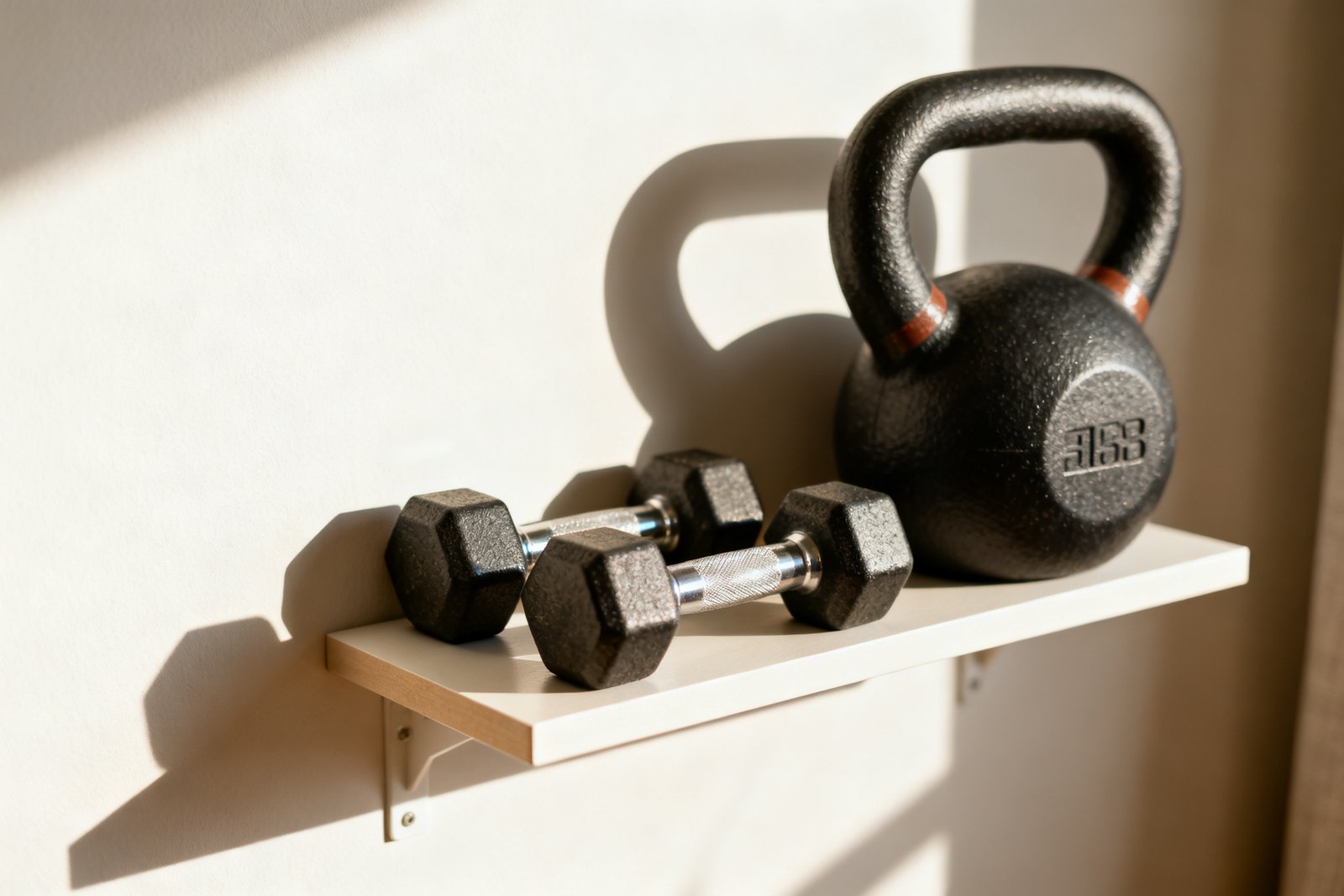
- Adjustable dumbbells: budget spin-lock style 40–50 lb set total ($60–$120 used; $100–$180 new). Takes less space than multiple pairs.
- Kettlebell: one moderate weight (15–35 lb depending on level), cast iron ($25–$50). Great for swings, squats, presses.
- Suspension trainer: door-mounted straps ($25–$50). Replaces pull-up bar for rows, assists with squats and core work.
Low-Cost Cardio Options
- Jump rope ($10–$20) or cordless “ropeless” handles for low-ceiling spaces ($10–$15).
- Stair intervals (free) with a timer app.
- Mini stepper with resistance bands ($40–$80 used; $60–$120 new) if you want machine feel without the footprint.
Recovery and Mobility
- Foam roller ($10–$20) or a firm lacrosse ball ($3–$5).
- Yoga block set ($10–$15) for support and progressions.
Make It Multi-Purpose and Discreet
It also helps to check out maximize vertical storage.
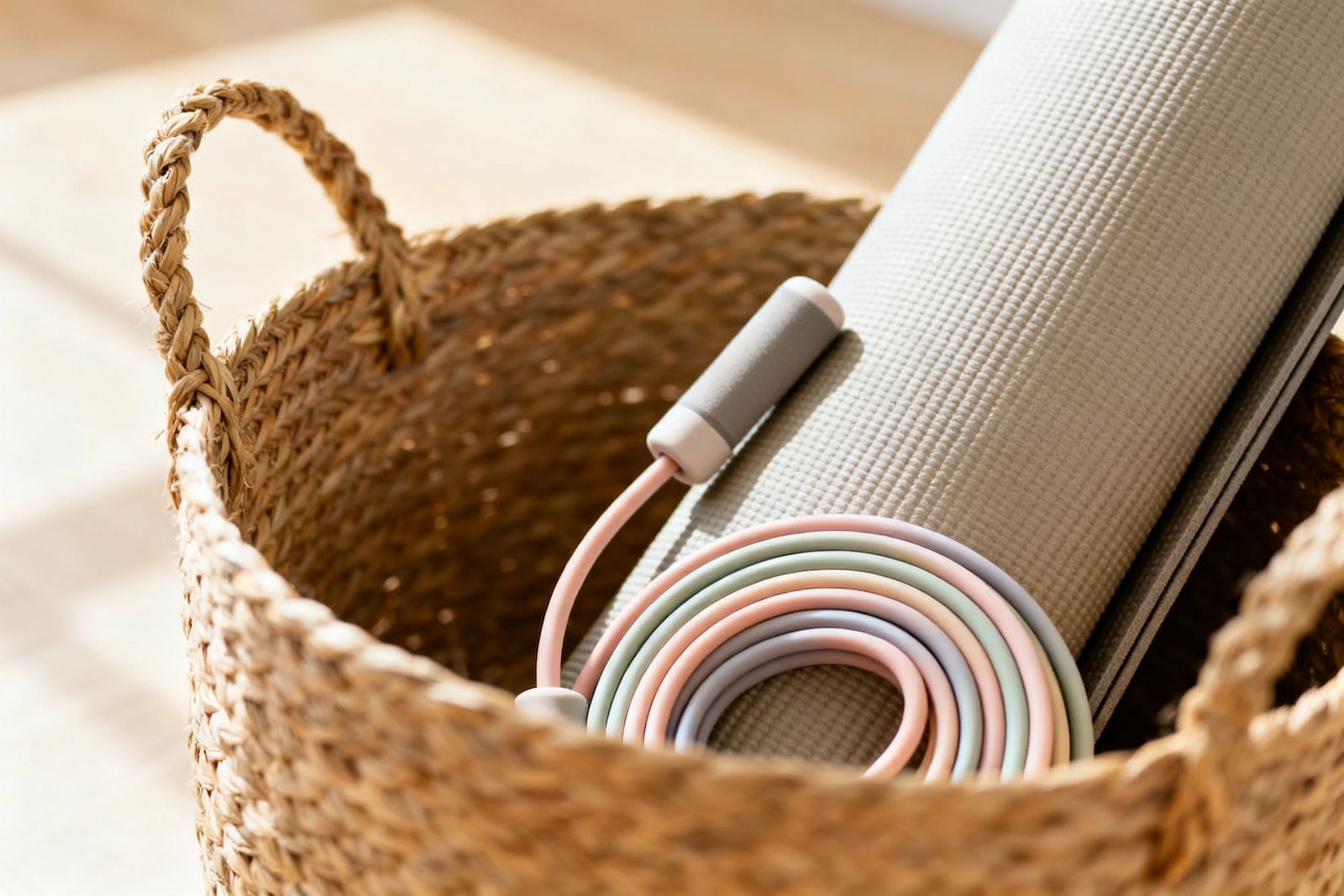
If your gym shares space with living areas, blend it in visually. Choose a mat in a neutral color and store gear in a lidded basket or fabric bin that matches your room. A small folding screen or curtain can hide the corner on non-workout days.
Use vertical space. A single peg rail or three wall hooks can hold bands, a rope, and a towel without clutter. Label small bins for “bands,” “handles,” and “mobility” so setup takes seconds.
Set Up the Space: A 6-Step Mini Plan
- Measure a 3′ x 6′ rectangle. Tape it out to see how it fits with furniture.
- Add flooring. Lay foam tiles or a stall mat; ensure edges are flush to avoid tripping.
- Install storage. Over-door organizer and a low bin under the sofa or bed.
- Assemble base kit. Mat, bands with door anchor, jump rope, and one strength add-on.
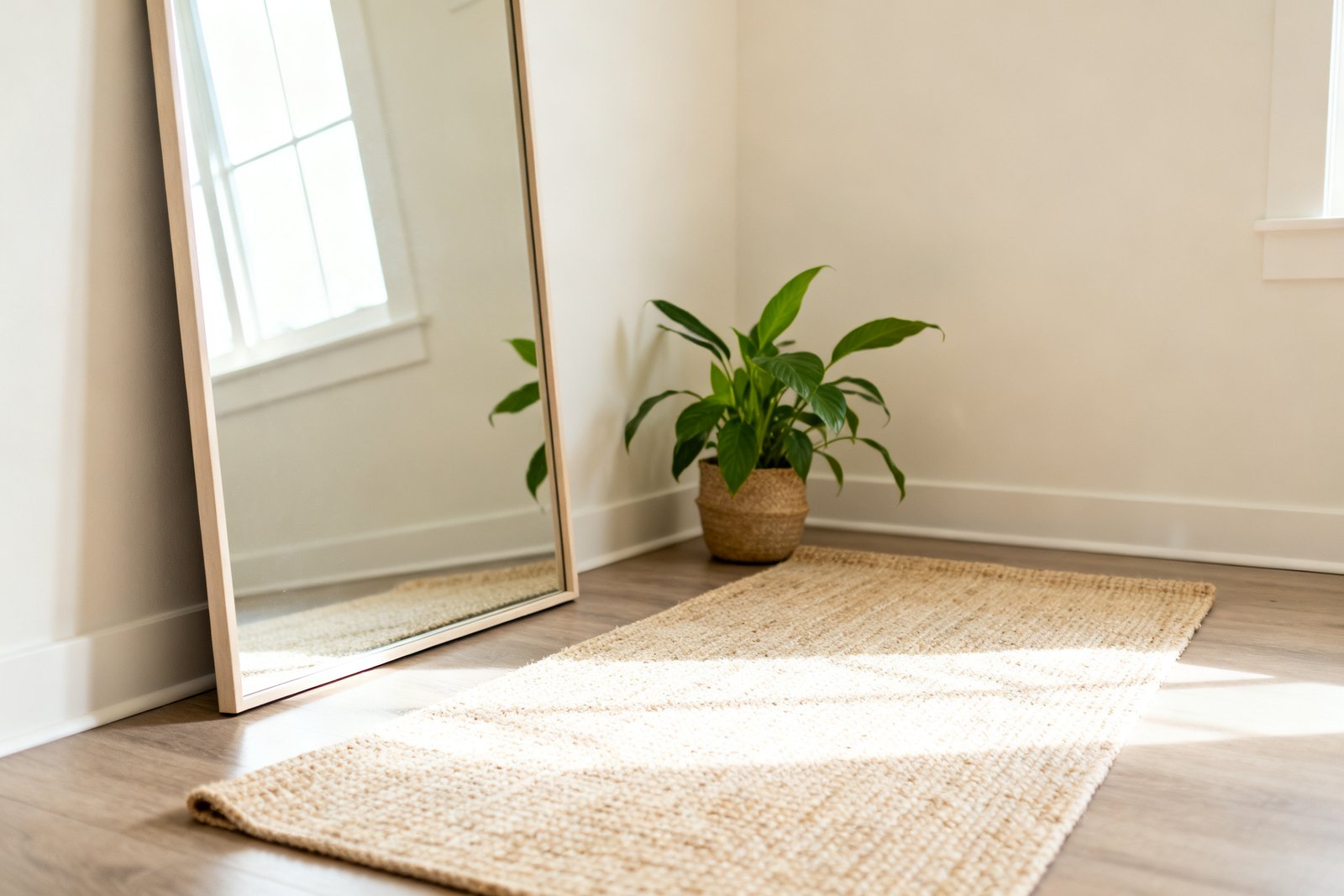
- Place a mirror if possible. A $10–$20 full-length mirror improves form and motivation.
- Set a charging spot for your phone/timer and a clip for a towel. Small comforts reduce excuses.
Example: Studio Apartment Corner Gym (~$150)
Space: 4′ x 6′ beside a bookshelf. Flooring: 6 interlocking tiles ($24). Storage: over-door shoe organizer ($14) and an under-bed bin ($16). Gear: long loop bands with door anchor ($28), fabric mini-bands ($12), a 25 lb kettlebell ($40 used), jump rope ($12). Mirror: thrifted full-length ($10).
Result: Strength (kettlebell + bands), cardio (rope), mobility (bands + mat), all stored out of sight. Setup time: under 2 minutes.
Program Your Workouts for Small Spaces
Simple Full-Body Circuit (20–30 minutes, 3′ x 6′ area)
- Warm-up (3 minutes): marching or rope, arm circles, hip hinges.
- Strength circuit (3 rounds): 8–12 kettlebell or dumbbell goblet squats; 8–12 band rows (door anchor); 8–12 floor presses with band or dumbbell; 20–30 seconds plank.
- Cardio finisher (4–6 minutes): 30 seconds jump rope, 30 seconds rest, repeat.
- Mobility (2–4 minutes): hamstring stretch with band, thoracic rotations, calf stretch.
No jumping? Swap rope for fast marches, step-backs, or mini-stepper intervals. Keep noise low with soft-soled shoes and a stall mat if you have neighbors below.
Where to Save vs. Where to Spend
Save
- Bands, rope, foam tiles: budget options work nearly as well as premium.
- Weights: buy used. Check local listings, garage sales, or community groups.
- Storage: repurpose bins or baskets you already own.
Spend (a little)
- Flooring if you lift heavier—prevents damage and reduces noise.
- One quality adjustable piece (adjustable dumbbells or a sturdy kettlebell) you’ll use weekly.
- Mirror or phone stand to check form—saves frustration and potential strain.
Mistakes to Avoid
- Buying too much at once. Start with a base kit and add only after two weeks of consistent use.
- Skipping flooring. Even a thin pad helps with grip and comfort.
- Ignoring storage. Clutter kills consistency; make cleanup part of the plan.
- Choosing gear that fights your space (e.g., long barbells in a narrow hallway).
- Overcomplicating programming. Repeat simple circuits and progress by adding reps, slowing tempo, or increasing band tension.
Troubleshooting Small-Space Challenges
Ceilings Too Low for Jump Rope?
Use a cordless rope or do fast step-touches, high-knee marches, or shadow boxing. For intensity, do intervals: 40 seconds on, 20 seconds off for 8–10 rounds.
No Door That Feels Sturdy for Anchors?
Swap to a suspension trainer with a wall or ceiling mount only if you can install properly. Otherwise, focus on floor-based rows using a towel around a sturdy table leg, or perform bent-over rows with a dumbbell or kettlebell.
Very Limited Storage?
Choose one weighted tool (adjustable dumbbells or a single kettlebell) and a set of long bands. Store inside a decorative ottoman or behind a sofa in a slim bin. Hang bands behind a curtain on a simple adhesive hook.
Concerned About Noise for Neighbors?
Avoid high-impact moves. Use slow-tempo squats, split squats, glute bridges, and band presses. Add intensity with isometric holds (20–40 seconds) and time-under-tension instead of jumps.
FAQ
How much should I budget to start?
$75–$150 covers a mat, bands, a jump rope, and one weighted tool (used). Add $20–$50 for better flooring if you have delicate floors or downstairs neighbors.
What if I only have a 3′ x 4′ space?
Prioritize standing and floor moves that don’t travel: squats, hinges, presses, rows with a door anchor, planks, and dead bugs. Store a single kettlebell under a chair and hang bands on a hook. Cardio can be step-touches, marching, or low-impact intervals.
Is a treadmill or bike worth it in a small apartment?
Only if you’ll truly use it 3+ times a week and you have a spot where it can live without blocking doors or windows. Otherwise, a mini stepper or jump rope gives similar benefits with a fraction of the space and cost.
How do I progress without buying heavier weights?
Slow the tempo (3–4 seconds down), add pauses at the hardest point, increase reps, shorten rest, use unilateral moves (single-arm presses, split squats), or stack band tension onto light dumbbells to make them feel heavier.
If you want to keep going, take a look at studio apartment layout tips.
Final Thoughts
A small-space home gym works best when it’s simple, reachable, and tailored to your goals. Start with a solid floor, a tidy storage plan, and a compact kit you’ll use often. Build gradually, keep the setup effortless, and your corner gym will pull its weight—without taking over your home or your budget.