
You don’t need a spare room or a Pinterest-perfect bay window to build a reading nook. You need a corner, some comfort, and a plan. Think “cozy command center,” not “library annex.” Ready to steal back a tiny patch of your home for books and bliss?
Let’s carve out your mini sanctuary—no contractor required.
Find the Sneaky Spot
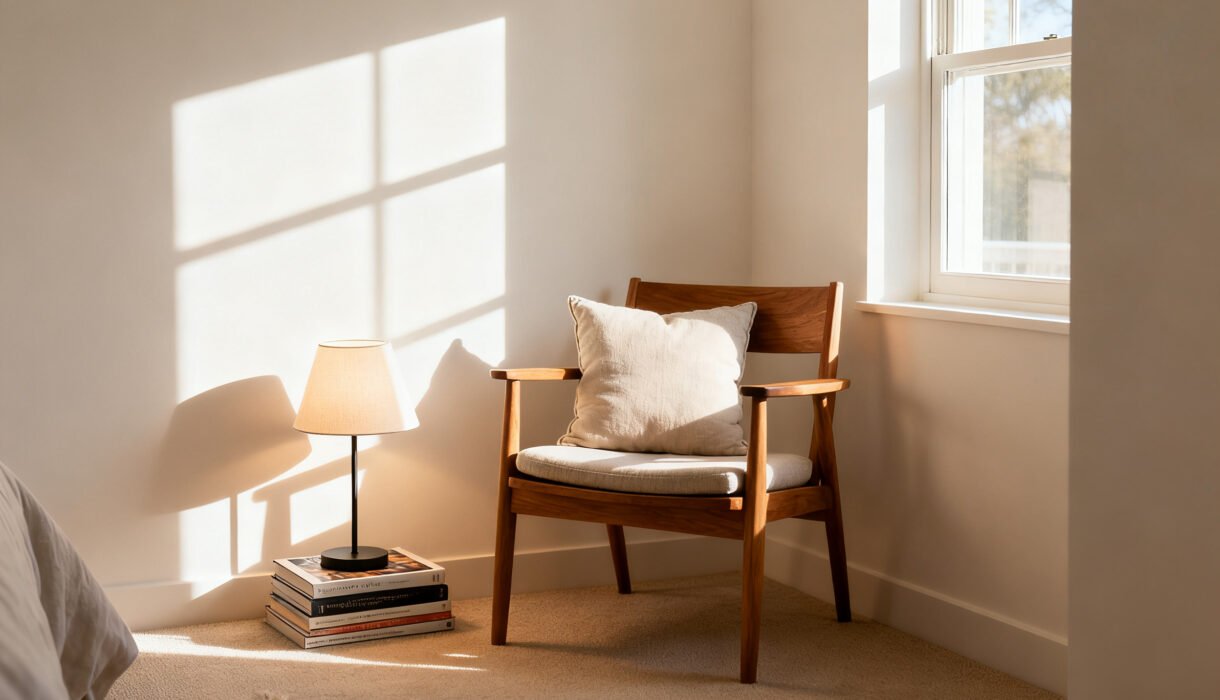
Small space = strategic thinking. You’re not looking for a room; you’re looking for a nook-shaped possibility. Corners, window ledges, the space beside a wardrobe, even that weird gap by the radiator?
Fair game.
- Corner takeover: A corner instantly feels contained. Slide in a chair or floor cushion and boom—instant nest.
- Window orbit: Natural light wins. If you’ve got a sill you can pad, that’s a built-in perch.
- Micro-closet conversion: Empty half a closet and add a cushion bench. Doors = built-in soundproofing (kind of).
- Hallway endcap: If you can fit a chair, a sconce, and a tiny shelf, you’ve found a nook.
Test the vibe first
Before you move furniture, sit on the floor with a pillow and read for 10 minutes. Too drafty? Too dark?
Too noisy? Fix those before you commit.
Pick Seating You’ll Actually Use
Your body will vote with its spine. Comfort rules, aesthetics follow.
IMO, choose seating that hugs you a little—no one wants to perch while reading a 400-page fantasy saga.
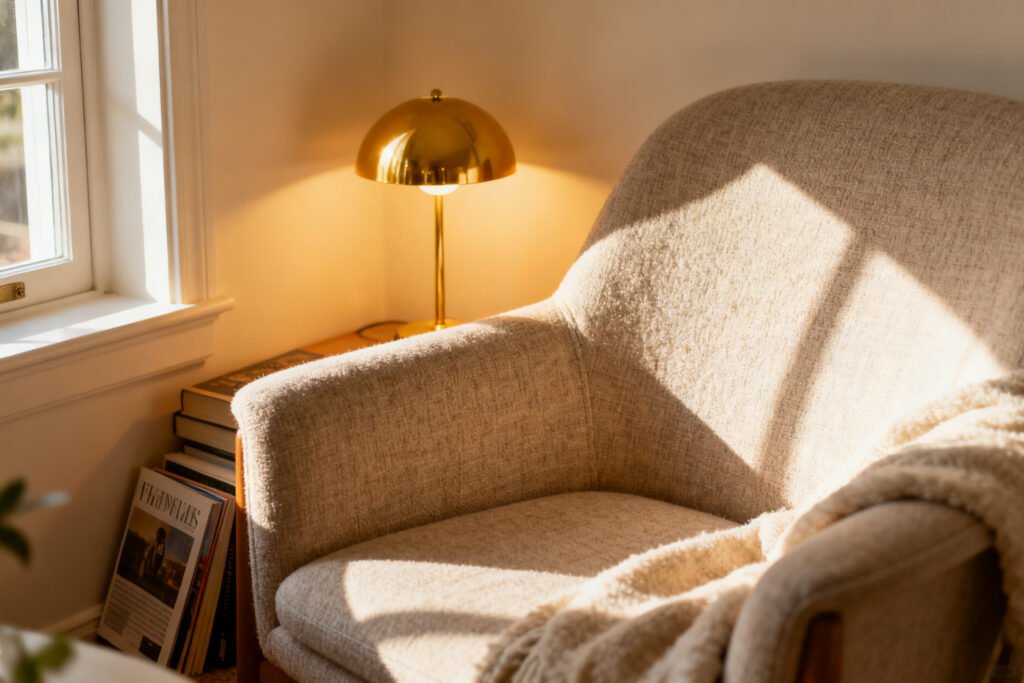
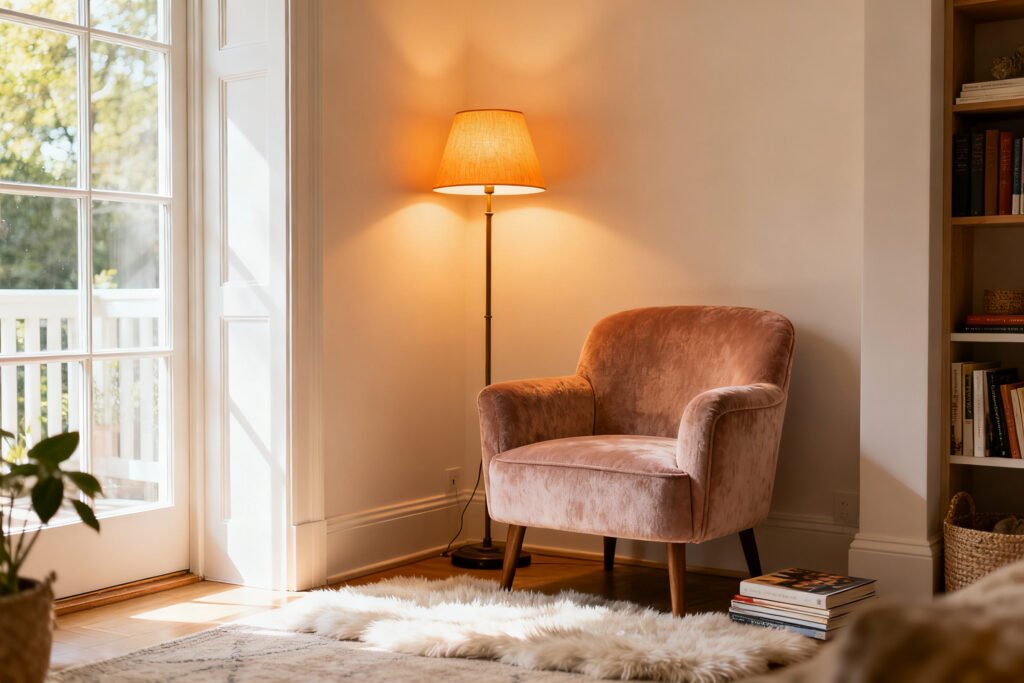
- Compact armchair: Look for a chair with a small footprint and supportive arms. Depth matters more than width.
- Floor lounge setup: Layer a thick rug, a floor cushion, and a back wedge pillow. It’s budget-friendly and super cozy.
- Bench + cushion combo: Perfect under windows or along a wall. Add a tufted cushion and throw pillows for lumbar support.
- Ottoman with storage: Sits like a pouf, hides the mess. Double win.
Ergonomics cheat sheet
- Back support: Keep one firm pillow behind your lower back.
- Feet grounded: Use a footstool if your legs dangle. Better posture, longer reading sessions.
- Angle of recline: Aim for slightly reclined, not slumped.
Your neck will send thank-you notes.
Light It Like You Mean It
Good lighting turns a corner into a portal. Bad lighting turns it into a nap trap. You want layers, not interrogation-room vibes.
- Task light: A focused reading lamp or gooseneck sconce. Place it behind your shoulder, opposite your dominant hand.
- Ambient glow: A small table lamp or LED strip along a shelf. Soft and warm—think 2700–3000K bulbs.
- Dimmer, always: Add a plug-in dimmer. It costs a few bucks and makes you feel fancy.
Small-space lighting hacks
- Wall-mounted sconces: Plug-in versions avoid drilling and eat zero floor space.
- Clip-on lights: Attach to shelves or headboards.
Ultra compact, very clever.
- Candles: Lovely, but keep them away from flammable throws and your bangs. Safety first, vibes second.
Surround Yourself with Smart Storage
You don’t need a towering bookcase. You need a landing pad for your current reads, tea mug, and the 14 bookmarks you swear you’ll stop losing.
- Slim side table: Choose one with a shelf or drawer. Round tables fit better in tight spaces.
- Wall shelves: Mount 1–2 shelves within arm’s reach. Keep only active reads and a plant (because oxygen).
- Magazine rack or basket: Corrals books without shouting. Slide it under a bench or next to your chair.
- Over-the-arm caddy: For remotes, reading glasses, pens. No more fumbling under cushions.
Keep it intentionally minimal
Stick to 5–7 books in the nook at once. Rotate the stack weekly. Less clutter = more reading, FYI.
Textiles Do the Heavy Lifting
Cozy doesn’t happen by accident.
Fabrics create warmth, soften sound, and trick your brain into thinking you live inside a hug.
- Layer your base: Start with a plush rug or sheepskin underfoot.
- Pillow trio: One firm lumbar, one soft squishy, one fun accent. That’s the comfort formula.
- Throw blanket strategy: Choose breathable but warm—cotton knit or lightweight wool. Avoid static-heavy synthetics.
- Curtains: If your nook faces a window, light-filtering curtains deliver glow without glare.
Color and pattern, but make it calm
Pick a primary color family (cool blues/greens or warm rusts/golds), then add a single pattern.
Too many prints = visual noise = doomscrolling instead of reading.
Define the Nook (Without Building Walls)
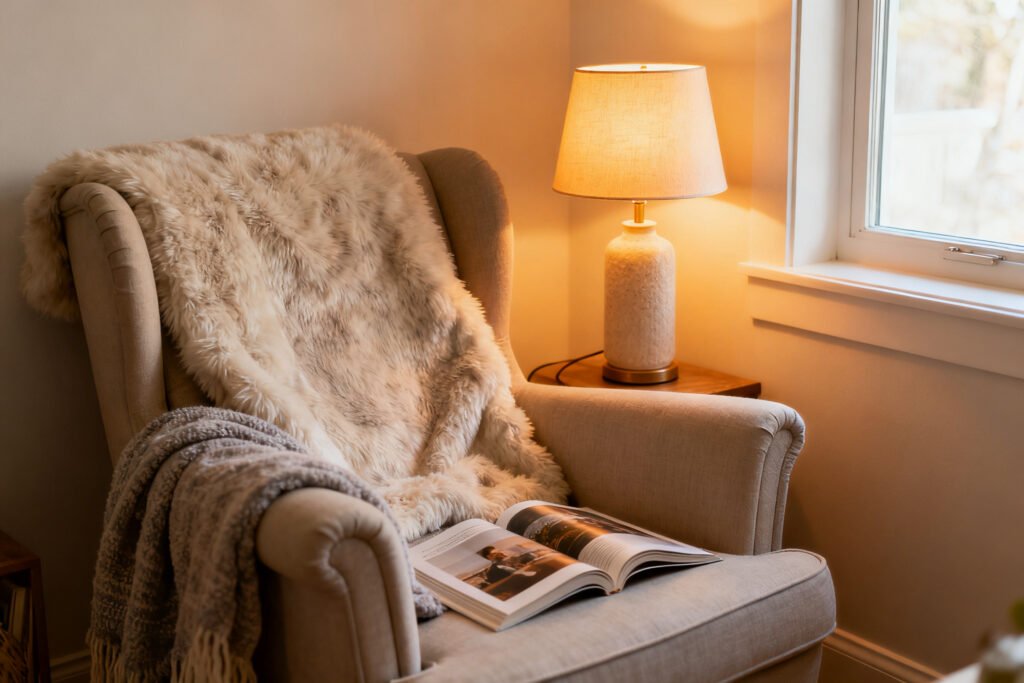
Signal to your brain: “We read here.” You can zone a nook inside any room with a few simple moves.
- Mini rug: An accent rug frames the space and makes your chair feel anchored.
- Art or a wall hanging: A single piece above the chair tells your eyes where to land.
- Folding screen: Adds privacy in studios or shared rooms. It looks intentional, not improvised.
- Plant barrier: A tall plant softens edges and hides chaos from other zones.
A cozy nook lands best in a calm, tidy room. The free 5-Day Budget Home Reset helps you clear the way.
Create a tiny ritual station
Add a coaster for tea, a candle or diffuser, and a bookmark dish. Small rituals cue your brain to focus (and make the nook feel a little bit fancy, IMO).
Make It Personal (Because It’s Yours)
A great reading nook feels like a secret—yours.
Skip generic decor and add details that spark joy without cluttering the space.
- One sentimental object: A framed photo, a travel trinket, or a signed book front and center.
- Sound control: White noise machine or a tiny speaker for lo-fi beats. Or silence, if you’re a purist.
- Scent profile: Choose one candle or diffuser scent for reading time only. Pavlov would be proud.
- Reading tools: Notebook, highlighters, sticky tabs. Keep them contained so the vibe stays calm.
Budget-Friendly Moves That Look High-End
You can splurge if you want, but you don’t have to. Small tweaks carry big style points.
- Thrift the chair, splurge the cushion: Comfortable padding transforms anything.
- DIY shelf: One stained board + two brackets = chic wall perch.
- Upgrade bulbs: Swap harsh bulbs for warm LEDs. Instant luxury for a few bucks.
- Peel-and-stick wallpaper: A single panel behind your chair defines the zone like magic.
FAQ
How small can a reading nook be and still feel comfy?
You can make a nook in as little as 3×3 feet.
Prioritize a supportive seat, a small light, and one surface for your drink or book. If you can stretch your legs and reach your lamp without contorting, you’re golden.
What’s the best lighting color for reading?
Aim for warm white bulbs around 2700–3000K. They keep your eyes relaxed and make the space feel inviting.
Pair that with a focused task light so the page stays crisp.
Do I need a window for a good reading nook?
Nope. Windows help, but you can fake daylight with layered lighting. Add a warm ambient lamp and a directional reading light, and you’ll forget what time it is anyway.
For more cozy small-space ideas, see make a small bedroom look bigger, budget lighting ideas, and layer rugs like a designer.
How do I keep my nook from turning into a clutter magnet?
Give everything a home.
Use a small basket for current reads, a dish for bookmarks and glasses, and a tray for your mug. When you finish reading, reset the space in 30 seconds—future you will cheer.
What seating works best for small studios?
Try a compact armchair with high legs (it looks lighter) or a floor cushion setup that tucks away. Storage ottomans also pull double duty and keep visual clutter down.
How can I make my nook feel private in a shared space?
Use a folding screen, a tall plant, or a bookcase-as-divider.
Add headphones or a white noise machine to reduce distractions. Train your roommates: when the nook light’s on, you’re “out.”
Conclusion
You don’t need square footage—you need intention. Pick a spot, add a seat, layer light and textiles, and personalize the details.
Keep it simple, keep it comfy, and guard it like a dragon guards treasure. Your books just found their forever home, and honestly, so did your Sunday afternoons.
Building a nook into a bedroom refresh? The Budget Bedroom Makeover Planner helps you plan it on a budget.