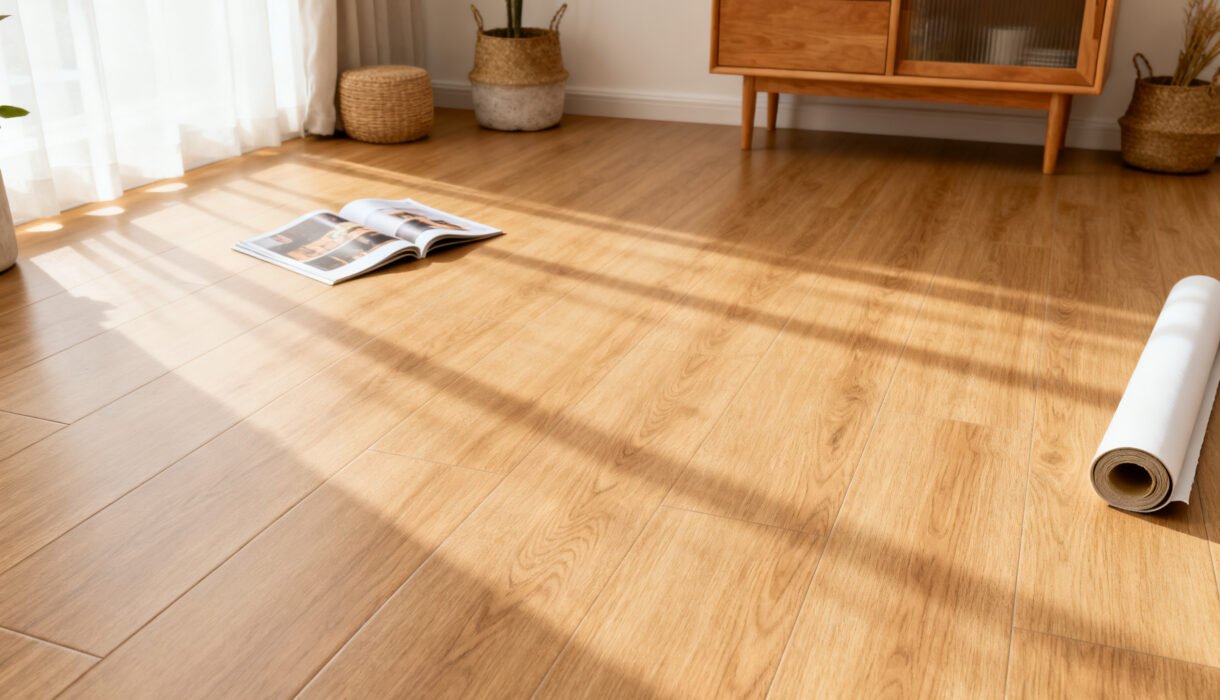

Your rental’s floors don’t have to scream “temporary.” You can upgrade them without glue, grout, or a phone call to your landlord that ends in a no. Removable, renter-friendly flooring looks good, installs fast, and peels up when you bounce. Ready to ditch the dingy carpet and mystery vinyl?
Let’s fix those floors without losing your deposit.
Peel-and-Stick Vinyl Tiles: Chic Without Commitment
Peel-and-stick vinyl tiles might be the hero of renter flooring. They’re budget-friendly, come in wild patterns, and install in a weekend with a knife and a ruler. No fumes, no special tools, no drama.
- Where they shine: Kitchens, bathrooms, laundry closets, entryways.
- Pros: Water-resistant, easy to cut, tons of styles (hello, faux marble).
- Cons: Cheap ones scuff fast; grout-look seams can trap dirt.
Install Tips That Save Your Sanity
- Prep like a perfectionist: Clean, degrease, and dry the floor.
Bumps telegraph through vinyl, so fill dips and sand ridges.
- Dry lay first: Test your layout from the center of the room so cuts land at the edges, not front and center.
- Score, don’t saw: Most tiles snap with a firm score and bend—no power tools needed.
- Edge insurance: Add removable double-sided floor tape around high-traffic edges for extra hold.
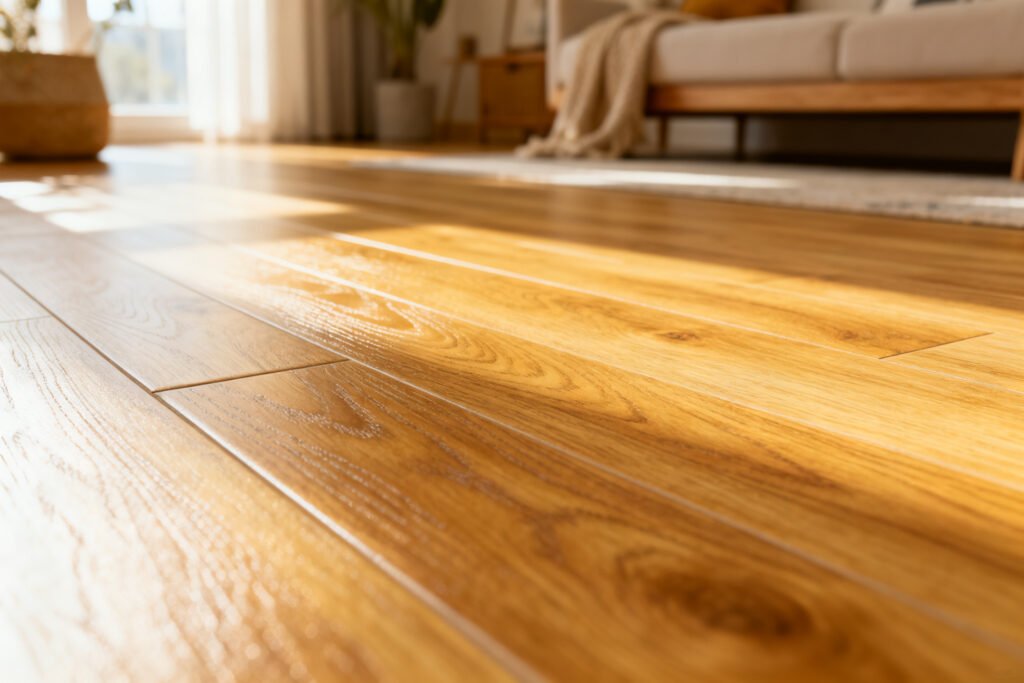
Floating Laminate and Click-Lock Vinyl: The “Real Floor” Look
If you want your rental to feel custom, floating laminate or click-lock vinyl planks deliver. They lock together and “float” over the subfloor—no nails, no glue, just a clean perimeter expansion gap you hide with quarter-round.
- Where they shine: Living rooms, bedrooms, dining rooms.
- Pros: Looks like wood, installs fast, durable under pets and chairs.
- Cons: Heavier lift to install; you’ll stash extra planks for future touch-ups.
Do I Need Underlayment?
- Yes, usually: A thin foam underlayment reduces sound and evens out tiny imperfections.
- Moisture barrier: For concrete slabs or basements, use underlayment with a vapor barrier.
- Transition strips: Install threshold pieces where your new floor meets tile or carpet—keeps everything clean and safe.
Large-Format Vinyl Mats: Instant Room Glow-Up
Don’t want a full install? Enter oversized vinyl mats and printed rugs.
They cover ugly floors with bold patterns, wipe clean, and roll up when you move. It’s basically a phone filter for your floors.
- Where they shine: Renters with little time, kitchens with weird layouts, messy zones.
- Pros: No install, no residue, renter gold.
- Cons: Can curl at corners; not a perfect wall-to-wall solution.
Keep Mats From Sliding
- Rug pads: Use a non-slip pad made for hard floors to prevent shifting.
- Edge weights: Tuck edges under furniture or use discreet corner weights.
- Heat trick: A quick warm-up with a hair dryer relaxes curls from shipping.
Carpet Tiles: Cozy, Modular, and Pet-Proof
Carpet tiles are like LEGO for floors. You stick them down with removable adhesive tabs, then swap stained tiles instead of crying over the whole rug.
Choose low-pile tiles for high-traffic areas and looped styles for durability.
- Where they shine: Bedrooms, offices, playrooms.
- Pros: Soft underfoot, patterns for days, easy spot-replacements.
- Cons: Not ideal for wet areas; can fade in strong sunlight.
Pattern Play That Doesn’t Try Too Hard
- Checkerboard: Alternate two neutral colors for a hotel-lobby moment.
- Quarter-turn: Rotate each tile 90 degrees for subtle texture—simple and upscale.
- Border trick: Frame the room with a darker color for depth and a custom look.
Peel-and-Stick Carpet Planks: The Grown-Up Rug
Carpet planks run in long strips that look like broadloom without the install headache. They’re great for long hallways or creating a “zoned” living area in an open plan without a giant rug budget.
- Where they shine: Hallways, studio apartments, living room “areas.”
- Pros: Seamless vibe, modular replacement, cozy sound absorption.
- Cons: More cutting around corners; choose adhesive tabs designed for clean removal.
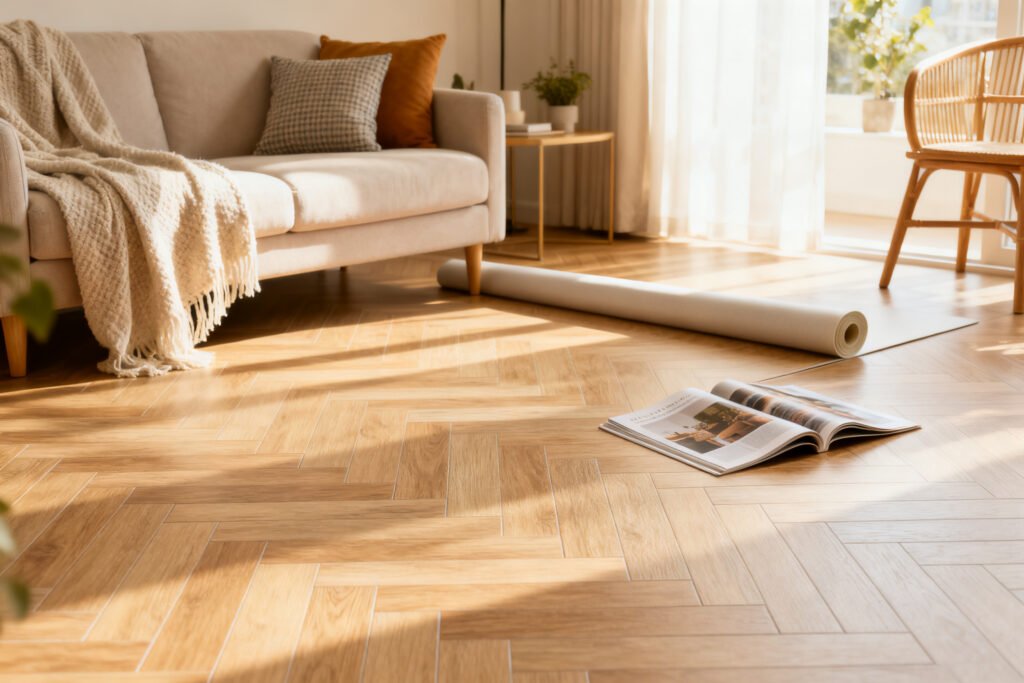
Real-Look Removable Vinyl Sheets: Wall-to-Wall Without Regret
Modern sheet vinyl can look shockingly good—think terrazzo, encaustic tile, or limestone. You can lay it loose with minimal double-sided tape at the edges and seams.
Trim to fit, tuck under baseboards or add quarter-round, and pretend you always had taste.
- Where they shine: Rentals with awful tile you want to completely cover.
- Pros: Big coverage, minimal seams, easy to clean.
- Cons: Tricky to maneuver in small bathrooms; you’ll need precise cuts around toilets and vents.
How to Cut Around the Weird Stuff
- Template it: Use kraft paper to trace shapes around toilets and door jambs, then transfer to vinyl.
- Sharp blade always: Change utility blades often to avoid ragged edges.
- Finish edges: Use quarter-round or flexible trim with removable adhesive for a pro finish.
Temporary Floor Paint and Stencils: Bold, Fast, and FYI, More Work
If your landlord okays paint (get it in writing), a coat of floor paint plus a stencil can transform concrete or beat-up wood. It’s not truly “peel off,” but you can repaint back to neutral before moving out.
- Where they shine: Porches, concrete bedrooms, ugly wood you can’t rip up.
- Pros: Unlimited design potential, budget win, high impact.
- Cons: Prep-heavy, needs drying time, not ideal for high-moisture zones without sealing.
New floors look best over a clean, clear space. The free 5-Day Budget Home Reset helps you reset first.
Seal the Deal
- Primer matters: Use a bonding primer for slick surfaces like sealed concrete.
- Topcoat: Finish with a water-based polyurethane for durability and easier cleanup.
- Slip resistance: Add a grit additive in wet areas so you don’t eat floor.
Smart Protection: Make It Last, Make It Removable
Let’s talk insurance. You want your floors to look fresh and your landlord to remain chill.
A little prep and protection go a long way.
- Felt pads everywhere: Chairs, tables, plant stands—pad it all to prevent dents and scratches.
- Mats at entry: Trap grit before it turns your vinyl into sandpaper art.
- Clean with the right stuff: Skip harsh solvents; use pH-neutral cleaners and microfiber mops.
- Test removal: Try a corner lift after 24 hours to confirm adhesives won’t nuke the original floor.
Budgeting and Sourcing: Get the Look Without the Panic
You don’t need a designer budget. You just need a calculator and a little discipline—IMO, the unsexy hero of DIY.
- Measure twice, add 10%: Waste happens—especially with patterns and odd rooms.
- Order samples: Colors shift in real light, and thickness varies a ton. Two bucks now saves 200 later.
- Mix high and low: Splurge in main rooms, use mats or basic peel-and-stick in low-traffic spaces.
- Watch sales: Big-box stores rotate promos; online shops offer open-box deals if you’re flexible.
FAQ
Will removable flooring damage my existing floors?
If you prep and choose the right adhesive, you’ll avoid damage.
Use products labeled “removable” and test a small area first. Clean thoroughly before install so adhesives grab the flooring, not the dust.
Can I put removable flooring over tile?
Yes, with caveats. Fill deep grout lines with a floor leveler so tiles don’t telegraph through.
Floating floors handle tile best; peel-and-stick works if the surface feels smooth after leveling.
For more renter-friendly ideas, see renter-friendly damage-free hacks, make a rental look expensive, and renter-friendly decor that won’t damage.
What about bathrooms and moisture?
Go for vinyl—tiles, planks, or sheet. Seal edges with a thin bead of removable caulk near tubs and toilets. Skip carpet in moisture zones unless you enjoy mold (don’t).
How do I remove it when I move out?
Warm the adhesive with a hair dryer, lift gently from a corner, and pull back low and slow.
Any sticky residue comes off with adhesive remover or a vinegar-and-water mix, then a rinse.
Can I layer over existing vinyl or laminate?
Usually, yes. Ensure the surface is clean, flat, and stable. For floating floors, watch total height so doors still clear and transitions look intentional.
What’s the most durable renter-friendly option?
Click-lock vinyl planks win for durability-to-effort ratio.
They resist water, shrug off pets and kids, and look like real wood—FYI, they also boost your space’s vibe instantly.
Conclusion
You don’t need permanent floors to make a permanent impression. From peel-and-stick tile to floating planks and vinyl mats, you’ve got options for every room, budget, and attention span. Pick what matches your life, protect it with smart habits, and enjoy the glow-up—deposit intact, pride fully installed.
IMO, that’s the best kind of renovation.