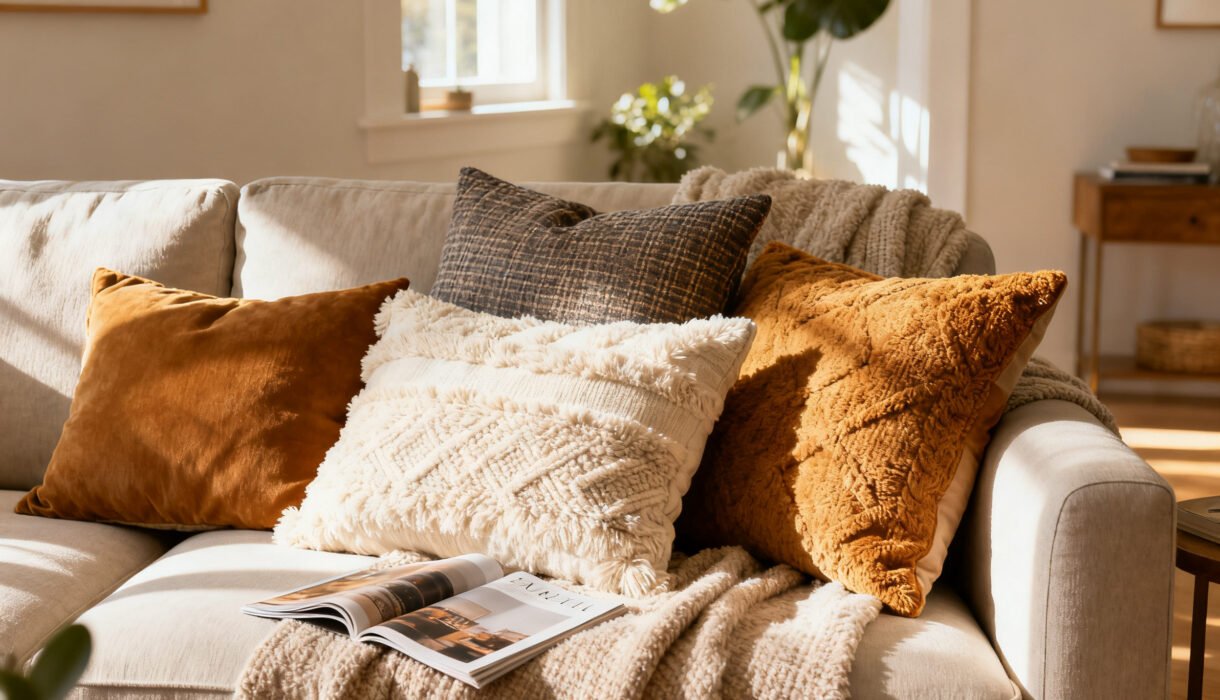

You can buy gorgeous furniture and still end up with a sad sofa if your pillows look cheap. The good news? The right throw pillows can fake “designer” faster than you can say “bouclé.” Let’s skip the fluff and get to exactly how to choose throw pillows that look expensive—without actually blowing your budget.
Start With Quality Fabrics (They Do the Heavy Lifting)
Your pillow fabric sets the tone.
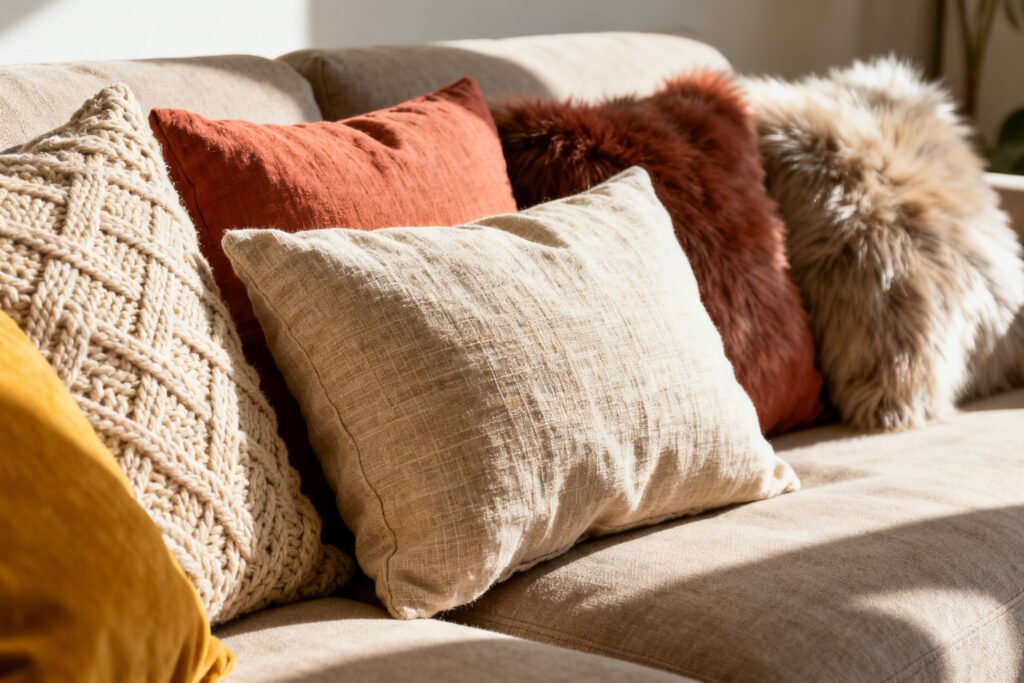
Even from across the room, you can spot quality. Aim for materials that have texture, weight, and a soft hand feel.
- Linen, velvet, wool, and bouclé read high-end instantly. They photograph beautifully and wear well.
- Skip thin polyester that shines under light. That reflective sheen screams “bargain bin.”
- Performance fabrics can look luxe too—just pick matte finishes and subtle weaves.
Pro tip: Mix your textures
Pair a nubby linen with a smooth velvet, or a soft bouclé with a tight woven cotton. The contrast adds dimension and looks intentional—aka designer.
Choose Inserts Like a Stylist
Inserts matter more than you think. A sad, flat pillow makes even a good cover look meh.
You want plump, structured, and huggable.
- Down or down-alternative where possible. They drape better and hold that classic “karate chop” if you like that look (controversial, IMO, but it works).
- Size up your insert by 1–2 inches bigger than the cover. For an 18″ cover, buy a 20″ insert. Instant fullness.
- Look for high fill power or dense down-alternative fibers. Avoid lumpy polyfill at all costs.
When to go firmer
If the pillow has heavy embroidery or thick fabric, a slightly firmer insert keeps it from slouching. You want volume, not a pancake.
Nail the Color Story (Neutrals + One Bold Moment)
Expensive-looking pillows usually live in a refined palette.
You don’t need 12 colors fighting for attention.
- Pick a base family: warm neutrals (camel, cream, chocolate) or cool neutrals (charcoal, slate, ivory). Then layer tones within that family.
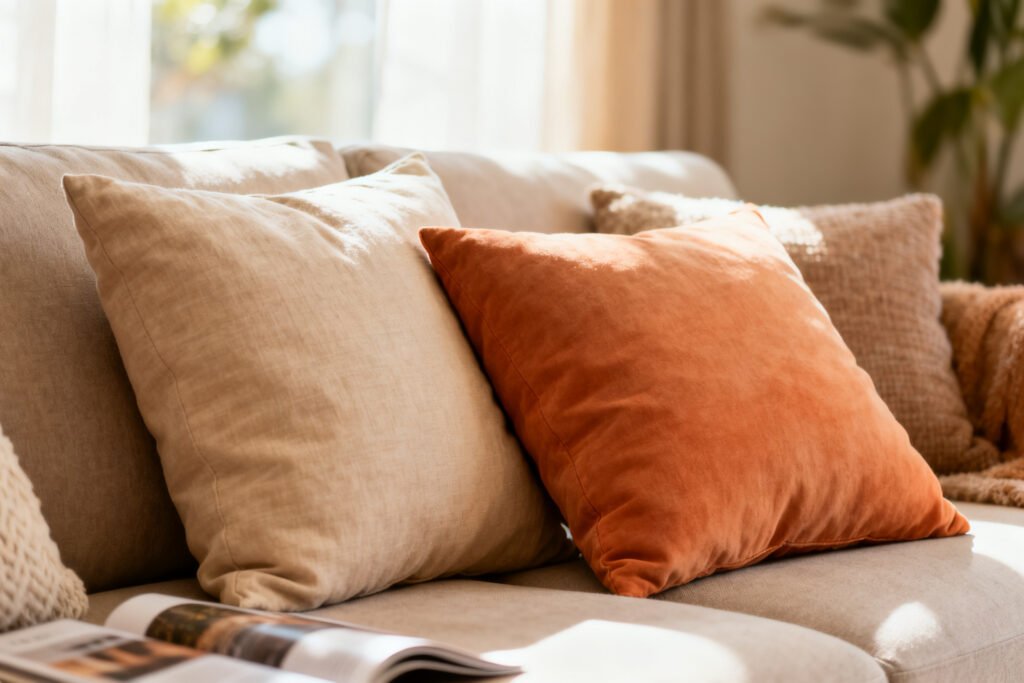
- Add one accent in a deep, saturated hue—think olive, oxblood, indigo, or rust. Jewel tones look luxe without trying.
- Avoid super bright brights unless your room is ultra-modern. Neon pink rarely whispers “custom upholstery.”
Pattern strategy
Go for patterns with depth, not noise. Try:
- Organic motifs like block prints or painterly stripes
- Understated geometrics with texture instead of loud color
- One “hero” pattern + two solids in textured fabrics
Mind the Details: Zippers, Seams, and Trim
Small details separate budget from bougie. Inspect construction like a detective.
- Hidden or metal zippers feel elevated. Avoid plastic-y exposed zips.
- Pattern matching at seams (when possible) signals quality.
- Piping and flanges work when subtle and tonal. Loud contrast piping can look dated.
- No flimsy tassels that fray in a week. If you love tassels, pick fewer, chunkier ones in cotton or wool.
Embroidery and appliqué
A little goes a long way.
Choose tactile, well-stitched embellishments in muted palettes. If it looks like it’ll snag on your ring, keep scrolling.
Get the Right Sizes and Shapes (Your Sofa Will Thank You)
Scale matters. Tiny pillows on a deep sofa look like afterthoughts.
Think variety, but with purpose.
- Standard go-tos: 22″ or 24″ squares for sofas, 20″ for accent chairs.
- Mix shapes: two large squares, one lumbar, maybe a smaller square. Asymmetry feels designer-y and relaxed.
- Deep sofas love oversized squares. Petite sofas look best with slightly smaller sets to avoid crowding.
Lumbar love
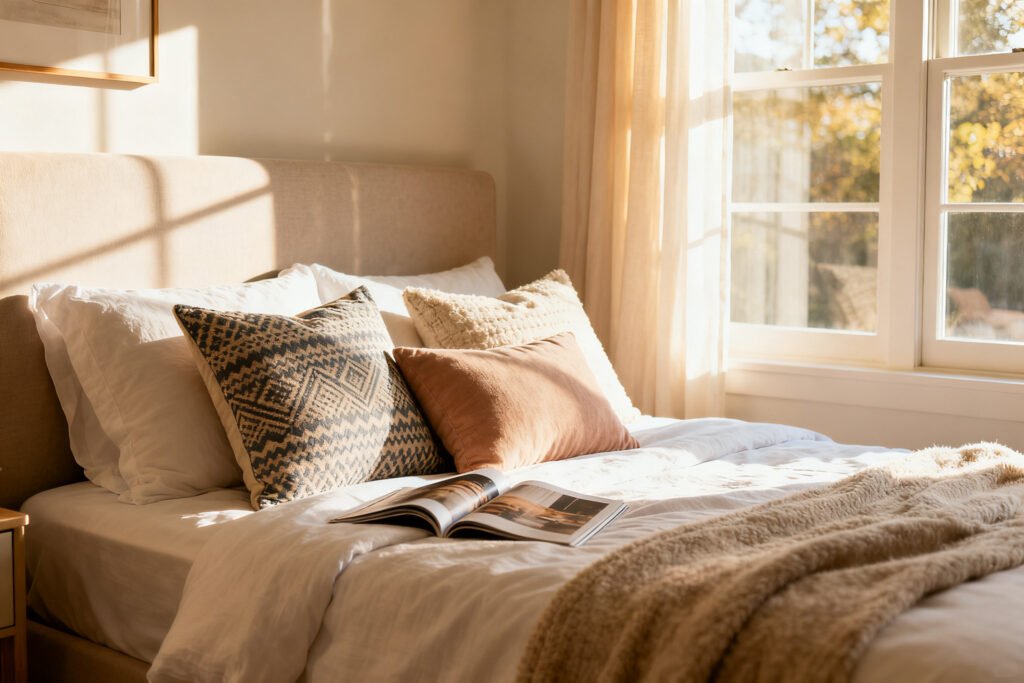
A single long lumbar on a chair or bed can look insanely custom.
Try 12×24, 14×36, or even 12×48 on a king bed. It’s a power move.
Curate Like a Capsule Wardrobe
Don’t toss every pretty pillow on the couch. Build a tight collection you can rotate through seasons without buying 20 more covers.
- Anchor pillows: 2–3 in solid, textured neutrals (linen, wool, bouclé).
- Statement pillow: 1 pattern or rich velvet in a deep color.
- Accent piece: 1 lumbar with subtle print or stripe to break it up.
FYI: Two great sets beat eight okay ones.
Your eyes need breathing room. Your sofa needs actual room.
Shop Smart: Where to Splurge vs. Save
You don’t need to go full custom.
You just need to know where quality counts.
- Splurge on: inserts, one hero pillow in artisan fabric, or performance velvet that won’t go bald after Netflix season three.
- Save on: solid linen covers, simple weaves, or seasonal swaps like boucle in winter, cotton in summer.
- Mix sources: Pair a designer fabric lumbar with affordable textured solids. No one will clock it.
Pillows look most luxe against a tidy, styled room. The free 5-Day Budget Home Reset helps you set the stage.
Hidden gems to look for
- YKK zippers listed in the product details
- Natural fiber content like 100% linen or a wool blend
- Hand-loomed or block-printed notes for subtle, artisanal variation
Styling Basics: How Many and How to Place Them
Let’s keep this easy and chic.
- Standard sofa: 5 pillows max—two large on each side and one center lumbar or hero square.
- Sectional: 5–7 pillows—load the corner with the biggest pair, balance the ends with medium and a lumbar.
- Accent chair: 1 lumbar or 1 small square. Don’t smother it.
Color placement
Put your richest color near the center or corner to anchor the look.
Flank with textured neutrals. It reads composed, not chaotic.
Care and Longevity (Because Pillows Do Real Life)
Expensive-looking pillows stay looking good. Treat them like part of your outfit that you actually maintain.
- Fluff often and rotate inserts to prevent lopsided lounging dents.
- Spot clean and vacuum seams—crumbs ruin the vibe fast.
- Steam, don’t iron textured fabrics to avoid flattening the weave.
- Sunlight check: Keep rich colors out of direct sun to prevent fading.
FAQ
How many patterns can I mix without it looking chaotic?
Two patterns plus one solid usually hits the sweet spot.
Keep patterns in the same color family and vary the scale—one larger, one smaller. Balance them with textured solids to calm the look.
For more budget styling tricks, see make your home look expensive, layer rugs like a designer, and budget curtain ideas.
What if I hate the “karate chop” trend?
Then skip it. Fluff the pillow, smooth the front, and let it sit tall.
A good insert and quality fabric carry the luxe look with or without the chop, IMO.
Do I need to match my throw pillows to my rug or curtains?
Match vibes, not exact colors. Pull one or two tones from your rug or art, then add complementary neutrals. Over-matching looks staged; coordinated looks curated.
Are patterned backs a waste?
Not if your sofa floats or your chairs show both sides.
Otherwise, spend on the front fabric and keep the back a coordinating solid to cut costs without losing style.
What size pillows work best on a bed?
For a queen, try two 24″ squares in front of your sleeping pillows plus a 12×36 lumbar. For a king, go bigger—26″ euros or three 24″ squares with a long lumbar. Clean, layered, and plush.
Conclusion
You don’t need a designer budget—just a designer filter.
Choose tactile fabrics, size up your inserts, edit your color palette, and pay attention to details like zippers and seams. Curate a few great pillows, place them with intention, and boom: your sofa looks custom. Minimal effort, maximum “Where did you get those?” energy.
Styling pillows as part of a bedroom refresh? The Budget Bedroom Makeover Planner helps you plan the whole look.