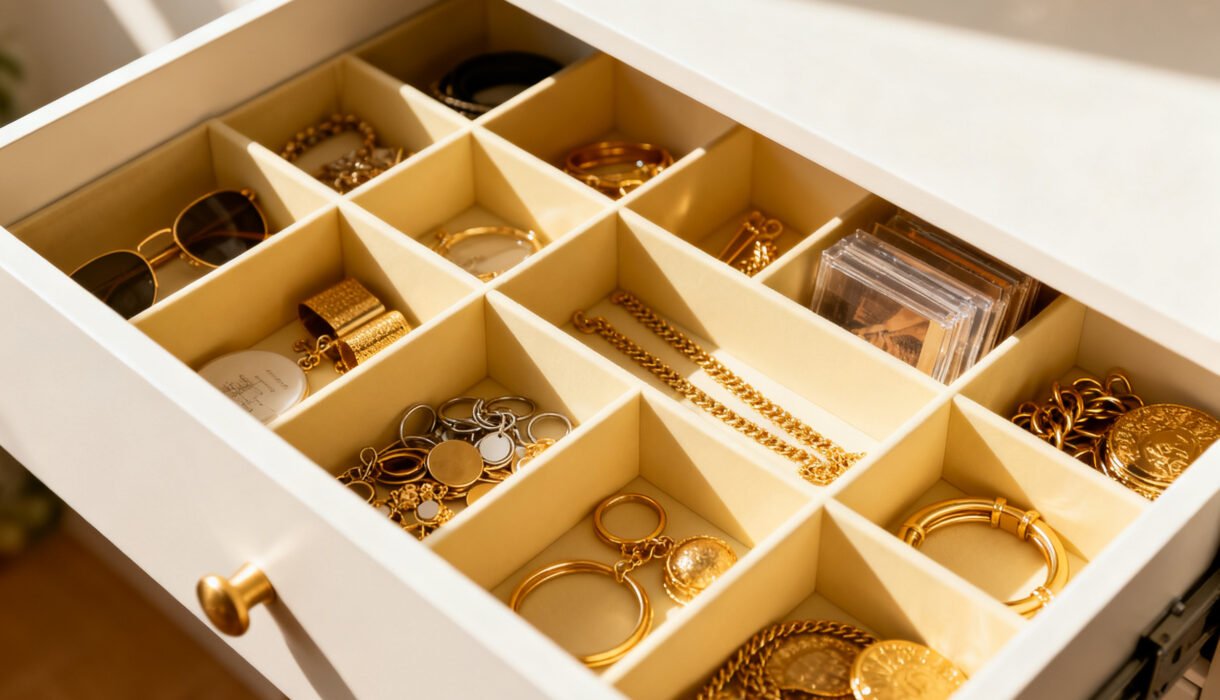

Your junk drawer is not a black hole. It just acts like one because you keep feeding it batteries, rubber bands, and mystery keys like snacks. Good news: you can tame it in under an hour and keep it that way without becoming a label-making tyrant.
Ready to turn chaos into “oh hey, I can actually find things”?
Admit What the Drawer Is (and Isn’t)
You don’t need a museum. You need a functional catch-all for small, useful stuff. That’s it.
Set a rule: Only keep items you use at least once a month or that solve common home problems. If it’s sentimental, broken, or super specific (like a rogue drill bit), it lives elsewhere.
What Belongs in a Junk Drawer
- Everyday tools: tape, scissors, mini screwdriver, super glue
- Small fix-it items: batteries, Command strips, felt pads
- Quick-grab gear: lighter, matches, USB stick, charging cable
- Writing things: pens, Sharpie, notepad
- House basics: spare keys (labeled), stamps, measuring tape
What Definitely Doesn’t
- Old tech fossils: dead chargers, ancient phones
- Hardware graveyard: 87 random screws you’ll “use someday”
- Paper piles: receipts, mail, warranties (create a paper spot elsewhere)
- Anything mystery: if you don’t know what it is, you don’t need it
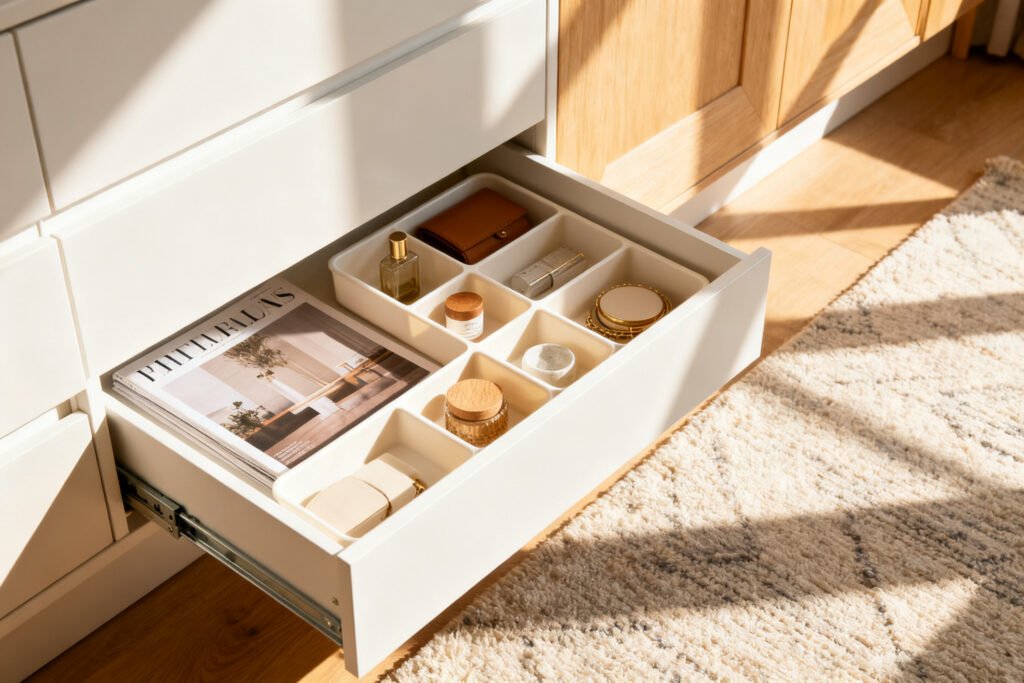
Empty It. Sort Fast. No Overthinking.
Dump everything on a counter or table.
Yes, all of it. You’ll sort faster when you see the mess in daylight. Use the Four-Pile Blitz method:
- Keep – useful and in working order
- Toss – trash, broken, dried-up, mystery alien pieces
- Relocate – belongs elsewhere (toolbox, office, car)
- Donate – duplicates or extras someone else can use
Give yourself a 15-minute timer.
Go with gut decisions. IMO, the more you think, the more nonsense you’ll justify.
Quick Tests for Keep vs. Toss
- Pen test: If it doesn’t write immediately, it’s gone.
- Battery test: Keep a cheap tester or label “NEW” and “USED” bags.
- Cable test: If you don’t know the device, toss or donate.
- Key test: Can’t name the door?
Say goodbye.
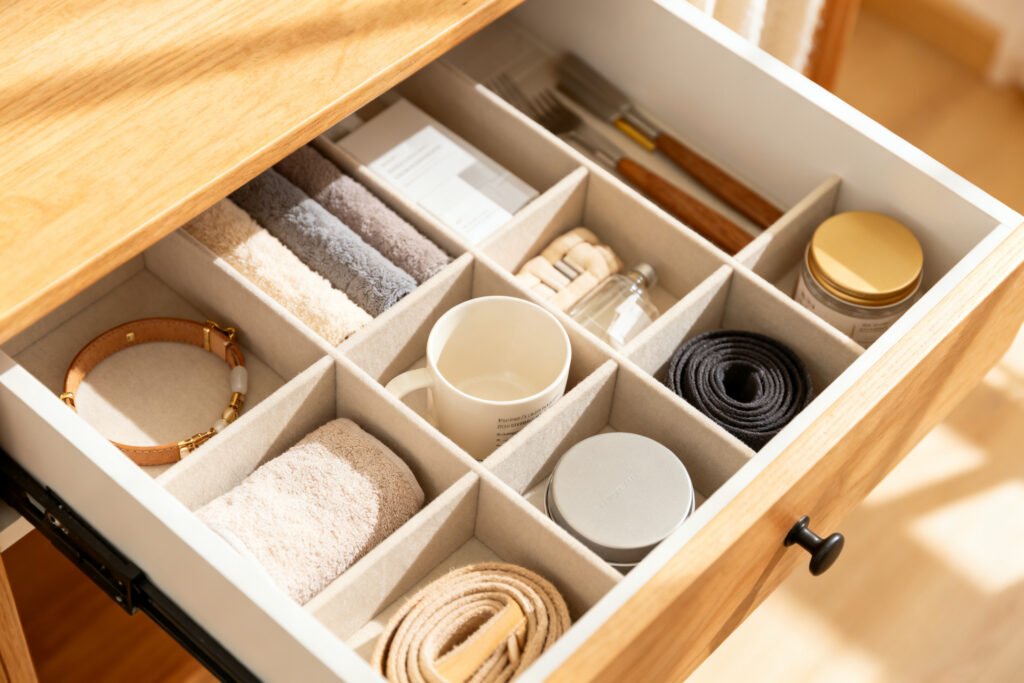
Create Zones, Not Chaos (a.k.a. Tray Time)
You don’t need fancy organizers. You need separate zones that fit your stuff.
Trays and dividers stop the slide-and-slam avalanche. Options that work:
- Modular trays: Mix-and-match plastic or bamboo trays you Tetris into the drawer.
- Adjustable dividers: Spring-loaded or foam core DIY if you’re crafty.
- Upcycled containers: Tea tins, mint boxes, ramekins. Free and cute.
Place the most-used items front and center.
Put small loose things in lidded tins so they don’t escape like feral paper clips.
Simple Zone Map
- Front left: Pens, pencil, Sharpie, notepad
- Front right: Tape, scissors, measuring tape
- Back left: Batteries (labeled)
- Back right: Command hooks/strips, super glue, felt pads
- Small cups: Rubber bands, paper clips, safety pins
FYI: Leave 10–20% empty space. If every square inch is packed, you’ll wreck it in a week.
Label Lightly (Without Becoming “That Person”)
You don’t need a label maker tattooed to your hand. But gentle labels keep habits lazy-proof.
Easy options:
- Stick-on tabs or masking tape with a Sharpie
- Color-coding (blue tray for tools, white for office stuff)
- Icon doodles if you share a home with non-readers or tiny humans
Label containers, not the drawer. That way, you can shuffle zones without scraping off stickers like a raccoon.
Set Failsafes So It Stays Organized
Systems fail where friction lives. Make the right choice the easy one.
- One-in, one-out: If a new pack of batteries arrives, toss empties and recycle packaging immediately.
- Monthly 5-minute refresh: Quick scan, toss junk, rehome strays. Set a recurring reminder. Yes, actually set it.
- Mini trash can nearby: Wrappers and dead pens won’t camp in the drawer if the bin sits right there.
- Bags for categories: Zip bags labeled “NEW BATTERIES,” “USED BATTERIES,” “CABLES—USB-C ONLY.”
- No paper rule: Mail and receipts get an inbox elsewhere. Zero exceptions. Paper is the drawer’s villain origin story.
Household Buy List Lives Here
Keep a small notepad titled “House Stuff” in the drawer. When you grab the last AAA battery, jot it down. Take a pic before grocery runs.
Future you will thank you. Present you can brag.
Deal With the Usual Suspects
Let’s tame the stuff that always picks fights.
- Rubber bands: Loop them around a spare notecard or a clothespin.
- Twist ties and zip ties: Bundle by size with, uh, a twist tie. Meta but effective.
- Batteries: Keep types separated. Store coin cells in packaging so they don’t short or get swallowed. Safety first.
- Super glue: Put it in a small zip bag. If it leaks, it won’t stage a coup.
- Loose screws/nails: Only keep a tiny mixed kit in a labeled tin. The rest live in the toolbox.
- Keys: Tag with key caps or masking tape. If unlabeled after two months, buh-bye.
A tidy junk drawer is easier once the whole space resets. The free 5-Day Budget Home Reset pairs perfectly with this project.
When Space Is Tiny (or Huge)
Not all drawers share the same personality. Adapt the setup.
Small Drawer Strategy
- Go vertical with stackable shallow trays.
- Limit to 4–5 categories max.
Brutal but necessary.
- Mount a mini magnetic strip inside the drawer front for paper clips and tiny tools.
Big Drawer Strategy
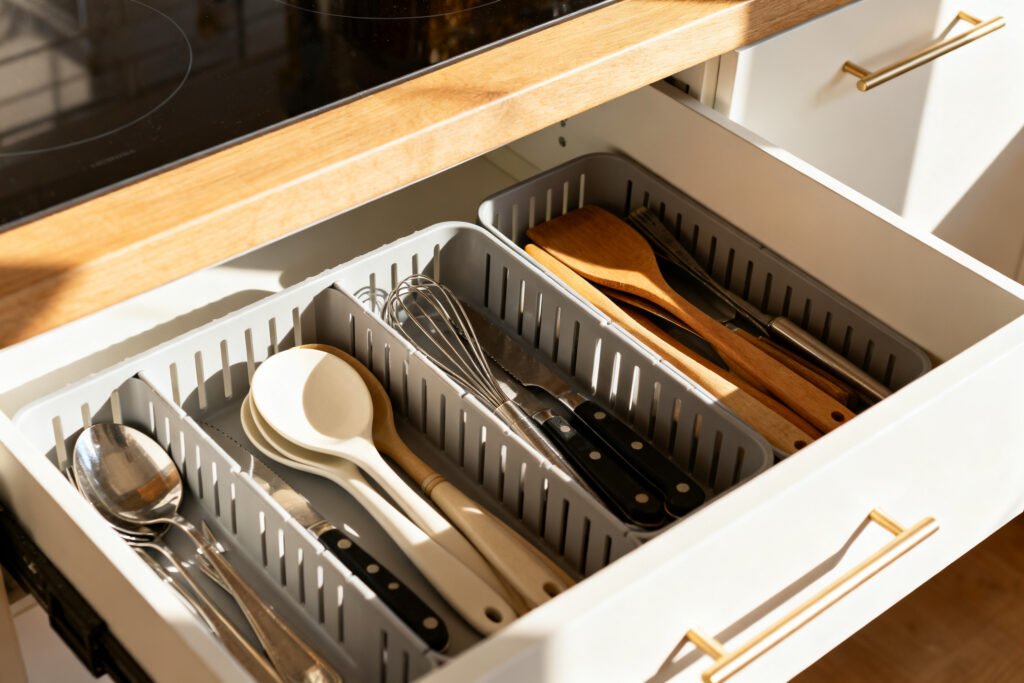
- Use a large cutlery tray as the backbone and add cups inside sections.
- Create a “parking lane” for a small pouch with oddballs you use weekly.
- Resist scope creep. Big space invites nonsense. Guard it like a dragon.
FAQ
How often should I clean a junk drawer?
Do a quick 5-minute reset once a month and a deeper purge every 3–4 months.
It takes less time than finding a working pen under a mountain of bread clips, IMO.
What’s the best organizer to buy?
The best organizer is the one that actually fits your drawer and your stuff. Look for modular trays you can rearrange. Upcycled tins and ramekins work great if you don’t want to spend money.
How do I handle batteries safely?
Store new and used separately and label them.
Keep coin cells in original packaging and away from kids and pets. Recycle used batteries at drop-off points—don’t toss them in the trash.
For more organization wins, see kitchen drawer organization, declutter your kitchen countertops, and deep cleaning checklist.
What if I share the drawer with messy roommates or kids?
Make zones obvious and labels bold. Use lidded containers for tiny things, and put most-used items front and center.
Then enforce a simple rule: if you take it out, you put it back in the labeled spot. Friendly nagging helps.
Can my junk drawer hold tools?
Yes, but keep it minimal: a mini screwdriver, tape measure, utility knife with a covered blade. Big tools live in a toolbox or closet kit.
The drawer handles quick fixes, not full renovations.
What do I do with mystery parts and extra hardware?
Create a “Project Parts” jar outside the junk drawer. Label it with the project and date. If you don’t use the parts in six months, let them go.
Future clutter avoided.
Conclusion
You don’t need perfection. You need a drawer that coughs up what you need without a scavenger hunt. Sort fast, create simple zones, label lightly, and run tiny resets.
Keep it easy and you’ll keep it tidy—no guilt, no drama, just a drawer that finally does its job. FYI: you just leveled up domestic life, quietly and efficiently.