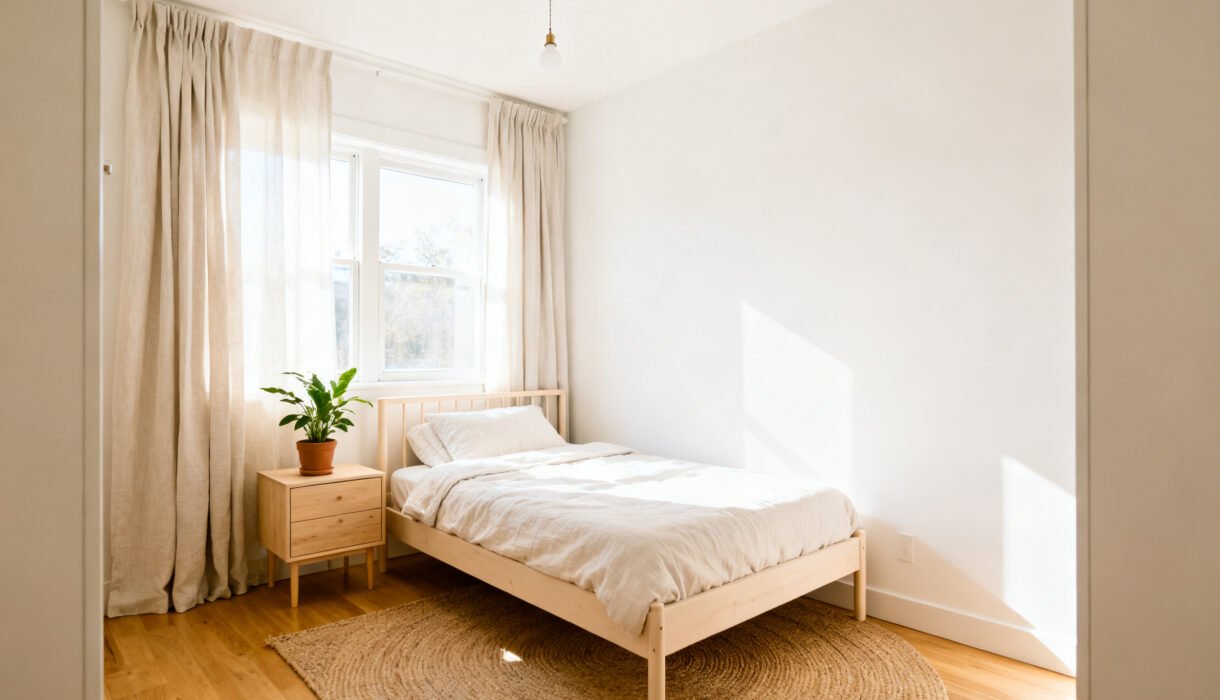

You don’t need a mansion to feel comfortable. You just need a few smart moves. If your bedroom feels like a shoebox with throw pillows, you can still make it look airy, calm, and surprisingly spacious.
Let’s turn that “where do I even walk?” vibe into “wow, did this room grow overnight?”
Start With a ruthless edit
You can’t style clutter. You just can’t. Start by removing anything you don’t love or use, then store seasonal stuff elsewhere.
The more floor and wall you expose, the bigger the room looks—magic without the magician.
- Empty surfaces first: nightstands, dressers, window sills.
- Cut duplicates: 7 candles? Keep 2. Your room isn’t a candle shop.
- Hide extras under-bed in slim bins or in a closet organizer.
Smart storage that disappears
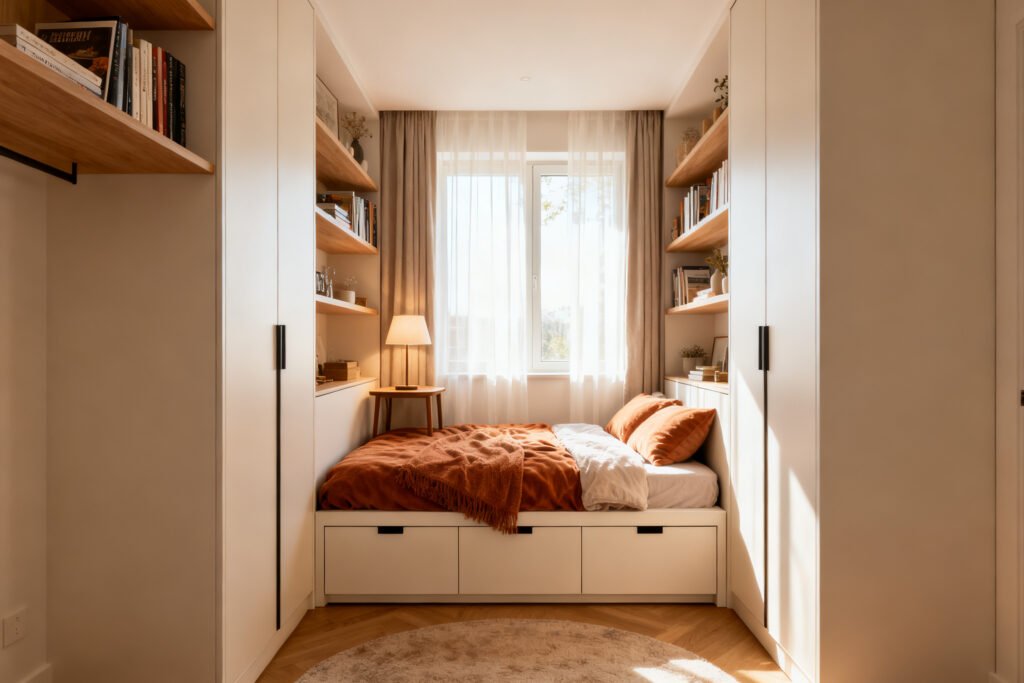
Aim for storage that blends in.
Think bed with drawers, a bench with a lid, or a narrow dresser that hugs the wall. Closed storage always reads calmer than open shelves full of “stuff.”
Light colors (but not boring)
White isn’t your only option. Light, warm tones reflect more light and make walls recede. Go for soft taupe, creamy greige, pale sage, or gentle blush.
They keep things bright without “rental white” energy.
- Paint walls and trim similar tones so edges blur and the room “expands.”
- Keep the ceiling lighter than the walls to lift the eye.
- Use a limited palette: 2-3 colors max to avoid visual noise.
Pattern? Yes, but scale it right
You can use pattern—just pick larger, low-contrast prints. Tiny busy patterns shrink a room visually.
A big botanical on a pillow or a subtle stripe on curtains adds interest without chaos.
Furniture: scale, legs, and double duty
Oversized furniture swallows small rooms. Pick pieces that fit your actual needs, not your fantasy of hosting 12 throw pillows.
- Right-size the bed: If a queen cramps everything, try a full. Your walking space matters more than three extra inches of mattress, IMO.
- Choose leggy pieces: Sofas, nightstands, and beds on legs show more floor, which tricks the eye into seeing more space.
- Go vertical: A taller, narrower dresser beats a wide one. It draws the eye up and frees floor width.
- Double-duty heroes: Nightstand with drawers, storage ottoman, folding desk, or a wall-mounted drop-leaf table.
Floating and wall-mounted for the win
A wall-mounted nightstand or shelf lets light pass under and clears the floor. Same with sconces—ditch table lamps and free surface space. Your room looks bigger and your water glass stops competing with your lamp.
Layout that breathes
You need clear pathways.
If you bump your shin daily, your layout lies to you.
- Center the bed on the longest wall when possible. It makes the room read balanced and bigger.
- Leave at least 24 inches of walkway on one side (both if you can). If not, commit to one accessible side and free the other for storage.
- Don’t crowd corners. Corners left open make walls feel longer.
- Float the rug under the front two-thirds of the bed. It frames the sleeping zone and gives a “floor island” effect.
Rug sizing cheat sheet
– Full bed: 6×9 under the front two-thirds – Queen: 8×10 under the front two-thirds – Twin: 5×7 or a runner alongside Too small looks choppy. Slightly bigger feels luxe (FYI, your toes will thank you).
Mirrors and light: your secret stretchers
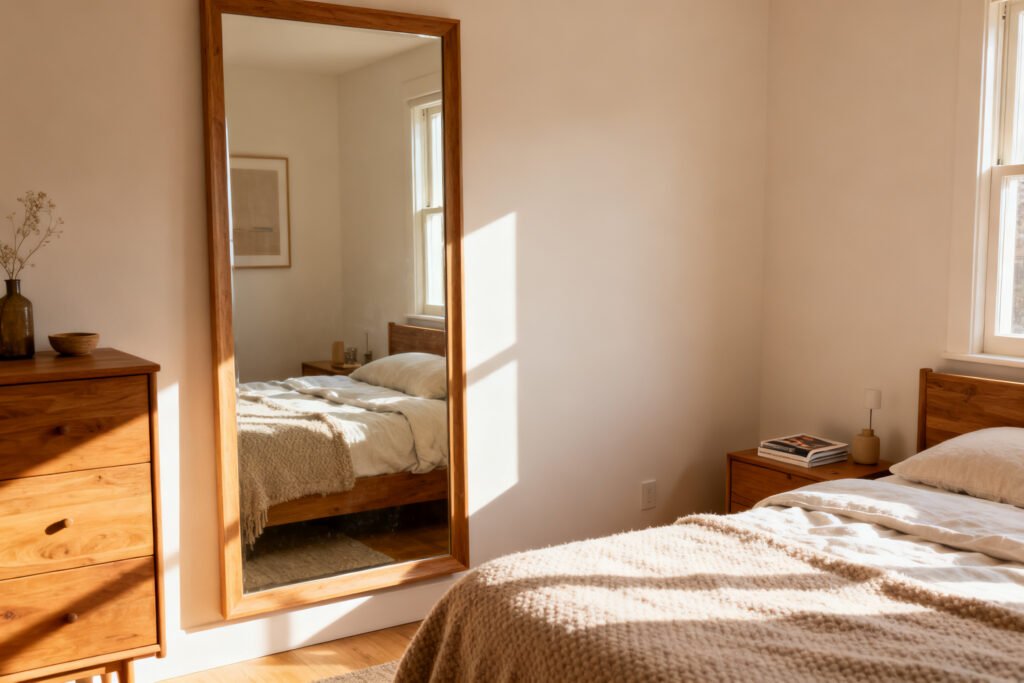
Mirrors bounce light and create depth.
Place a large mirror opposite a window or behind a lamp to double the glow.
- One big mirror > multiple small ones. Fewer lines = cleaner sightlines.
- Layer lighting: overhead fixture + wall sconces + a small task light. Dimmer switches = instant mood control.
- Use sheer curtains or hang drapes wide and high to expose more glass and pull in more light.
Window tricks that elongate
– Hang curtains high, a few inches from the ceiling. – Extend the rod so panels sit outside the frame when open, making the window look wider. – Match curtain color to wall for a seamless, taller look.
Visual continuity: keep the eye moving
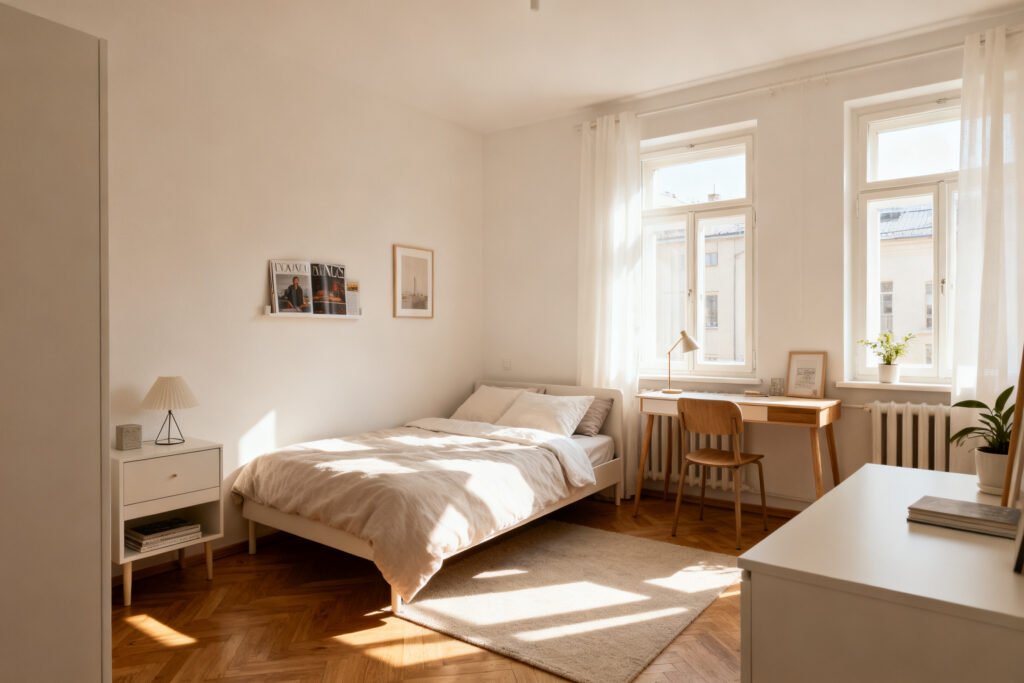
Cohesion makes a room feel bigger because your eye travels smoothly instead of stopping at every contrast point.
- Limit finishes: pick one or two wood tones and stick to them.
- Repeat colors: if your bedding is sage, echo it in a pillow, art mat, or a small vase.
- Hide cords: nothing shrinks a room like cable spaghetti. Use cord covers or clip them along furniture edges.
Art that adds space, not clutter
– One large piece over the bed beats a gallery wall in a tiny room. – Go tall: vertical art lifts the ceiling visually. – Keep frames simple so the art reads as one statement, not eight tiny distractions.
A small bedroom feels bigger the moment clutter clears out. The free 5-Day Budget Home Reset gives you a five-day reset to start.
Textiles and bedding: light, layered, airy
Heavy fabrics add weight visually. Choose lighter weaves and soft textures that feel fresh.
- Stick to 2-3 pillows and a throw. Save the mountain of cushions for your couch, IMO.
- Use a light duvet or quilt in a crisp, low-contrast color.
- Match or coordinate bedding with walls or rug to smooth transitions.
Small details that cheat the eye
– Thin lamp shades and glass bases feel lighter than chunky ceramics. – Acrylic or glass side table almost disappears but still works hard. – Striped runner along the bed lengthens the look of the floor.
Tech and decor: keep it calm
Tech can dominate a small space fast.
Hide it or slim it down.
- Mount the TV and run cords inside a paintable cover.
- Downsize the dresser-top shrine of perfumes and trinkets—use a tray and cap it at 5 items.
- Greenery, not clutter: one medium plant beats five tiny pots.
FAQ
What color should I paint a small bedroom?
Go light and warm: soft white, greige, pale sage, or blush. Keep trim close to the wall color to blur edges. If you want contrast, use it in small accessories, not big surfaces.
Can I use dark colors at all?
Yes—use them strategically.
Paint one accent wall behind the bed a deeper tone or add a dark blanket at the foot. Keep everything else light so the room still breathes.
For more small-space styling, see make a small living room look bigger, small bedroom makeover ideas, and choose the right rug size.
What size bed works best in a tiny room?
Choose the biggest size that still leaves a comfy walkway and space for a small nightstand. Many people realize a full-size bed with better flow beats a queen that traps them against the wall.
How do I make a low ceiling feel higher?
Hang curtains close to the ceiling, use vertical art, and pick furniture with low profiles and visible legs.
Paint the ceiling a shade lighter than the walls, and add uplighting or sconces that wash light upward.
Do rugs help or hurt small rooms?
They help—if you size them right. A rug that sits under most of the bed and extends out creates a defined, cozy zone and makes the floor feel larger. Tiny rugs chop up the space.
What lighting works best?
Layer it: a ceiling light for general glow, wall sconces for reading, and a small accent light to warm the corners.
Add dimmers so you control brightness without adding more fixtures.
Conclusion
Making a small bedroom look bigger boils down to a few power moves: edit ruthlessly, go light and cohesive, choose right-sized furniture with legs, maximize light and mirrors, and keep paths clear. Sprinkle in smart storage and high-hanging curtains, and your room stops feeling cramped and starts feeling curated. You don’t need more square footage—you just need better tricks.
FYI, you’ve got them now.
Planning a full small-bedroom refresh? The Budget Bedroom Makeover Planner helps you map it out on a budget.