
Your tiny home can absolutely feel chic, organized, and—dare I say—spacious. The secret? Clever storage that works harder than your morning coffee. Let’s ditch the clutter, make every inch earn its keep, and turn tight corners into “wow, that’s smart” moments.
1. The Vertical Victory: Go Up, Not Out
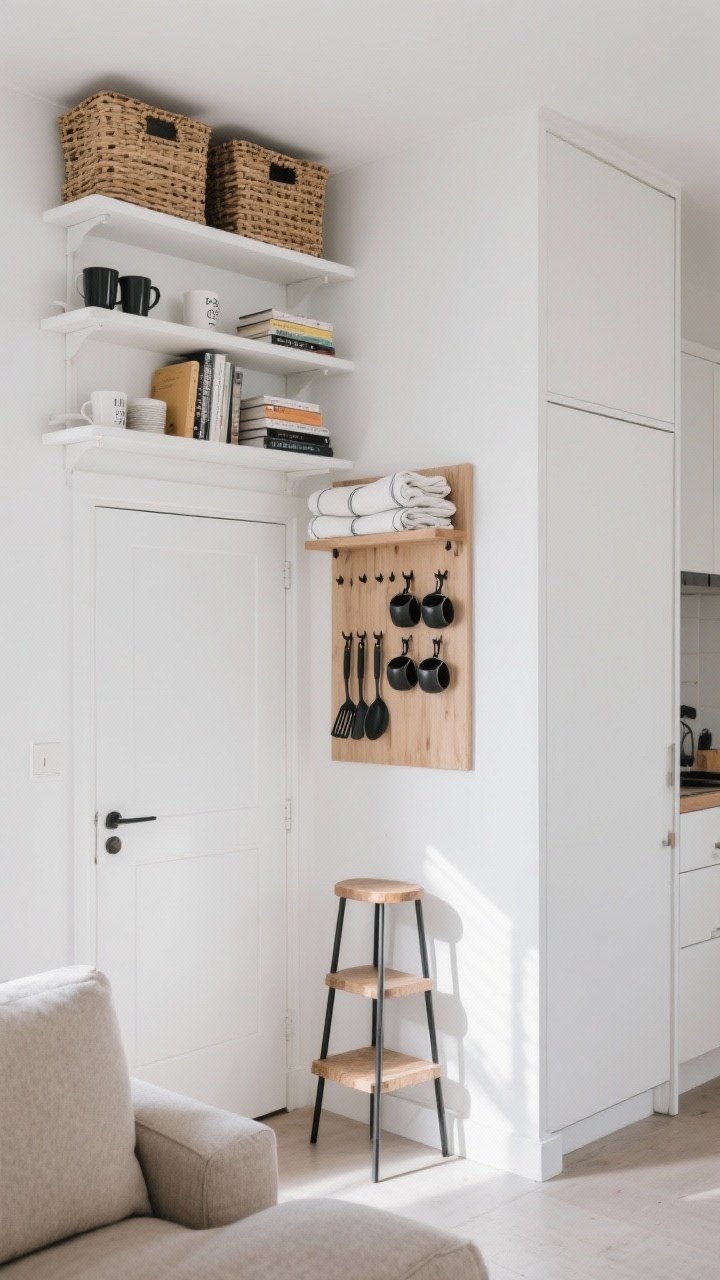
When floor space is scarce, your walls are prime real estate. Think of them as your storage skyline—build up.
Smart Ways To Climb the Walls
- Ceiling-high shelves: Run shelves all the way to the ceiling and keep a slim step stool nearby. Store rarely used items up top and daily essentials at eye level.
- Over-door storage: The space above doors is criminally ignored. Add a shelf for baskets or extra linens.
- Pegboards + rails: In kitchens and offices, a rail with hooks or a pegboard turns utensils, mugs, and tools into wall art.
- Tall, narrow cabinets: A skinny pantry or broom closet can slide into awkward gaps and look custom.
FYI: Vertical lines also make rooms feel taller. Double win—storage and visual height.
2. Double-Duty Furniture: Every Piece Should Earn Its Rent
If it doesn’t do two jobs, it’s not invited. Multi-functional furniture is the tiny home MVP.
Pieces That Work Overtime
- Storage ottoman or bench: Hide blankets, remotes, and games inside. Top with a tray and it’s a coffee table.
- Lift-top coffee table: Great for laptop life and hiding clutter in a pinch.
- Platform or Murphy bed with drawers: Stash off-season clothes or extra bedding without a clunky dresser.
- Drop-leaf dining table: Fold it down to a console, pop it up for dinner—and store stools underneath.
- Nesting tables: Pull them out when guests come over; tuck them back when you want breathing room.
Pro tip: Choose pieces with slim legs or light frames so rooms feel airy, not cramped.
3. Zone Like a Designer: Tiny Spaces Need Boundaries
Clutter usually means your stuff doesn’t have a designated home. Zoning fixes that instantly. Even in one room, carve out clear zones for living, dining, working, and sleeping.
Easy Zoning Tricks
- Rugs = boundaries: A small rug under a desk defines an office nook without walls.
- Slim shelves as dividers: Use an open bookcase to separate the bed from the sofa. Bonus: storage on both sides.
- Color-coding: Use matching baskets or labels per zone. Your brain relaxes when it knows where stuff lives.
- Hooks at every zone: Entry for bags, kitchen for towels, bath for robes—a hook forest (tasteful, promise).
Once you assign a zone, stick to it. If mail wanders into the kitchen, it’s chaos. Ask me how I know.
4. Cabinet Tetris: Max Out Drawers, Doors, and Dead Space
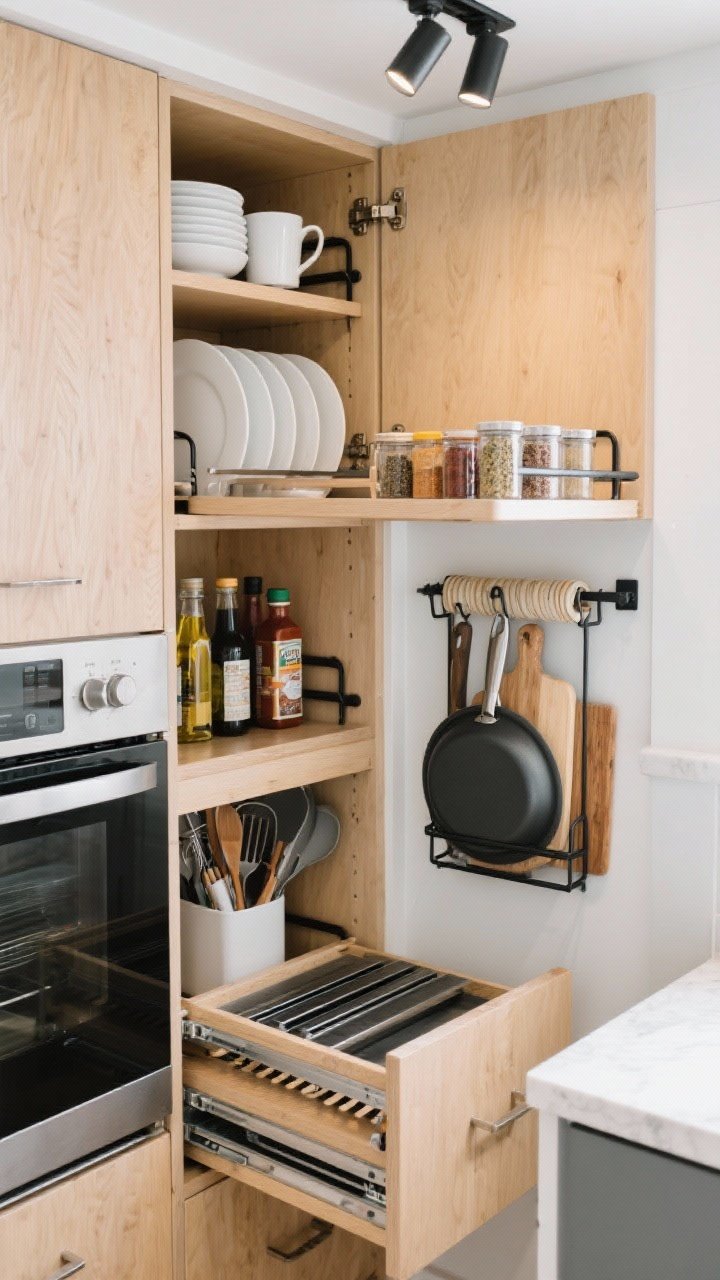
Most cabinets are 50% air. Time to pack them properly—without the avalanche effect.
Cabinet and Drawer Upgrades
- Stacking shelf risers: Double your shelf space for plates, spices, and mugs.
- Pulldown and pullout organizers: Pullout trays, lazy Susans, and pulldown racks make the deep corners usable.
- Back-of-door storage: Add racks for wraps, cutting boards, lids, or cleaning supplies.
- Drawer dividers: Partition drawers for utensils, tools, makeup—everything gets a slot.
- File your pans: Use vertical racks so sheets and lids stand up. No clanging mess, no rage.
In bathrooms, use stackable drawers under the sink to dodge the plumbing and still fit extras like TP, hair tools, and spare soap.
5. Hide in Plain Sight: Sneaky Storage You’ll Actually Use
Pretty storage is great, but sneaky storage? That’s the magic. Tuck things where no one looks—except you.
Camouflage Ideas
- Under-sofa bins: If your sofa has legs, slide low-profile bins beneath for games, tech, or seasonal decor.
- Overhead shelves in hallways: A shallow shelf near the ceiling looks built-in and holds rarely used items.
- Floating nightstands with baskets: Keep floors clear and stash cords, books, and eye masks below.
- Art that opens: Picture frames with hidden compartments or shallow cabinets disguised as mirrors. Spy-level storage.
- Radiator or heater covers: Turn the top into a narrow console with a small shelf or tray.
IMO, if it can hold a basket, it’s storage. If it can’t, can we make it hold a basket?
Entryway Micro-Mudroom
- Wall-mounted shelf + hooks: One rail for keys and hats, one low for bags. Add a shoe tray to save floors.
- Slim shoe cabinet: Those 6-inch-deep wonders hide a dozen pairs and look sleek.
6. The Container Glow-Up: Bins, Baskets, and Labels (But Make It Cute)
Containers tame chaos and keep your small space looking curated. Also, labels stop the dreaded “Where’s my charger?” interrogation.
Containment Best Practices
- Choose a palette: Stick to 2-3 materials—like woven baskets, clear acrylic, and matte black—to keep visuals calm.
- Go clear where it counts: Clear bins for pantry, craft supplies, or hardware save time and sanity.
- Soft bins for odd shapes: Great for scarves, kids’ toys, and gym gear.
- Label everything: Minimalist labels or a label maker. Future you will send thanks.
- Use trays as boundaries: Corral daily essentials (keys, sunscreen, headphones) so surfaces don’t spiral.
Quick win: Create a “drop zone” bin for things you’re returning, donating, or lending. No more floating clutter.
7. Edit Like a Minimalist, Live Like a Maximalist
You don’t need to own less to feel spacious—you just need to own the right less. Editing your stuff is the secret sauce that makes every storage hack actually work.
Declutter With Intention
- Use the 20/20 rule: If it costs under $20 and can be replaced in 20 minutes, you probably don’t need to keep it “just in case.”
- One-in, one-out: New jacket in? Old jacket out. Same goes for mugs (looking at you, gift mugs).
- Set capacity limits: One bin per category—if it’s full, something has to go.
- Quarterly sweeps: Put it on your calendar. Fifteen minutes per zone. No mercy for tangled cords.
Then style what remains. Display a few favorite pieces, store the rest, and let your tiny home breathe. Small space, big vibe.
Final note: Start with one zone—entry, kitchen, or closet. Add vertical storage, swap in a double-duty piece, and corral the little stuff with containers. You’ll see a difference in a day, and you’ll feel it every time you walk in. Tiny home, major upgrade.
