
Your studio can be chic, functional, and totally “you” without feeling like a dorm room. The trick? Smart layout moves, a few style power-plays, and a dash of editing. Let’s turn one room into a home that works hard and looks incredible.
1. Zone It Like a Mini City
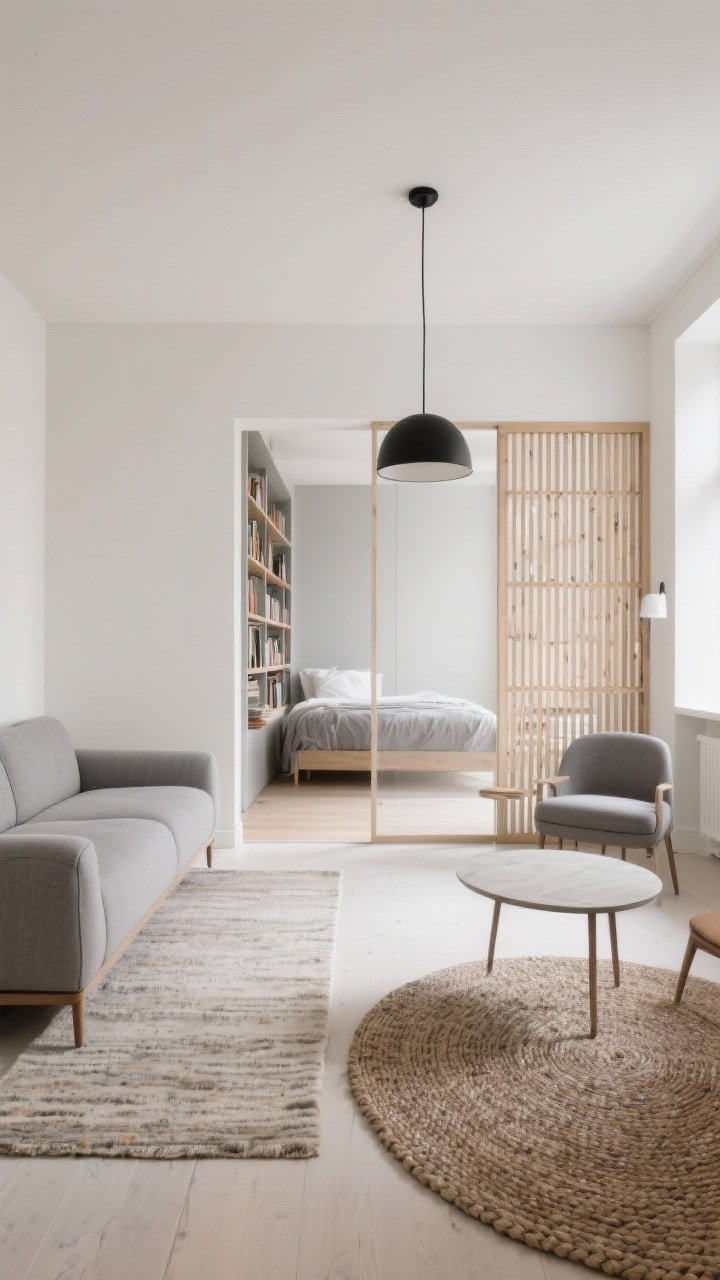
One room, many lives. Create clear zones for sleeping, lounging, dining, and working so everything has a purpose—and nothing screams chaos.
How to carve out zones without walls
- Rugs = Instant Rooms: A rug under the bed, another in the “living room.” Boom—two spaces.
- Float Your Sofa: Don’t shove it against the wall. Use it to separate sleep and lounge zones.
- Screens & Shelves: Slatted screens or open bookcases create soft divisions and let light flow through.
- Ceiling Cues: A pendant over the dining table anchors the area without eating floor space.
FYI: Keep a consistent color palette across zones so it all feels intentional, not chopped up.
2. Go Vertical Or Go Home
Your walls are basically free real estate. Use height to store, display, and elongate the room visually.
Smart vertical upgrades
- Ceiling-High Curtains: Hang them high and wide to fake taller windows and add drama.
- Stacked Shelving: Floating shelves, ladder shelves, even a narrow etagere—great for books and decor.
- Over-Door Storage: Hooks and rails for bags, hats, and umbrellas—practical and cute.
- Art in Columns: Arrange frames in a vertical line to draw the eye up (and away from the square footage).
Pro move: A tall mirror bounces light and visually doubles your square footage. It’s sorcery, but legal.
3. Furniture That Pulls Double Duty
In a studio, every piece needs a side hustle. Choose multi-functional furniture and you’ll unlock space you didn’t know you had.
Pieces that earn their keep
- Sofa Bed or Daybed: Lounge by day, sleep palace by night. Daybeds are sleek and guest-friendly.
- Storage Coffee Table: Stash remotes, throws, and “I’ll deal with it later” clutter.
- Drop-Leaf Table: Tiny footprint most days, dinner party hero when expanded.
- Nesting Tables: Pull them out when needed. Tuck them away when you don’t.
- Lift-Top Bed or Underbed Drawers: Hide off-season clothes and spare linens like a pro.
IMO, if it doesn’t have storage or a second function, it better be jaw-droppingly gorgeous.
4. Color, Light, And Mirrors: The Space Trio
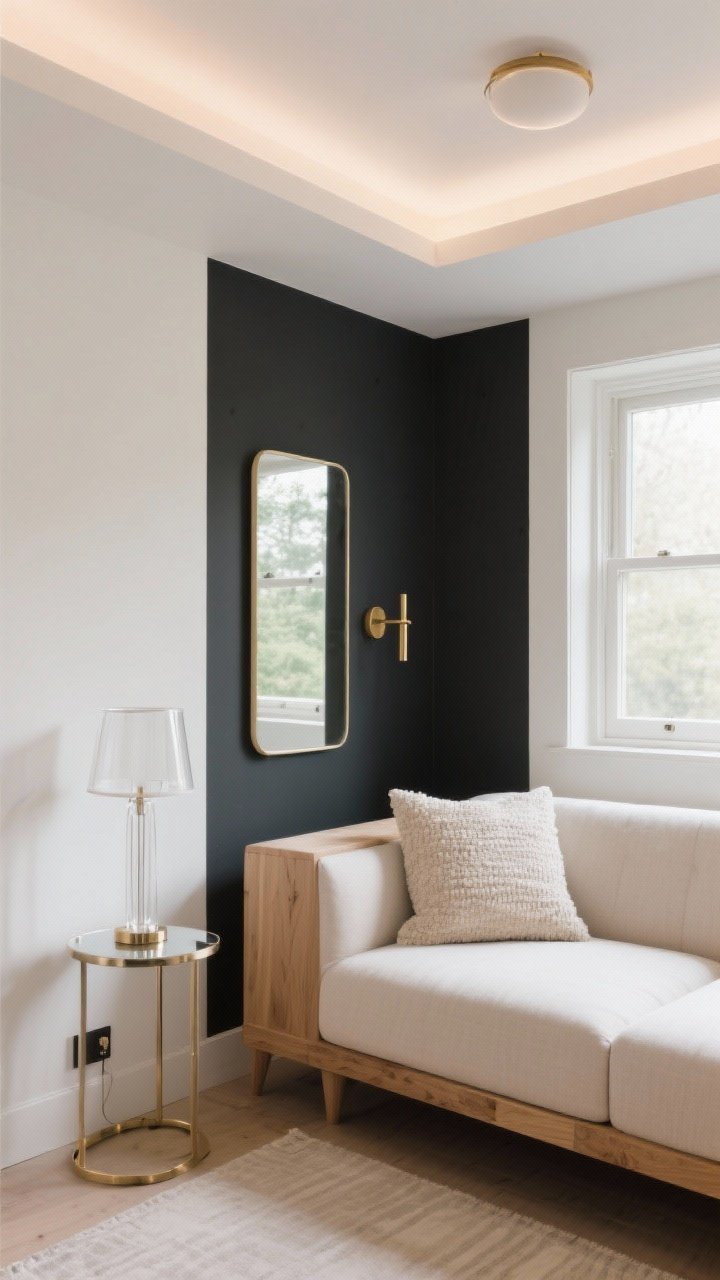
Want your studio to feel bigger? Use color strategically, maximize lighting, and place mirrors like a stylist.
Palette that expands the room
- Light Base, Bold Accents: Keep walls pale (warm white, soft gray, pale greige). Layer color with pillows and art.
- Tone-on-Tone Textures: Vary textures (bouclé, linen, wood grain) in similar shades for depth without heaviness.
- One Accent Wall: If you must go dark, choose one wall to add contrast and cozy vibes.
Light the room in layers
- Three-Point Lighting: Overhead, task, and ambient. No overhead “interrogation room” vibes.
- Plug-In Sconces: Great for bedside or sofa-side without hardwiring.
- Clear Shades & Slim Lamps: Keep sightlines clean and light unobstructed.
Mirror magic
- Across From Windows: Double the daylight. Double the joy.
- Mirrored Furniture: A small mirrored side table reflects light instead of visually cluttering.
Remember: shiny metals (brass, chrome) also bounce light. A little goes a long way.
5. Style Your Surfaces—Without Clutter
Yes, decor makes it feel like home. No, you don’t need every candle in the store. Edit ruthlessly, then display thoughtfully.
Curate like a stylist
- Rule of Three: Group items in odd numbers; vary height and texture.
- Trays Are Your BFF: Corral keys, remotes, and hand cream into chic order.
- Books As Pedestals: Stack a couple coffee-table books and perch a candle or vase on top.
- One Statement Per Surface: Choose either a bold lamp or a big plant—let it shine.
Hide the mess (strategically)
- Closed Storage: Media consoles with doors beat open cubbies for visual calm.
- Pretty Bins & Baskets: Linen, rattan, canvas—disguise the less aesthetic stuff.
- Bedside Pockets or Caddies: Tuck chargers and notebooks off the tabletop.
Editing tip: Every time you add something, remove something. Balance is the vibe.
6. Textiles That Cozy Up And Define Space
Textiles are the fastest way to add warmth and structure. They soften acoustics, define zones, and introduce pattern without bulk.
Rugs do the heavy lifting
- Proper Sizing: Living area rug should fit under front sofa legs; bedroom rug should peek out generously on both sides.
- Layering: Flatweave base + plush accent in the lounge zone = texture and comfort.
- Patterns With Purpose: Subtle stripes elongate; small-scale patterns hide city dust (you know the one).
Soft goods that earn their spot
- Throw Pillows: Mix solids, small prints, and one “wow” pattern. Keep to 2–3 colors total.
- Bed As a Feature Wall: A tailored duvet and a textured throw turn your bed into an anchor, not an eyesore.
- Curtain Tricks: Sheers for daylight, blackout behind for sleep—layer them on one rod with double brackets.
PSA: Washable textiles are your friend. City life + spills happen.
7. Entry, Kitchen, And Tiny Extras That Matter
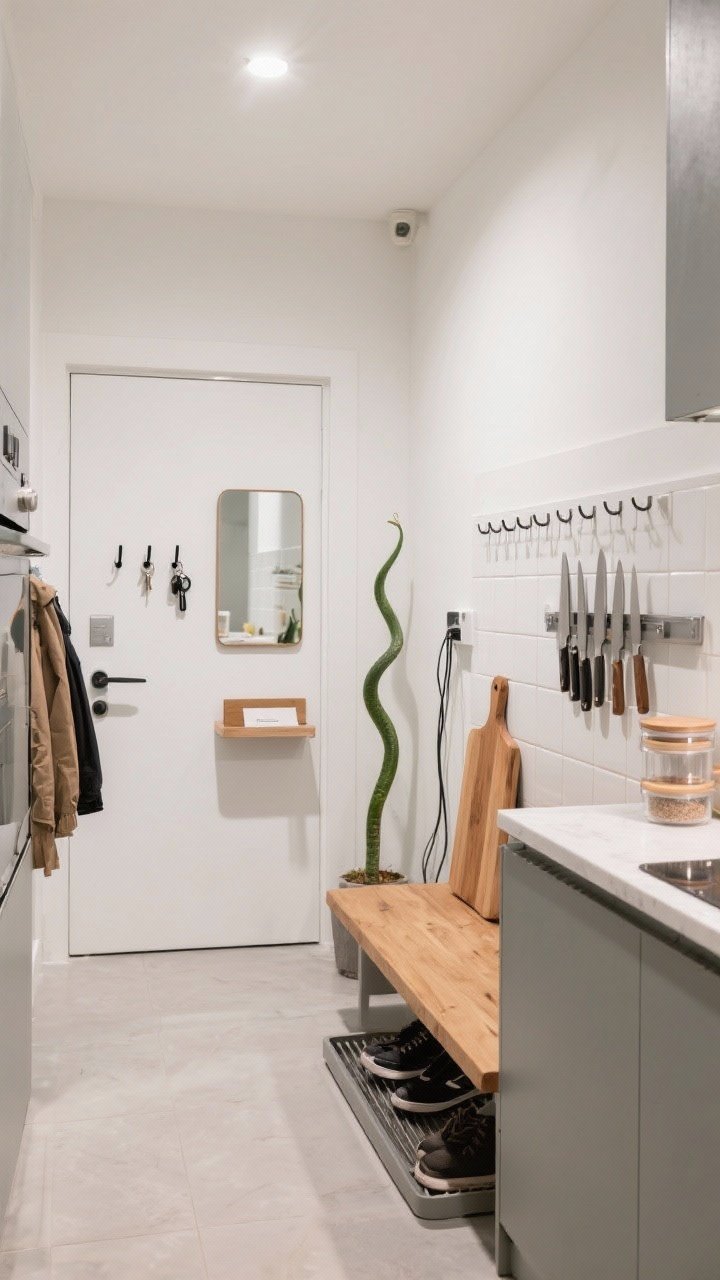
Studios often skip foyers and pantries, but you can fake them and level up daily life. Small upgrades = big sanity.
Entryway that actually works
- Mini Landing Strip: A slim console or wall shelf for keys and mail right by the door.
- Hooks + Mirror: Coats up, quick outfit check, done. Use vertical space instead of clunky racks.
- Shoe Tray or Bench: Corral dirt and create a sit-down spot. Your floors will thank you.
Micro-kitchen genius
- Magnetic Knife Strip & Rail System: Free up counter space for actual cooking.
- Clear Canisters: See what you have, stack what you can. Looks tidy, saves money.
- Serving Board As Decor: Lean a pretty wood board to warm up all that metal and tile.
Little habits, huge payoff
- One-In, One-Out: Keeps storage honest. If it comes in, something else goes.
- Nightly Five-Minute Reset: Fluff pillows, clear surfaces, load the dishwasher—tomorrow-you will be smug.
- Hidden Tech: Cable boxes in baskets, cord clips under tables. Visual calm = instant luxe.
And yes, plants. A tall, slim floor plant adds life without eating floor space. Snake plant, ZZ plant—low drama, high reward.
Wrap-Up: Your studio isn’t a limitation; it’s a design challenge you’re about to win. Zone smart, go vertical, pick multi-tasking furniture, and keep your styling tight. Stick to a cohesive palette, edit often, and let the light do its thing. You’ve got this—tiny home, big personality.
