Minimalist Living Room Styling Inspiration You’ll Actually Want to Steal
Posted in :

Your living room is doing the most—hosting hangouts, Netflix marathons, and morning coffee moments. So why not let it breathe a little? Minimalism doesn’t mean cold or boring. It means curating what you love, ditching the noise, and letting your space finally exhale. Ready to make your living room look expensive with less effort? Let’s do it.
1. Edit Ruthlessly, Then Style Intentionally
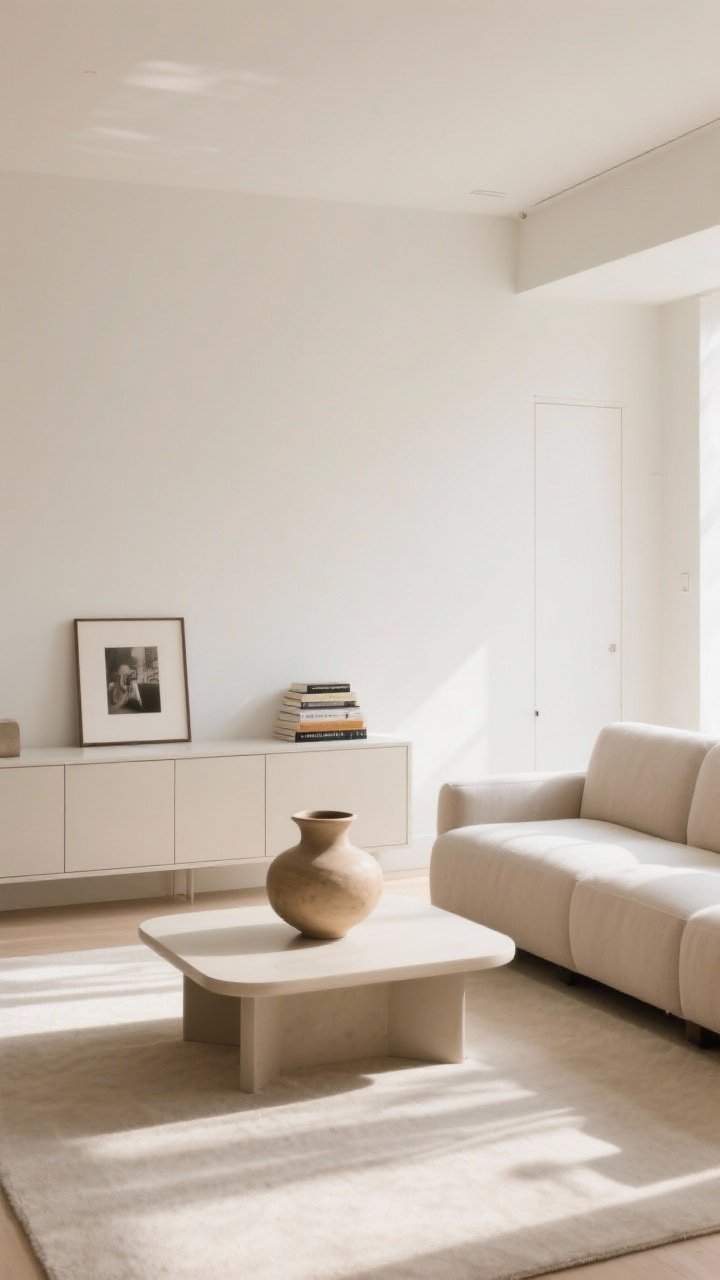
Minimalism starts with subtraction. Clear surfaces, remove duplicate decor, and keep only what earns its spot. If it doesn’t spark joy or serve a purpose, it’s auditioning for a new home (FYI: donation centers love you).
What to keep
- Functional essentials: sofas, coffee tables, lighting, storage
- One or two “hero” decor pieces: a sculptural vase, a statement bowl, a large art print
- Personal touch: one framed photo or a favorite book stack—curated, not cluttered
Once you’ve edited, style with intention. Give objects breathing room, leave negative space, and let shapes shine. Your room should feel like a deep exhale, not a yard sale.
2. Build a Calm Color Story (And Stick to It)
A minimalist palette is your secret sauce. Choose a base neutral—warm white, soft greige, or pale taupe—and add depth with layered tones. Think oatmeal + caramel + graphite. Delicious.
Easy palette formulas
- Warm minimal: ivory walls, tan sofa, walnut wood, matte black accents
- Cool minimal: soft gray walls, stone-textured rug, ash wood, chrome touches
- Earthy minimal: clay-toned pillows, natural jute rug, olive throw
Introduce color through small, swappable accents—pillows, a throw, a single art piece. Keep patterns low-contrast and minimal. IMO, two accent colors max keeps it chic, not chaotic.
3. Choose Furniture With Clean Lines (But Cozy Vibes)
Minimalist furniture isn’t stiff—just streamlined. Look for low profiles, slim legs, and soft silhouettes. Avoid bulky arms and overly ornate details that crowd your visual space.
Smart picks
- Sofa: deep-seated but tailored; performance fabric in a neutral tone
- Coffee table: oval or rectangular with rounded corners—hello, flow
- Side chairs: airy frames in wood, bouclé, or linen for texture
- Storage: closed credenzas to hide the “real life” stuff
Pro tip: match wood tones—two types max—to keep the room cohesive. If mixing, vary finishes (e.g., matte oak + black metal) so it looks intentional, not accidental.
4. Layer Textures Like a Pro (Because Flat = Boring)
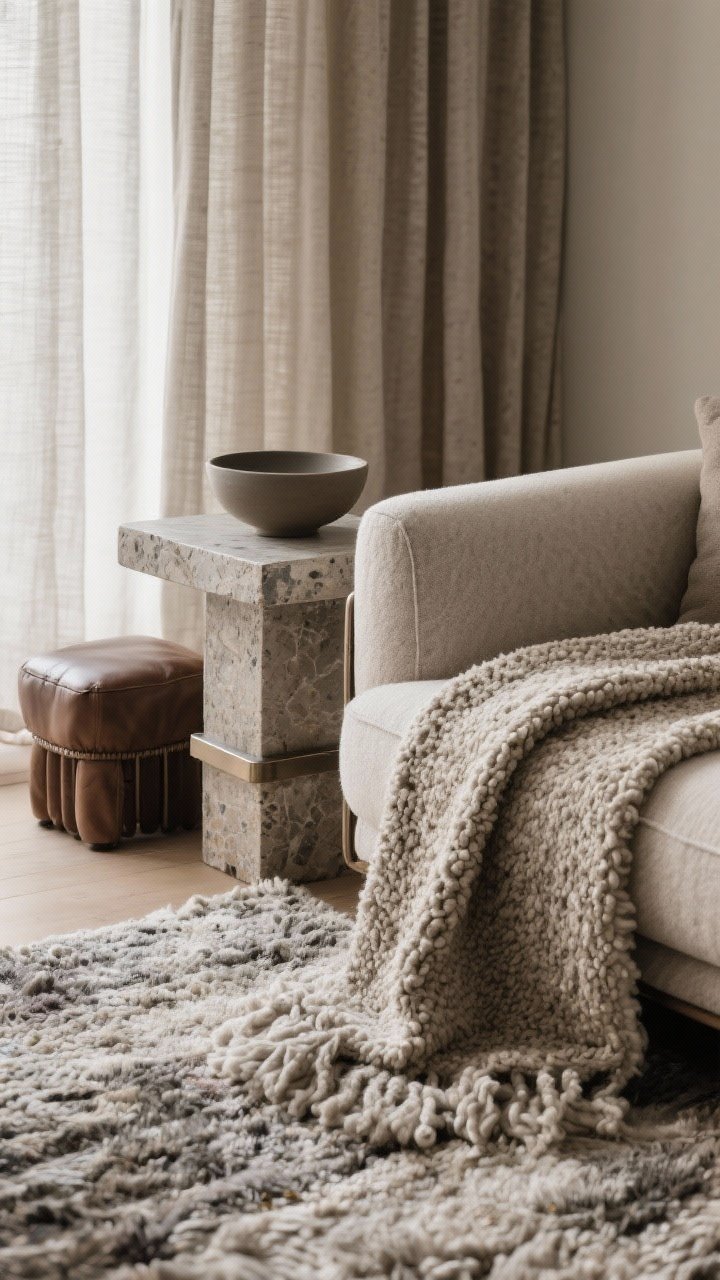
Minimal doesn’t mean flat. Without pattern overload, texture does the heavy lifting. It adds warmth, depth, and that “I live in a coffee table book” vibe.
Texture toolkit
- Rug: wool, jute, or a low-pile patterned neutral for subtle interest
- Textiles: linen curtains, bouclé throw, leather ottoman—mix smooth and nubby
- Hard surfaces: matte ceramics, honed stone, brushed metal
Anchor with one hero texture (like a chunky wool rug), then layer in two to three supporting textures. Keep it tonal so it whispers, not shouts.
5. Light It Like a Gallery, Live In It Like a Home
Lighting is where minimalists quietly flex. You want layers: ambient, task, and accent. Translation: ceiling light, floor lamp, table lamp, maybe a sconce if you’re fancy.
Lighting checklist
- Overhead: a simple drum or sculptural pendant (dimmer mandatory)
- Floor lamp: arc or column style to elongate the room
- Table lamp: stone or ceramic base for texture
- Accent: picture light or candle for soft glow
Use warm bulbs (2700–3000K) to avoid the hospital vibe. Bonus points for matching color temperature across fixtures—your eyes will thank you, promise.
6. Curate Art And Decor With Breathing Room
One statement piece beats a dozen tiny frames. Go big, simple, and graphic: a large canvas, a black-and-white photo, or a textured wall hanging. Keep frames clean—thin black, oak, or white.
Styling moves that work
- One focal wall: center a large piece above the sofa, hung at eye level
- Bookshelf minimalism: stacks + one sculptural object per shelf—leave negative space
- Coffee table: a tray, a candle, and one sculptural piece—done
Plants count as decor. Go for one or two sculptural varieties—fiddle leaf, rubber plant, or olive tree. Skip the jungle effect unless you’re auditioning for a rainforest docuseries.
7. Design Systems: Storage, Flow, And Little Habits
Minimalist living rooms stay minimal because they’re designed for real life. Tuck clutter away, plan traffic flow, and create tiny rituals that keep the peace.
Make it easy to stay tidy
- Closed storage: baskets inside credenzas for remotes, chargers, and random life bits
- Entry drop zone: a small tray or box for keys and mail (visual clutter kryptonite)
- Cable control: cord clips and a power strip box—out of sight, out of mind
Layout matters
- Keep 30–36 inches of walkway space around main pieces
- Place the coffee table 14–18 inches from the sofa for comfy reach
- Float furniture if you can; it makes small rooms feel bigger
Little habits keep the vibe going: five-minute end-of-day resets, weekly surface wipe-down, and monthly edits. Minimalism isn’t a one-time purge—it’s a lifestyle (but chill, not militant, IMO).
Wrap-up: Minimalist living rooms aren’t about having nothing—they’re about letting what you love actually shine. Edit first, layer textures, pick calm colors, and let the space breathe. Keep it simple, keep it warm, and let your living room finally match your inner peace—or at least your Pinterest board. You’ve got this.
