Mindful Decorating Tips for a Stress-free Home You’ll Actually Want to Live In
Posted in :

Let’s be real: your home can either calm your nervous system or send it into chaos. The secret isn’t buying more stuff—it’s being intentional with what you let in. Consider this your cozy, no-judgment guide to designing a space that helps you breathe easier, think clearer, and actually relax.
1. Start With A Purposeful Reset (AKA Declutter Without The Drama)
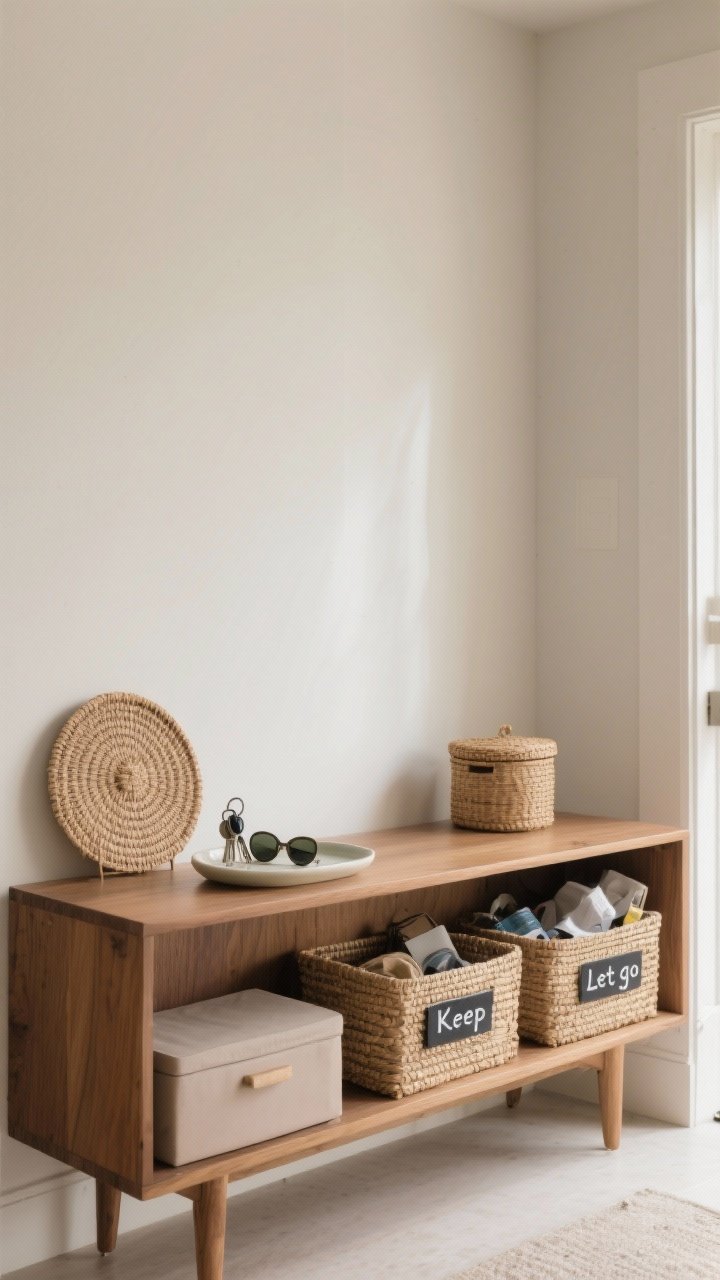
Clutter is visual noise. When every surface is packed, your brain doesn’t know where to rest, and cue the stress spiral. You don’t need a full minimalist makeover—just a thoughtful edit.
How To Declutter Mindfully
- Pick one zone: a nightstand, coffee table, or entry console. Win small, then repeat.
- Use the 3-basket rule: keep, relocate, let-go. No “maybe” pile—IMO, that’s how stuff multiplies.
- Make surfaces 30% empty: it gives the eye breathing room and looks effortlessly styled.
Bonus: store everyday essentials in pretty lidded baskets or trays so things are handy—but not screaming at you.
2. Create Calming Color Stories That Actually Support You
Colors affect your mood—no woo-woo required. Soft, grounded tones are your besties for relaxation. Think warm whites, muted greens, misty blues, and natural wood tones.
Pick A Palette You Can Stick To
- Choose 3-4 core colors: a light neutral, a mid-tone, a calming accent, and a natural material (like oak or rattan) as your “color.”
- Use saturation smartly: deeper colors in cozy zones (bedroom), lighter tones where you want energy (kitchen).
- Test before you commit: paint swatches on different walls and check them at morning, afternoon, and evening light.
FYI: If you love bold color, use it in smaller doses—pillows, art, or a statement lamp—so it energizes without overwhelming.
3. Edit Your Visual Field: Style Fewer, Better Vignettes
You don’t need 37 tiny decor pieces. Curate little “moments” that bring joy and tell a story. It’s like giving your home a highlight reel.
The Rule Of Three (With Texture)
- Group items in threes: vary height, texture, and shape. Example: a ceramic vase, a framed print, and a small wood bowl.
- Leave negative space: empty space is not wasted—it’s the breath between notes.
- Rotate seasonally: keep a decor bin and swap items every few months to refresh without buying new.
Pro tip: Corral vignettes on trays to make them feel intentional—and to dust in one swoop. You’re welcome.
4. Layer Cozy Textures For Instant Calm (Without Visual Clutter)
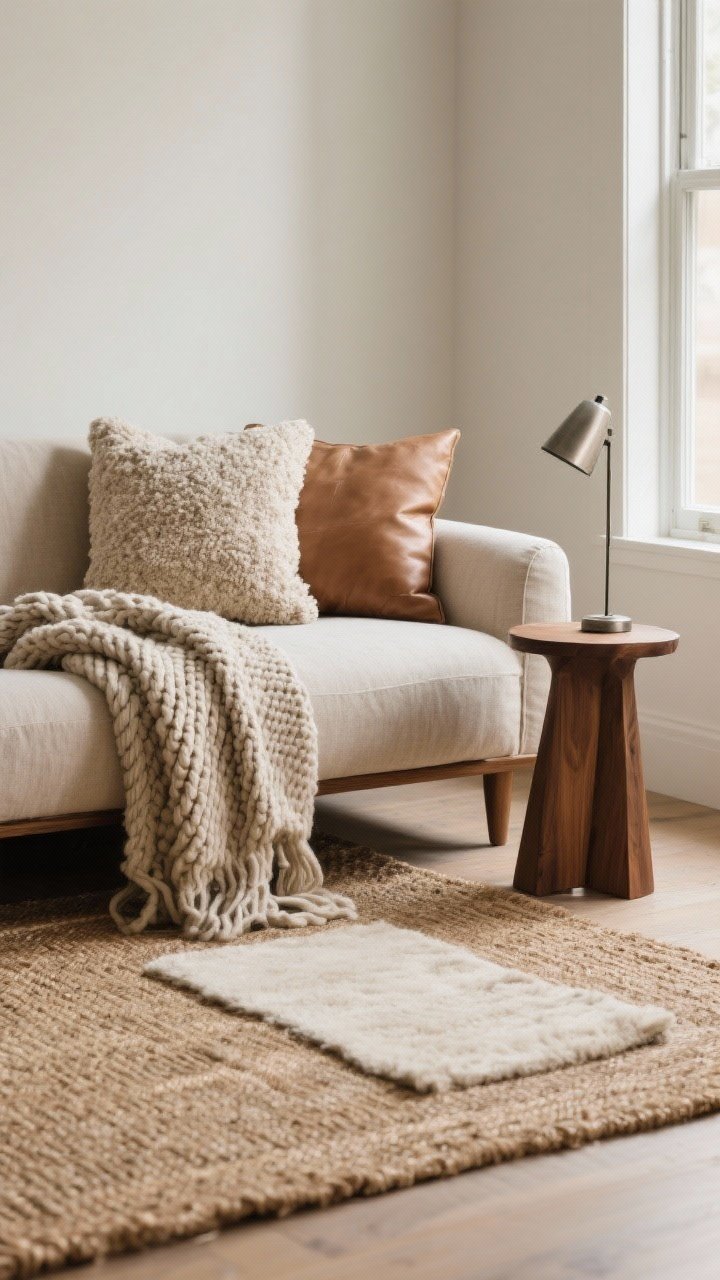
Texture is how your home gives a hug. Soft textiles and natural materials signal comfort and warmth, even if your palette is minimal.
Mix, Don’t Match
- Blend 4-5 textures: think linen, wool, bouclé, wood, and a touch of metal. Contrast is key.
- Use a base and a pop: crisp cotton sheets with a chunky knit throw; smooth sofa with a nubby pillow.
- Mind the floor: a natural-fiber rug (jute, sisal) topped with a softer wool or cotton rug adds comfort and style.
Keep patterns simple and large-scale to avoid visual buzz. Small, busy prints can read as clutter—especially in small spaces.
5. Optimize Your Lighting For Mood And Function
Harsh overhead light = instant stress. Layered lighting = instant calm. You want warm, dimmable, and flexible.
The Three Layers You Need
- Ambient: soft general lighting (dimmable ceiling lights or paper lanterns).
- Task: focused lighting for reading, cooking, or work (sconces, desk lamps).
- Accent: warm glows that make things feel cozy (picture lights, candles, salt lamps if you’re into that vibe).
- Swap bulbs to 2700K–3000K for warmth. Smart bulbs let you shift cooler in the morning, warmer at night.
- Use lamps at varying heights to avoid shadowy corners and create depth.
- Let in natural light: sheer curtains, clean windows, and mirror placement to bounce light around.
Even better, set a nighttime lighting ritual—one switch that takes the house from “work mode” to “wind-down.”
6. Design Daily Ritual Zones You’ll Actually Use
Your home should support how you live, not how Pinterest thinks you live. Create small, intentional setups that make your daily routines easy and enjoyable.
Micro-Zones That Reduce Friction
- Entry reset: hooks, a tray for keys, a shoe basket, and a small lamp. Instant calm when you walk in.
- Tea or coffee corner: kettle, mugs, canisters, and a tiny vase. Morning joy on autopilot.
- Reading nook: comfy chair, side table, throw, and a warm lamp. Phone stays elsewhere, tyvm.
- Wellness station: yoga mat in a basket, candle, and a speaker for a 10-minute stretch.
Make it obvious and low-effort. If your ritual requires three cupboards and a scavenger hunt, it won’t happen.
7. Bring Nature In (Your Nervous System Will Thank You)
Nature calms the body—there’s science behind it—so invite it indoors in ways that feel doable for your space and lifestyle.
Biophilic Moves That Aren’t High Maintenance
- Go for easy plants: snake plant, pothos, ZZ, philodendron. They forgive forgetful watering schedules.
- Use natural materials: wood bowls, stone coasters, rattan baskets, linen napkins.
- Play with scent: essential oil diffuser with lavender, bergamot, or cedarwood for a subtle chill vibe.
- Open the windows: a five-minute air swap can change the whole mood of a room.
No green thumb? Dried branches in a tall vase look sculptural and last forever. Zero maintenance, maximum effect.
Quick Room-By-Room Checklist
- Living room: one clutter-free surface, layered lighting, plants near windows, cozy throw.
- Bedroom: calm palette, blackout curtains, no-charging-zone nightstand, soft rug underfoot.
- Kitchen: clear counters, uniform containers, one pretty vignette (bowl + cutting board + candle).
- Bathroom: matching towels, closed storage, eucalyptus in the shower for spa vibes.
Final Thought: Mindful decorating isn’t about perfection. It’s about small, consistent choices that make your home feel like an exhale. Start with one corner, one ritual, one soft lamp. Then watch the calm ripple out—room by room. FYI: Your future, less stressed self is already grateful.
