Tiny Kitchen Organization Hacks That Work You’ll Wish You Tried Sooner
Posted in :

You don’t need a walk-in pantry to have a dreamy, efficient kitchen. You just need smart moves, a little discipline, and maybe a label maker you’ll brag about. These tiny kitchen organization hacks that work will help you squeeze the most out of every inch—without giving up your aesthetic.
1. Edit Ruthlessly, Then Zone Like a Boutique
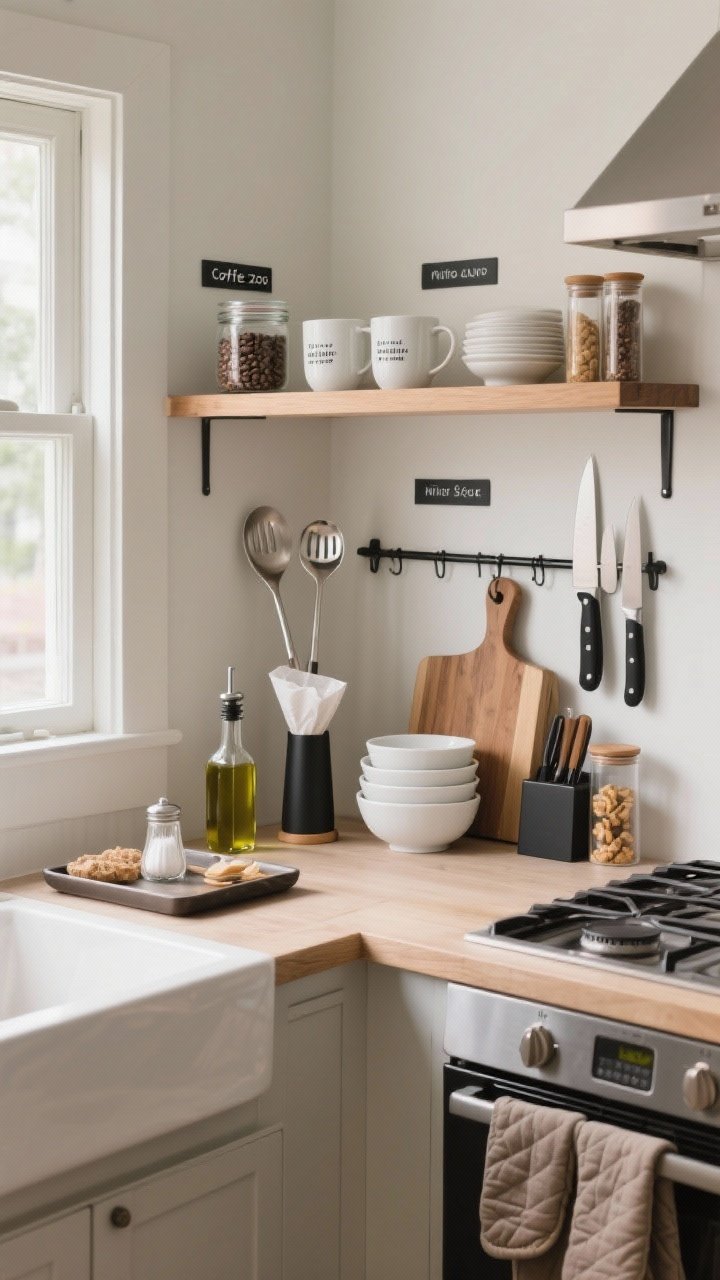
Before we add a single organizer, let’s cut the chaos. Be brutally honest: are you using that melon baller? If the answer is “once in 2017,” bye.
Declutter Fast
- One drawer at a time: Empty it, toss duplicates, and donate the “someday” gadgets.
- Set limits: Keep 2–3 of your favorite spatulas, not 9 almost-identical ones.
- Lose bulky packaging: Rehome tea, snacks, and pods in slim containers.
Create Micro-Zones
Think like a tiny department store. Group by task, not by random category. Your future self will thank you when coffee happens in 60 seconds flat.
- Coffee zone: Mugs, beans, filters, scoop, and sweetener together.
- Prep zone: Cutting boards, knives, mixing bowls, and measuring tools.
- Heat zone: Oils, salt, pepper, oven mitts near the stove.
Label zones so everyone in the house follows the same system. Labels = sanity.
2. Go Vertical: Walls, Doors, and Every Sneaky Inch
If it stands upright, it can store something. Tiny kitchens thrive when walls step up and do their job.
Smart Vertical Moves
- Magnetic knife strip: Free up a drawer and turn knives into wall art.
- Rail systems with hooks: Hang ladles, measuring cups, or even a small colander.
- Over-cabinet door organizers: Hide cutting boards, wrap, or foil inside cabinet doors.
- Toe-kick drawers: If you’re renovating, add hidden drawers at the base for flat items.
Short on space near the stove? A slim, rolling cart can tuck beside the fridge and hold oils, spices, and baking sheets. It’s like a disappearing pantry.
3. Double Up Inside Drawers and Cabinets
You know that chaotic drawer that eats measuring spoons? We’re fixing it. Drawer Tetris is an art, and we’re mastering it.
Drawer Magic
- Tiered inserts: Two layers of organization in one drawer. Top level for daily tools, slide back for specialty items.
- Adjustable dividers: Create custom slots for spatulas, peelers, and bag clips (aka the Bermuda Triangle residents).
- File your lids: Store pan lids vertically using a rack so they don’t avalanche every time.
Cabinet Power-Ups
- Stacking shelves: Add a second level for plates or mugs—no wasted headspace.
- Pull-out baskets: Convert deep cabinets into easy-access “drawers.” Great for snacks and produce.
- Under-shelf baskets: Slide onto existing shelves to hold wraps, napkins, or flatware.
FYI, uniform containers for pasta, rice, and baking supplies mean you can stack and see everything at a glance. Bonus: it looks insanely satisfying.
4. Rethink the Counter: Stations, Trays, and Slim Heroes
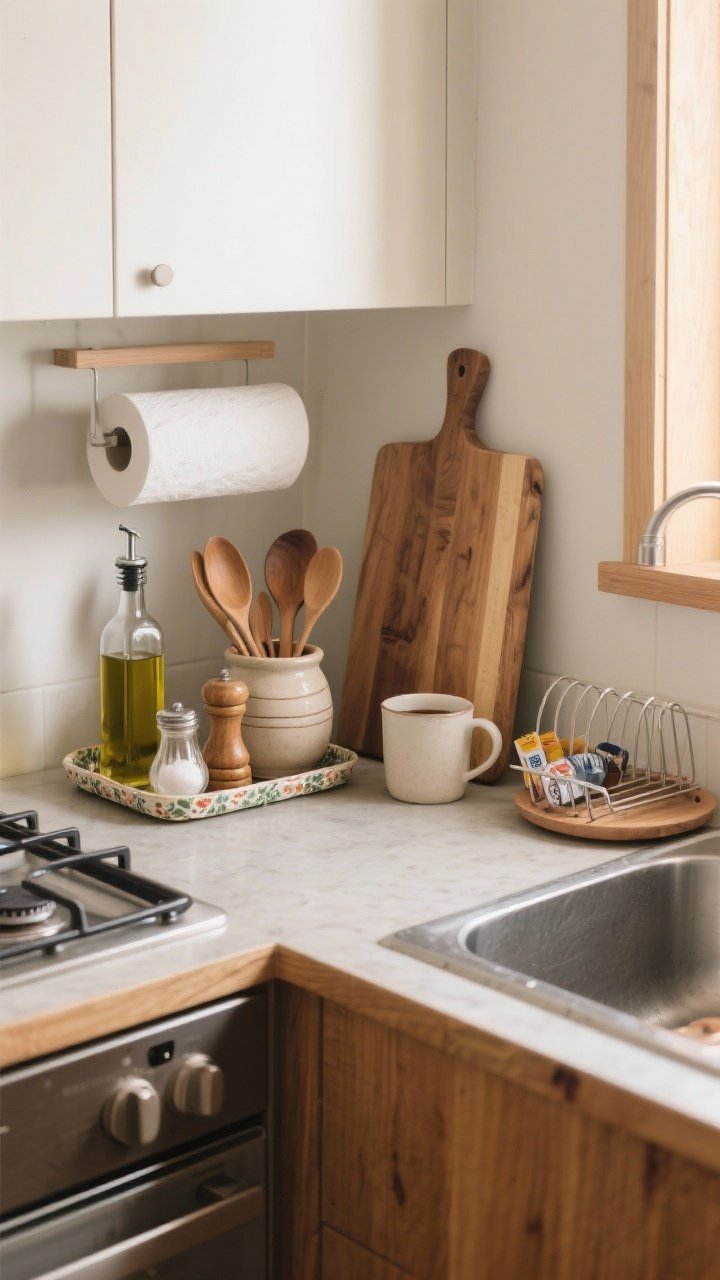
Counter space is prime real estate. Treat it like waterfront property—only VIPs live here.
Build Mini-Stations
- Tray trick: Corral olive oil, salt, pepper, and a crock of wooden spoons on a pretty tray. Easy to clean, looks intentional.
- Coffee caddy: Use a narrow drawer organizer or small lazy Susan for syrups and pods.
- Cutting board cover: A large, sturdy board over the sink or stove creates extra prep space when needed.
Only Keep the Essentials Out
- Appliance rule: If you don’t use it 3+ times a week, it lives in a cabinet.
- Vertical paper towel holder: Mount it under a cabinet or on the wall.
- Slim dish rack: Go collapsible or over-the-sink to free up counter real estate.
Visually, less is more. The fewer items on display, the tidier your kitchen will feel—even on a Tuesday night after pasta chaos.
5. Pantry Without a Pantry: Decant, Label, Rotate
No pantry? No problem. We’re building one inside your cabinets, one container at a time.
Decant With Purpose
- Square containers: They nest tight, maximize space, and stack neatly.
- Clear bins: Keep snacks, baking mixes, or breakfast items together. Pull, grab, done.
- Lazy Susans: Perfect for oils, vinegars, and sauces—no more sticky bottle graveyards.
Label Like a Pro
- Front-facing labels: What it is, and optionally the date you refilled.
- Use one style: Matching labels calm visual clutter (and make you look wildly organized).
- First in, first out: Rotate older items forward so nothing expires unseen.
Bonus hack: Repurpose a bar cart or bookshelf as an open pantry. Add baskets for potatoes and onions, can risers for soups, and hooks for reusable bags.
6. Make the Sink Zone Work Overtime
The sink is more than a dish pit—it’s a storage and prep goldmine if you set it up right.
Under-Sink Strategy
- Stackable bins: One for cleaning sprays, one for dish tabs, one for extras like sponges.
- Tension rod: Hang spray bottles to open up space below for towels or trash bags.
- Over-the-door caddy: Keep daily-use items (brushes, gloves) easy to grab.
On and Around the Sink
- Over-the-sink drying rack: Collapsible, great for rinsed produce or quick-dry items.
- Slim soap trays: Contain drips and keep the counter from looking messy.
- Magnetic sponge holder: If you have a metal sink, it’s the neat-freak hero you didn’t know you needed.
IMO, a compost caddy with a tight lid near the sink gets bonus points—less trash, fewer smells, more eco points.
7. Style Meets Storage: Aesthetic Tricks That Earn Their Keep
Tiny kitchens can be gorgeous and functional. The secret is choosing pretty things that also work hard. Because yes, your mixing bowls can double as decor.
Pretty + Practical Moves
- Open shelves: Keep only attractive, frequently used items: white dishes, glass canisters, wood boards. Edit, then edit again.
- Nesting everything: Bowls, measuring cups, and storage containers that nest will save your sanity (and space).
- Color coordination: Stick to a tight palette so the room reads calm, not chaotic.
- Statement hooks: Brass or matte black hooks for mugs or pans add style while working overtime.
Lighting and Illusions
- Under-cabinet lights: Peel-and-stick LEDs brighten work zones and make everything feel bigger.
- Glass doors or mirrors: Reflect light and open up the space. Sneaky, but effective.
- Clear the sightlines: Keep taller items away from windows and counters to reduce visual clutter.
And yes, you can keep a tiny vase on the counter. Just one. With flowers you actually change, not the dried bouquet from last fall. FYI, freshness makes the whole space feel intentional.
Quick Wins You Can Do Today
- Install a magnetic strip and free a full drawer in 10 minutes.
- Decant dry goods into two stackable containers and label them.
- Create a coffee zone with a tray, jar for spoons, and a tiny bin for pods.
- Add an under-shelf basket to your most crowded cabinet.
Bottom line: A tiny kitchen doesn’t need more square footage—it needs better habits and smart helpers. Start with one section, keep what you love, and give everything else a home. Before you know it, cooking in your small space will feel effortless—and dare we say, actually fun.
