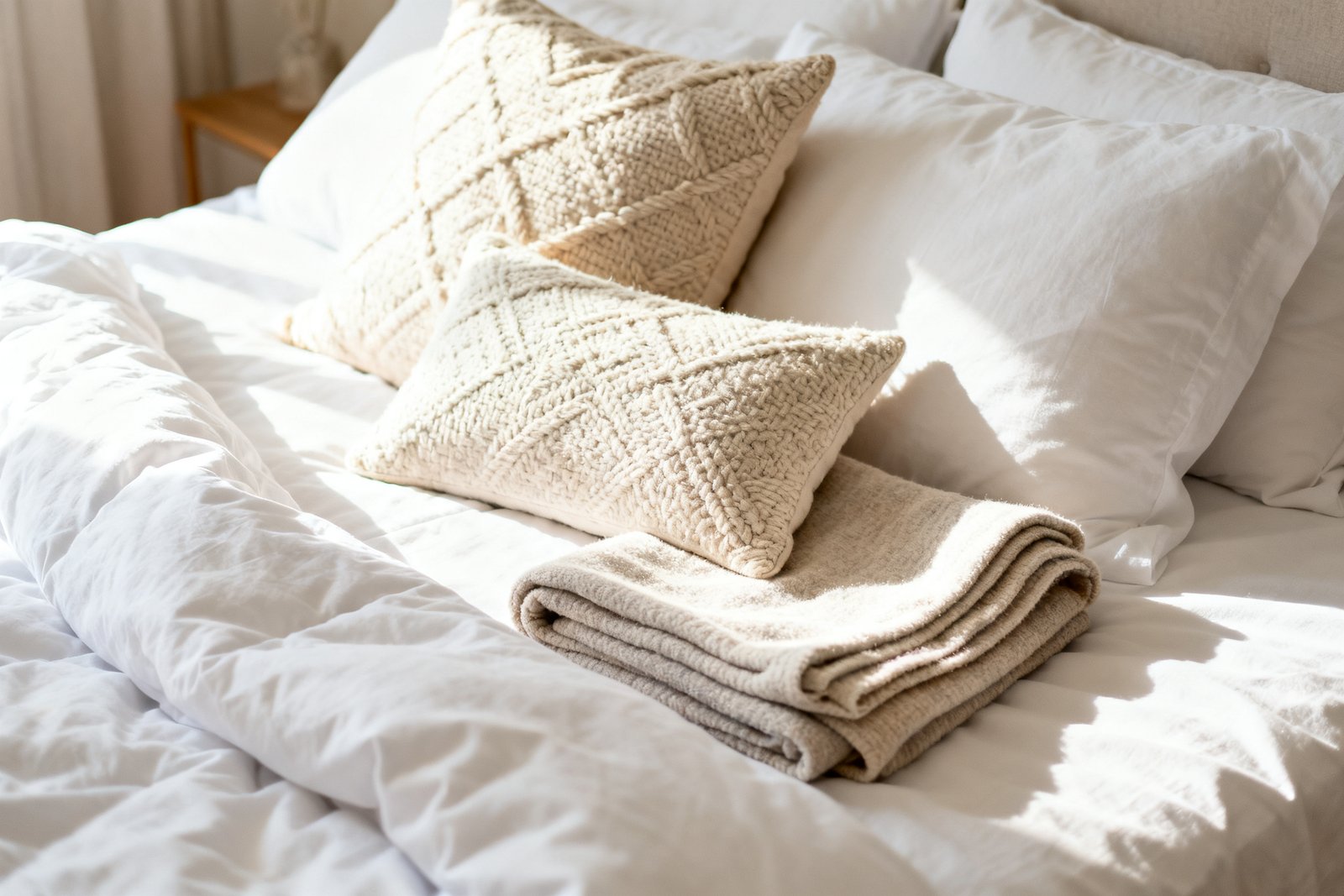

A well-styled bed makes your whole bedroom feel intentional, even if the rest is a work in progress. You don’t need designer prices to get a designer look—just smart layers, the right proportions, and a few styling tricks. Here’s how to build a polished bed on a realistic budget.
Start with a Solid Base: Mattress, Protector, and Foundation
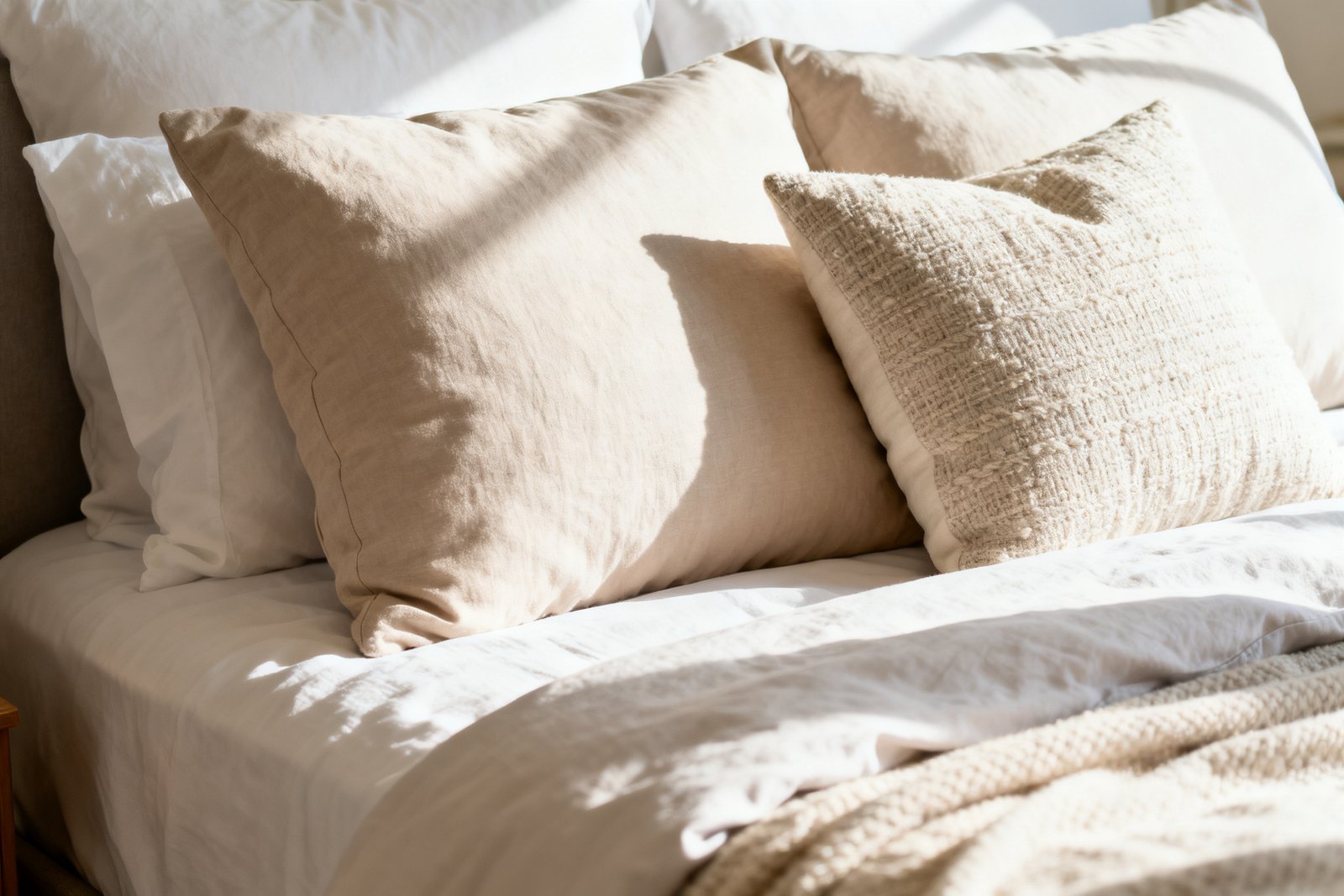
You can’t style away discomfort. If your mattress is fine but a little tired, add a 2–3″ foam or fiberfill topper ($35–$120) for softness and shape. Always use a fitted protector ($15–$30) to smooth the surface and keep the bed fresher longer.
Check your foundation height. Designer beds often look balanced because the mattress height sits roughly 24–28″ from the floor. If your bed feels low, add 2–3″ bed risers ($15–$25) or a box spring alternative. A skirted bed frame cover ($25–$50) hides basic metal rails for a cleaner look.
Choose Affordable, Good-Feeling Sheets
For more ideas, see our guide on how to style a nightstand like a designer.
Skip chasing thread count. Look for 100% cotton percale (crisp and cool) or brushed microfiber (soft and wrinkle-resistant). Good sets range from $20–$60 for queen at big-box stores and outlets.
Color and pattern tips
- Solid white, ivory, or soft gray creates a hotel base that mixes with anything.
- Pinstripes, fine checks, or small-scale prints hide wrinkles and pet hair.
- Avoid glossy sheens if you want a high-end look; matte reads more expensive.
For the smoothest look, buy deep-pocket fitted sheets if your mattress is tall, and size up your flat sheet (e.g., king flat on a queen) for an easier tuck.
Layer Your Top: Quilt, Duvet, or Comforter (and How to Make It Look Full)
A beautifully made bed transforms the room. Keep refreshing your space with our free 5-Day Budget Home Reset.
Designers use layers for dimension: a lightweight quilt/coverlet for structure and a duvet or comforter for volume. If your budget allows one item now, start with a midweight quilt ($35–$90) and add a duvet later.
Make it look plump
- Size up: Use a king duvet insert on a queen bed for a fuller, hotel-like overhang.
- Double insert trick: Put two thin duvet inserts into one cover for loft on a budget.
- Down alternative is affordable and fluffs easily ($30–$80 for queen inserts).
Folding like a pro
- Spread your quilt or coverlet smoothly, tucking the foot under the mattress for a clean line.
- Fold the top edge of the quilt back 8–12″ to show off your sheet cuff.
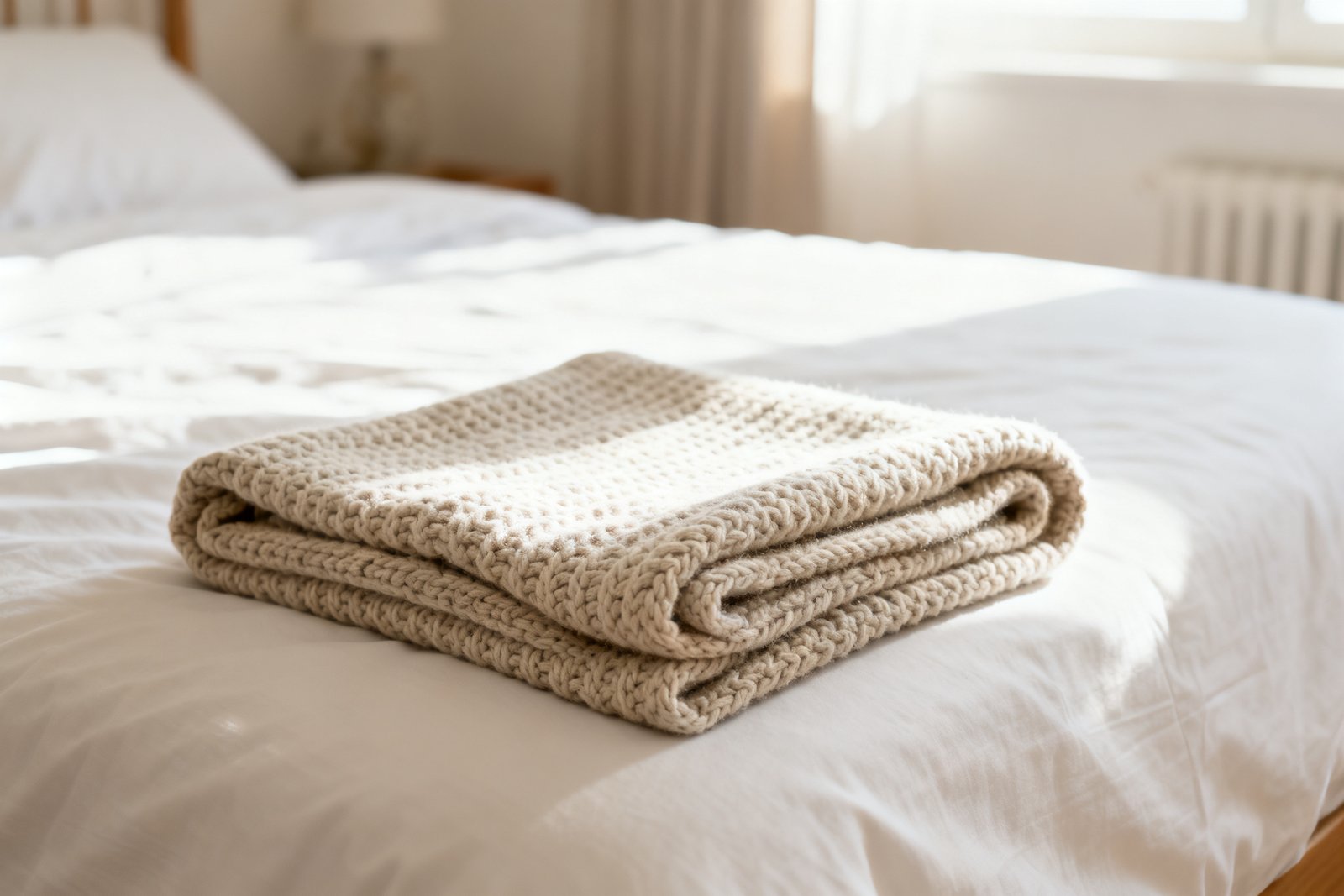
- Lay the duvet or comforter over the lower third of the bed and fold it back once for a plush “roll.”
Stick to 2–3 layers max so the bed looks intentional, not bulky.
Build the Pillow Plan (Proportions Matter)
It also helps to check out choose throw pillows that look expensive.
A designer bed usually layers three zones of pillows: sleep pillows, shams, and accents. You don’t need dozens—just the right sizes and a simple arrangement.
Simple arrangements by bed size
- Queen: 2 standard sleeping pillows + 2 standard shams + 2 square Euro pillows (26″) + 1 lumbar (12×24″ or 14×36″).
- King: 2 king sleeping pillows + 2 king shams + 3 Euro pillows (26″) + 1 long lumbar (14×48″ or 12×54″).
- Full/Twin: 2 standard sleeping pillows + 2 shams + 1 Euro or 1 lumbar.
On a tight budget, skip Euros and use an oversized lumbar ($15–$30 with insert) for a clean, modern look. Choose pillow covers you can wash, and buy inserts secondhand or during white sales ($8–$20 each for down-alternative).
How to style them
- Prop sleeping pillows upright against the headboard.
- Place shams in front, slightly overlapping.
- Add Euros or a single long lumbar centered for finish. Fluff inserts by squeezing the sides and give a gentle “karate chop” for a designer crease on down-alternative too.
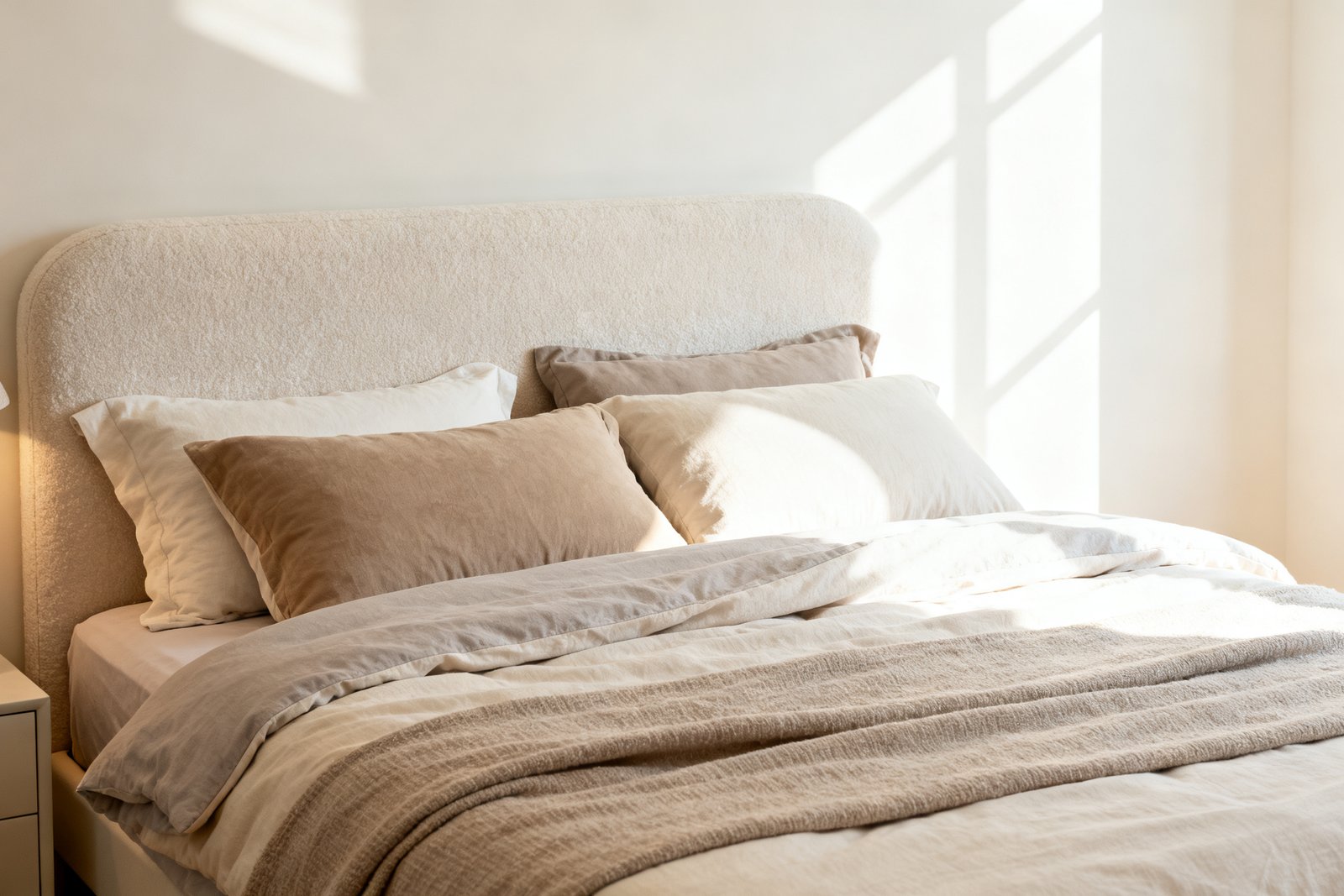
Pick a Cohesive Color Palette
Designers limit the palette to 2–3 main colors plus one accent. Start with your existing headboard or wall color and build from there. A safe formula: warm white or oat base + a muted color (sage, clay, slate) + one pattern that echoes your room’s tones.
Budget palette ideas
- Calm neutral: white sheets + taupe quilt + oatmeal duvet + black-and-cream lumbar.
- Warm minimal: ivory sheets + camel coverlet + white duvet + rust lumbar.
- Cozy color: light gray sheets + sage quilt + white duvet + small check lumbar.
Keep high-impact pattern on the smallest items (lumbars, shams) so you can switch looks for $10–$30 instead of replacing big pieces.
Texture Over Trend: How to Add Depth Cheaply
Texture photographs like luxury. Mix a nubby throw ($15–$25), a cotton matelassé or channel-stitched quilt, and a smooth percale sheet for contrast. Avoid piling on shiny fabrics—matte or slub textures feel elevated.
DIY upgrade: Replace plastic buttons on a duvet cover with wood or horn-style buttons ($4–$10) for a custom detail. Or add simple corner ties inside a budget duvet cover with ribbon so inserts stay put.
Make the Bed the Designer Way (Daily Routine)
- Shake out the top layer to remove creases.
- Smooth the quilt and create a neat hospital tuck at the foot if you like structure.
- Fold the top sheet and quilt back together to show a 8–12″ cuff.
- Fluff pillows and align edges; keep gaps even on both sides.
- Drape a throw diagonally across the lower corner or folded into thirds at the foot.
Total time: 2–3 minutes once you get the sequence down.
Example: Styling a Queen Bed for Under $200
Scenario: You have a basic metal frame and an older mattress with no headboard. Goal: Clean, cozy, “hotel at home” look.
- Frame cover/bed skirt in oatmeal: $30
- Mattress protector: $20
- Brushed microfiber sheet set in white: $25
- Cotton channel-stitch quilt in taupe: $60
- Down-alternative duvet insert (lightweight): $35
- Simple white duvet cover: $25
- Oversized lumbar pillow with cover (striped): $28
Total: About $223 before sales. Shopping on sale or secondhand for the duvet cover and quilt can bring this under $200. The finished look: white base, structured quilt, plush folded duvet, and one bold lumbar—clean and intentional without extra pillows.
Small Upgrades That Read Expensive
- Steam or iron pillow shams and the sheet cuff. Pressed edges elevate even budget linens.
- Use clip-on bedframe glides or felt pads to stop squeaks and keep the look neat.
- Add a DIY headboard: a 1/2″ plywood panel wrapped in batting and fabric ($35–$60) mounted to the wall behind the bed.
- Swap plastic pillow inserts for down-alternative with higher fill weight for better shape ($12–$20).
- Hide extra blankets in an underbed bin or a basket to avoid visual clutter.
Mistakes to Avoid
- Too many patterns competing. Limit to one hero pattern and one subtle pattern.
- Short overhang on comforters. Size up so sides graze 2/3 down the bed frame.
- Pillows that slide. Use grippy shelf liner between shams and headboard to keep them upright.
- Skipping inserts. Flat decorative covers without proper inserts look collapsed; size inserts 1–2″ larger than covers.
- Ignoring scale. A tiny throw on a king bed looks skimpy—fold a larger throw or layer two lightweight ones.
Care and Longevity on a Budget
Rotate quilts and duvet covers seasonally to reduce wear. Wash sheets weekly and shams every 2–3 weeks on cool and low heat to preserve color and fibers. Keep a fabric shaver ($10–$15) for pilling and a handheld steamer ($20–$30) for fast refreshes that make inexpensive textiles look new.
FAQ
How many pillows do I actually need?
For a tidy look without clutter: two sleeping pillows and either two shams or one long lumbar. If you like a fuller style, add two Euros on a queen or three on a king. Anything beyond that is optional and should serve the overall balance.
What’s the easiest way to get a hotel look?
Use white or ivory sheets, a midweight quilt for structure, and a fluffy duvet folded at the foot. Add one patterned lumbar for character. Iron or steam the top edges so everything looks crisp.
Are microfiber sheets okay, or should I only buy cotton?
Both can look and feel great. Microfiber is soft, budget-friendly, and resists wrinkles; cotton percale is cooler and crisper. If you run hot, choose percale or linen-cotton blends; if you want easy care and softness, microfiber works well.
How do I make a low bed look more substantial?
Raise the frame slightly, add a bed skirt or frame cover to hide legs, and use taller pillows (Euros) to create visual height. A DIY wall-mounted headboard or art placed low enough to relate to the mattress also increases presence.
If you want to keep going, take a look at make a small bedroom look bigger.
Styling your bed is the heart of a bedroom refresh—the Budget Bedroom Makeover Planner walks you through the whole room, from layout to finishing touches.
Final Thoughts
A designer-looking bed isn’t about expensive sets—it’s about proportion, simple layers, and consistent texture. Invest first in comfort and cohesion, then add personality with one or two interchangeable accents. With a clear plan, you can style a bed you love on almost any budget.