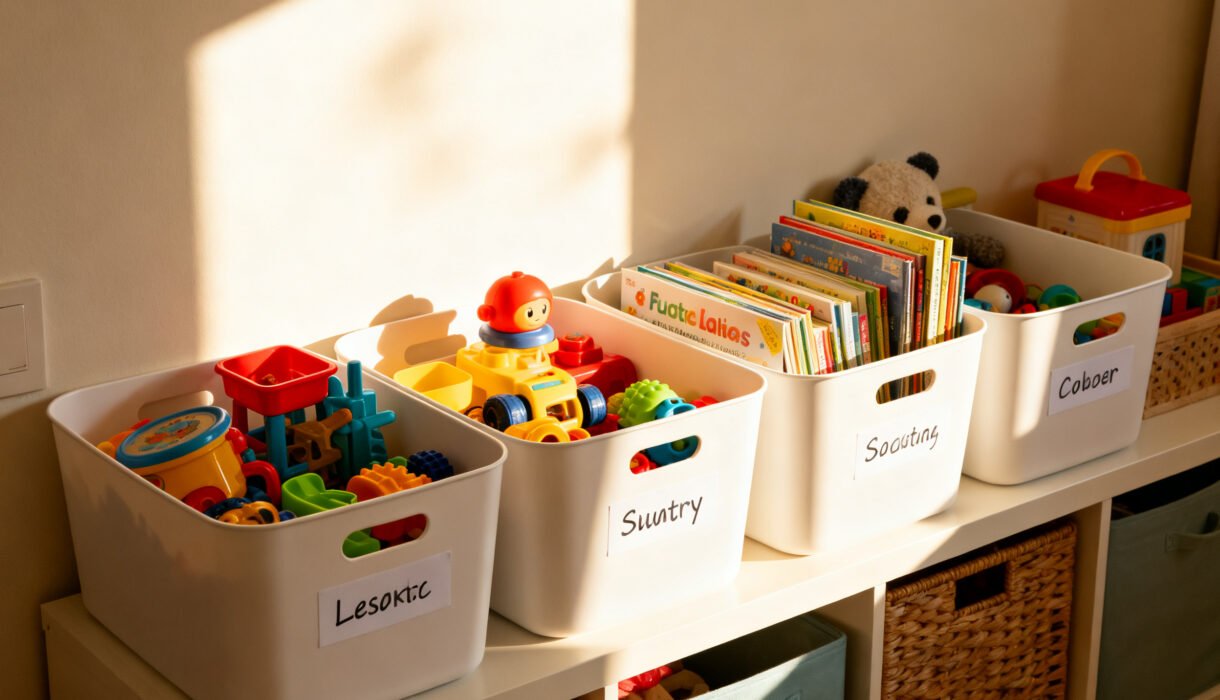

You don’t need a playroom the size of a gym to keep toy chaos under control. You just need a plan, a few clever containers, and a ruthless streak that says “no” to broken crayons and headless dolls. Ready to shrink the clutter and get your floor back?
Let’s turn that tiny space into a toy-taming ninja zone—fast.
Start With the Toy Triage
Before you organize anything, cut the volume. Less stuff = less mess = more sanity. Grab three bags or bins and label them: Keep, Donate, Trash.
How to Sort Without Melting Down
– Keep only what your kids actually use weekly.
Be honest—nostalgia lies. – Donate duplicates, outgrown puzzles, and toys that “might be fun someday.” Spoiler: they won’t. – Toss broken toys, puzzle pieces that lost their crew, and dried-up markers. FYI: You’re not throwing away memories. You’re making space for the ones they’ll actually remember.
Use Vertical Space Like a Pro
When floor space disappears, go up.
Walls do more than hold finger paintings.
Smart Vertical Solutions
– Wall-mounted shelves: Stash light bins or display sets with lots of pieces (looking at you, LEGO friends). – Pegboards: Clip baskets for cars, art supplies, and tiny figures. Pegboards adapt as kids’ interests change—big win. – Over-the-door organizers: Those shoe pockets? Perfect for dolls, blocks, and small books.
Cheap, invisible, magical. Pro tip: Keep heavier items low and light items high. Your toes will thank you.
Contain Everything (But Label It)
Toys scatter.
Containers corral. But containers without labels turn into junk drawers.
Best Bins for Small Spaces
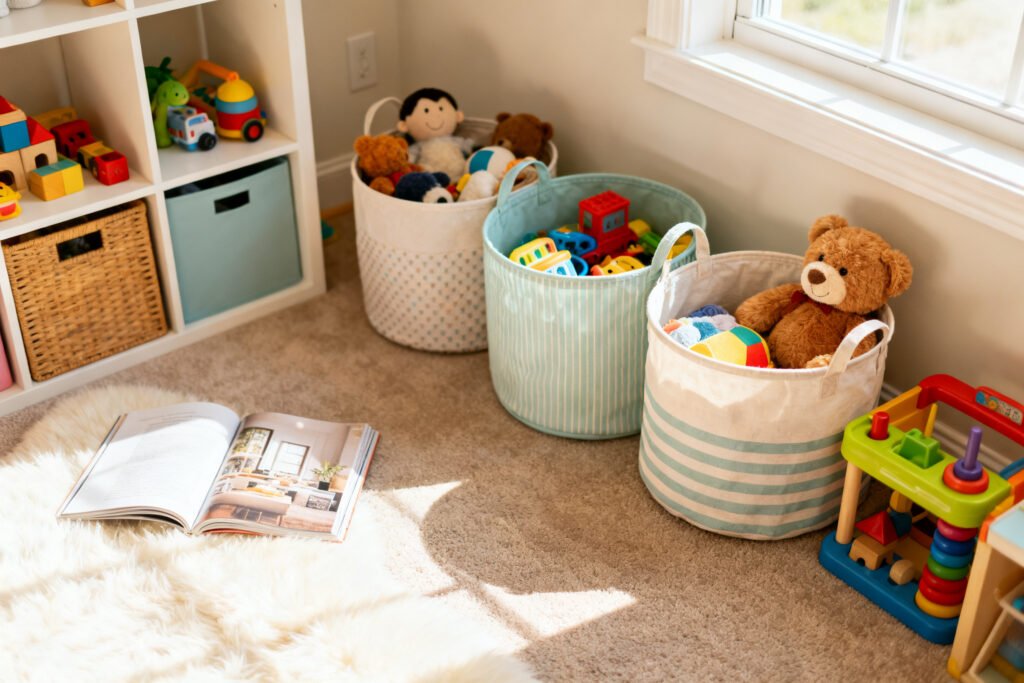
– Clear plastic shoebox bins: Stackable, cheap, and you can see what’s inside without guessing. – Fabric cubes: Cozy vibe, great for shelves, perfect for plush toys and dress-up clothes. – Lidded under-bed bins: Hide bulkier sets (Duplo, train tracks) out of sight but still reachable.
Label Like You Mean It
– Use picture + word labels for pre-readers. “Cars” and a car pic = instant win. – Color-code by child or category (green = crafts, blue = blocks). – Keep labels simple: “Animals,” “Cars,” “Art,” “Dress-Up.” Your future self will thank you. IMO, labels are the difference between “Where’s my T. rex?!” and a peaceful bedtime.
Pick Storage That Multitasks
If a piece of furniture doesn’t do double duty, it takes up too much space.
Small rooms demand overachievers.
- Storage ottomans: Seats + toy chests. Toss in stuffed animals or board games.
- Benches with bins: Window seats pull their weight when they hide LEGOs underneath.
- Rolling carts: Art station today, science lab tomorrow. Wheel it to the table, then park it in a corner.
- Bunk or loft beds: Create a mini play zone or book nook underneath. Instant square footage, zero renovation.
Bonus move: Choose furniture with rounded corners. Your shins can’t handle another run-in with a rogue wooden box.
Create Toy “Zones” (Even in One Room)
Zones help kids know where to play—and where to put stuff back. You don’t need a giant space; just define small areas with intention.
Example Zone Setup
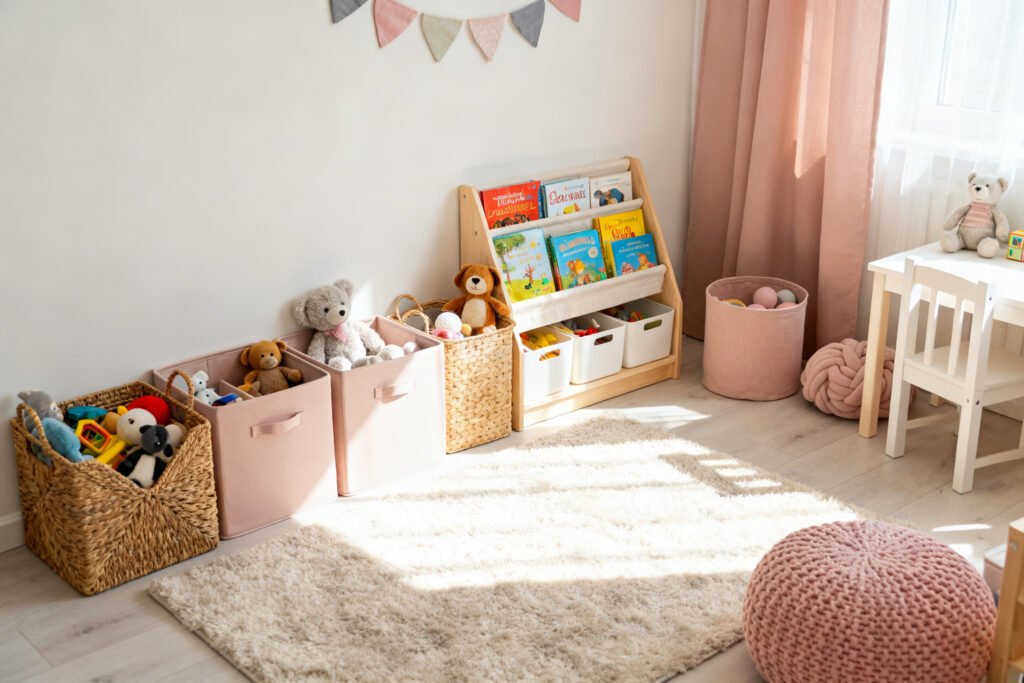
– Building Zone: Small rug + low shelf + bins labeled “Blocks,” “Minifigs,” “Vehicles.” – Art Zone: Rolling cart + tabletop caddy + paper tray.
Keep messy stuff higher if you like your walls paint-free. – Reading Zone: Narrow bookshelf + beanbag. Books face-out if possible—kids grab what they can see. – Pretend Play Zone: Hooks for costumes + one bin for accessories. Cap it to one bin—drama stays contained.
Keep zones near where they make sense: art near a table, blocks on a rug, books by a cozy light. Easy access = actual use.
Rotate Toys to Keep It Fresh
Kids don’t need every toy available every day. Shockingly, boredom drops when choices shrink.
Rotations make old toys feel new and cut cleanup time.
How to Run a Zero-Stress Rotation
– Stash half the toys in a closet or under-bed bin. – Swap weekly or biweekly. Tie swaps to a day (Sunday reset!) so you don’t forget. – Keep favorites always out. Rotations should delight, not start a mutiny. – If a toy stays in storage for a month without getting requested? Donate it.
No guilt. FYI: Rotations also help you see what your kid actually plays with. Data, but make it toddler.
Make Cleanup Kid-Proof
You can design the prettiest system on earth, but if your kid can’t use it?
It collapses. Build for tiny humans.
- Keep bins low so kids can reach and return items solo.
- One-step storage: No lids for everyday bins. Lids are effort. Effort gets ignored.
- Use big categories: “Animals,” not “Farm vs. Jungle.” Sanity > taxonomy.
- Make cleanup a game: Timer on, music up, race to beat 2 minutes.
- Set limits: One cube per category. When it’s full, something rotates out or gets donated.
IMO, the best system is the laziest system that still works.
Toy storage sticks better when the whole space resets. The free 5-Day Budget Home Reset builds that momentum.
Small-Space Power Moves You’ll Actually Use
– Command hooks for capes, bags, and headphones—no tools, no holes, magic. – Magnetic strips for metal cars and kid-safe tools.
Looks cool, saves space. – Narrow book ledges behind doors or hallways. Books don’t need deep shelves. – Bedside caddies for favorite books and a stuffed buddy. Fewer nightstand piles. – Collapsible baskets for quick company cleanups.
Dump, fold, done.
Maintenance That Doesn’t Make You Cry
Systems crumble without tiny, repeatable habits. Nothing wild—just 5-minute routines.
Weekly Reset
– Empty the “misc” bin and return items to their homes. – Pull broken toys and low-ink markers. – Rotate one category if interest dips (trains in, dinosaurs out). – Do a 3-item edit: pick three toys to donate or store. Momentum matters.
Teach the System
– Walk kids through where things go.
Repeat. Repeat again. – Praise good cleanup. Bribery?
Acceptable in desperate times. – Post a simple picture chart at their eye level for cleanup steps.
FAQ
How do I organize toys when I have zero closet space?
Lean on furniture with storage: benches, ottomans, under-bed bins, and wall shelves. Use over-the-door organizers for small stuff. If the floor looks messy, try fewer categories and bigger bins.
What’s the best way to store LEGO without stepping on it?
Use shallow, lidded trays or under-bed drawers for the builds-in-progress and a single open bin for loose bricks.
Add a small parts case for minifigs and specialty pieces. Keep it low to the ground and near a play mat to contain scatter.
For more storage ideas, see renter-friendly storage ideas, small-space storage ideas, and tiny home storage hacks.
How do I stop stuffed animals from taking over?
Set a limit: one cube or hammock. Use a beanbag cover as a “plush jail”—stuff it with animals and boom, a seat.
If new plushies arrive, one old one rotates out. Simple, not heartless.
My kid ignores half their toys. What now?
Try a 50/50 rotation for two weeks.
Watch what they ask for. Donate what never gets requested. Sometimes boredom means overwhelm—fewer choices lead to deeper play.
How do I organize art supplies without a dedicated craft room?
Load a rolling cart with three tiers: paper on top, markers/crayons/scissors in cups middle, paints/glue bottom.
Add a lidded box for “messy day” items. Wheel it to the table and park it in a closet corner when done.
How do I keep grandparents’ gifts from flooding our tiny space?
Share your storage limits and a wish list (experiences, consumables, books). Store extras in a rotation bin.
After a trial period, donate duplicates. Gratitude + boundaries can coexist, I promise.
Conclusion
Small spaces don’t doom you to toy chaos—they just force smarter choices. Trim the stash, go vertical, label everything, and rotate like a minimalist DJ.
Build a kid-proof system that takes seconds, not sermons. Do that, and you’ll actually see your floor again—maybe even sit on it without landing on a rogue fire truck.