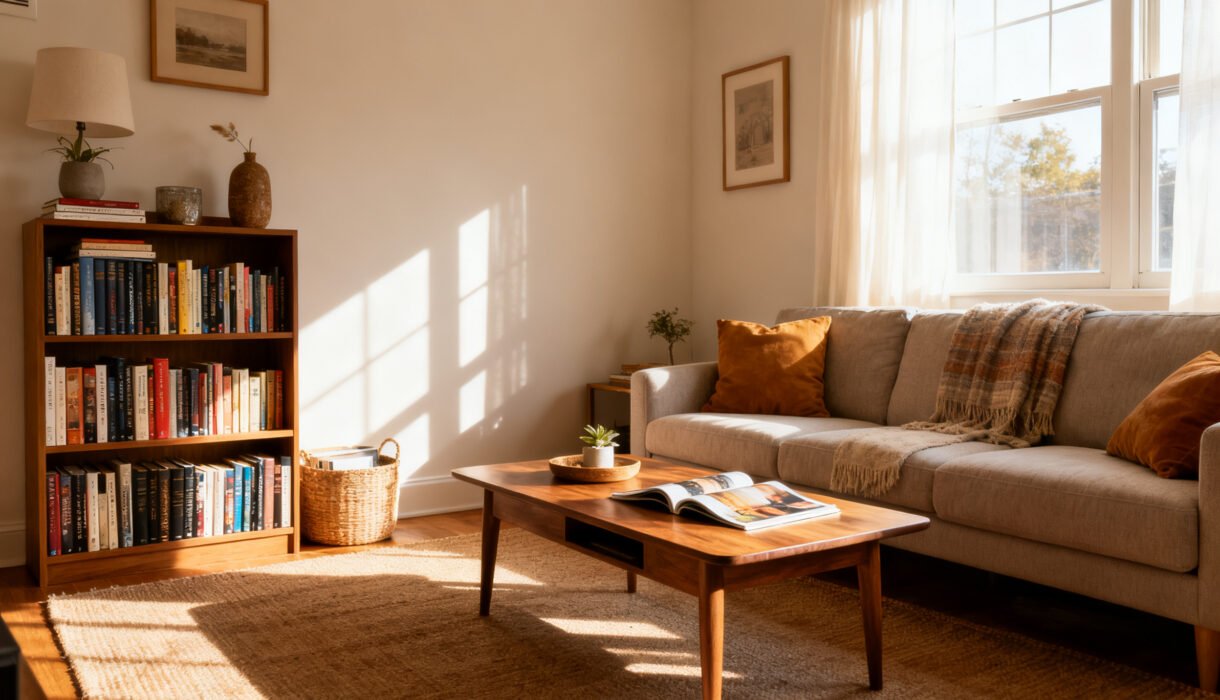

Small living rooms don’t need apologies; they need strategy. With a few smart moves, you can turn a cramped box into a cozy, functional space that actually works. Ready to outwit square footage and make your living room feel bigger, brighter, and way more livable?
Let’s map it out—without sacrificing your style (or your dignity).
Start With a Game Plan (Yes, Measure Stuff)
Before you buy anything, grab a tape measure and a rough floor plan. You can’t cheat space, but you can play it smart. Measure the room, windows, doors, and walkway clearances.
Then list what you absolutely need: seating, a spot for TV, storage, maybe a place to work.
- Anchor first: Decide where the largest piece goes (usually the sofa). That sets the flow.
- Leave pathways: Aim for 24-36 inches of walking space where people pass through.
- Right-size furniture: No, the giant sectional won’t “make it cozy.” It will bulldoze your room.
Pro-tip: Make Zones
Carve out micro-areas: a seating zone, a reading nook, maybe a mini desk area. Zoning keeps a small room from feeling like a furniture traffic jam.
Use rugs, lighting, and furniture orientation to define areas without building walls.
Float the Furniture (Don’t Hug Every Wall)
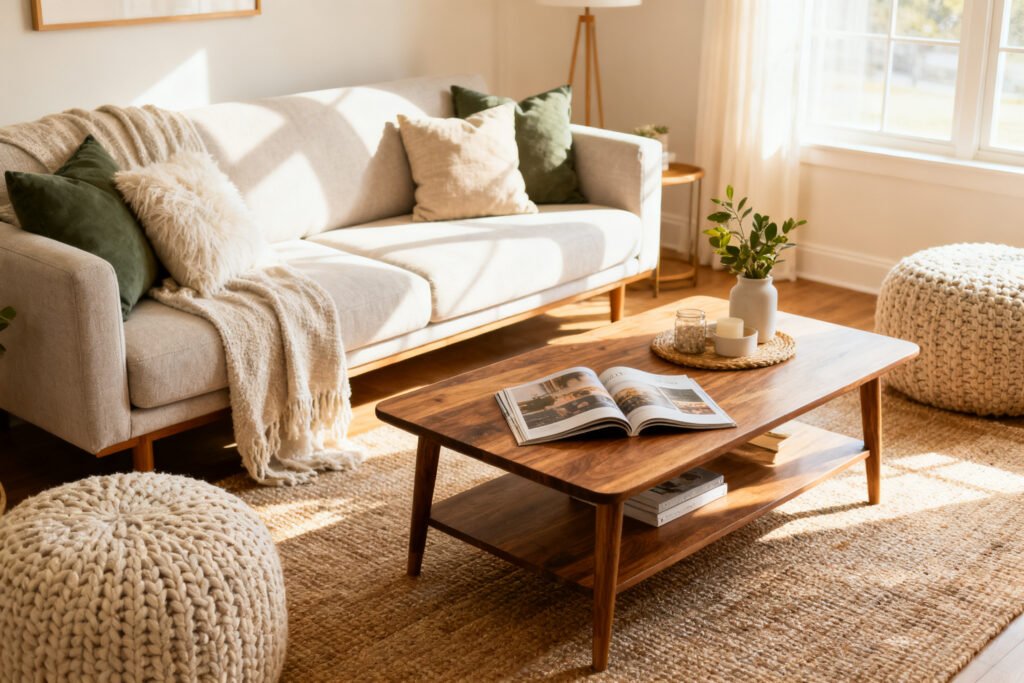
The impulse to push everything against the walls? Skip it. Floating furniture creates flow and makes the center feel intentional.
Place your sofa a few inches from the wall or even centered on a rug with chairs facing it.
- Conversation layout: Face seating pieces toward each other for connection and symmetry.
- Open corners: Leave at least one corner open to make the space breathe.
- Use slim profiles: Narrow arms, raised legs, and low backs keep sightlines clean.
When Walls Work Best
If your room is very narrow, a wall-aligned sofa plus a single accent chair across from it can still feel balanced. Add a narrow console behind the sofa or under the TV for storage that doesn’t stick out.
Choose Agile, Multi-Tasking Pieces
Your furniture needs to earn its keep. Look for pieces that move, fold, or stash.
- Nesting tables: Pull them out when needed; tuck them away when you don’t.
- Ottoman over coffee table: Extra seating + footrest + tray surface = win. Storage ottomans? Double win.
- Drop-leaf tables: A console by day, dinner spot by night. Magic.
- Lightweight accent chairs: Easy to shuffle for guests, easy to ignore when you’re alone.
Scale Matters (A Lot)
Choose a coffee table that’s 1/2 to 2/3 the length of your sofa and low enough to keep sightlines open.
Aim for a media console slightly wider than your TV for balance. IMO, nothing shrinks a room faster than oversized furniture.
Use Vertical Space Like a Pro
If your floor’s crowded, look up. Walls and ceilings can do heavy lifting.
- Wall-mounted shelves: Store books, baskets, and plants off the floor. Float a shelf above the sofa for display.
- Sconces over lamps: Free your side tables and add mood lighting without a footprint.
- Ceiling-mounted curtains: Hang them high and wide to visually expand the room and windows.
Built-Ins Without the Contractor
Create a “built-in” look with tall bookcases flanking the TV or a window bench with storage. Align the tops of shelves for a cohesive line across the room. FYI, consistent vertical lines trick the eye into reading the space as taller.
Play With Light, Reflections, and Color
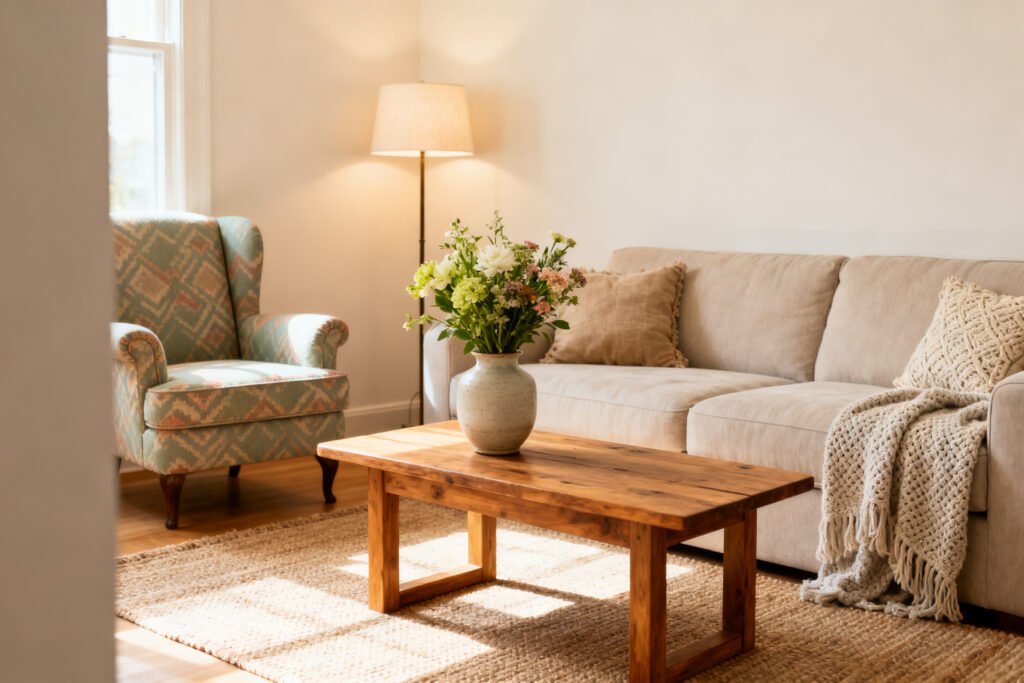
Lighting and color can cheat your brain in the best way.
Mix warm, layered light with a palette that suits your vibe.
- Layer lighting: Overhead + task + accent lights create depth. Overhead alone = interrogation room.
- Mirrors near light sources: Place one opposite a window to bounce light and visually extend the room.
- Color strategies: Light neutrals expand, but don’t fear color. Deep hues on one wall can “push” it back.
Rug Rules That Actually Help
Go bigger than you think.
A rug that fits under the front legs of sofas and chairs unifies the seating zone and makes the room feel larger. Tiny rugs = tiny room energy. Don’t do it.
Style Smart: Keep It Cohesive, Not Boring
Small rooms love consistency.
Pick a simple color palette with 2-3 main tones and a few accent textures. Keep patterns in the same scale family so your eye doesn’t scramble.
- Declutter like you mean it: Visible surfaces stay clean. Use closed storage for the not-cute stuff.
- Repeat materials: Match woods, echo metals, and reuse colors to create rhythm.
- Edit decor: A few bold pieces beat 17 tiny trinkets. Your dusting schedule will thank you.
A smart layout works best in an uncluttered room. The free 5-Day Budget Home Reset helps you reset before you rearrange.
Art Placement = Instant Polish
Hang art at eye level (around 57-60 inches from the floor to center) and keep frames in complementary finishes. One large piece can make a room feel bigger than a messy mini gallery, IMO.
Layout Ideas You Can Steal
- The Conversational Core: Sofa centered on a rug, two slim chairs opposite, round ottoman in the middle, floating everything 6-12 inches from walls.
- The Narrow Room Fix: Sofa against the longest wall, small swivel chair angled across, long runner rug, wall-mounted TV, tall bookcase by the far corner.
- The Multi-Tasker: Loveseat + storage ottoman, ladder desk behind or beside the sofa, nesting tables as flexible surfaces, sconces instead of table lamps.
- The Window Hero: Bench under window with cushions and baskets inside, petite sofa facing it, accent chair near a corner, mirror opposite the window.
Quick Wins If You’re Short on Time
- Swap bulky end tables for sleek nesting sets.
- Mount a simple shelf under the TV for media gear.
- Raise curtain rods to the ceiling and widen them beyond the window trim.
- Add a tall plant to draw the eye up (faux is fine—no judgment).
FAQ
How do I fit a TV without making it the star of the room?
Mount it and treat it like wall art. Surround it with slim shelves or a gallery arrangement so it blends in.
Keep the media console narrow and use baskets to hide cables and remotes. Bonus: add a frame-style TV or use a screensaver with art—stealth mode activated.
What’s the ideal sofa size for a small living room?
Most small rooms love something between 68-78 inches wide with slender arms and raised legs. If you need flexibility, consider a loveseat plus an accent chair or two chairs and a storage ottoman.
Scale beats squish every time.
Can I use a sectional, or is that asking for trouble?
You can—just choose a compact, low-profile one with a chaise instead of a bulky L. Float it if possible and leave breathing room on at least one side. If it eats your pathways, it’s a hard no.
For more small living room ideas, see make a small living room look bigger, small living room makeover ideas, and layer rugs like a designer.
How many seating pieces feel right in a small room?
Aim for 4-5 seats total using a mix of sofa, chairs, and ottomans.
Ottomans and stools pull double-duty without hogging space. Think flexible seating, not fixed theater rows.
What colors actually make a small space feel bigger?
Light neutrals open things up, but contrast adds dimension. Try a soft base (warm white, greige, pale gray) with deeper accents on one wall or with furniture.
Add texture—linen, wood, metal—so it feels layered, not flat.
Do rugs have to cover the whole floor?
Nope. They just need to unify the seating area. Choose the largest size that allows front legs of seating to sit on it.
Round rugs can also soften tight corners and improve flow.
Conclusion
Small living rooms thrive on intention. When you measure first, float furniture, use multitasking pieces, and work those walls, you’ll squeeze out every inch without sacrificing style. Keep it cohesive, edit ruthlessly, and remember: good flow beats big furniture every day.
FYI, once you dial in the layout, the room won’t just look bigger—it’ll live bigger.