Study Room Makeover Ideas That Actually Work (and Look Amazing)
Posted in :

Your study room should hype you up, not put you to sleep. If your space is a tangle of cords, a sad chair, and a desk that’s basically a dumping ground, we’re fixing that today. Here are seven makeover ideas that actually work—zero fluff, all impact.
1. Claim a Focal Wall (Your Brain Loves Boundaries)
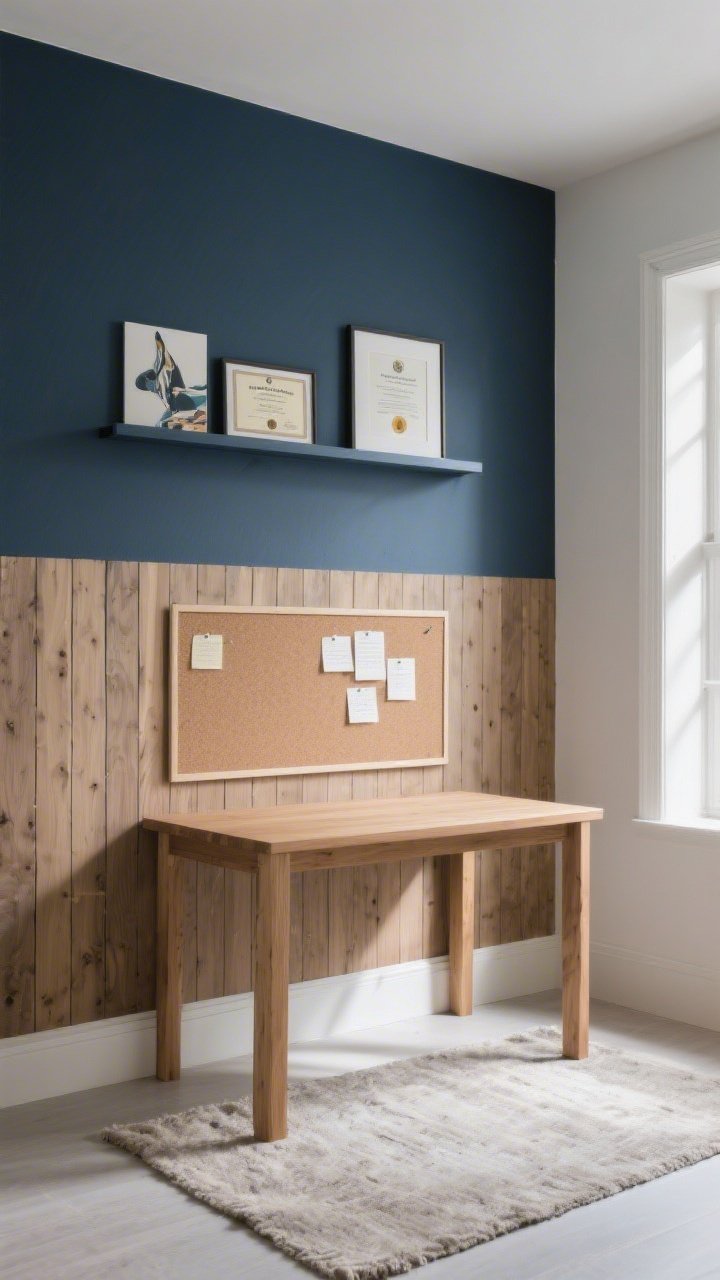
A study room without a defined zone is just… a room. Give your space a clear anchor with a focal wall so your brain knows, “Oh hey, it’s focus time.” It can be paint, wallpaper, or even a giant pinboard—just make it intentional.
How to Nail It
- Paint it deeper: Try a moody green, slate blue, or warm taupe to reduce visual noise.
- Go textural: Peel-and-stick wood slats, linen wallpaper, or a cork wall for pinning notes.
- Low-commitment option: A big fabric panel or wall-sized art print behind the desk.
Bonus: Mount a slim picture ledge to rotate art and diplomas without drilling a million holes. It looks curated, not cluttered.
2. Upgrade Your Desk Triangle (Chair, Surface, Lighting = Power Trio)
If you only change three things, make it these. Your desk, chair, and task lighting are the MVPs of comfort and productivity. Treat them like it.
Quick Wins
- Desk: Size for your space, not your ego. 48–60 inches wide fits most rooms. Add a drawer or rolling file if you stash papers.
- Chair: Adjustable height, lumbar support, breathable fabric. Your back is not a decorative item.
- Lighting: A dimmable task lamp with a 4000–5000K bulb keeps text crisp. Angle it opposite your writing hand to avoid shadows.
FYI: If your desk faces a wall, hang a small mirror or art grid to reduce that “cornered” feeling. If it faces a window, angle slightly to the side to avoid glare.
3. Create Zones: Focus, Reference, Reset
One table can’t handle your entire life. Break the room into micro-zones so tasks feel easier to start—and finish.
Zone Ideas That Actually Work
- Focus: Your main desk with only essentials—laptop, lamp, notepad, water. Nothing else.
- Reference: A side cart or shelf with books, printer, and supplies within a roll-and-grab reach.
- Reset: A small lounge chair or floor cushion for reading, brainstorming, or quick breaks.
Use rugs or different lighting to separate zones without building walls. A small rug under the reading nook = instant mini lounge.
4. Storage That Hides (But Still Finds)
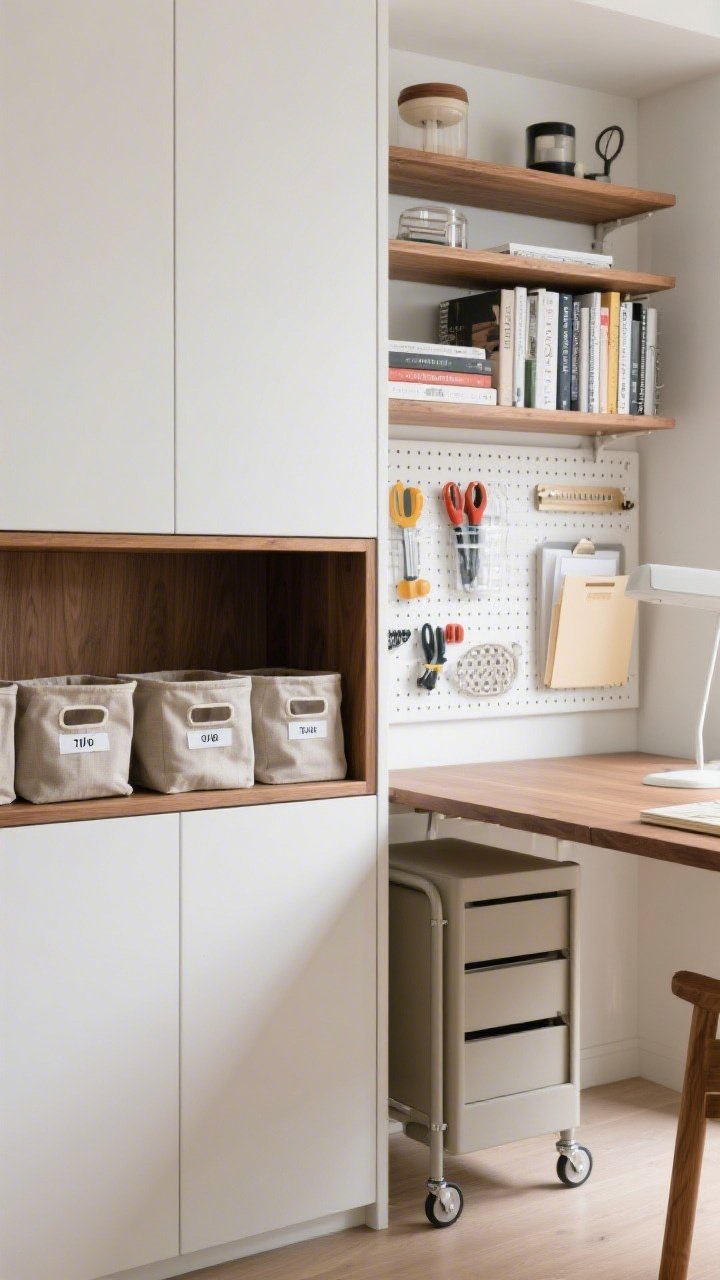
Visual clutter is concentration’s worst enemy. Keep what you reach for close, and everything else invisible—but trackable.
Smart Storage Strategies
- Closed cabinets + open shelves: Hide the ugly, display the inspiring. Aim for 70/30 closed to open.
- Label everything: Pretty bins, clear labels. Your future self will thank you at 1 a.m.
- Vertical wins: Pegboards, wall files, and magnetic strips free up desk space fast.
- Rolling cart: The Swiss Army knife of storage. Park it under the desk, pull it out when needed.
Pro move: Keep a “Reset Basket” to toss random items during the week. Empty it every Friday. Clutter, meet boundaries.
5. Layer Lighting Like You Mean It
Overhead light alone is the decorating equivalent of using only salt. Layer it up: ambient for overall glow, task for focus, accent for mood.
The Three-Layer Formula
- Ambient: Ceiling light or floor lamp with a warm 3000–3500K bulb for general comfort.
- Task: Adjustable desk lamp, bright and neutral (4000–5000K). Eye strain, be gone.
- Accent: LED strip under shelves, small sconce, or picture light. It’s the vibe layer.
IMO, add a smart plug or dimmer so you can go from study mode to chill mode with one tap. Your circadian rhythm will cheer.
6. Style With Purpose: Colors, Textures, and “Quiet” Decor
Yes, it should look good. But also? It should help you think. Choose intentional colors and quiet decor that support focus instead of stealing it.
What Works Best
- Color palette: Neutrals + one accent. Think warm beige + olive, greige + navy, or soft gray + terracotta.
- Textures: Mix wood, matte ceramic, linen, and a soft rug. Cozy without chaos.
- Greenery: Low-maintenance plants (ZZ plant, pothos) for calm and better air vibes.
- Art with intention: One large piece or a tight grid. Avoid visual noise. Inspirational, not inspirational-poster cheesy.
Keep your desk accessories in the same metal or finish for cohesion—black matte everything? Chic. Brass? Elevated. Mismatch sparingly.
7. Rituals, Tech, and Tiny Habits (The Secret Sauce)
A makeover isn’t just furniture; it’s habits. Bake focus into your space with small, repeatable actions and a bit of stealthy tech.
Set Up Your Success
- Charging station: A dock for laptop, tablet, and headphones. Cords corralled with clips or a cable box.
- Time cues: Sand timer, Pomodoro app, or a gentle chime. Start, pause, finish—repeat.
- End-of-day reset: Two-minute tidy, lamp off, door closed. Your brain loves closure.
- Sound control: Soft rug, curtains, and door draft stoppers to reduce echo. White-noise playlist for focus if needed.
FYI: Keep a “parking lot” notepad on the desk to dump random thoughts. It keeps you from opening 28 tabs “just for a second.”
Mini Checklist to Make It Stick
- One focal wall or backdrop
- Ergonomic chair and proper task light
- Three clear zones
- Closed storage with labels
- Layered lighting with dimmers
- Simple palette + calm textures
- Daily reset ritual
Quick Tip: Take a before photo. Then tackle one section per day: wall, desk triangle, storage, lighting, styling, habits. In a week, you’ll have a space that looks curated and actually helps you get stuff done. No more doom-scrolling in a sad chair. You’ve got this.
Start Your Room Makeover
| Use a simple checklist system to plan and finish your makeover. ✔ clear steps ✔ easy process ✔ great results |
