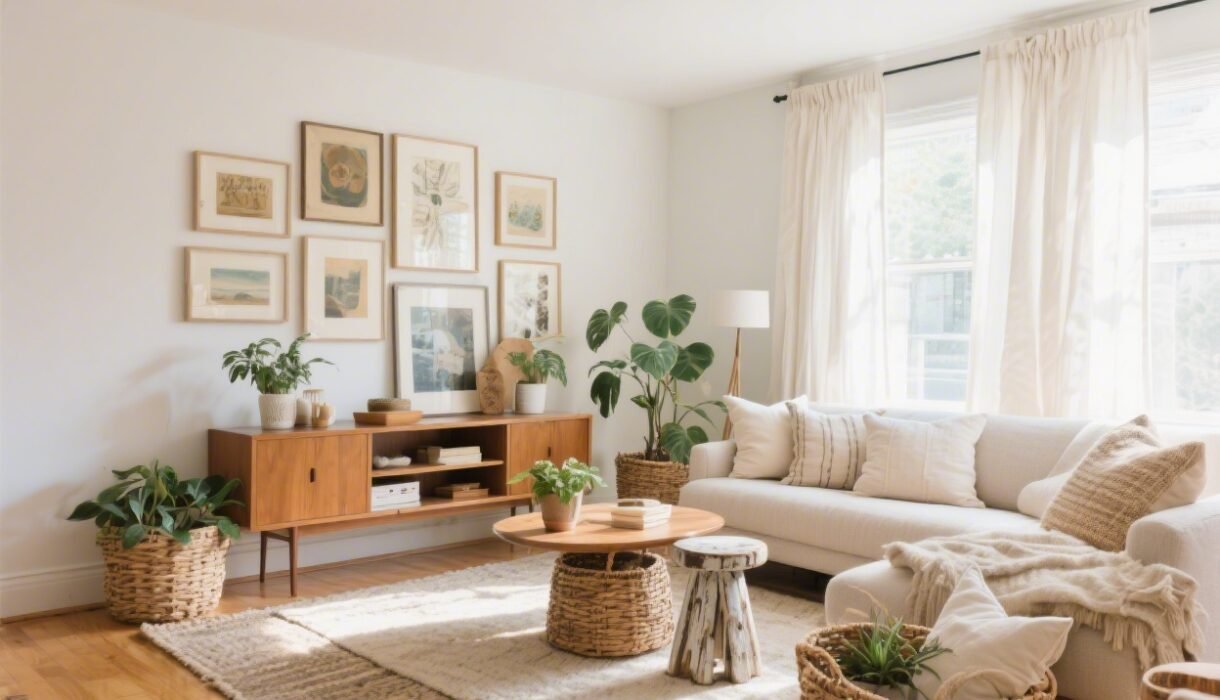
11 Smart Budget Decor Ideas to Stop Wasting Money That Actually Look Luxe
Posted in :

You don’t need a black Amex to make your home look high-end. You just need a smarter plan. Let’s stretch that decor budget without sacrificing style—and cut the sneaky ways money slips through the cracks. Ready to make your space look intentional, layered, and expensive (without the stress)? Let’s go.
1. Shop Your House First (Seriously)
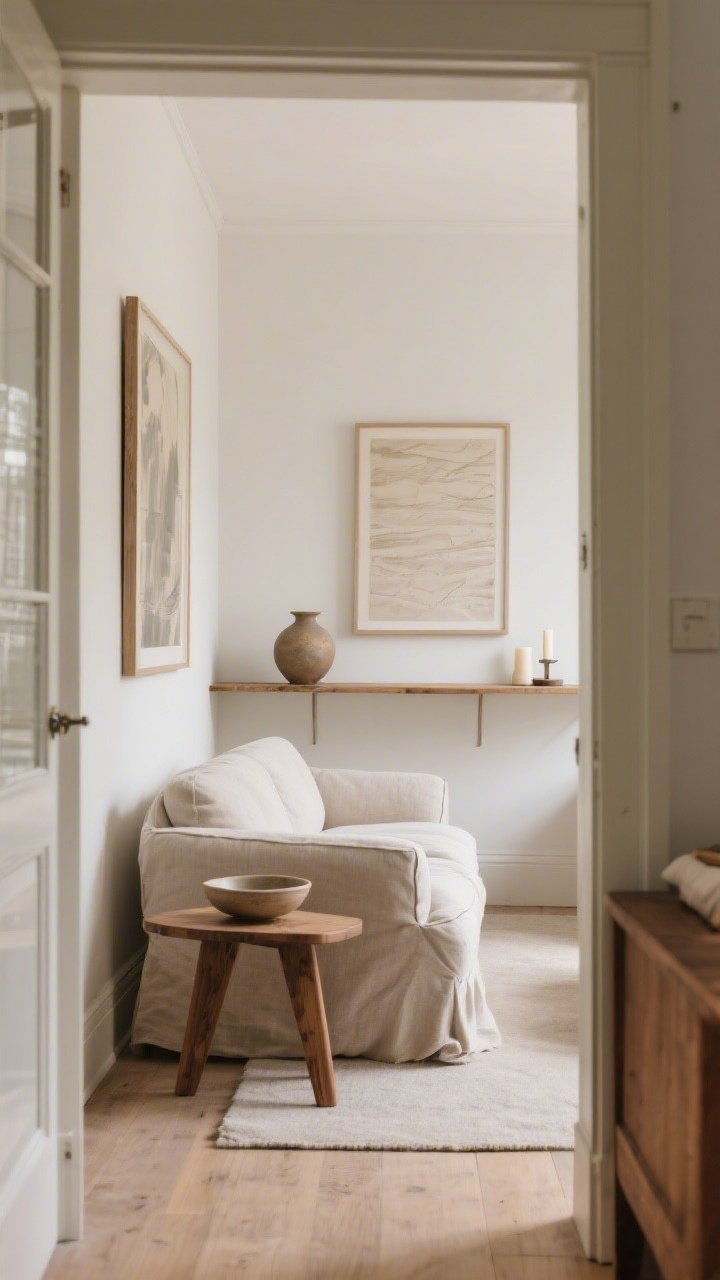
Before you buy a single thing, take a lap around your home. You probably already own great stuff that’s hiding in the wrong room—or under a pile of laundry. Move pieces, swap art between rooms, and restyle shelves. You’ll be shocked how different everything feels with zero spending.
Where To Start
- Swap side tables between the bedroom and living room for an instant style change.
- Move art from a hallway to above your sofa. Scale matters more than price.
- Re-home accessories: bowls, vases, and candles migrate well.
- Edit ruthlessly: remove two items from every surface for a cleaner, more luxe vibe.
Pro tip: Take quick phone pics of each room. It’s easier to see what feels off—or where that neglected lamp could shine.
2. Create A Mood Board And Set “Style Guardrails”
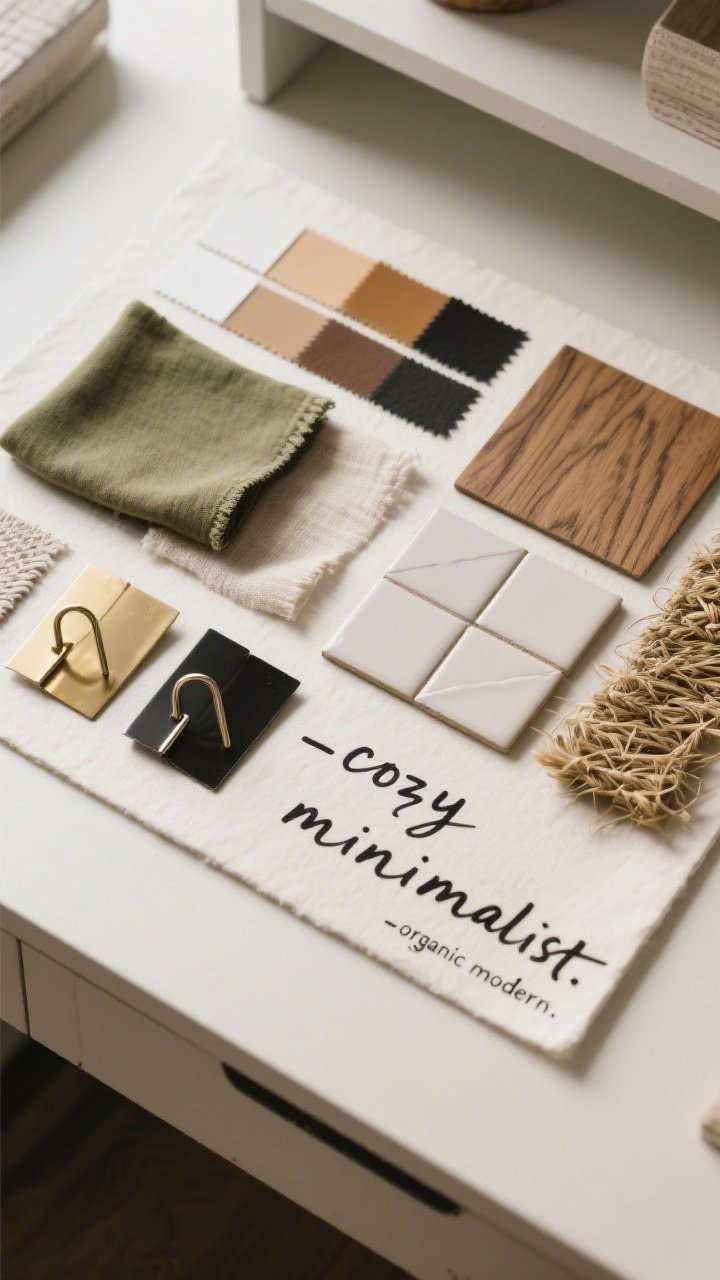
Impulse buys are budget kryptonite. Make a mini mood board to keep you focused. Pick your color palette, textures, and metals first, so every purchase works hard and plays well with others.
Set Your Guardrails
- Palette: 2-3 main colors, 1-2 accents (e.g., warm white, camel, charcoal + olive).
- Textures: linen, wood, matte ceramic, woven grass—choose 3-4 you’ll repeat.
- Metals: pick one hero (brass, black, chrome) and one supporting role, max.
- Style words: “cozy minimalist,” “organic modern,” or “classic with edge.” Keep them visible when shopping.
FYI: A $20 thing that fits the vibe beats a $200 thing that doesn’t. Consistency looks expensive.
3. Buy Big, Neutral Basics—Then Layer Color Cheap
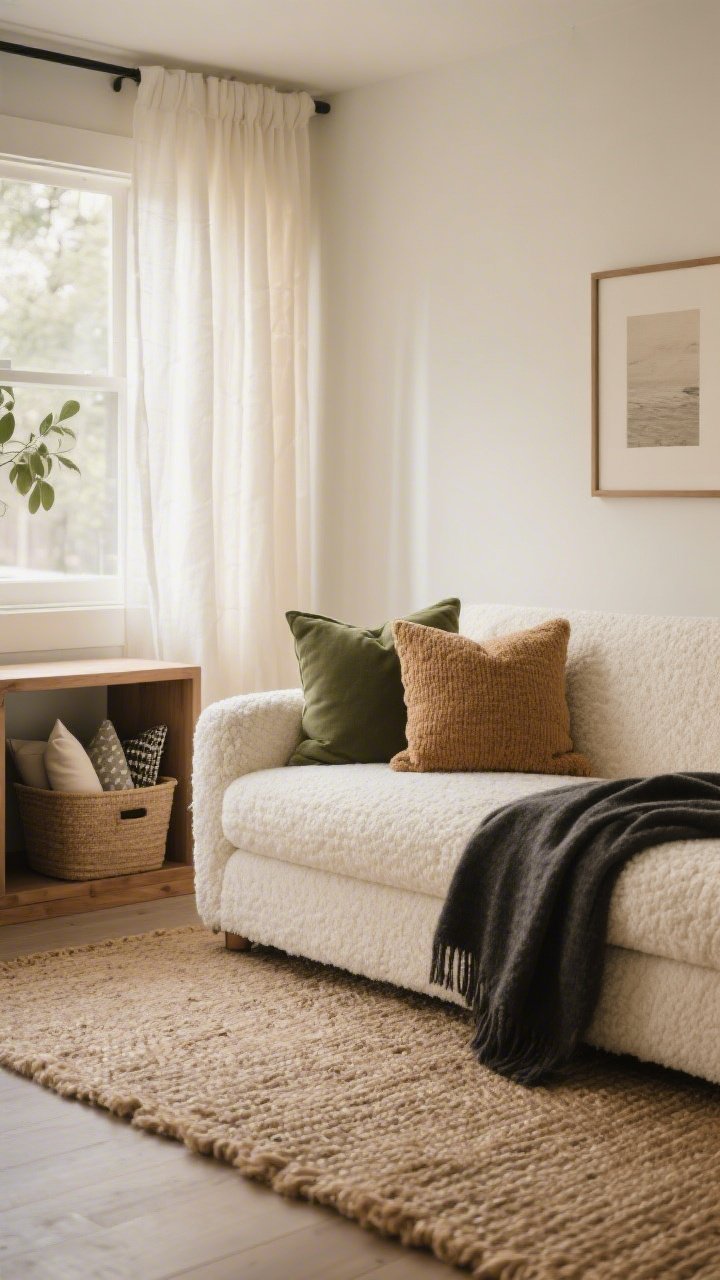
Stop wasting money replacing loud sofas and trendy rugs every two years. Get your large foundation pieces in timeless neutrals and add personality with budget-friendly layers you can swap seasonally.
What To Splurge Vs. Save
- Spend a bit more: neutral sofa, natural fiber rug, quality curtains in a solid color.
- Save (and rotate): pillows, throws, lampshades, art prints, table runners.
- Seasonal swap kit: keep a small bin of pillow covers and throws to refresh without rebuying.
Neutral doesn’t mean boring—think texture: linen, bouclé, wool, and raw wood do the heavy lifting.
4. Master Lighting Layers For Instant Luxe
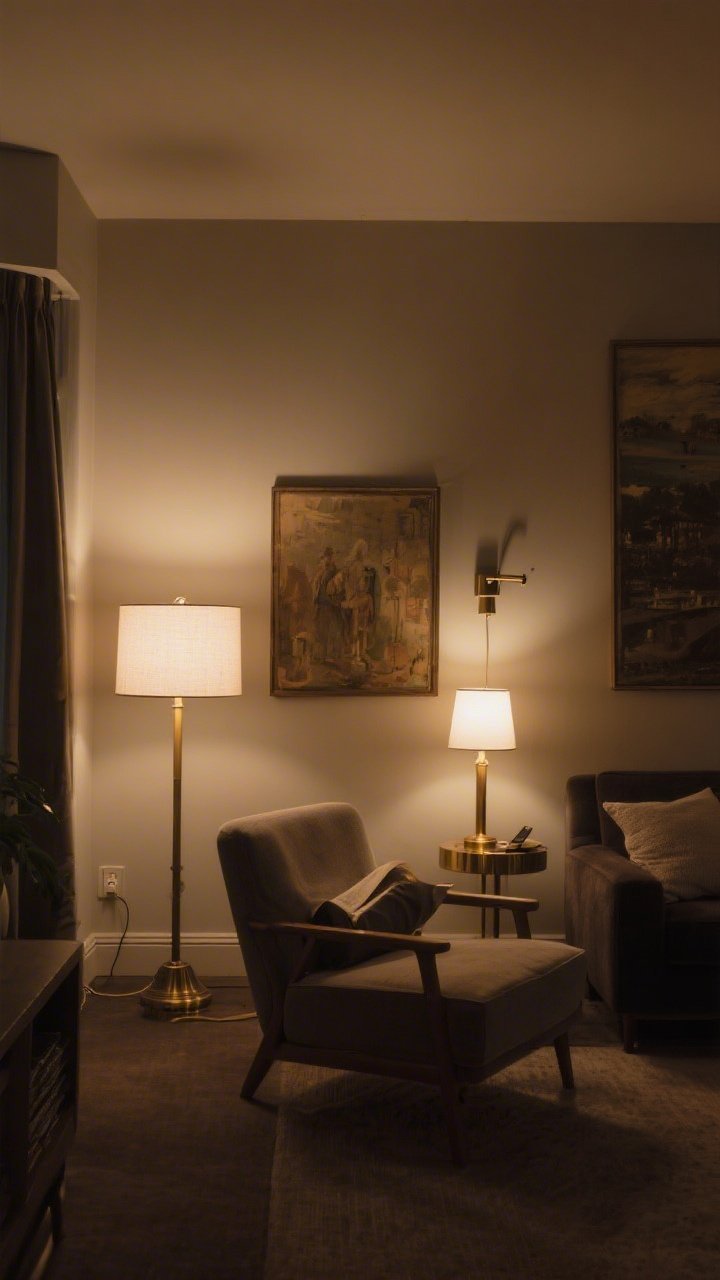
Harsh overhead lights make even designer furniture look meh. Add three lighting layers—ambient, task, and accent—to make your space feel expensive and intentional fast.
Cheap Lighting Wins
- Swap bright white bulbs for warm 2700K LEDs. Game changer.
- Plug-in sconces: mount without hardwiring for chic hotel energy.
- Clip-on picture lights to elevate thrifted art instantly.
- Dimmer plugs make even basic lamps feel moody and custom.
Bonus: Mismatched lamps can look curated—just keep shades similar and repeat your metal finish.
5. Frame It Right (Art, Photos, And Fabric)
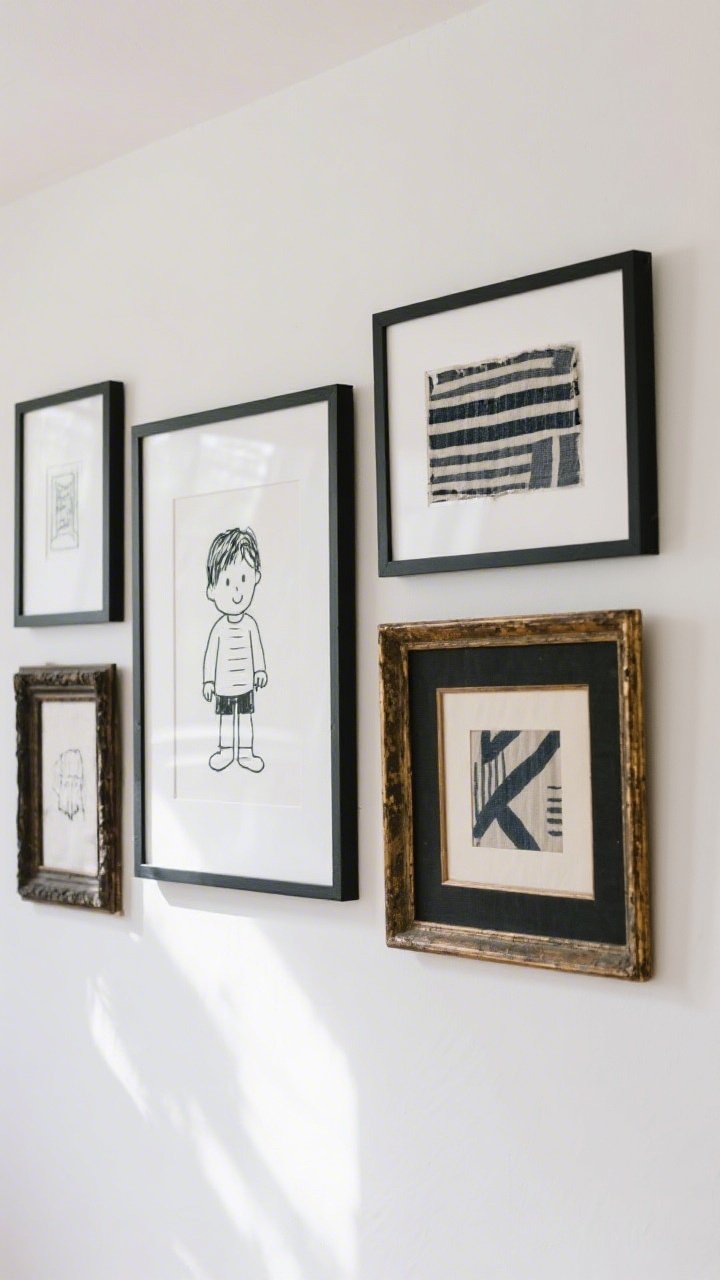
Artwork isn’t the money pit; framing is. Use standard-size frames, mat your pieces, and DIY the gallery wall. Your kid’s doodle? Elevated with a white mat. Fabric remnant? Modern art when framed big.
Smart Framing Moves
- Use off-the-shelf frames with custom mats for a tailored look on a budget.
- Print in black and white to unify random images or travel photos.
- Go oversized with one piece rather than sprinkling ten tiny frames.
- Mix high and low: thrifted frames + new mats = designer vibes.
And please, hang art at eye level—about 57 to 60 inches to the center. It matters.
6. Upgrade Hardware And Textiles (Small Changes, Huge Impact)
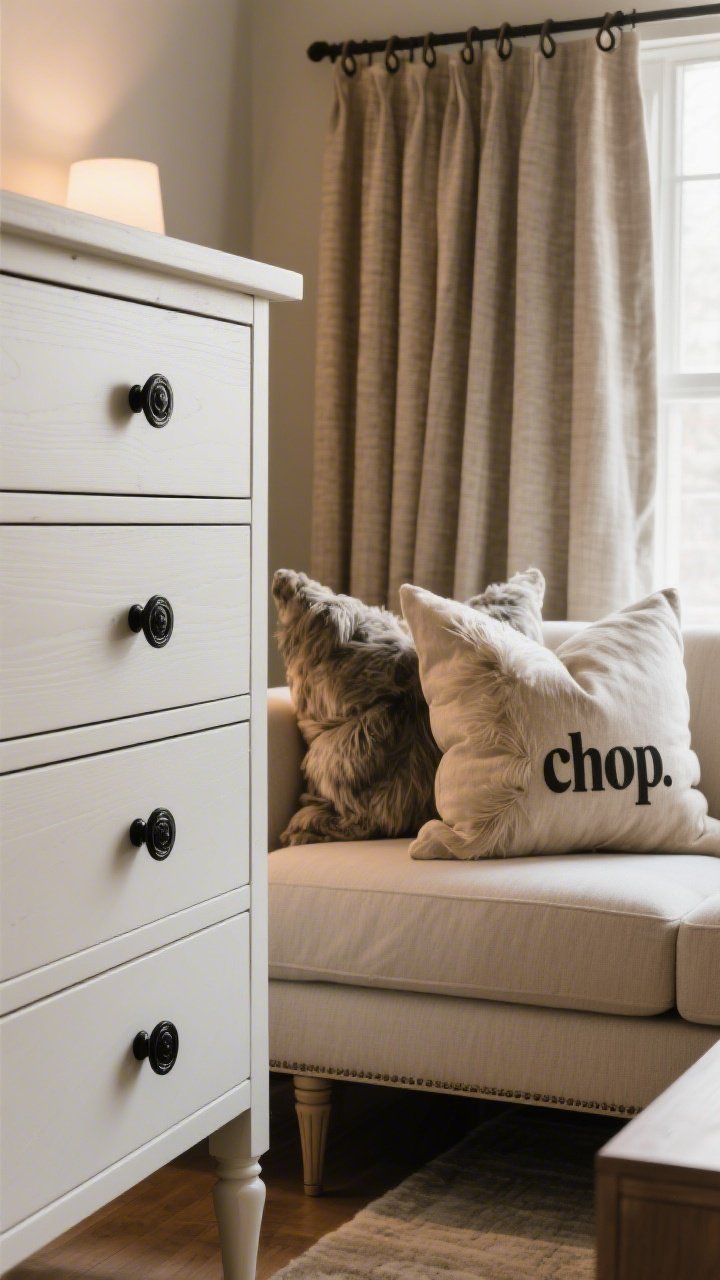
You don’t need new furniture—just better details. Swapping knobs, pulls, and legs can make a basic dresser look custom. Same goes for curtains and throw pillows with better fabric and fuller fills.
High-Impact, Low-Cost Tweaks
- Cabinet hardware: matte black or aged brass instantly modernizes.
- Curtain glow-up: hang them high and wide; use thicker panels and clip rings.
- Pillow pro move: buy 20×20 covers with 22×22 feather inserts for that designer “chop.”
- Furniture legs: raise sofas or credenzas with nicer feet for better proportions.
These are the moves that make guests go, “Wait, is this new?” while you smirk and say nothing.
7. Choose Multi-Tasking Furniture That Earns Its Keep
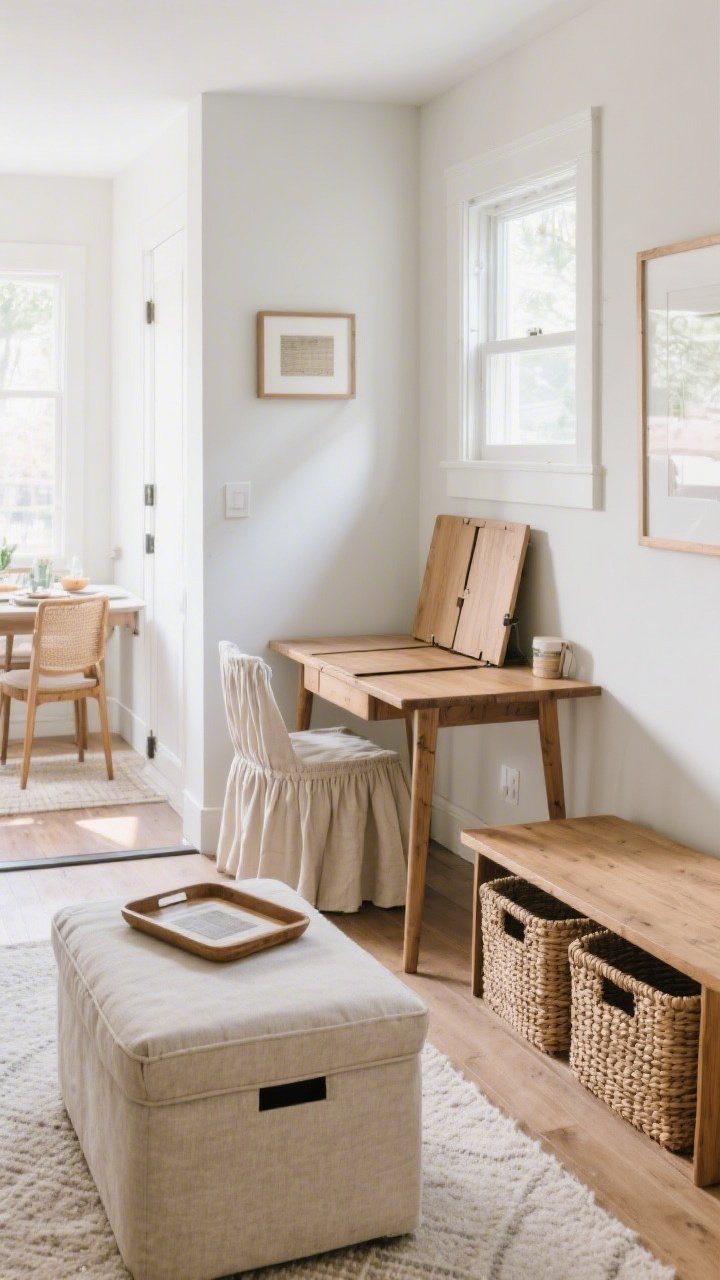
Buying single-use pieces burns cash and square footage. Go for double-duty furniture that solves storage and style in one shot.
Smart Multi-Taskers
- Ottoman with storage over a coffee table—stash blankets, remotes, board games.
- Drop-leaf tables that flex from desk to dining party.
- Benches with baskets for entryways—pretty and practical.
- Skirted side table with hidden bins underneath for sneaky storage.
Every piece should do at least two jobs: look good and hide stuff. IMO, that’s the golden rule.
8. Style Shelves And Surfaces With “Rule Of Thirds” Magic
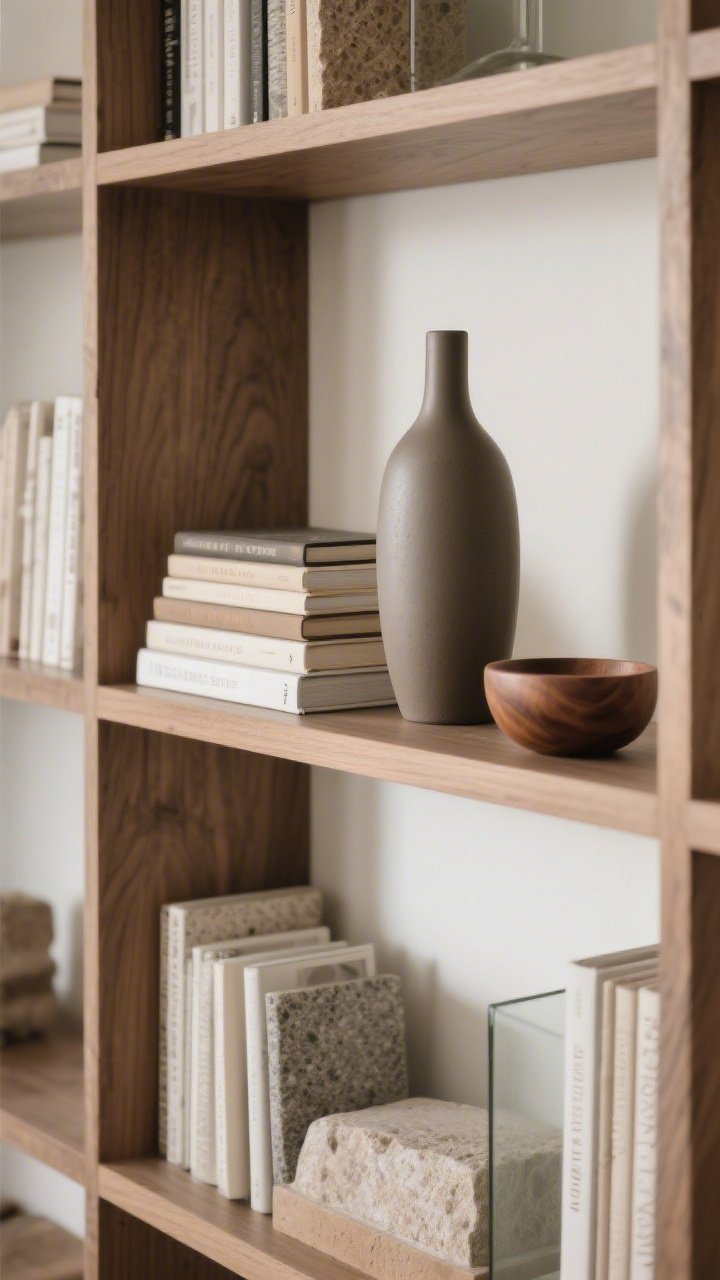
Clutter is the enemy of expensive-looking spaces. Use the rule of thirds to style shelves, nightstands, and consoles so they look curated, not chaotic.
How To Style Like A Pro
- Group in threes: tall + medium + small for visual rhythm.
- Mix shapes: stack books (horizontal), add a vase (vertical), and a small bowl (round).
- Repeat textures: wood, stone, ceramic, glass—pick three and echo them.
- Leave negative space: it’s the secret to that airy, designer feel.
Rotate objects seasonally instead of buying more. Your shelves are not a trophy case for every candle you’ve ever owned.
9. Paint And Peel: Walls, Floors, And Furniture Refreshes
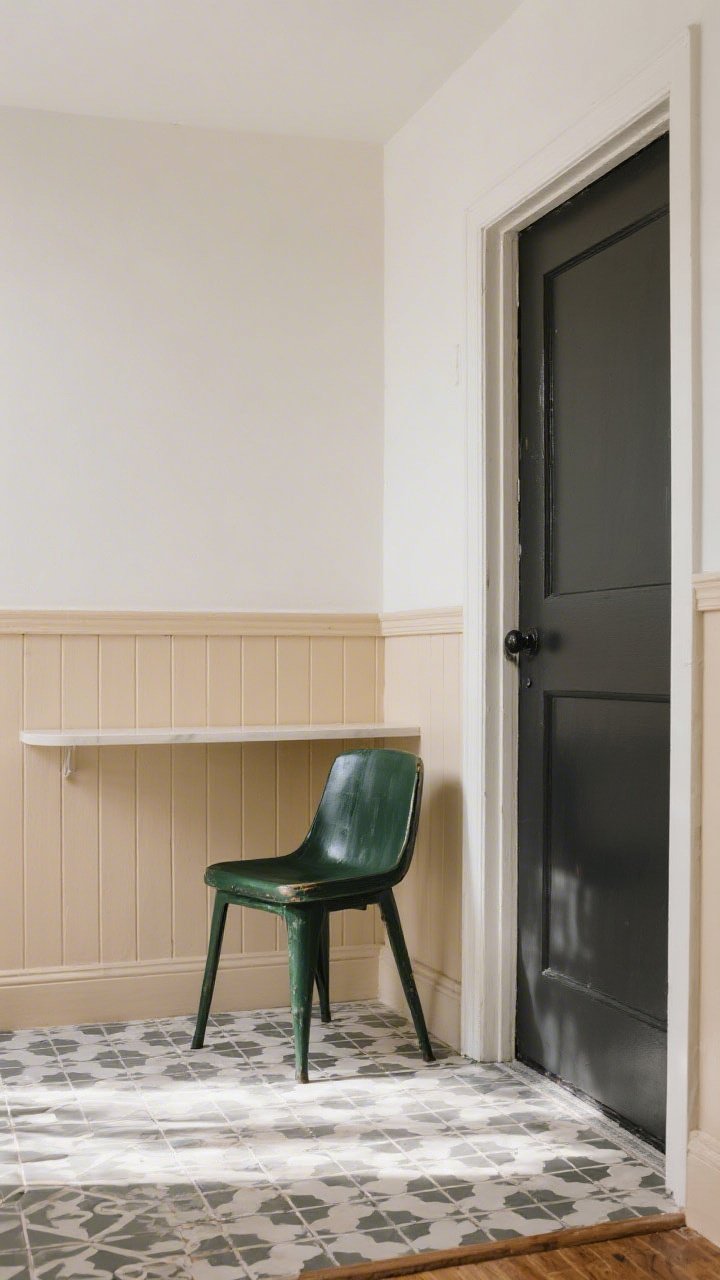
Paint still gives the biggest bang for your buck. And no, you don’t have to commit to a full-room makeover to get the glow-up.
Low-Cost, High-Reward Paint Moves
- Accent walls or wainscoting to add architectural interest in rentals.
- Paint old furniture in a modern hue—deep olive, charcoal, or warm putty.
- Stair risers or interior doors in a moodier color for a custom look.
- Peel-and-stick wallpaper or floor tiles for renters—commitment-free style.
Test swatches in morning and evening light. The right undertone saves you from repainting (and regretting).
10. Thrift, Trade, And Time Your Purchases
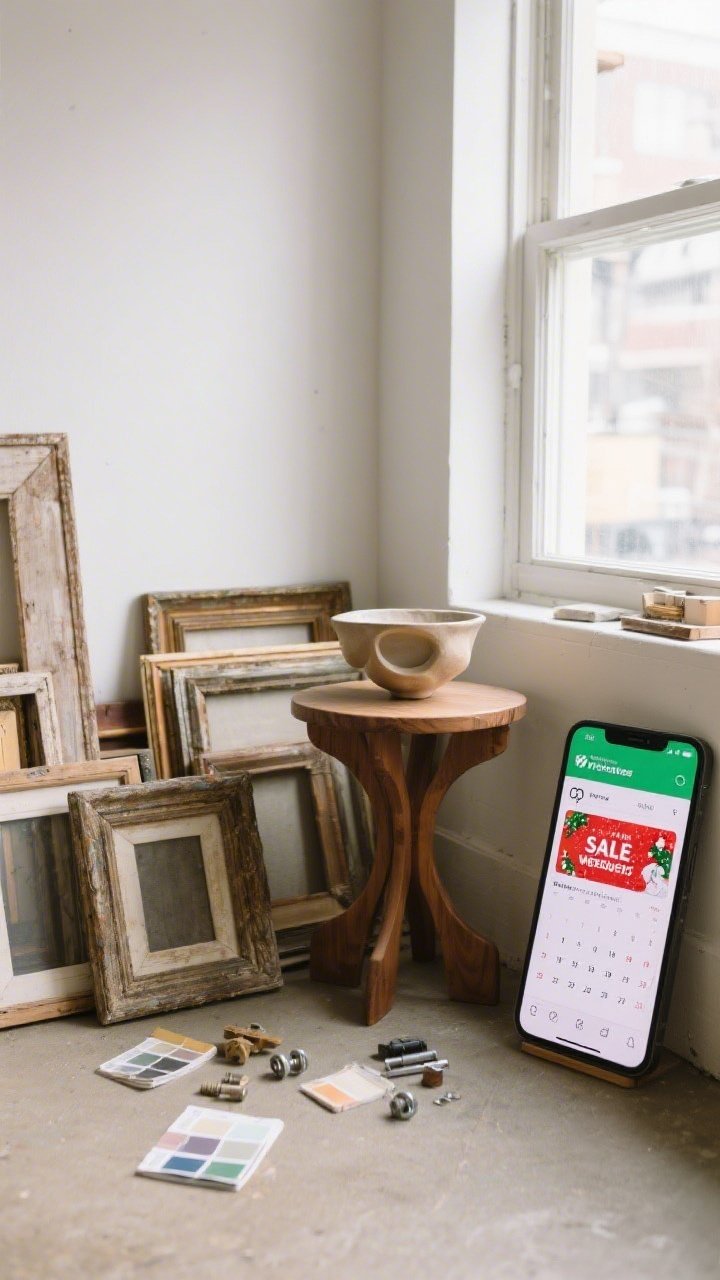
Full price is a choice. Shop thrift stores, Facebook Marketplace, and estate sales for solid wood and interesting silhouettes, then update with paint or hardware. And if you do buy new, timing is everything.
Money-Saving Tactics
- Set alerts for specific brands or item types. You’ll pounce faster than the flippers.
- Learn sale cycles: big furniture sales hit around holiday weekends and late summer.
- Negotiate kindly: bundle items from the same seller for a better price.
- Trade with friends: decor swaps scratch the itch without spending.
Thrifted frames, bowls, and side tables are the unsung heroes of budget decor. Grab them when you see them.
11. Style Maintenance: Keep It Fresh Without Rebuying
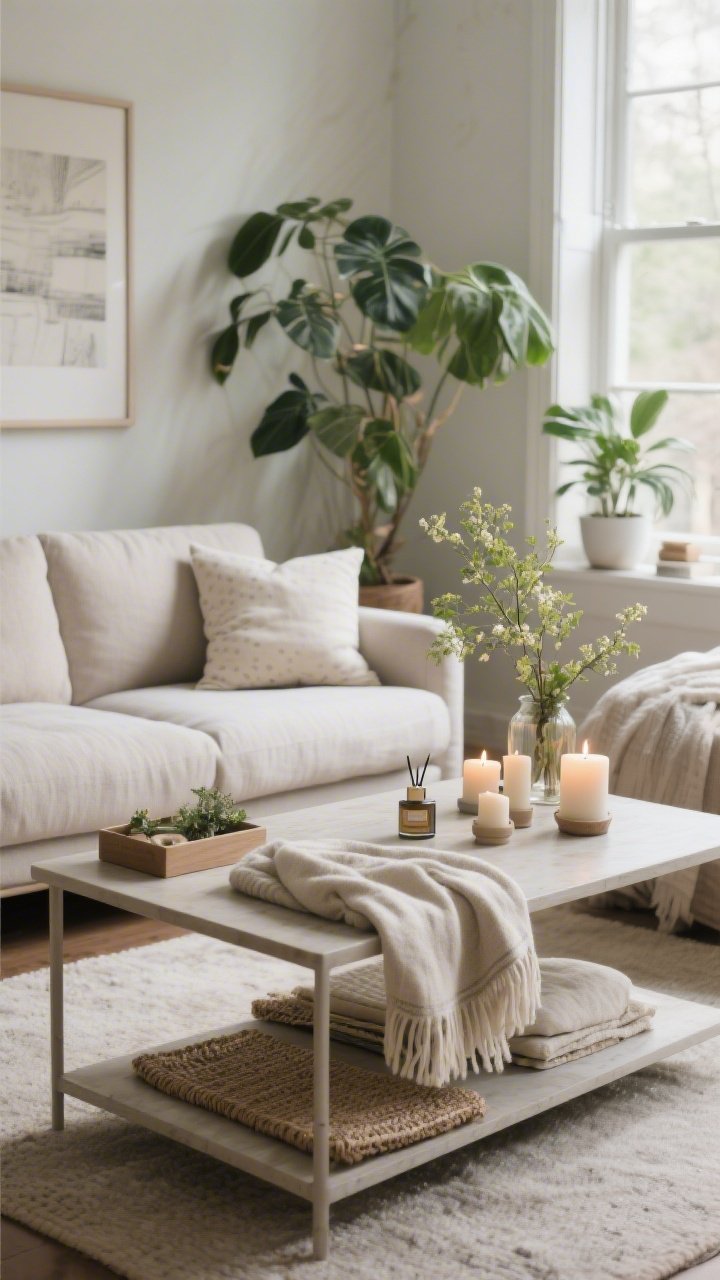
The biggest waste of money? Constantly “resetting” your space because it stops feeling special. Put your home on a simple style maintenance plan so it keeps looking good without constant spending.
Refresh Rituals That Cost Almost Nothing
- Monthly 20-minute edit: clear surfaces, restyle one shelf, swap a throw or two.
- Seasonal plant check: trim, repot, or rotate. Greenery is decor that grows.
- Textile rotation: light linens in spring/summer, chunkier knits in fall/winter.
- Scents and sound: candles, diffusers, and a playlist—vibe is part of decor.
Keep a small “prop box” with candleholders, extra mats, and pillow covers. When the urge to shop hits, shop that box first. FYI: it works.
Final Thought: A stylish home isn’t about constant buying—it’s about better choices, good bones, and tiny tweaks that add up. Start with what you own, set your guardrails, and choose pieces that work harder. Your space will feel elevated, intentional, and totally you—without the scary credit card bill. You’ve got this.
Upgrade Your Space The Smart Way
Use this workbook to avoid wasting money and make better decorating decisions.