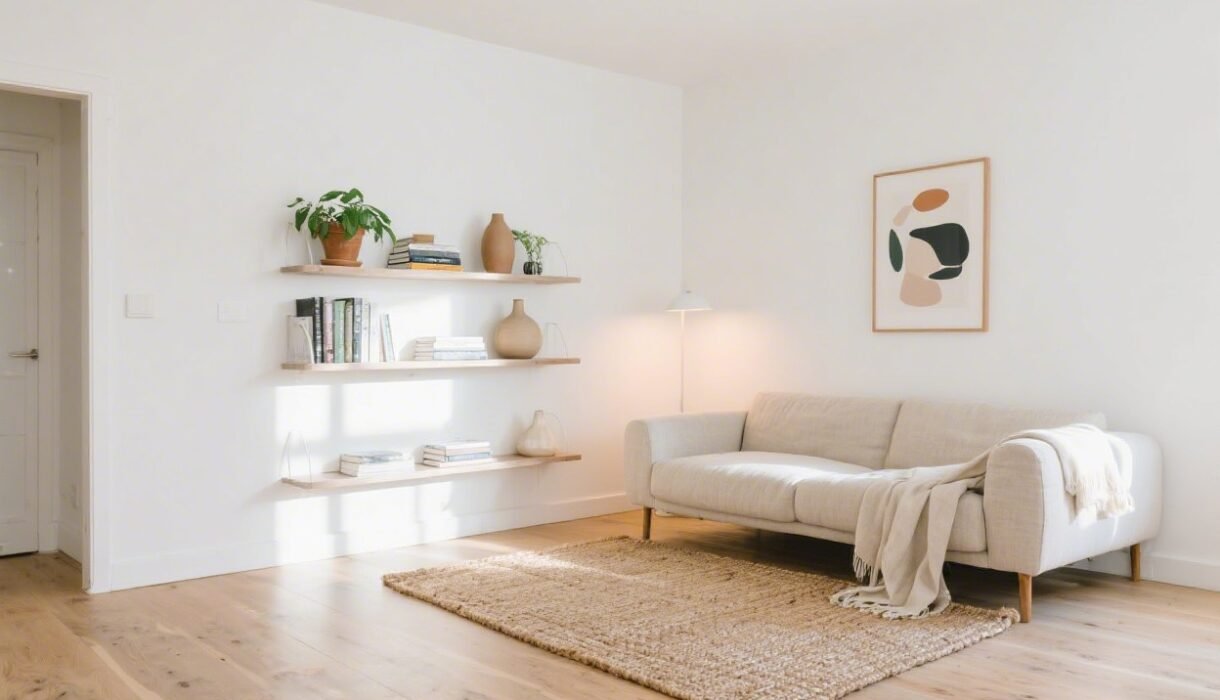
15 Minimalist Room Makeover Ideas on a Budget That Look Designer
Posted in :

Ready to make your space feel calmer, cooler, and way more expensive—without actually spending much? Same. Minimalism isn’t about owning nothing; it’s about choosing right. These ideas help you declutter, restyle, and shop smart so your home looks like a breath of fresh air (and not a storage unit).
Let’s makeover your space with 15 budget-friendly, minimalist tricks you can do this weekend. Spoiler: you’ll probably only need paint, baskets, and a little courage.
1. Declutter Like You Mean It
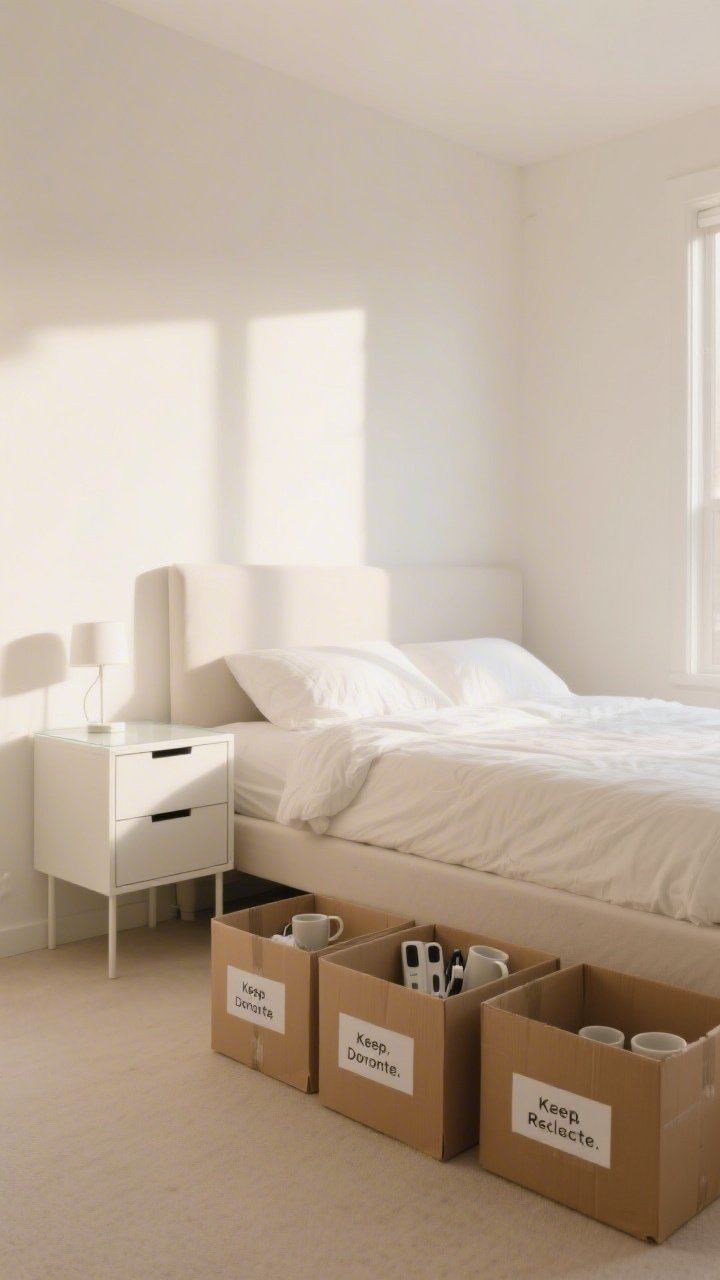
Minimalism starts with less stuff. Not boring—freeing. Clear every surface, then put back only what you love or use daily.
The 30-Minute Reset
- Timer on: Give yourself 30 minutes per zone (desk, nightstand, dresser).
- Three bins: Keep, Donate, Relocate. No “maybe” pile—be decisive.
- Hide duplicates: Stash extras in a box. If you don’t miss them in 30 days, donate.
FYI, the floor counts as a surface. Clear it and your room will feel instantly bigger.
2. Paint With Purpose (And Restraint)
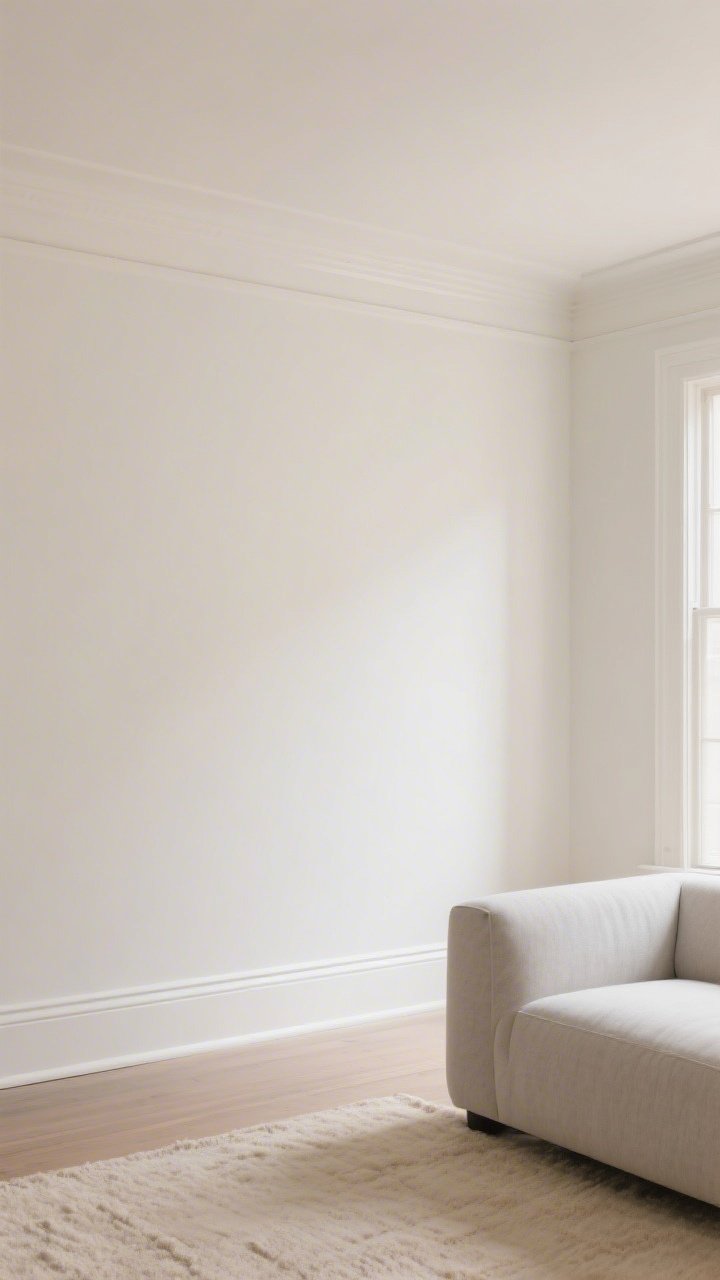
Paint is the cheapest magic trick. Go for a soft neutral that bounces light: warm white, creamy beige, or a pale greige. It calms visual noise and makes mismatched pieces play nice.
- One-wall rule: If painting the whole room is too much, just do the biggest wall. Instant cohesion.
- Satin or eggshell: Easy to clean, not too shiny.
- Ceiling check: Paint the ceiling the same shade for a seamless, gallery-like vibe.
Bonus: Touch up baseboards. Crisp trim = cleaner room, even if nothing else changed.
3. Edit Your Color Palette To Three Shades
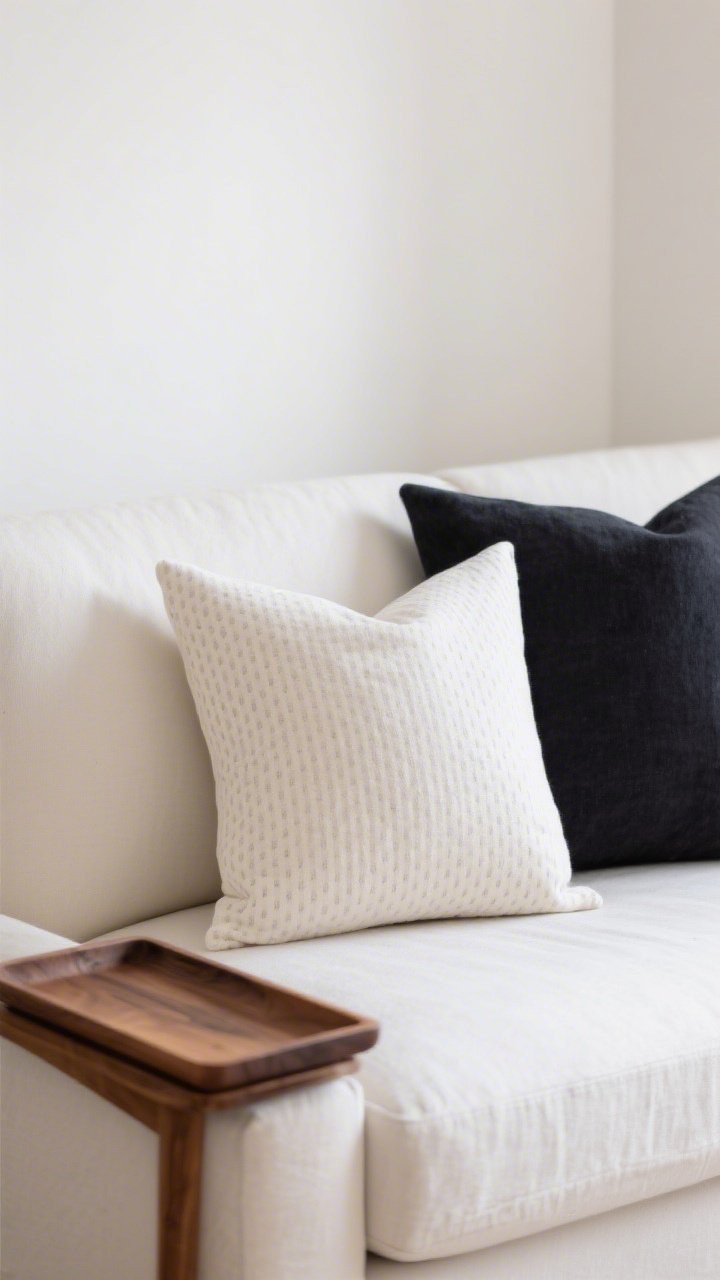
Minimalism doesn’t mean monochrome, but it does mean consistency. Pick one primary neutral, one contrasting tone, and one accent (natural wood counts!).
- Example: Warm white + charcoal + oak.
- Textiles match: Swap busy patterns for solids or micro-prints.
- Stick to it: When shopping, ask: does it fit the palette or is it chaos?
Watch your space instantly feel curated—like you actually planned it (you did).
4. Shop Your House Before You Shop Stores
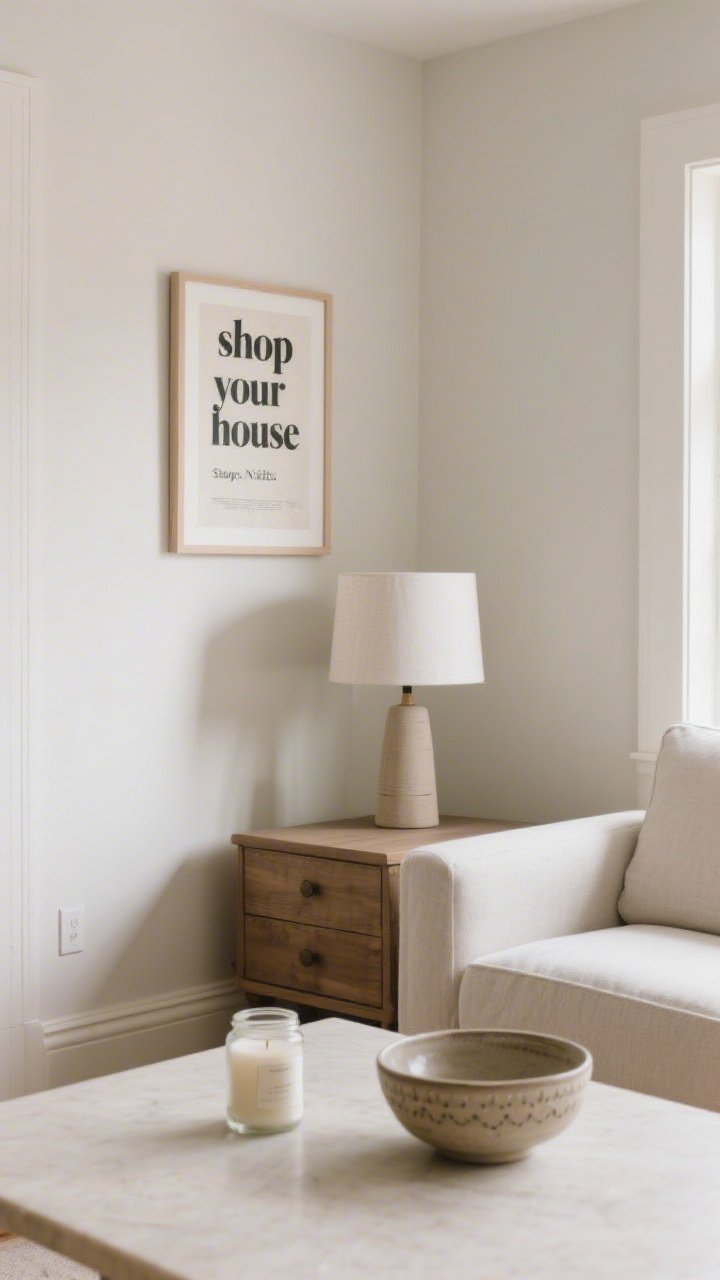
Before you add to cart, go on a treasure hunt. Pull items from other rooms and test-drive them in new spots. You’ll get fresh styling—free.
- Swap tables: A nightstand might make a killer side table.
- Rotate art: Move one piece to a different wall and hang it lower for a gallery feel.
- Reuse containers: Candle jars and ceramic bowls = minimalist catch-alls.
IMO, 70% of “new room” energy comes from moving what you already own.
5. Master Negative Space
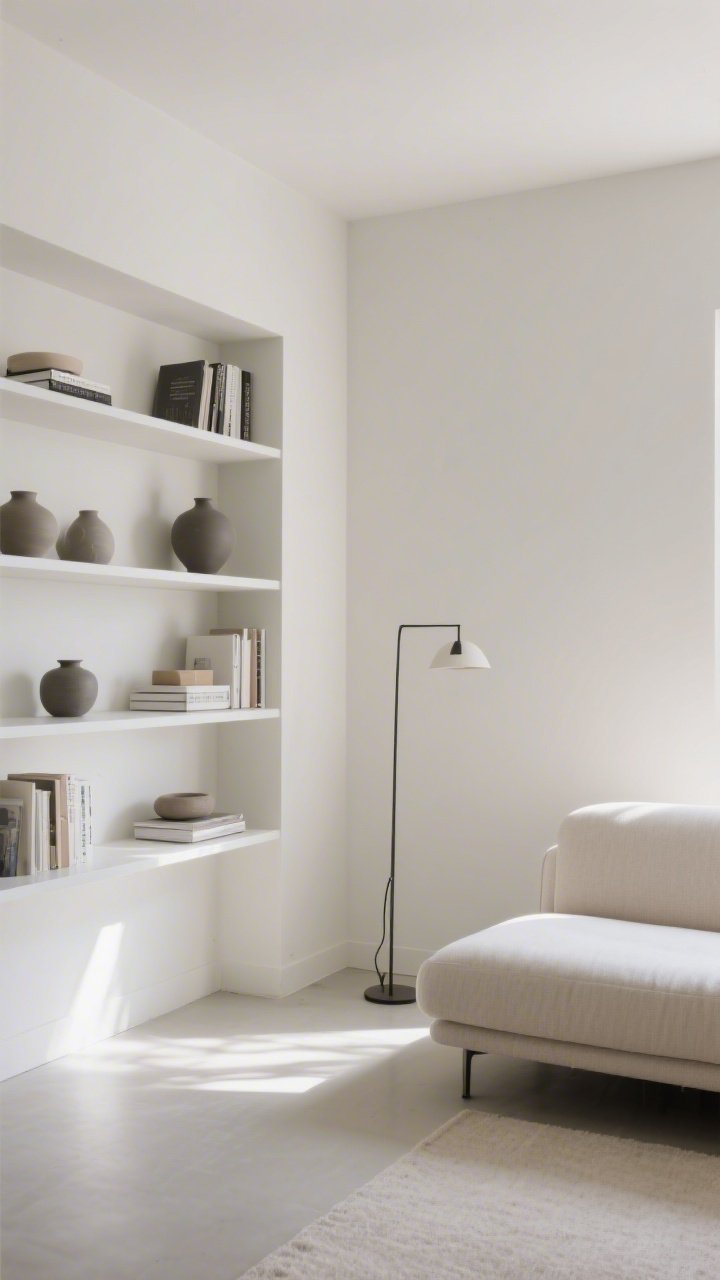
Minimalist rooms breathe. That means embracing empty areas (aka negative space). Not every wall needs art, not every shelf needs stuff.
- Leave gaps: Style shelves 60% full. Your eye—and dusting routine—will thank you.
- Float furniture: Pull sofas or beds 3–6 inches off the wall to soften the room.
- Open corners: One plant or a floor lamp is plenty.
Try removing one item from each surface. The room will instantly feel lighter.
6. Layer Textures, Not Clutter
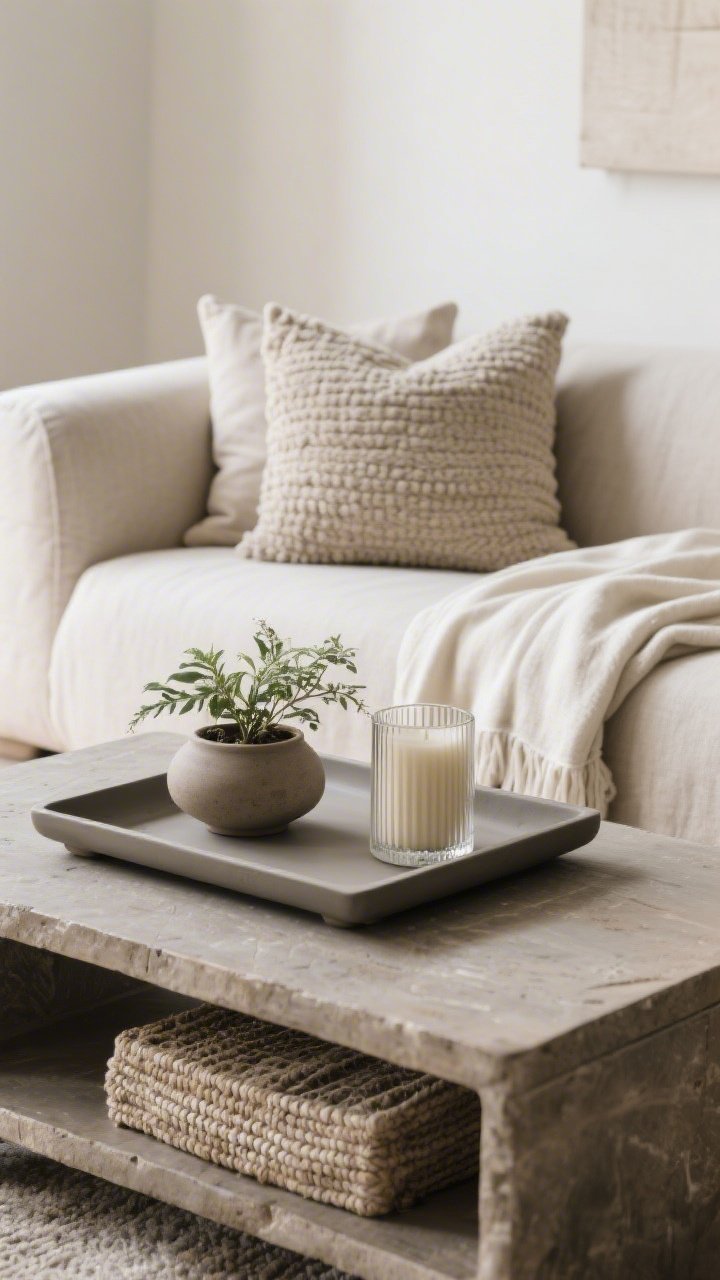
When you reduce color and pattern, texture keeps things interesting. Think chunky knit throw, linen curtains, matte ceramics, and smooth wood.
Easy Texture Combos
- Sofa: Linen pillow + boucle pillow + light cotton throw.
- Bed: Crisp percale sheets + stonewashed duvet + wool blanket.
- Coffee table: Matte tray + small plant + ribbed glass candle.
Keep it to 3–4 textures per zone so it feels intentional, not busy.
7. Simplify Window Treatments
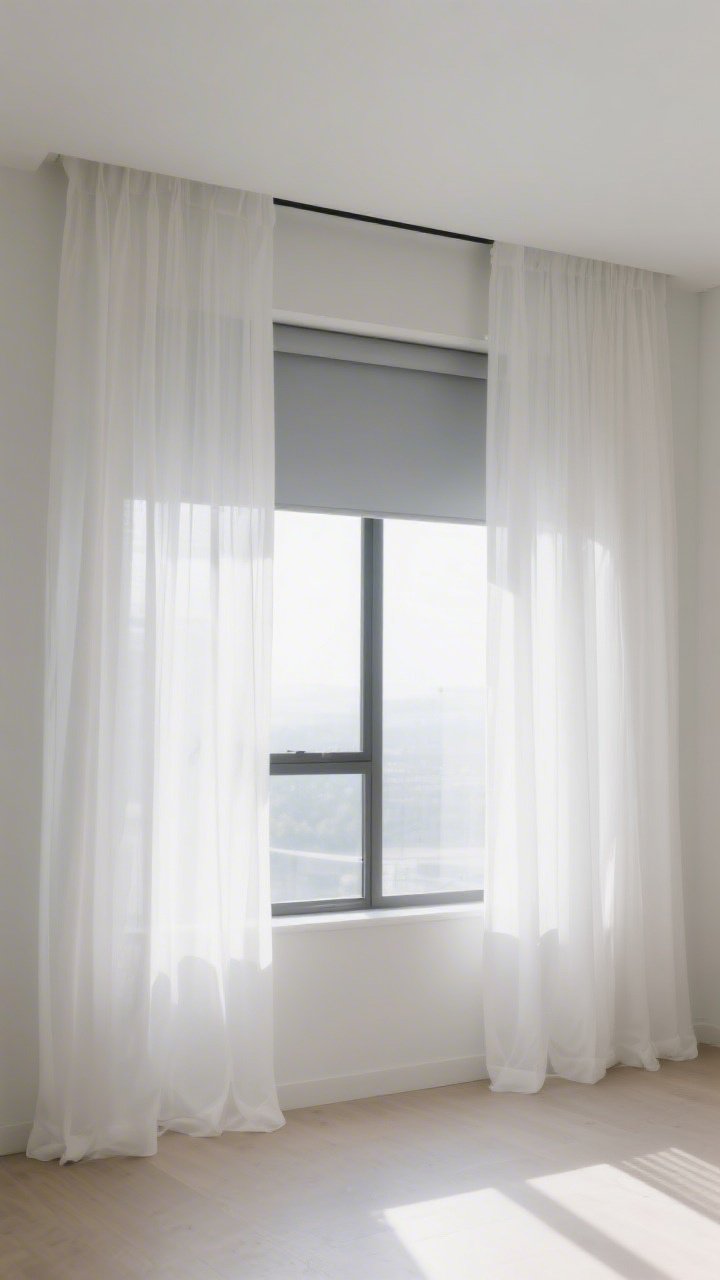
Heavy drapes = heavy mood. Swap them for sheer curtains or simple roller shades. Your space will feel taller and brighter.
- Hang high, wide: Mount rods near the ceiling and extend 6–10 inches past the window to fake bigger windows.
- Neutral fabrics: White, oatmeal, or light gray blend beautifully.
- Skip puddling: Curtains should just kiss the floor—clean and crisp.
Natural light is free design. Let it do the heavy lifting.
8. Curate A Single Statement Piece
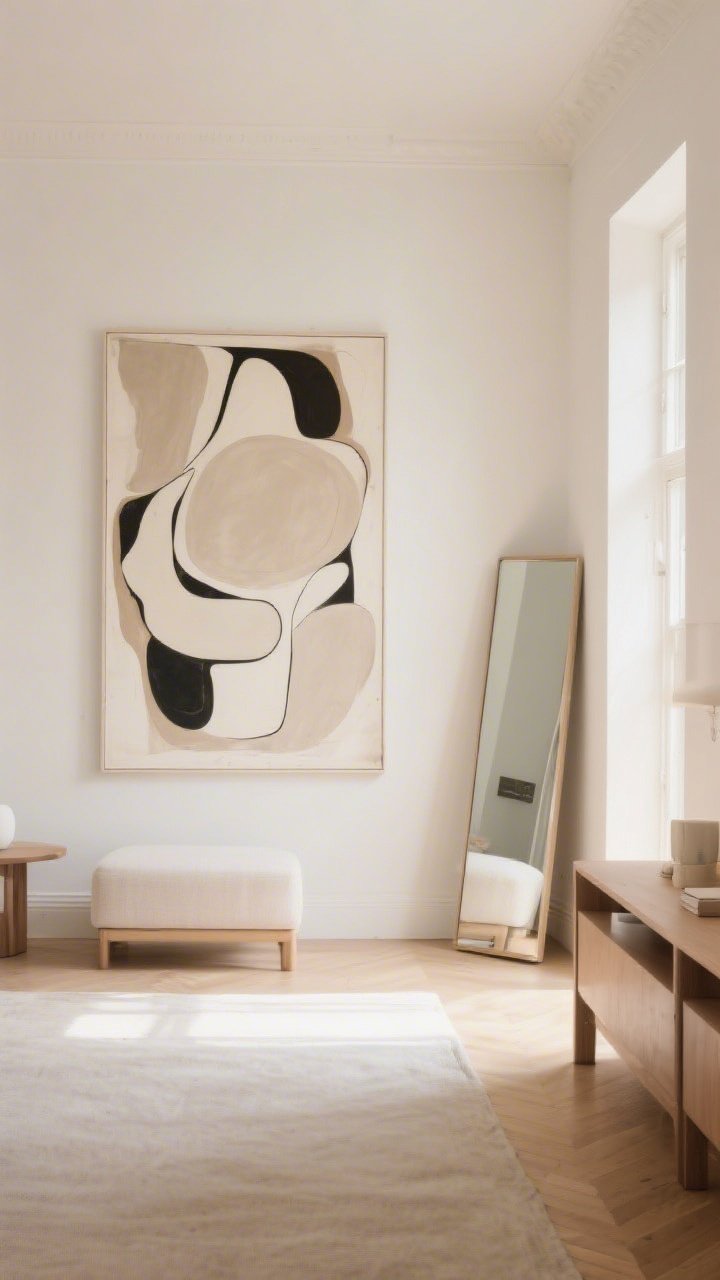
Instead of a bunch of small decor, feature one strong statement per room: an oversized art print, a sculptural lamp, or a bold mirror. The rest? Keep quiet.
- Go big: Larger pieces look more refined than clusters of tiny things.
- DIY art: Paint a giant abstract in your palette. Frame fabric or a thrifted canvas.
- Mirror magic: Lean a tall mirror to bounce light and add height.
Think gallery energy, not gift shop chaos.
9. Streamline Storage With Closed Containers
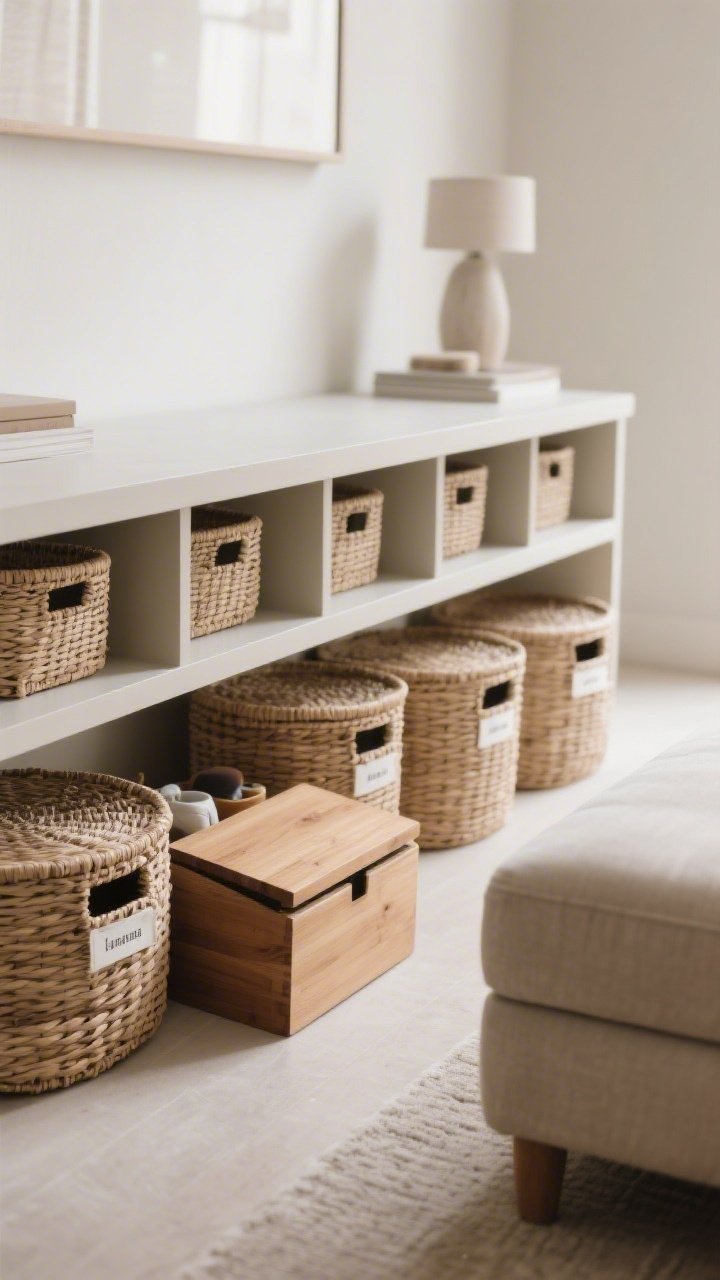
Visual clutter kills minimalist vibes. Use closed storage to hide the nonsense—baskets, lidded boxes, ottomans with storage. If you must display, keep it calm and color-matched.
- One basket per person: For daily drop zones near the door or sofa.
- Match materials: Woven baskets, wood boxes, or white bins—pick one style.
- Label inside: Minimal outside, organized inside. Win-win.
Clutter still exists—it’s just out of sight and under control.
10. Rethink Your Furniture Layout
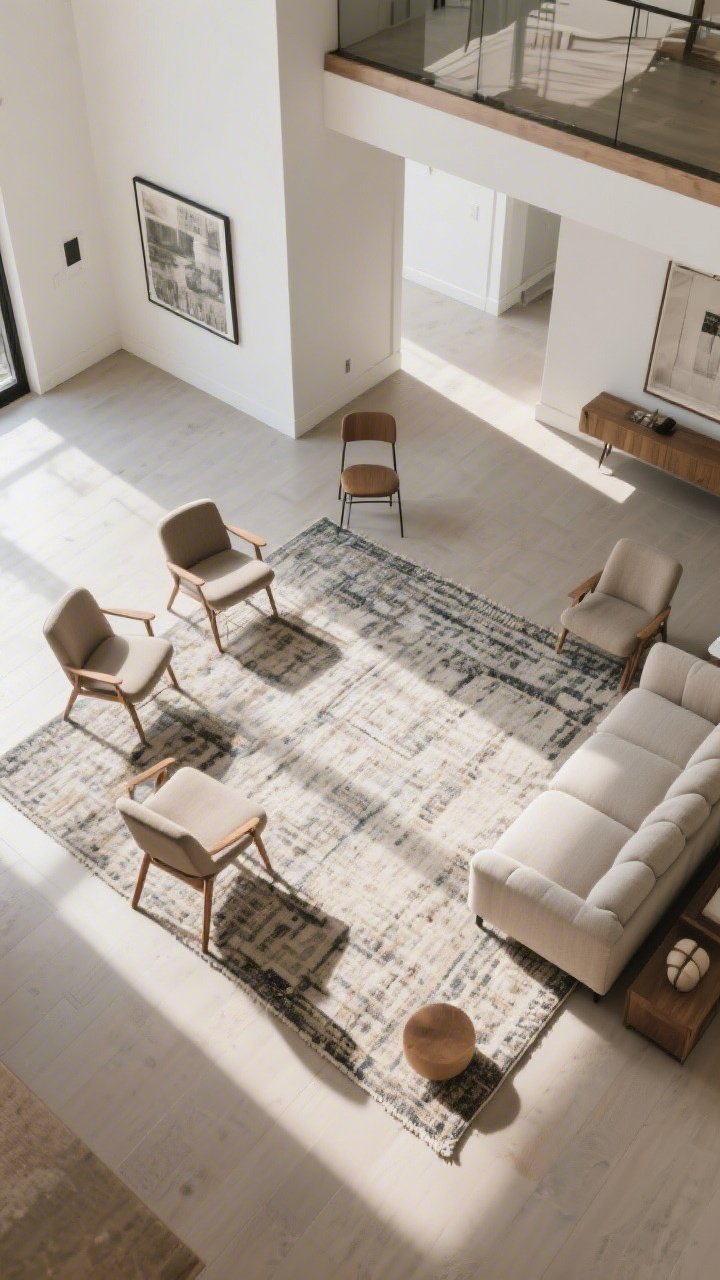
You might not need new furniture—just a smarter layout. Aim for clear walkways, balanced weight, and fewer pieces that do more.
Layout Checklist
- Anchor with a rug: Front legs of furniture on the rug to define the zone.
- Balance scale: Don’t crowd one side of the room with heavy pieces.
- Rule of threes: Group seating or decor in odd numbers for focus.
Remove just one piece (side table, extra chair) and see how it opens up the room.
11. Upgrade Lighting The Minimalist Way
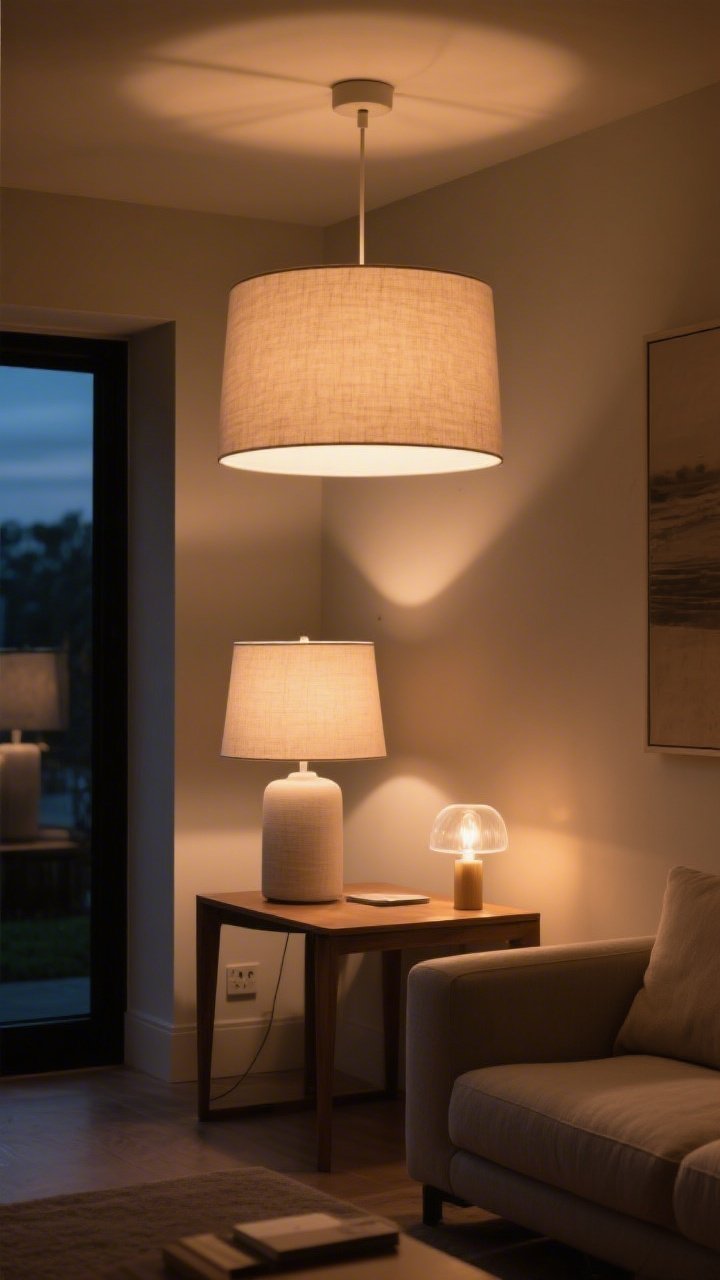
Lighting sets the mood—and bad lighting ruins great decor. Layer three types: ambient (overhead), task (reading), and accent (glow-up time).
- Warm bulbs: 2700–3000K for cozy light that flatters everything.
- Dim everything: Add cheap plug-in dimmers to table lamps for instant ambiance.
- Clean lines: Simple lamps with fabric or frosted shades = calm and chic.
Bonus: Switch to matching bulbs. Mixed color temps are chaotic. Your retinas agree.
12. Minimize The Bed (But Make It Luxe)
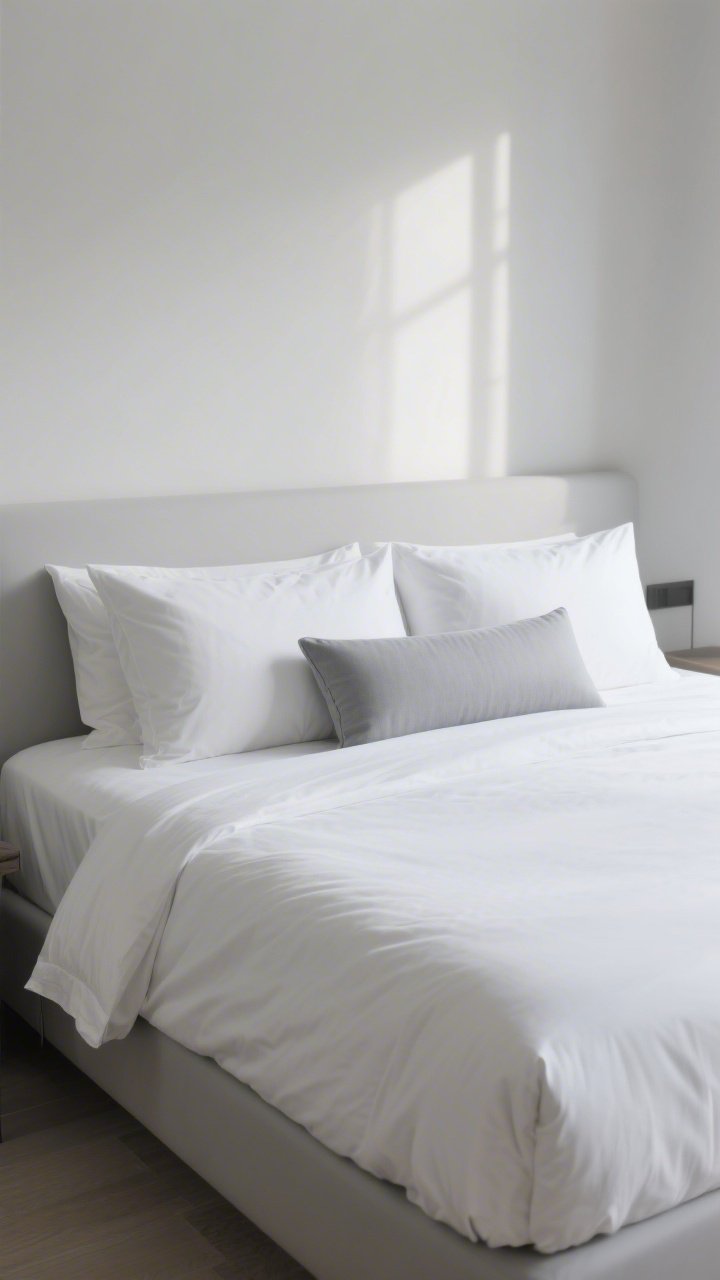
Hotel vibes on a budget? Yes. Strip the bed to fewer, better layers: fitted sheet, duvet, two sleeping pillows, two shams, one throw. Done.
- Stick to solids: Whites, creams, or soft gray = timeless.
- One hero pillow: A long lumbar pillow looks designer and replaces a pile of toss pillows.
- Iron or steam: Smooth bedding elevates everything for free.
Make your bed daily. Future you will be very impressed.
13. Style Surfaces With A Tight Formula
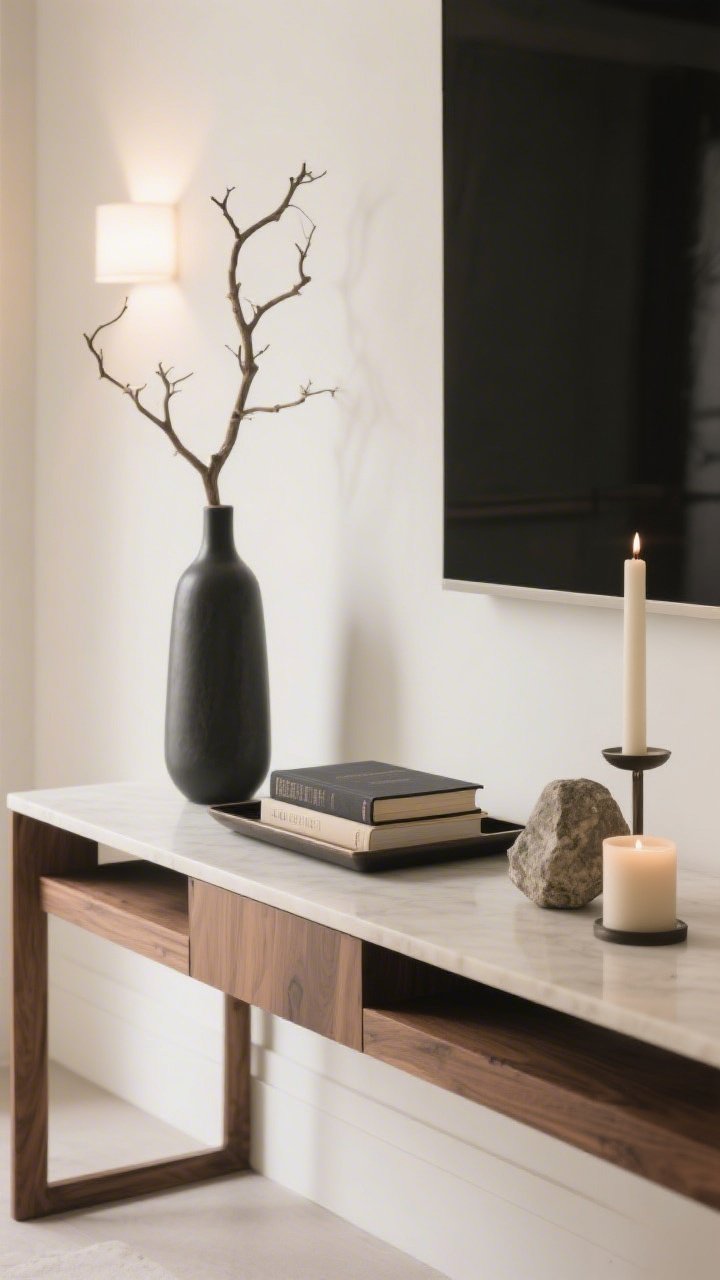
Flat surfaces are clutter magnets. Give them a simple styling formula so they stay pretty and practical.
Three-Item Rule (By Type)
- Something tall: Lamp, vase, or sculptural branch.
- Something low: Tray or book stack to ground the vignette.
- Something organic: Plant, stone, or candle for softness.
Keep trays on coffee tables, nightstands, and dressers. They corral stuff and look intentional—like you’re a person who has it together.
14. Bring In Nature (But Keep It Simple)
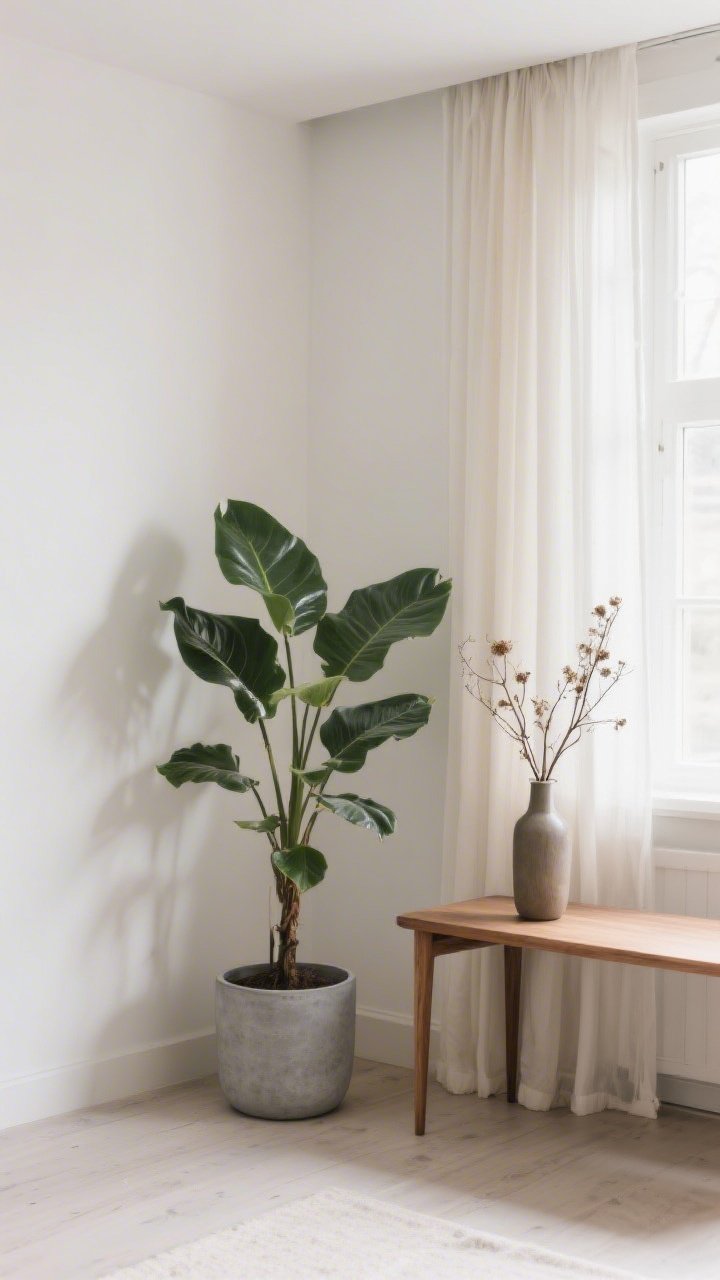
Plants add life without visual noise—if you choose right. Go for single, architectural plants instead of tiny clusters.
- Pick a hero: Snake plant, rubber plant, or olive tree (faux is fine if it’s good).
- One pot style: Matte ceramic or cement in neutral tones.
- Branches on a budget: Forage seasonal clippings and pop them in a tall vase. Chic and free.
Greenery + neutrals = instant Scandinavian calm.
15. Hide Cords And Tech Like A Pro
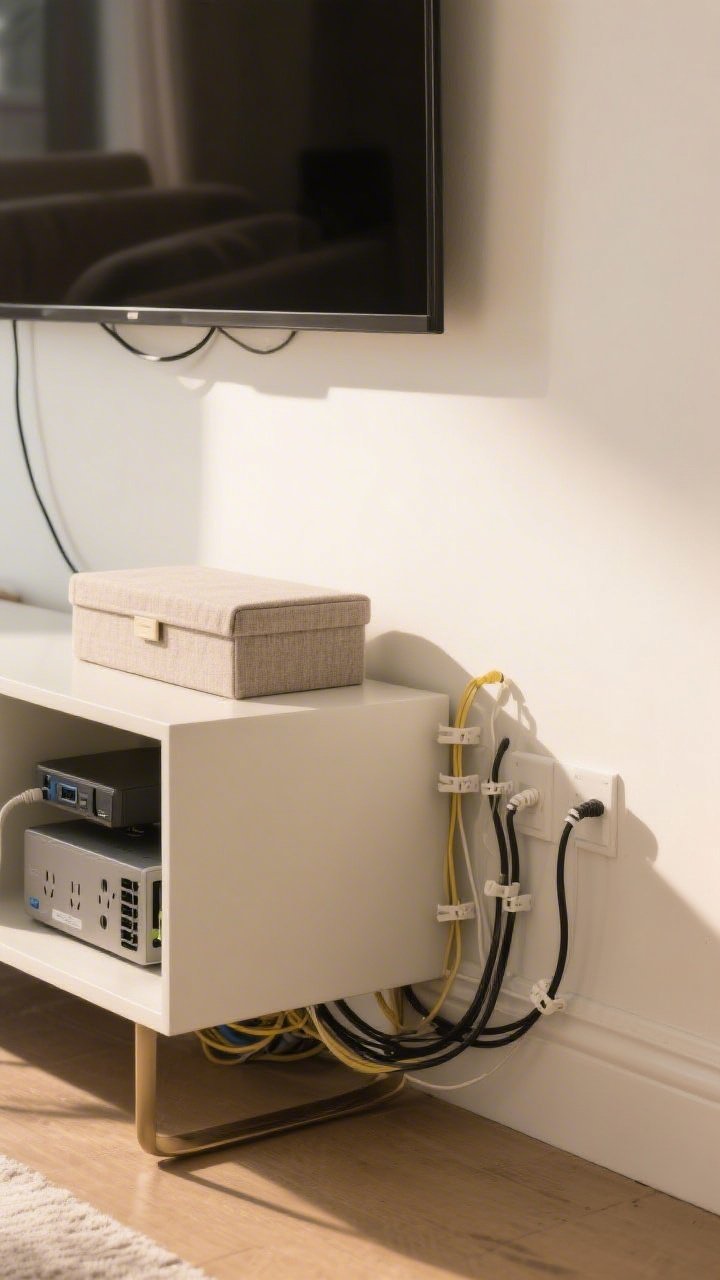
Nothing ruins a minimalist room like cord spaghetti. Tidy your tech so the vibe stays sleek.
- Route and stick: Use adhesive cord clips along furniture backs or baseboards.
- Hide the hub: A lidded box under the console can contain power strips and routers.
- Mount the TV: Or use a fabric cord cover painted wall-color to camouflage.
Small detail, huge impact. Your room will instantly feel more polished—like, “Is this a design blog?” polished.
Bonus Budget Tips (Because I Love You)
- Thrift with a plan: Search for solid wood, clean lines, and real glass. Skip heavy ornamentation.
- Spray paint saves: Matte black or soft white can unify mismatched frames and lamps.
- Sell to fund: List old decor and use that cash for one intentional upgrade.
Minimalism isn’t about rules; it’s about relief. Clear the noise, choose what matters, and let your space breathe. Start with one section today—declutter a shelf, hide some cords, or swap in sheer curtains. Your future self (and your electric bill—hello, natural light) will be very pleased.
Make Your Room Makeover Simple
If you don’t want to waste time figuring out what to do next, this workbook gives you a clear step-by-step plan.