13 Small Room Makeover Low Budget Ideas That Actually Work Right Now
Posted in :

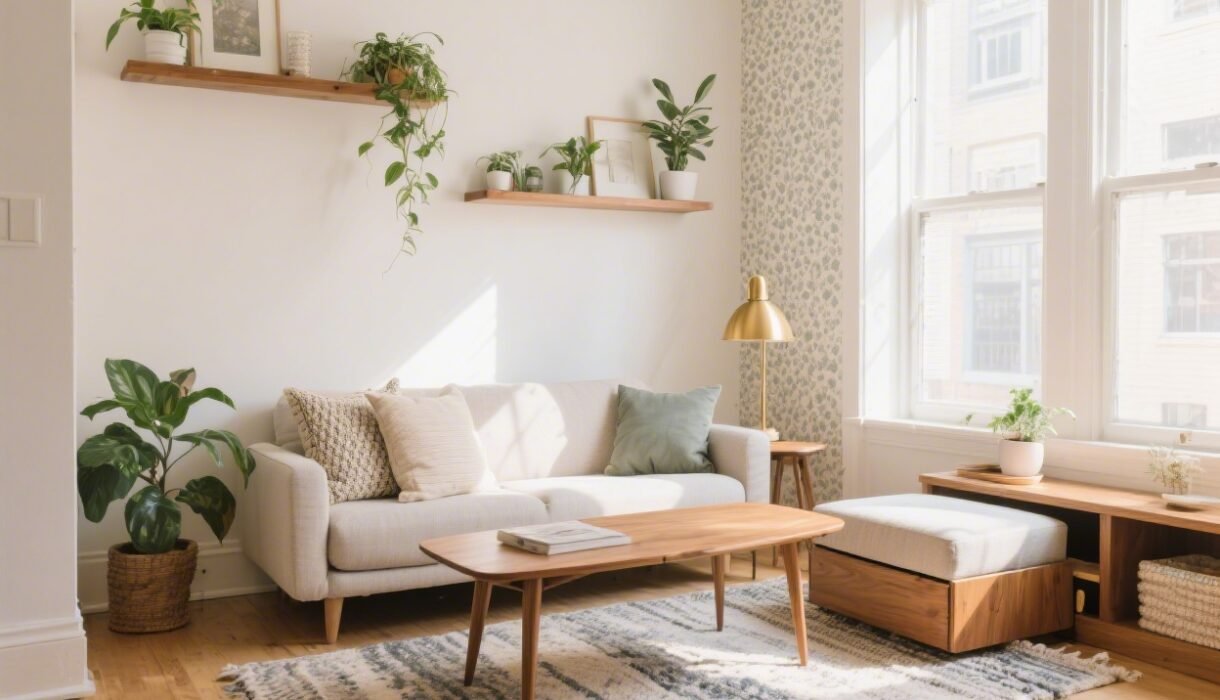
Your small room doesn’t need a massive budget to look designer. It just needs smart moves, a little attitude, and maybe a command hook or twelve. Ready to make your space feel bigger, brighter, and way more “you” without spending your entire weekend (or paycheck)? Let’s do this.
1. Edit Ruthlessly, Then Style What’s Left
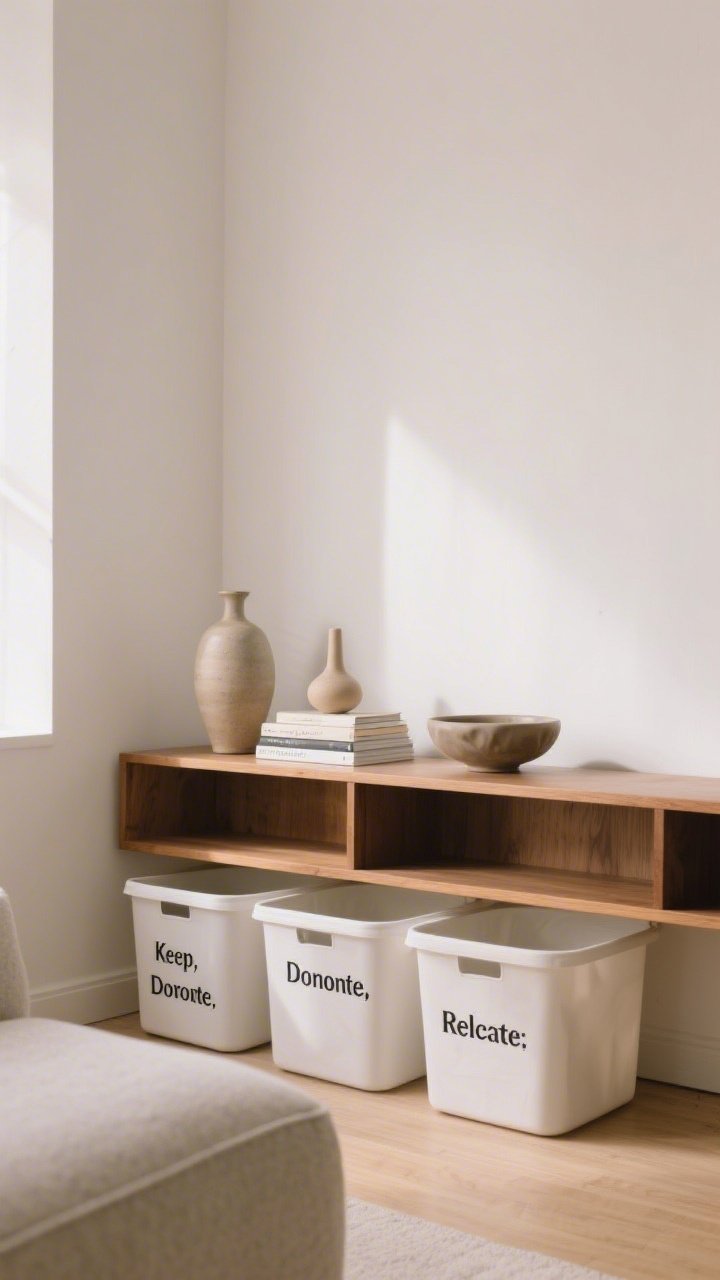
Before you buy a single throw pillow, cut the clutter. Small rooms don’t hide mess—they magnify it. Keep only what you love and what earns its square inches.
Why it works
Less stuff = more visual breathing room. Your eye reads “calm” instead of “chaos,” which instantly feels larger and more intentional.
- Speed purge: Three bins—Keep, Donate, Relocate. 20 minutes per category (decor, books, randoms).
- One-in, one-out rule: Every new item replaces something.
- Style your survivors: Group in odd numbers, vary height, and leave negative space.
2. Paint: One Can, Big Impact
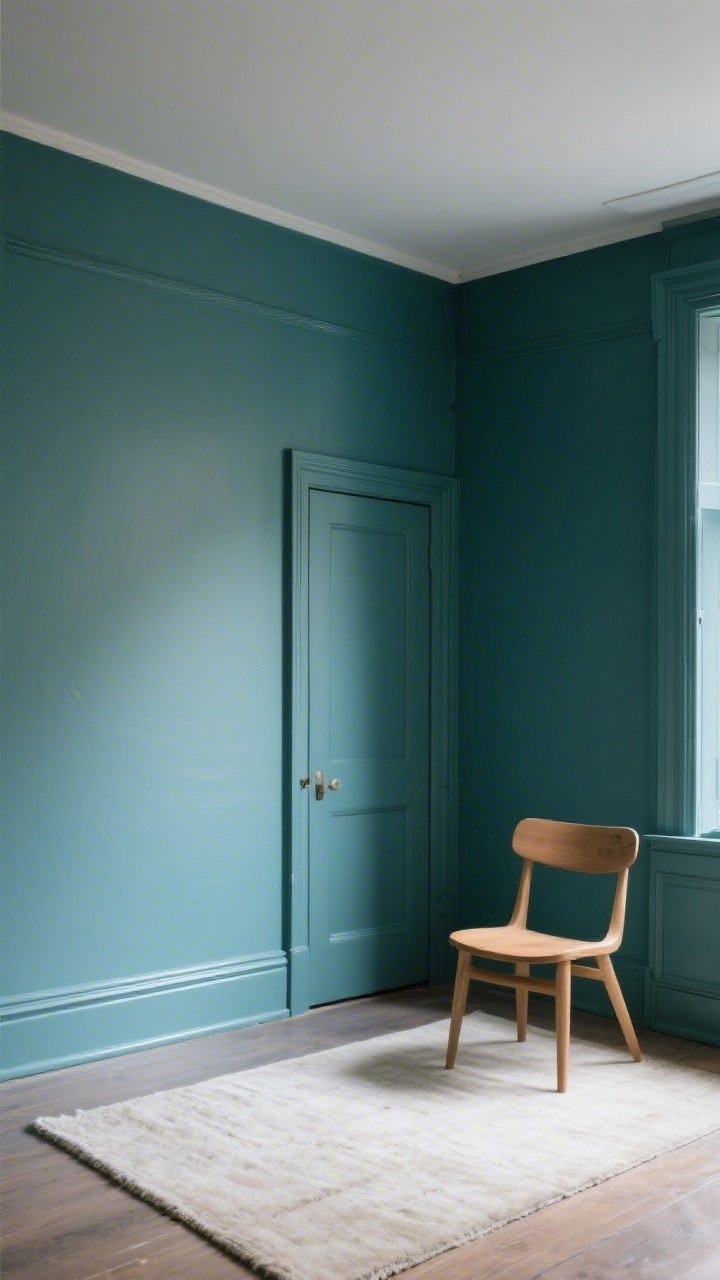
Paint is the ultimate budget shapeshifter. Light colors reflect, dark colors cocoon—both can look chic in small spaces when used intentionally.
Easy paint plays
- Monochrome walls + trim: Paint walls, trim, and doors the same soft hue. Fewer visual breaks = larger feel.
- Color drench: For cozy rooms, go mid-to-dark on every surface. It feels designed, not dungeon.
- Ceiling trick: Paint the ceiling 10% lighter than your walls to “push” it upward.
FYI: Eggshell on walls, satin on trim. It bounces light just enough without going shiny.
3. Light Like a Boutique (Not a Basement)
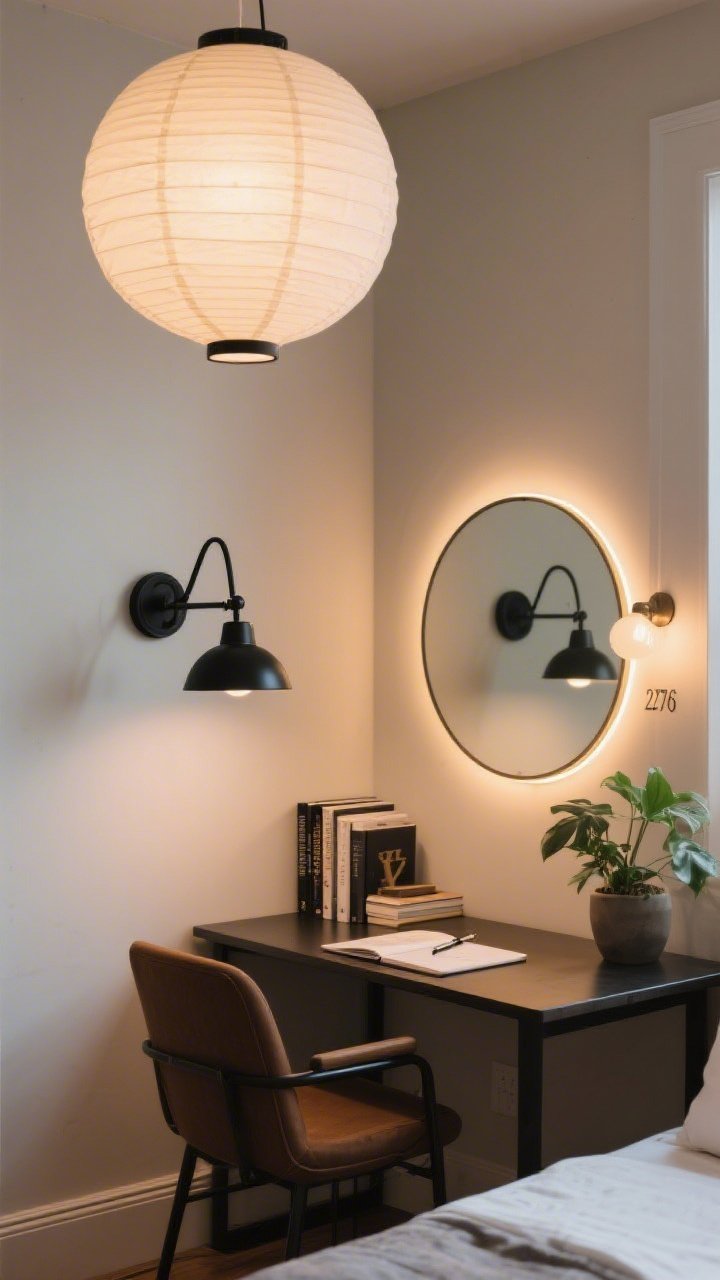
Overhead lighting alone is a mood killer. Layered light flatters a room (and you) from every angle.
Lighting formula
- Ambient: A soft-glow ceiling fixture or paper lantern.
- Task: Clip-on lamps, swing-arm sconces, under-cabinet strips.
- Accent: LED strip behind a mirror, picture light, or uplight in a corner plant.
Swap harsh bulbs for 2700K–3000K LED. Dimmable if you can. You’re not interrogating suspects; you’re relaxing.
4. Mirrors: The Instant Square-Footage Illusion
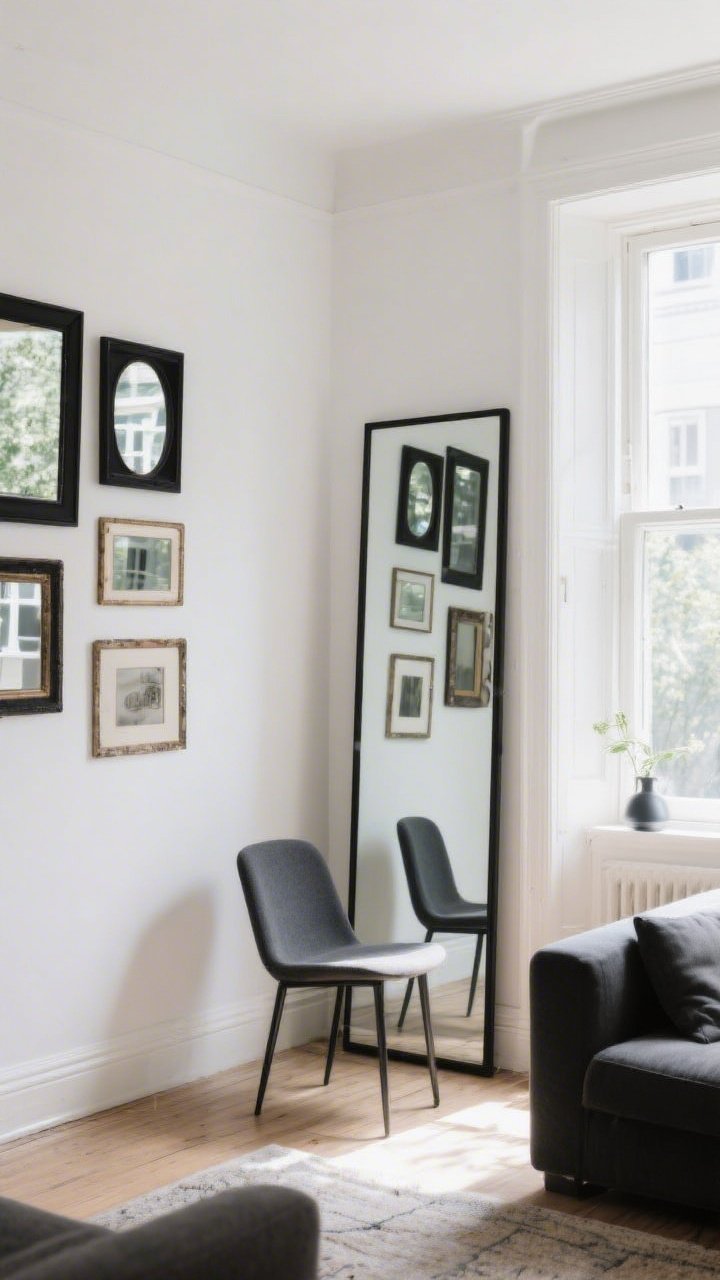
Yes, mirrors make rooms look bigger. But placement is everything.
- Across from windows: Doubles your daylight. It’s like borrowing a second window.
- Floor mirror behind a chair: Adds depth without stealing space.
- Mirror gallery: Thrift a mix, paint frames one color, hang as “art.”
Pro move: Use a large mirror rather than several tiny ones if you want a true expansion trick. Bigger panes, bigger payoff.
5. Go Vertical: Walls Are Free Real Estate
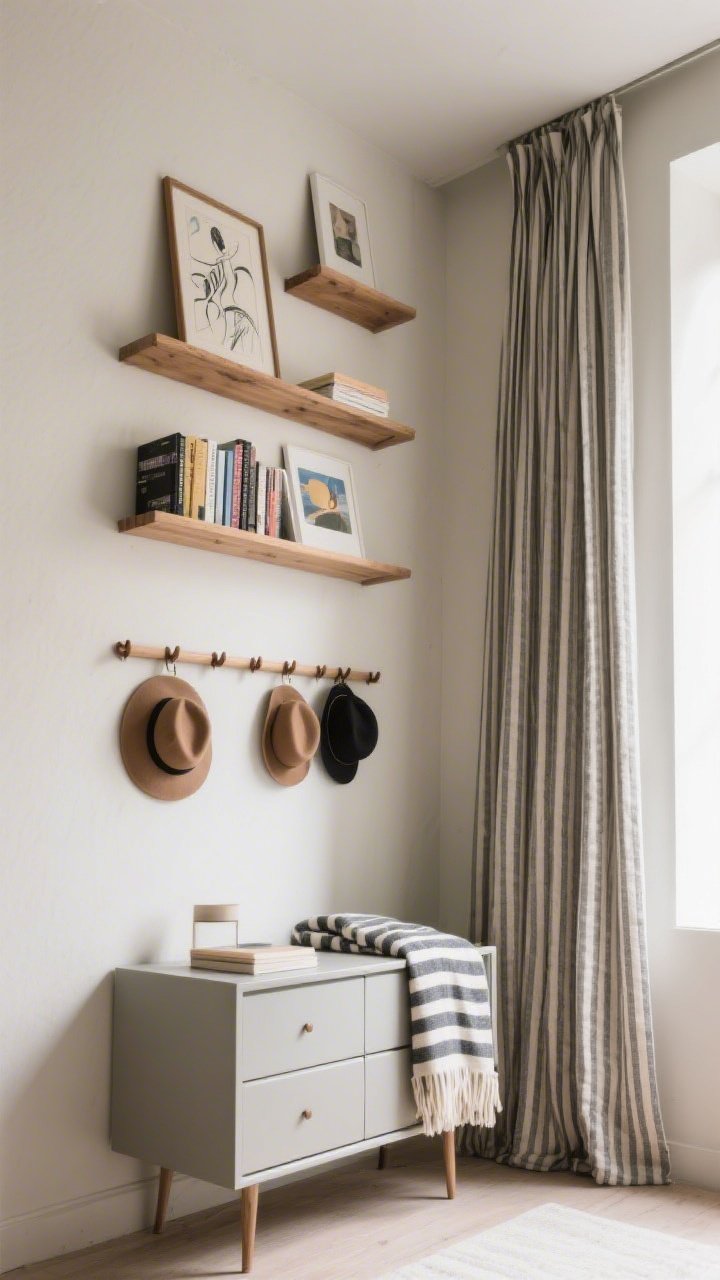
When floor space is tight, think up. Vertical lines draw the eye and make ceilings feel higher.
Vertical upgrades on a budget
- Wall shelves: Stagger two or three above a desk or dresser.
- Peg rail or Shaker pegs: Hang bags, hats, throws—functional and pretty.
- Skinny book ledges: Display art or books spine-out to reduce visual bulk.
- Striped textile: One long striped curtain panel = instant height illusion.
6. Curtains That Fake Taller Windows
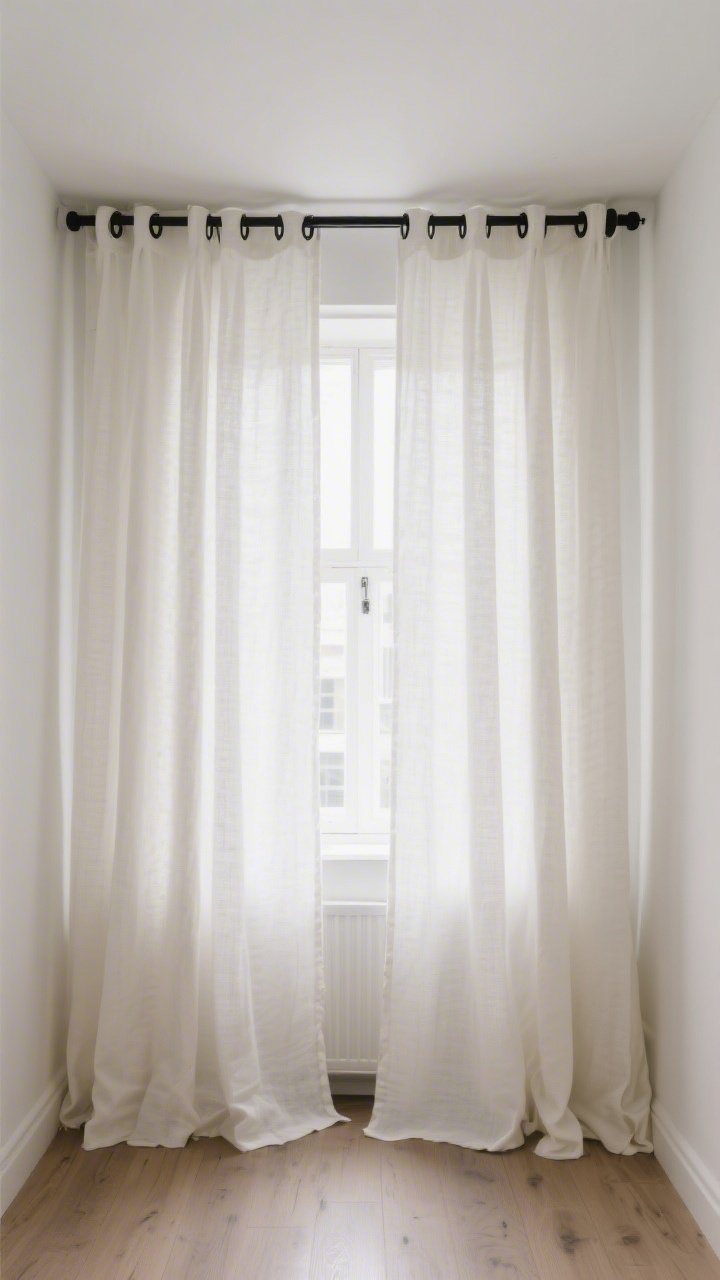
Short curtains are the skinny jeans of windows—they chop your legs. Go long and high for drama.
- Hang high: Mount rods 2–6 inches below the ceiling or crown molding.
- Go wide: Extend rods 8–12 inches beyond the window so panels don’t block light.
- Puddle or kiss: Panels should graze the floor for a tailored look.
Budget hack: Use IKEA panels or drop cloths with clip rings. Iron the hem. Thank me later.
7. Furniture That Works Overtime
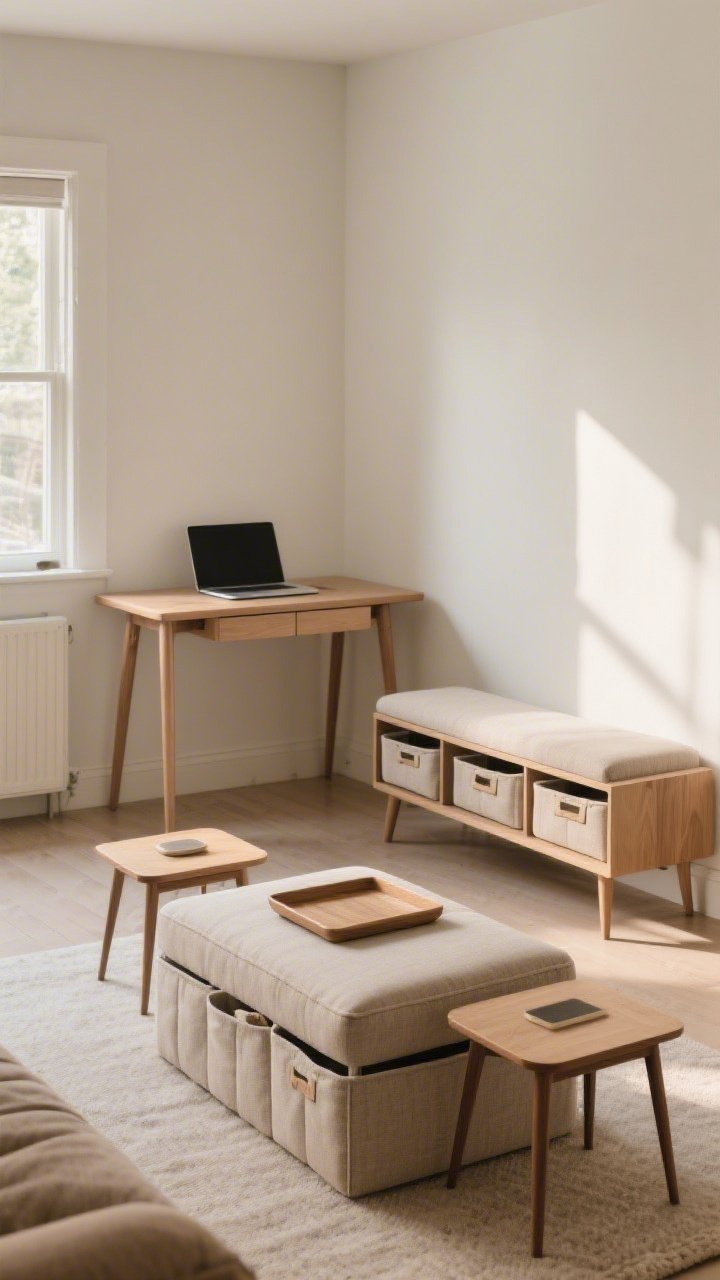
Single-use furniture is cute in a mansion. In small rooms? It’s freeloading.
Smart swaps
- Storage ottoman: Coffee table + blanket vault + extra seat.
- Drop-leaf table: Desk by day, dining table when needed.
- Bench with bins: Entry seating with hidden storage.
- Nesting tables: Pull out when guests arrive, tuck in later.
Pick pieces with legs (not skirts). Seeing more floor makes the room feel lighter.
8. Zone Like A Designer (Even In One Room)
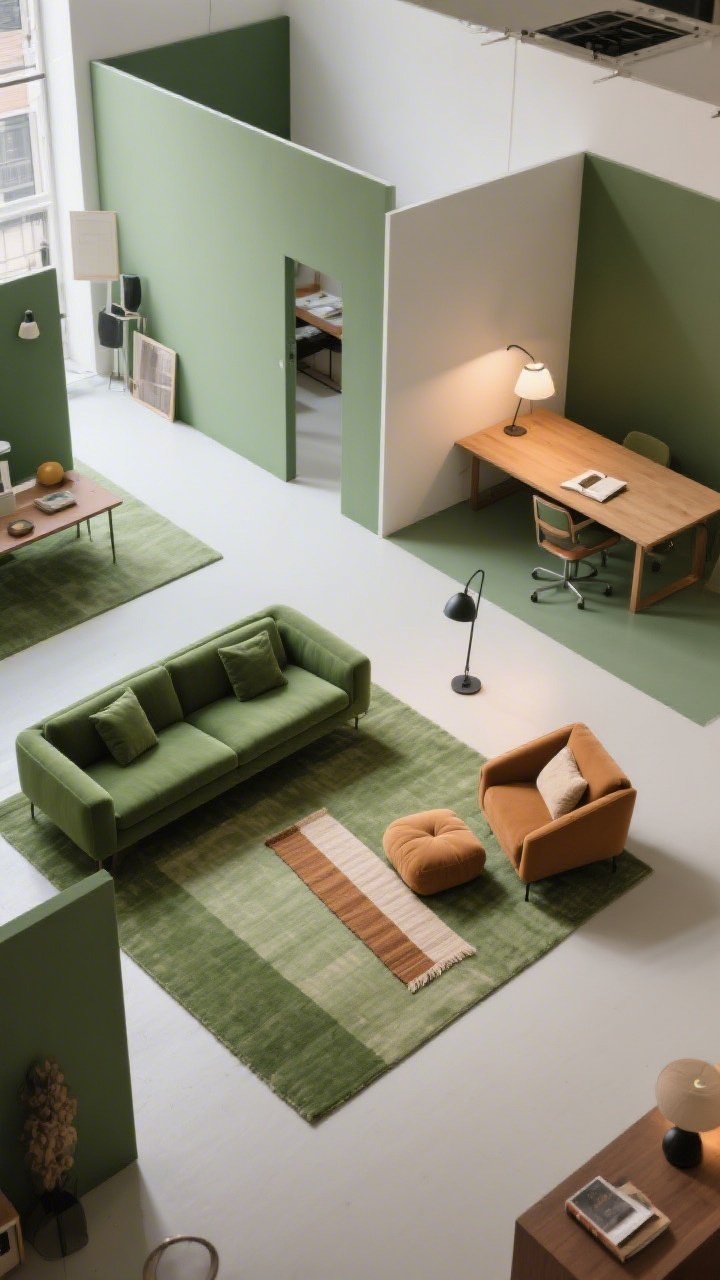
If your space does triple duty, define zones visually—no walls required.
- Rugs: One under the sofa area, a runner by the bed, a mat by the desk.
- Lighting cues: A task lamp instantly says “work zone.”
- Color accents: Repeat one color per zone—like moss green in the lounge area, warm tan in the reading corner.
Keep pathways clear. If you bump it daily, it doesn’t belong there. IMO, flow beats everything.
9. Style Shelves With Breathing Room
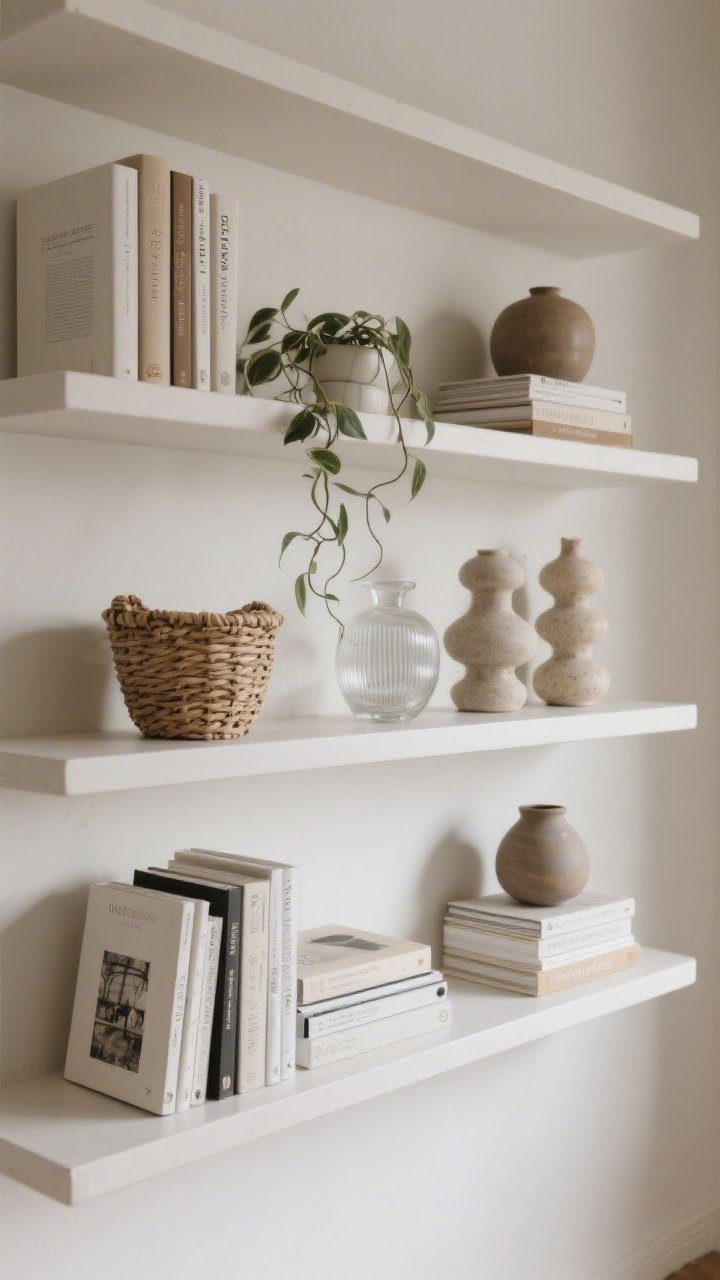
Overloaded shelves scream cramped. Edit, then arrange with rhythm and empty space.
Shelf styling recipe
- Books: Stack some vertical, some horizontal. Use horizontals as pedestals.
- Odd numbers: Groups of 3 or 5 look balanced.
- Heights + textures: Mix ceramics, woven baskets, glass, and a plant.
- Negative space: Leave at least 20–30% of each shelf open.
Color-code loosely or remove busy dust jackets for a calmer look. It’s not cheating; it’s curation.
10. Art That Fits (And Flatters) The Space
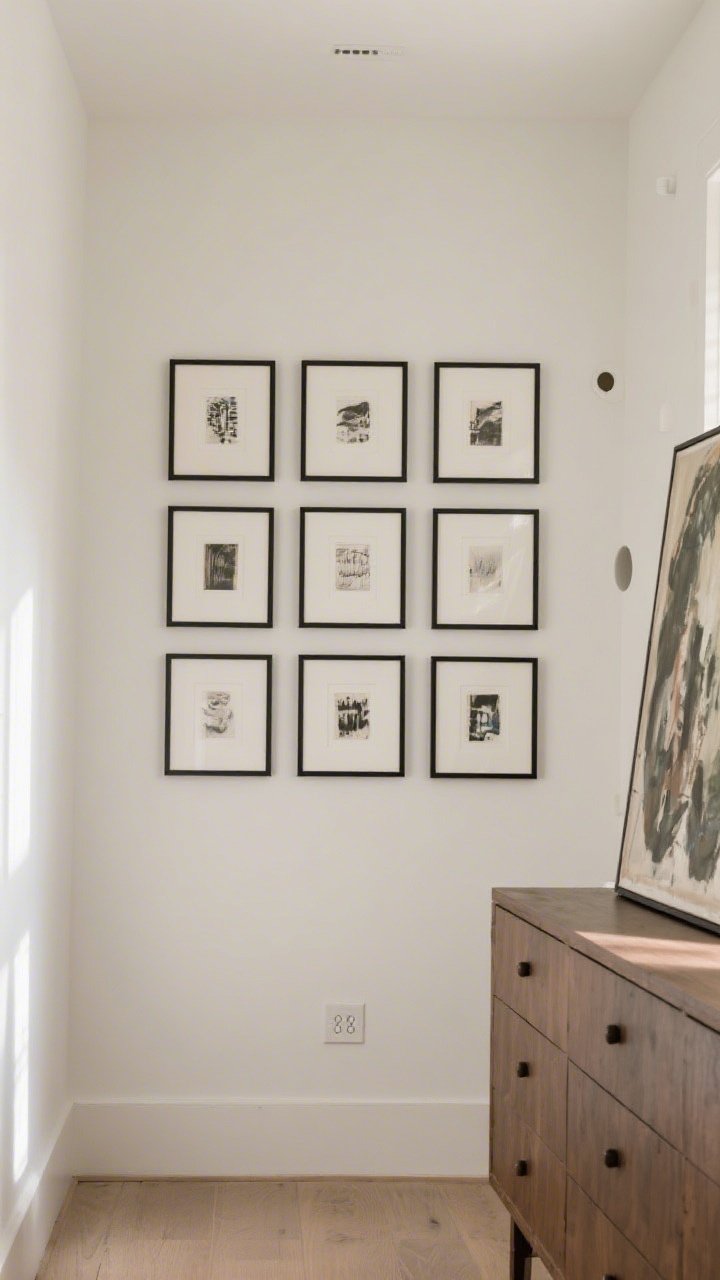
Tiny art on a big wall looks shy. Either go large or create a tight, intentional gallery.
- Big on a budget: Engineer prints, fabric yardage, or DIY abstract on canvas.
- Gallery grid: Same frames, same spacing (2 inches). Clean and chic.
- Lean it: Rest art on a shelf or dresser to avoid extra holes and keep it casual.
Hang at eye level—center around 57–60 inches from the floor. Museum vibes, zero snootiness.
11. Textiles: Layer Soft, But Keep It Simple
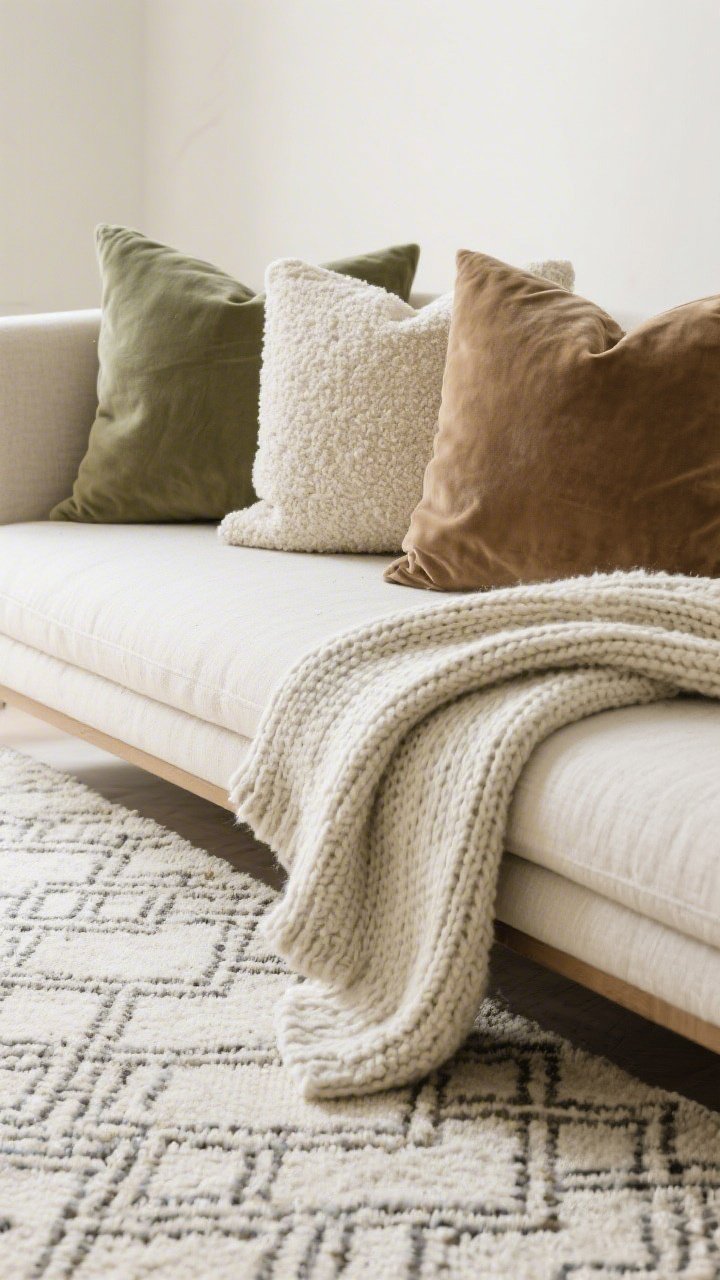
Texture adds luxury, but too many patterns can shrink a room visually. Aim for a calm, tactile mix.
Texture toolkit
- One hero pattern: A rug or duvet in a soft motif (stripes, micro-geometrics).
- Grounding solids: Pillows and throws in linen, boucle, velvet, or chunky knit.
- Repeat tones: 2–3 colors carried through textiles = intentional, not busy.
Quick polish: Swap pillow covers seasonally. It’s the cheapest refresh with the biggest “woah, did you redecorate?” energy.
12. Hidden Storage (Your Secret Superpower)
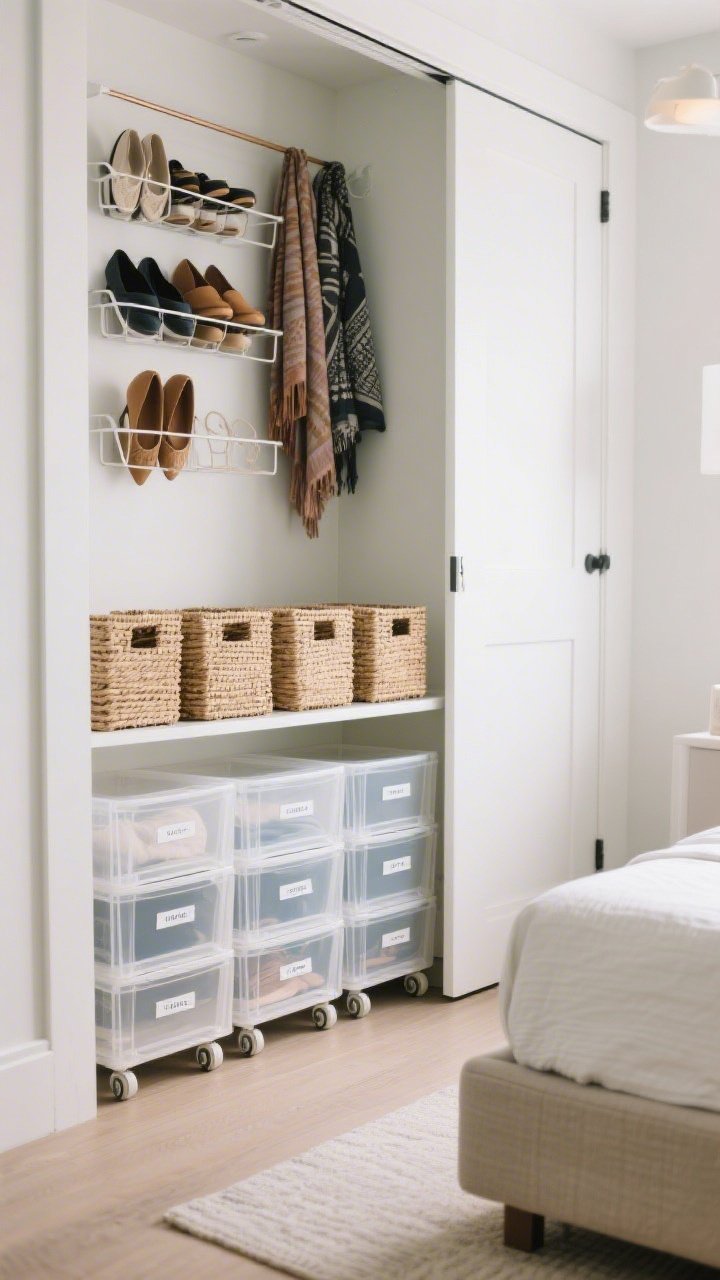
Clutter hides in plain sight. Outsmart it with storage that blends in and stacks up.
- Under-bed boxes: Clear, labeled, on wheels. Rotate off-season stuff.
- Over-door racks: For shoes, scarves, cleaning supplies—whatever chaos you have.
- Uniform baskets: Same color and material for a cleaner line on shelves.
- Bed risers (subtle): Gain 2–4 inches of hidden storage without the dorm vibe.
Think “home for everything.” If it doesn’t have one, it becomes a floater. Floaters multiply. Don’t let them win.
13. Accents With Personality (But Keep Them Big)
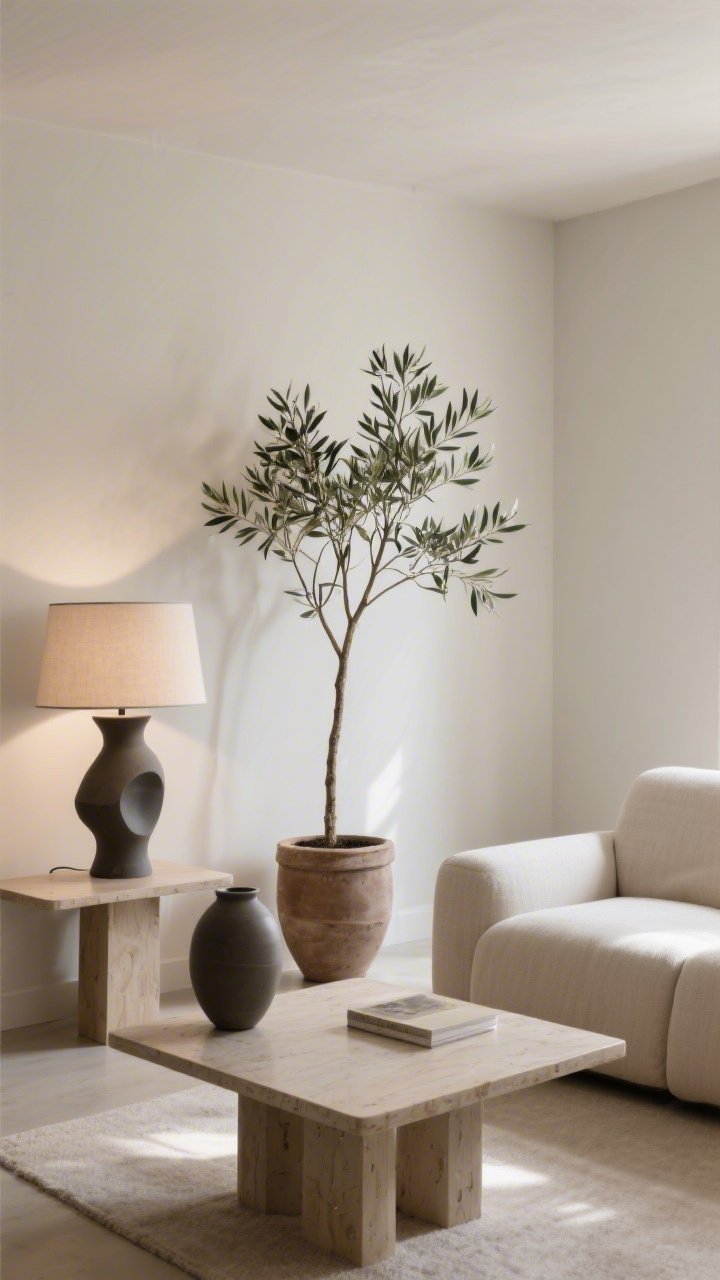
Small rooms need fewer, bolder accents—otherwise it looks like a souvenir shop exploded. Choose pieces with presence.
- One statement lamp: Sculptural base, simple shade—art and function.
- Oversized vase or bowl: On a console or coffee table with branches.
- Large plant: One tall guy (fiddle, olive, snake) beats five tiny ones.
Then edit. If everything shouts, nothing’s heard. Pick your star and let it shine. FYI: A bold accent in a tight color palette still feels calm.
Bonus Mini-Tips You’ll Actually Use
- Hardware glow-up: Swap dated knobs on dressers or cabinets. Instant upgrade under $30.
- Cord control: Adhesive cable clips + cord covers. Visual clutter, gone.
- Scent matters: A subtle diffuser or candle makes your small space feel spa-level intentional.
Sample Budget Game Plan (Under $200)
- Paint + supplies: $45–$70
- Two IKEA curtain panels + rings + rod: $40–$60
- Thrifted mirror: $20–$40
- LED bulbs/strips + a clip lamp: $20–$30
- Two baskets + a plant: $20–$40
Mix and match to fit your priorities. The trick is stacking small wins that add up.
Quick Room Reset Checklist
- Declutter surfaces and floor
- Rearrange furniture for flow (pull sofa 4–8 inches from wall)
- Add a mirror opposite light
- Hang curtains high and wide
- Swap in warm LED bulbs
- Style shelves with negative space
- Place one bold accent, edit the rest
Small space, big style—totally doable. You don’t need a renovation; you need a few smart choices and the courage to let the good stuff breathe. Start with one section above, set a 30-minute timer, and watch the room—and your mood—lift. You’ve got this.
Make Your Room Look Better Without Spending More
This workbook helps you improve your space while staying within your budget.