10 Budget Room Makeover Mistakes to Avoid Before Buying Decor—so You Don’t Regret It
Posted in :

You know that rush when your cart is full of cute throw pillows and a faux olive tree? Deep breath. Let’s make sure your budget room glow-up doesn’t turn into a “why did I buy this?” saga. Here are the top mistakes people make before buying decor—and how to dodge them like a pro.
1. Skipping The Plan Because “I’ll Wing It”
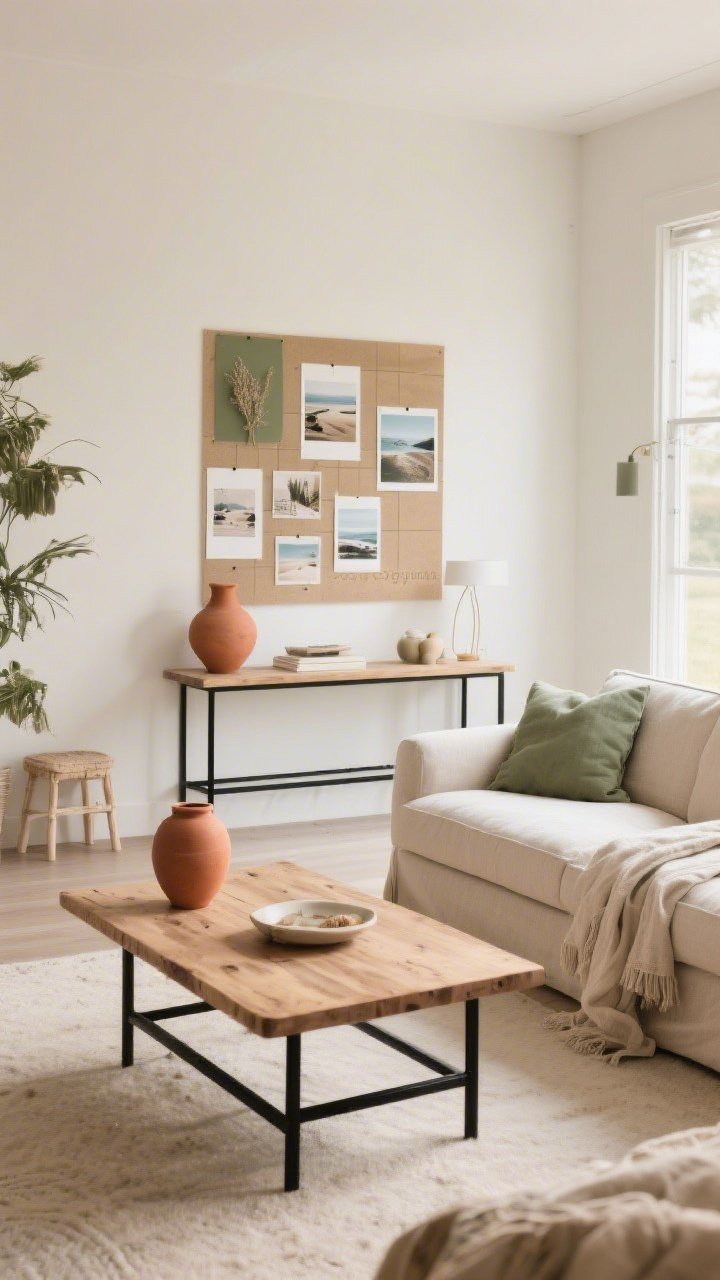
Look, spontaneity is cute for weekend brunch, not for room makeovers. If you don’t map out your vibe, color scheme, and key pieces, you’ll end up with decor that fights each other like siblings on a road trip.
What To Do Instead
- Pick a mood: Cozy organic, moody modern, airy coastal—name it so you can aim at it.
- Create a mini mood board: Save 5–7 images that share colors, materials, and shapes.
- Choose a palette: 2–3 main colors + 1 accent. Commit, then shop.
Pro tip: Screenshot your plan and bring it to the store. If it doesn’t fit the board, it doesn’t make the cart. FYI: this alone saves money.
2. Ignoring Measurements Like They’re Optional
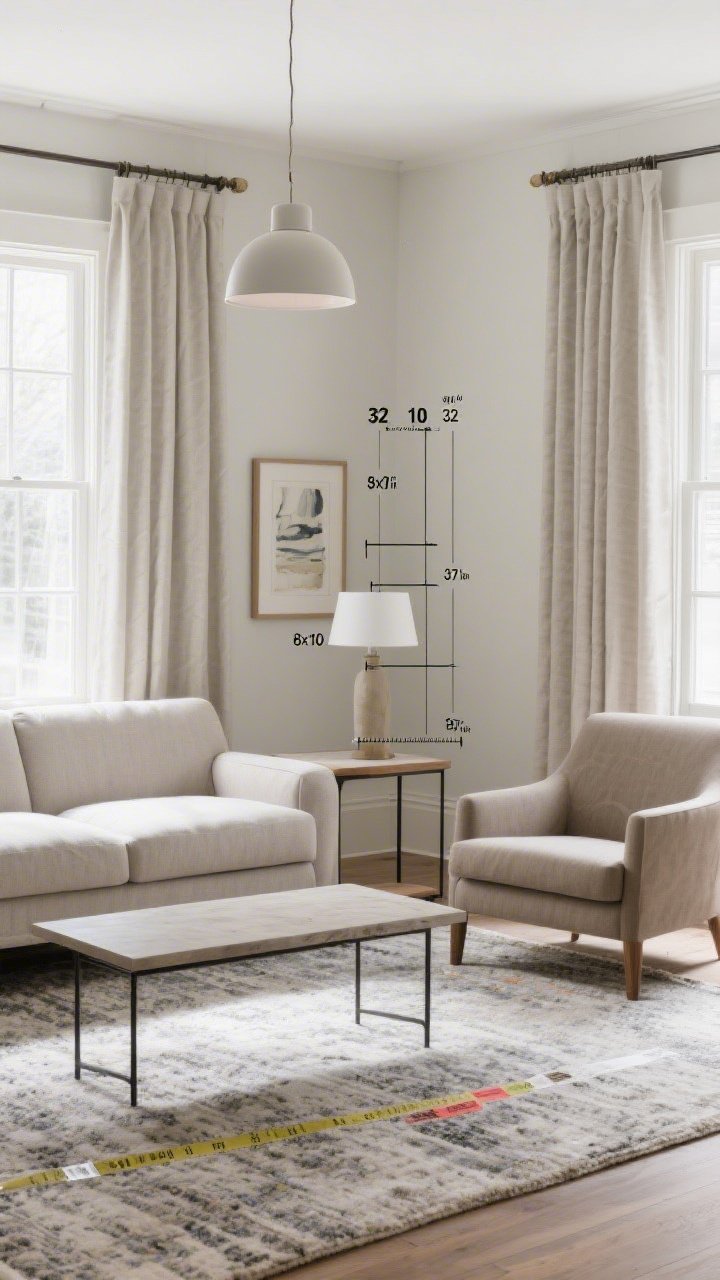
Buying a rug “that looks big enough” is how you get a postage stamp in a living room. And don’t get me started on coffee tables that bruise shins.
Key Measurements To Lock In
- Rug: Front legs of furniture on the rug (living room). For bedrooms, extend 18–24 inches beyond the sides of the bed.
- Curtains: Hang rods 4–6 inches above the frame (or to the ceiling) and extend 8–12 inches past each side.
- Lighting: Pendant over table = 30–36 inches above surface. Nightstand lamps = shade at eye level when seated.
- Art height: Center at ~57 inches from the floor, or align with nearby furniture tops.
Always measure: Wall width, ceiling height, doorways, and the path your furniture travels—stairs and turns count.
3. Blowing The Budget On Trendy Decor First
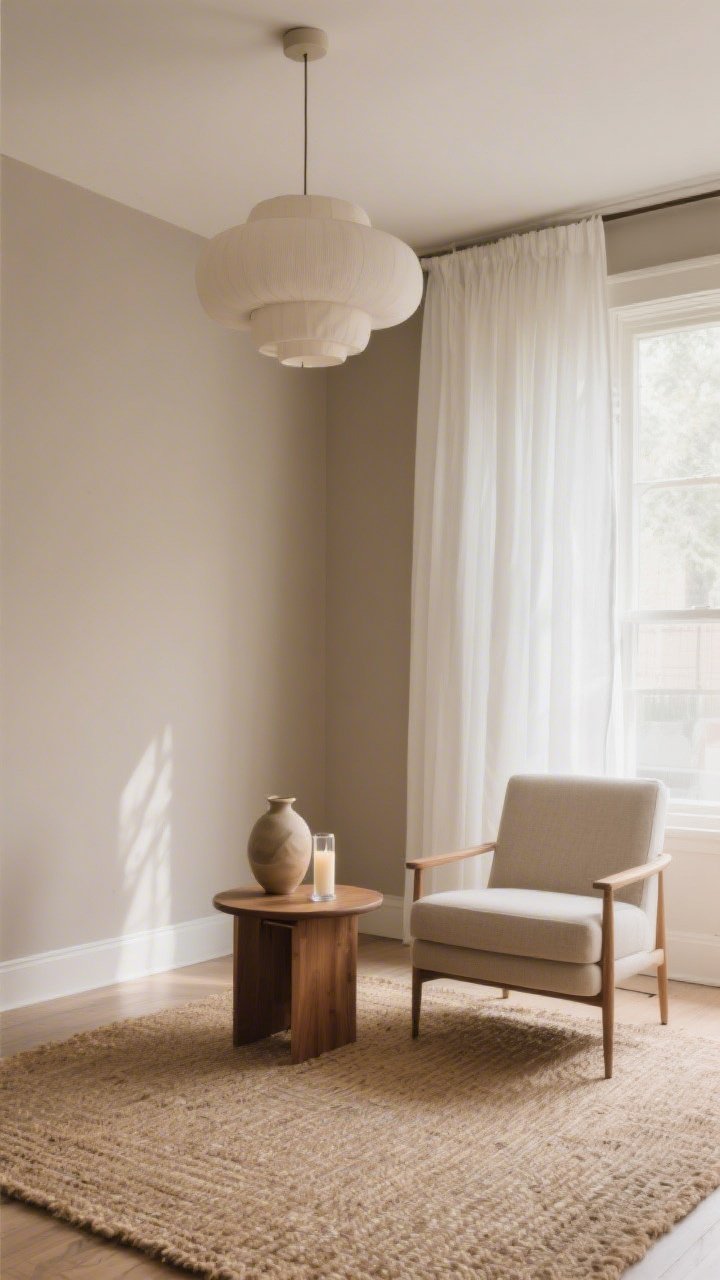
Trends are fun until your budget’s gone and you still don’t have a proper lamp. Don’t spend half your cash on a viral vase when you still need a rug and curtains.
Budget Like A Stylist
- Prioritize “surface area” items: Rugs, curtains, paint, and lighting make the biggest impact per dollar.
- Use a 60/30/10 split: 60% on foundational pieces, 30% on accent furniture, 10% on decor.
- Cap trend spend: Limit trendy items to 10–15% of your budget. Your future self will thank you.
IMO: Three timeless pieces beat ten things you’ll donate next year.
4. Forgetting Function Because The Aesthetic Is A Vibe
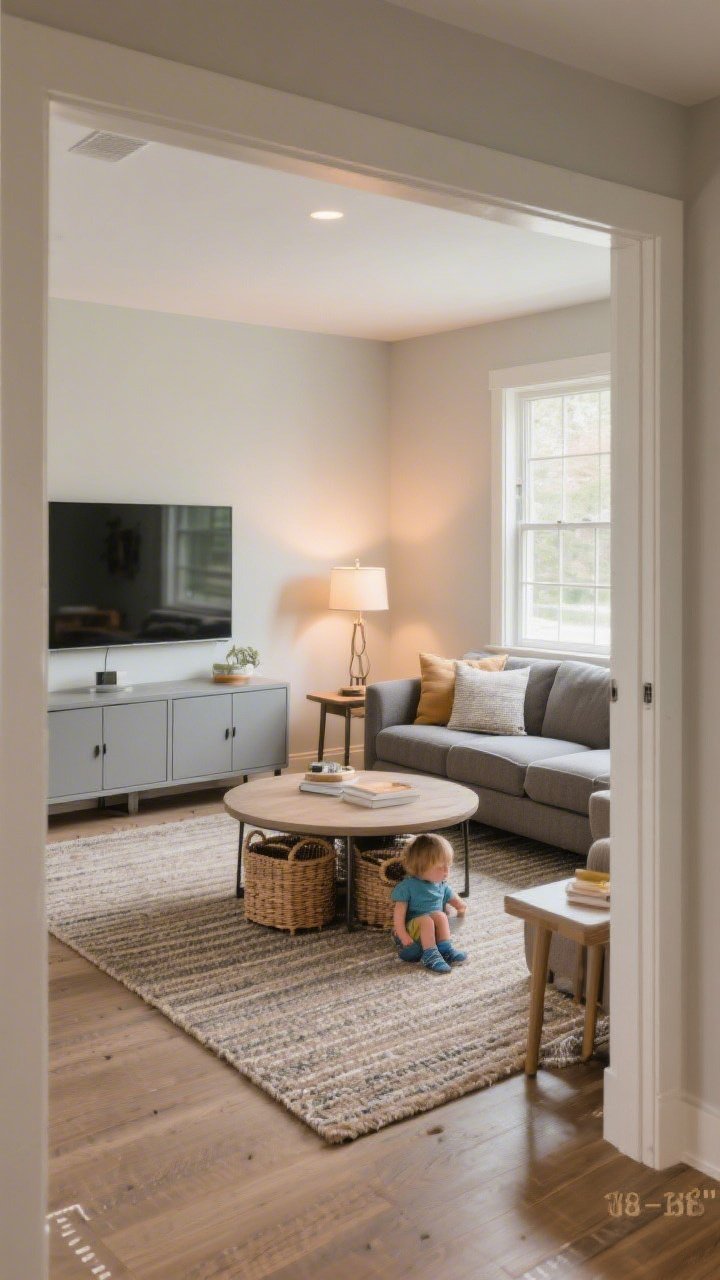
Yes, that sculptural chair is stunning. But if you can’t sit in it for five minutes, it’s art, not furniture. Design has to serve your life first.
Define How You Live In The Room
- Traffic flow: Leave 30–36 inches for main walkways, 18 inches around coffee tables.
- Storage needs: Baskets, closed cabinets, and multi-use pieces tame visual clutter.
- Maintenance: Pets? Kids? Go for performance fabrics and wipeable finishes.
Bottom line: If it doesn’t support how you use the room, it’s not a deal—no matter the discount.
5. Copy-Pasting Pinterest Without Editing
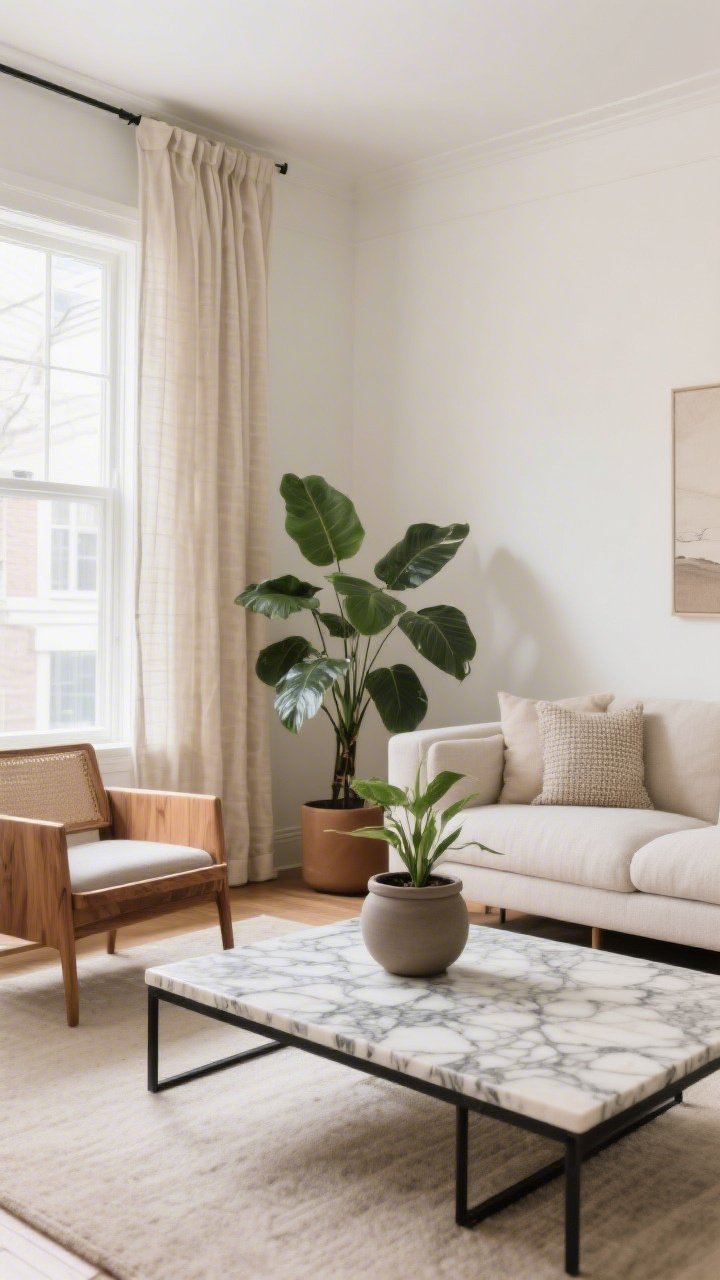
We all save the same cozy living room with linen drapes and a marble table. But your room, light, and layout are unique. Copying without customizing equals “almost right,” which feels wrong every time you walk in.
Customize From Inspiration
- Match your light: North-facing rooms love warm tones; south-facing can handle cooler palettes.
- Translate materials: If marble’s pricey, try quartz, ceramic, or a stone-look laminate.
- Scale smart: If your room is smaller, reduce the size of patterns and furniture, not just quantity.
Pro move: Borrow the formula (like wood + linen + black metal + greenery), not the exact items.
6. Neglecting Lighting—AKA Decorating In The Dark
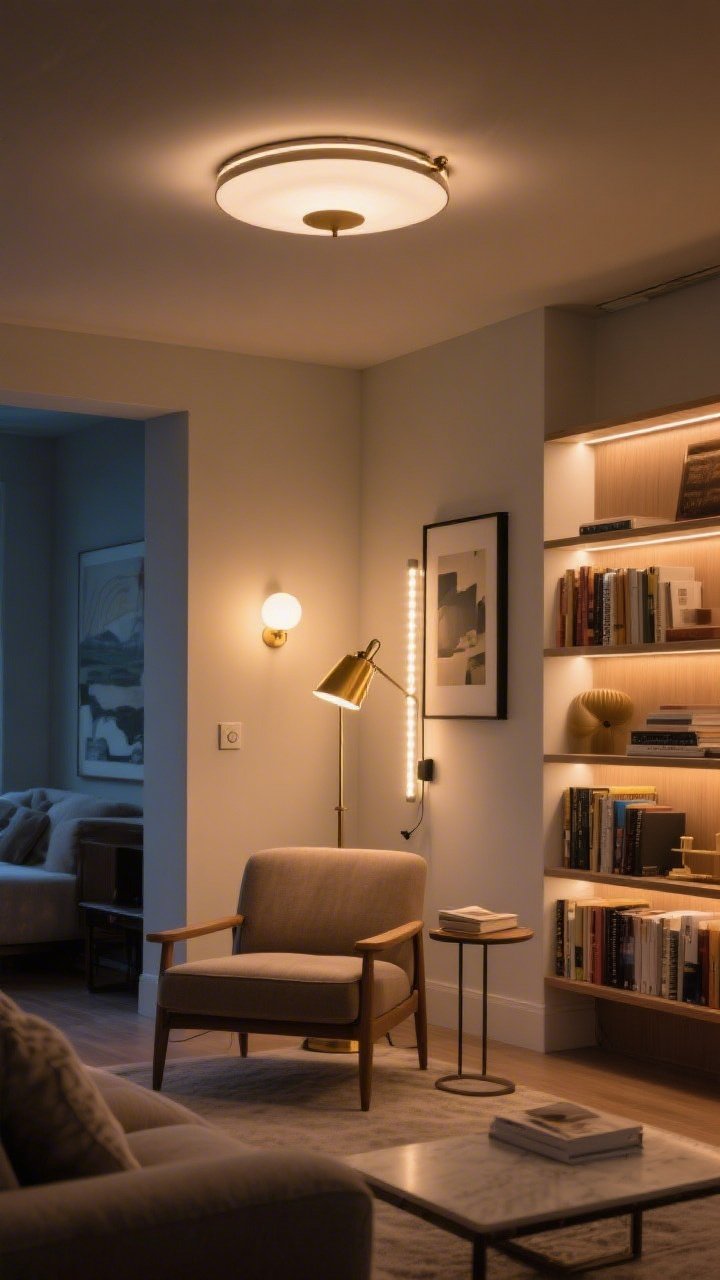
One ceiling light is a vibe if that vibe is “dentist’s office.” Layered lighting is what makes rooms feel intentional and expensive—even on a budget.
The Three-Layer Lighting Rule
- Ambient: Overhead or overall light—ceiling fixtures, flush mounts, or large floor lamps.
- Task: Reading lamps, under-cabinet lights, desk lamps where you actually do stuff.
- Accent: Picture lights, sconces, candles, LED strips for shelves or behind TVs.
Quick upgrades: Swap harsh bulbs for warm 2700–3000K LEDs, add plug-in sconces, and use dimmers where possible. It’s decor magic without buying decor.
7. Choosing Paint Last (When It Should Be First)
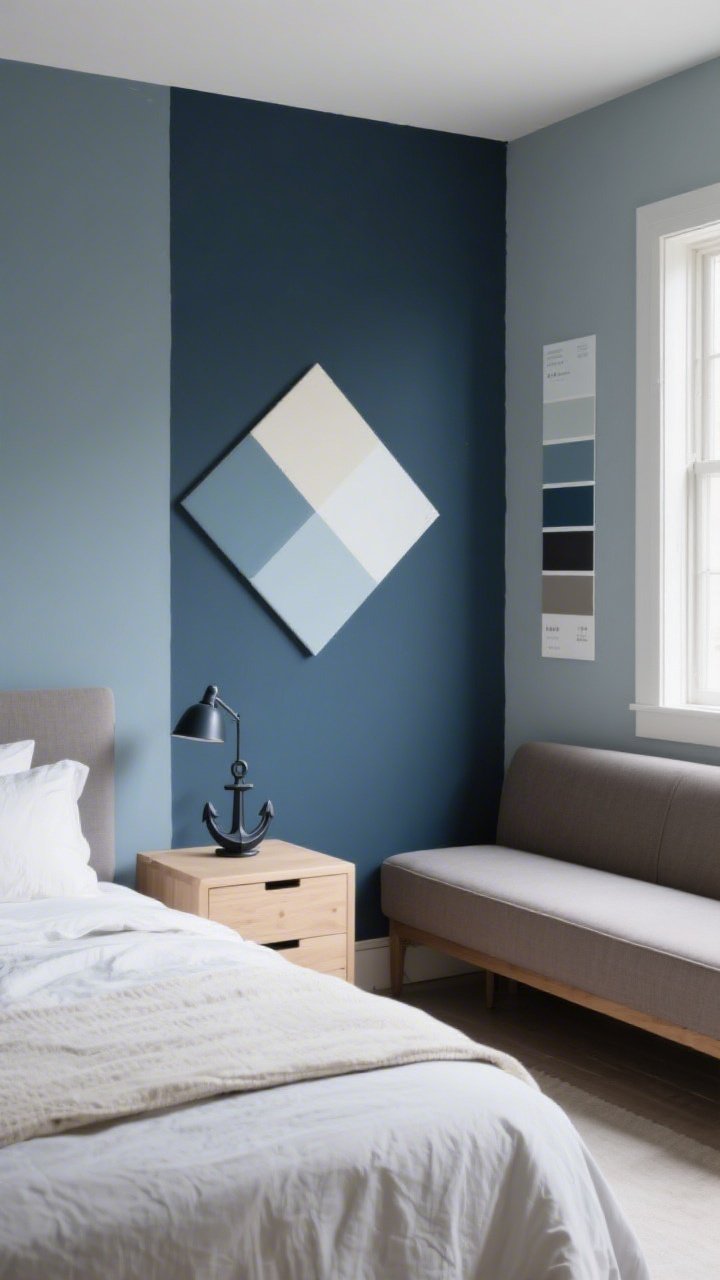
Paint is the biggest, cheapest transformer. But people buy decor first, then spend weeks trying to match it. Reverse it and watch everything snap into place.
Paint Like A Pro
- Test large swatches: At least 18×18 inches on multiple walls; check morning, noon, night.
- Coordinate undertones: If your sofa is warm gray, choose a paint with a similar warm undertone.
- Consider contrast: Deep wall color with light furnishings, or light walls with a few dark anchors.
Bonus: A quality paint job can make budget furniture look curated. The walls are your backdrop—nail them first.
8. Forgetting Texture And Pattern—Everything Looks Flat
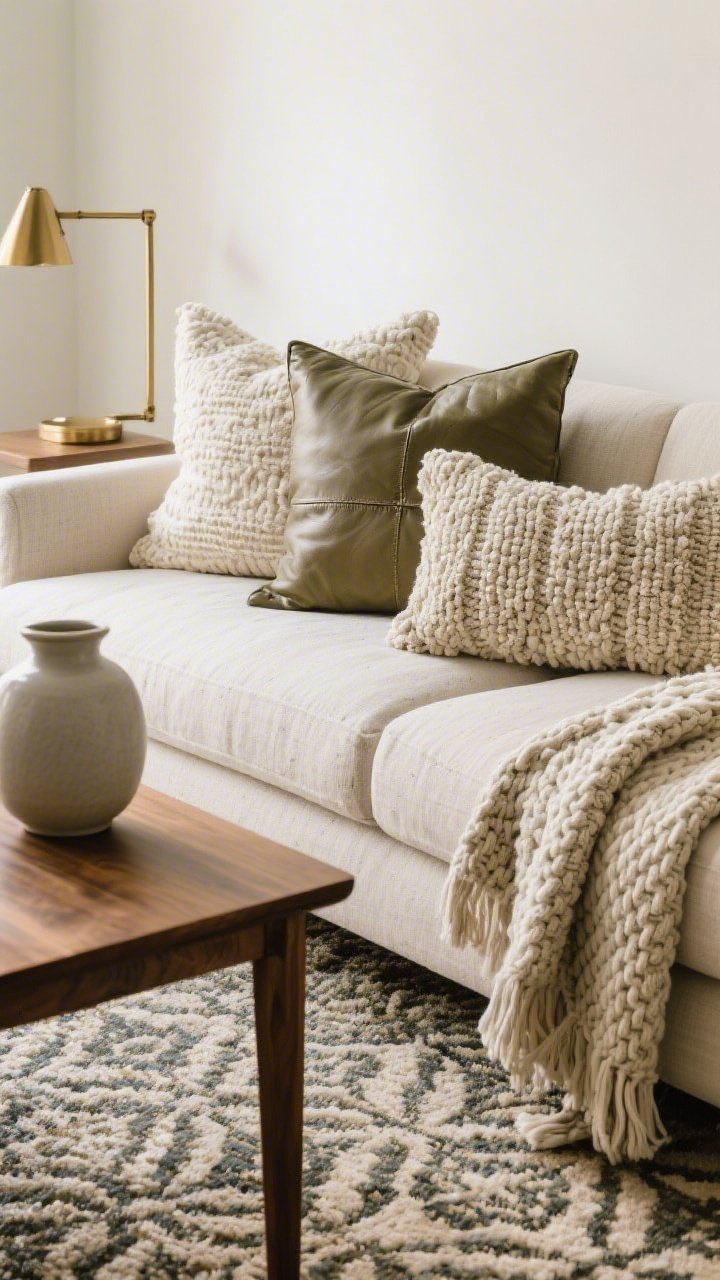
If your room feels “meh,” you probably need texture. All smooth surfaces read cheap. Mixing textures creates depth, and it doesn’t have to cost much.
Layering That Actually Works
- Textures to mix: Linen, boucle, jute, leather (or faux), wood grain, matte ceramics, soft knits.
- Pattern play: Start with one large-scale pattern (rug or curtains), add a medium (pillows), then a small (throw or art). Keep them in the same color family.
- Shine balance: Pair matte finishes with one subtle shine—like a brass lamp or glossy tray.
Budget wins: Swap pillow covers, add a chunky throw, and bring in a textured planter. Tiny changes, huge upgrade.
9. Buying All At Once Instead Of Phasing
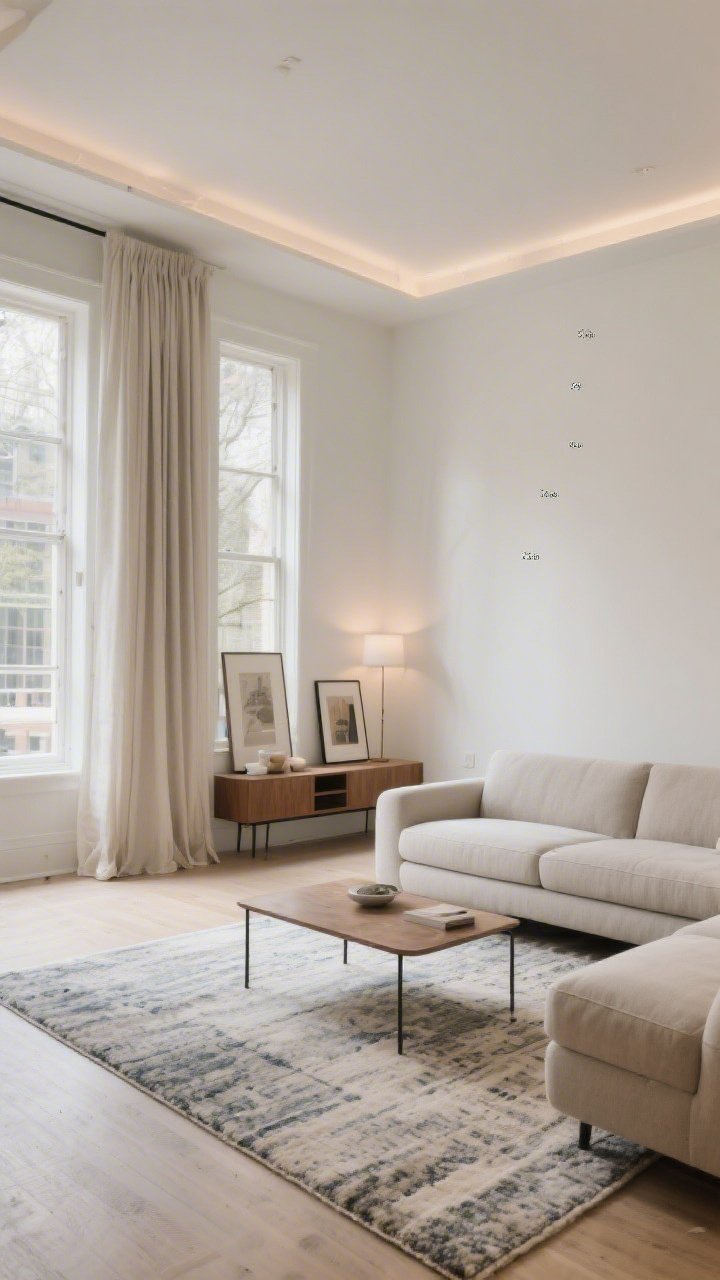
Impulse shopping feels productive, but layering slowly leads to better choices. Also, returns are a pain and your future self is busy.
The 3-Phase Makeover Plan
- Phase 1: Foundation. Declutter, paint, lighting, rug, curtains. Set the stage first.
- Phase 2: Furniture. Anchor pieces (sofa/bed/table), then side tables and storage.
- Phase 3: Styling. Art, pillows, plants, trays, books, and the fun stuff.
Why it works: Each phase teaches you what’s missing so you don’t double-buy. Also, your style evolves—let it.
10. Overlooking Scale And Sightlines—The “Why Does This Feel Off?” Problem
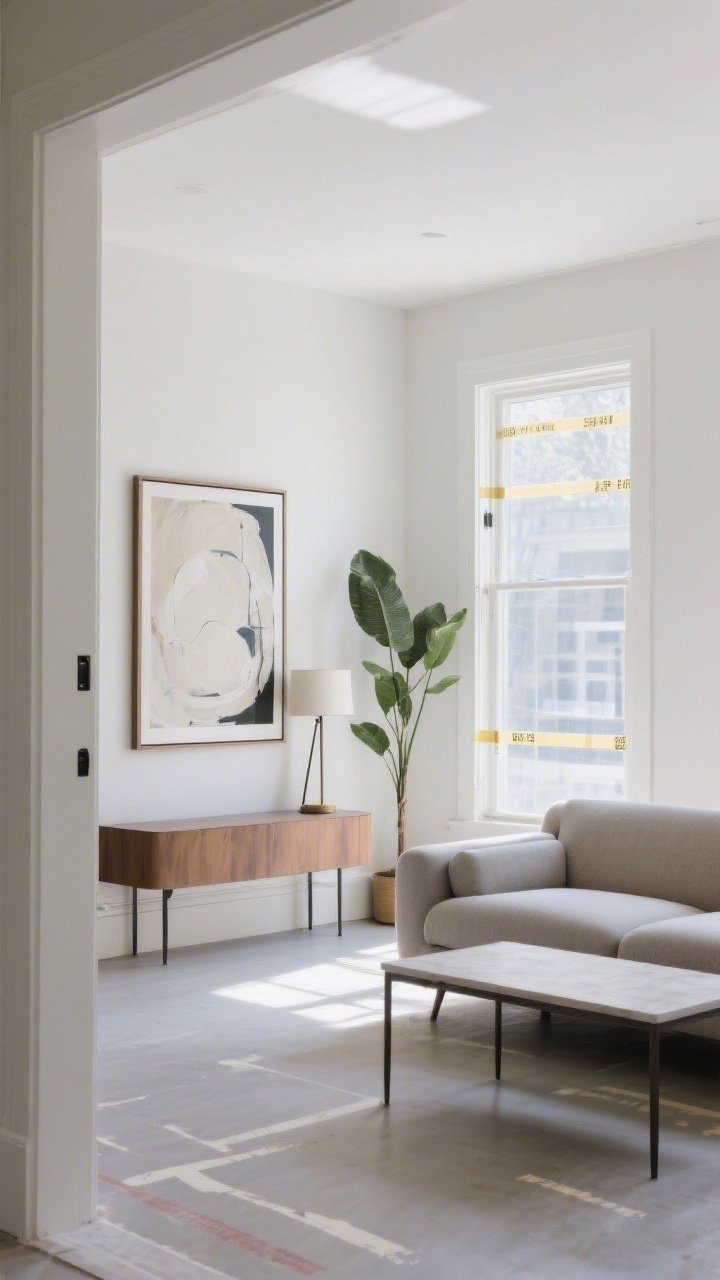
Even with great pieces, a room can feel wrong if scale and sightlines are off. Your eye wants balance and flow—not a wall of tiny frames or a micro coffee table.
Scale And Placement Cheats
- Sofa to coffee table: Table should be about two-thirds the sofa width and 14–18 inches away.
- Art over furniture: Aim for 60–75% of the furniture’s width. One big piece often beats a cluttered gallery.
- Vertical balance: Use taller items (plants, floor lamps, bookcases) to draw the eye up in low-ceiling rooms.
- Entry and focal points: Keep sightlines clear from the doorway to a focal moment—fireplace, art, window.
Quick fix: Mock up with painter’s tape or paper cutouts before drilling or buying. Zero regrets, lots of confidence.
Mini Checklist Before You Click “Buy”
- Does this fit my mood board and color palette?
- Have I measured the space and checked clearances?
- Is this item functional for how I use the room?
- Where does it live? What’s next to it, under it, above it?
- Is this a foundation piece or a style layer? Am I prioritizing correctly?
- Will it still look good if I change the wall color or swap pillows in six months?
Smart Places To Save vs. Spend
- Save on: Pillow covers, throws, planters, trays, side tables, basic curtains with upgraded rods.
- Spend on: Rug (size matters), lighting, sofa/bed frame, quality paint, blackout liners where needed.
Ready to shop with confidence? You’ve got the plan, the tape measure, and the taste. Start with the big-impact moves, layer slowly, and let your room earn its personality. You don’t need a giant budget—just better decisions. Go make that glow-up happen.
Avoid Common Decorating Mistakes
Follow this checklist before starting your makeover to avoid costly mistakes.